
About the Greater Kudu
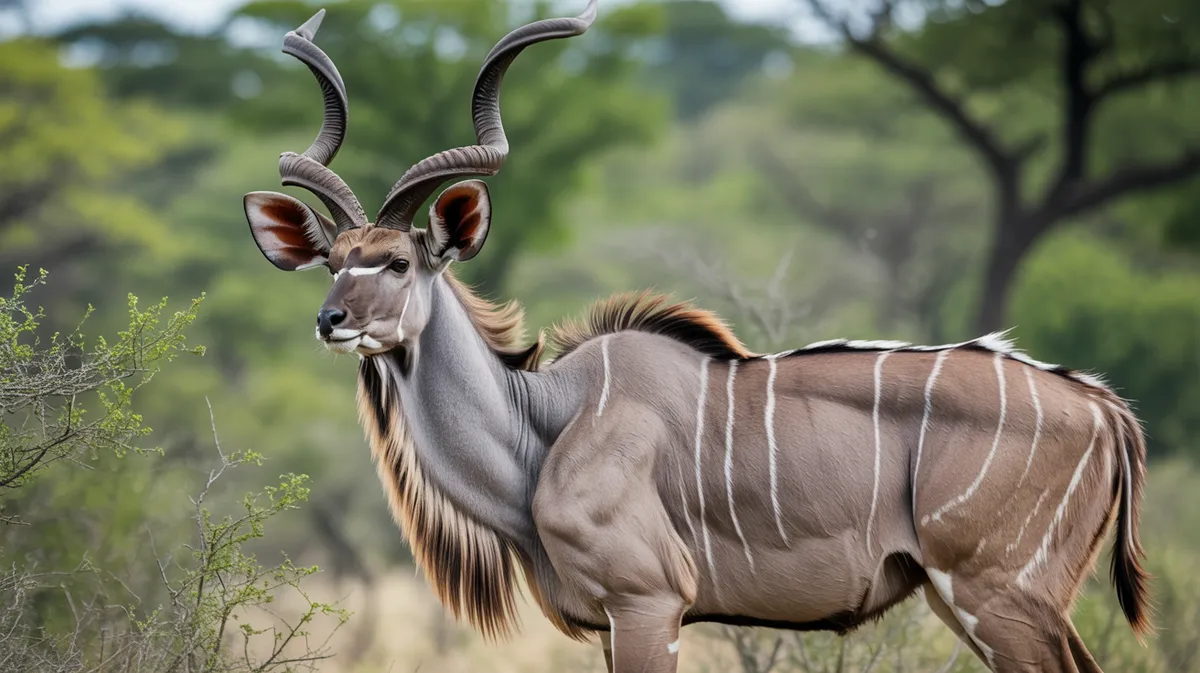
Tragelaphus strepsiceros is a browsing antelope of African woodland and thicket, and the bull's horns are among the most extreme headgear in the family: a pair of open spirals that make two and a half twists and reach lengths past 1.8 m along the curve. He does not use them like a bludgeon. Kudu bulls fight by interlocking horns and wrestling, and the spiral geometry is thought to lock the horns in a controlled way - which occasionally goes wrong, and pairs of bulls have been found dead with horns inseparably jammed. Kudu are ambush-avoiders rather than runners: they freeze, rely on vertical white flank stripes that break their outline in dappled thorn scrub, and then explode away with high, effortless leaps that clear fences over 2 m. Females live in small groups; bulls are largely solitary and join only to breed. They are browsers, taking leaves, forbs and pods rather than grass, and can persist in degraded bush that grazers abandon - which is why kudu remain common across southern Africa even as many antelope decline. Their alarm bark is one of the loudest of any antelope and carries far through thick cover.
Fascinating facts
Spiral Horn Masters
Male greater kudus' horns can reach up to 1.8 meters long and form two and a half graceful spirals, making them highly prized among wildlife enthusiasts.
Masters of Camouflage
The vertical white stripes on their bodies blend with sunlight and shadows, helping them remain nearly invisible in thickets and woodland.
High Jumpers
When startled, greater kudus can leap over bushes and fences up to 2.5 meters high to escape predators.
Detailed description
The greater kudu (Tragelaphus strepsiceros) is among the largest and most striking antelopes in Africa, with males standing 120–150 cm at the shoulder and weighing 190–270 kg, while females are smaller, averaging 100–120 cm and 120–210 kg. Males are easily recognized by their spectacular spiral horns, which can reach up to 1.8 meters in length and have 2–2.5 twists, while females lack horns entirely. Both sexes have a distinctive coat marked by 6–10 vertical white stripes along the torso, a white chevron between the eyes, and a bushy tail with a white underside. Their large, rounded ears provide acute hearing, aiding in predator detection. Greater kudus are highly agile, capable of leaping over 2.5-meter obstacles, and are adapted for moving silently through dense thickets. They are predominantly browsers, feeding on a wide variety of leaves, shoots, flowers, and fruits, and can survive long periods without direct water intake by extracting moisture from their food. Socially, females and their offspring form small herds of 6–10 individuals, while adult males are more solitary or form loose bachelor groups, joining female groups only during the breeding season. Kudus are generally shy and elusive, relying on their cryptic coloration and stillness to avoid detection. Their crepuscular habits mean they are most active at dawn and dusk, resting in dense cover during the heat of the day.
Did you know?
Despite their large size, greater kudus are remarkably silent and elusive, often going unnoticed even in relatively open habitats.
Research & sources
Wikipedia summary
The greater kudu is a large woodland antelope, found throughout eastern and southern Africa. Despite occupying such widespread territory, they are sparsely populated in most areas due to declining habitat, deforestation, and poaching. The greater kudu is one of two species commonly known as kudu, the other being the lesser kudu, T. imberbis.
Behaviour & social structure
Greater kudus exhibit a predominantly crepuscular activity pattern, foraging during early morning and late afternoon to avoid midday heat and predators. Their diet is highly varied, consisting mainly of leaves from acacia, bushwillow, and other woody plants, but also includes fruits, flowers, and occasionally grasses, especially after rain. Kudus are selective feeders, often standing on their hind legs to reach higher foliage. Social structure is matrilineal; females and their young form stable groups, while mature males are largely solitary except during the rut. Males engage in ritualized sparring, locking horns in displays of strength, but serious fights are rare. Vocalizations are infrequent but include barks when alarmed and low grunts or moans during social interactions. Kudus rely heavily on their acute senses of hearing and smell, and when threatened, they may freeze or flee in bounding leaps. They are known to use established game trails and frequently visit mineral licks to supplement their diet.
Reproduction & life cycle
Breeding in greater kudus is seasonal and varies geographically, often peaking at the end of the rainy season (April–June in southern Africa). Males join female groups during the rut, engaging in displays such as neck wrestling and lateral displays to establish dominance. After a successful mating, gestation lasts approximately 240 days (about 8 months). Females give birth to a single calf, rarely twins, in dense cover to avoid predation. Calves remain hidden and motionless for the first 3–4 weeks, with the mother visiting briefly to nurse. Weaning occurs at 4–6 months, but young may remain with the maternal group for up to two years. Sexual maturity is reached at 1.5–2 years for females and 2.5–3 years for males, though males typically do not breed until they are older and able to compete successfully.
Adaptations & survival
Greater kudus are superbly adapted to woodland and thicket habitats. Their cryptic coloration and vertical stripes break up their outline, providing camouflage among dappled light and shadow. Large, sensitive ears enhance auditory detection of predators. Their long legs and strong muscles allow for powerful leaps, aiding in escape from threats and navigating rugged terrain. Kudus can survive in arid regions by obtaining moisture from succulent plants and dew, reducing dependence on open water sources. Their selective browsing habits allow them to exploit a wide range of plant species, including those with chemical defenses. Behavioral adaptations include freeze-and-hide tactics and the use of alarm barks to warn conspecifics.
Cultural significance
The greater kudu holds considerable cultural significance in southern Africa. Its horns, prized for their beauty and unique spiral shape, are used in traditional ceremonies, as musical instruments (shofar in Jewish tradition), and as trophies. Kudus feature in local folklore as symbols of grace, alertness, and elusiveness. Their images appear in rock art and are sometimes associated with rainmaking rituals. In some communities, kudu meat is considered a delicacy, and the animal is respected for its role in the ecosystem.
Recent research
Recent research has focused on the genetic diversity of greater kudu populations, revealing significant differentiation between subspecies and highlighting the importance of habitat connectivity. Studies on their browsing behavior have shown kudus play a key role in shaping woodland vegetation structure. GPS collaring and camera trap studies have improved understanding of their spatial ecology, home range sizes (typically 5–25 km²), and responses to human disturbance. Ongoing research investigates the impact of climate change on their distribution, as well as disease dynamics in fragmented populations.
Videos
Habitat
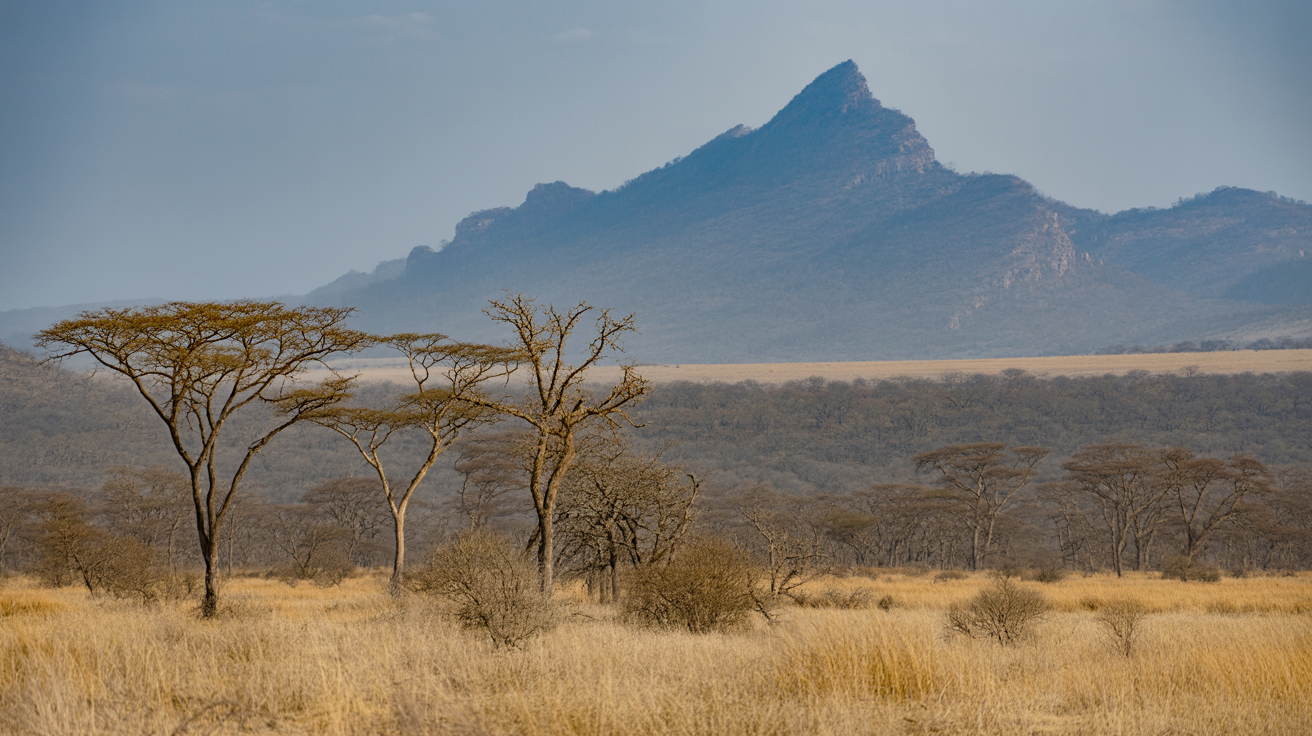
Savanna woodlands and bushlands
 Africa
Savanna
Grasslands with scattered trees, characterized by seasonal rainfall and home to diverse grazing animals and predators.
 Various Continental Regions
Grassland
Open areas dominated by grasses rather than trees, supporting numerous herbivores and their predators.
 Global
Forest
Wooded areas with significant tree cover and diverse plant and animal communities.
Conservation
The Greater Kudu is currently classified as Least Concern on the IUCN Red List.
Threats & challenges
Despite being classified as Least Concern, greater kudu populations face significant pressures from habitat loss due to agricultural expansion, deforestation, and human settlement. Poaching for meat, hides, and horns remains a major threat, particularly outside protected areas. Kudus are susceptible to diseases such as rinderpest and anthrax, which can cause local population crashes. Fragmentation of habitat leads to isolated populations, reducing genetic diversity and increasing vulnerability. Roadkill and competition with livestock for food resources are additional challenges. While populations are stable in many protected areas, declines are noted in regions with high human encroachment.
Taxonomy
Scientific name
Tragelaphus strepsiceros
- Kingdom
- Animalia
- Phylum
- Chordata
- Class
- Mammalia
- Order
- Artiodactyla
- Family
- Bovidae
- Genus
- Tragelaphus
- Species
- strepsiceros
Where to see a greater kudu
11 zoos and aquariums in 5 countries are recorded as keeping this species.
 Tallinn Zoo🇪🇪 Tallinn, Estonia
 Houston Zoo🇺🇸 Houston, United States
 North Carolina Zoo🇺🇸 Asheboro, United States
 Śląski Ogród Zoologiczny🇵🇱 Chorzów, Poland
 Caldwell Zoo🇺🇸 Tyler, United States
Community notes
Share your observations about the Greater Kudu.
No community notes yet. Be the first!
Discover more wildlife
More fascinating animals from the encyclopedia.