
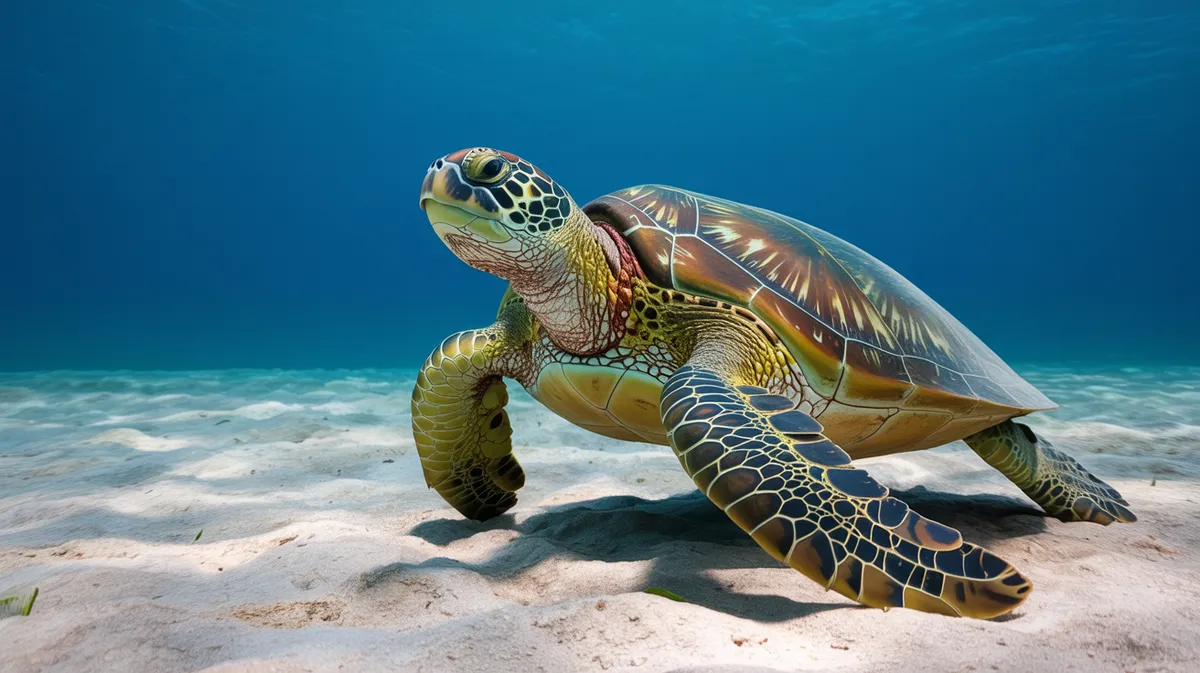
About the Green Sea Turtle
The Green Sea Turtle (Chelonia mydas) is a prominent member of the family Cheloniidae and is the only species in its genus. These turtles are robust in size, often reaching shell lengths of up to 1.5 meters and weighing between 110 to 180 kilograms. Their distribution spans tropical and subtropical waters worldwide, with notable populations in the Atlantic and Pacific Oceans, as well as the Indian Ocean. Unlike its name suggests, the 'green' in Green Sea Turtle refers to the unique coloration of the fat beneath their carapace, a result of their herbivorous diet primarily consisting of seagrass. This diet not only influences their internal fat color but also plays a critical role in maintaining healthy seagrass beds, which are vital marine ecosystems. The carapace itself varies from olive to nearly black, often leading to confusion with their Pacific relatives, the Black Sea Turtles. Adaptively, their streamlined shell and powerful flippers enable them to navigate vast oceanic distances, often migrating thousands of kilometers between feeding and nesting sites.
Fascinating facts
Massive Migrators
Green Sea Turtles are known for their long migrations, with some individuals traveling over 2,600 kilometers (1,600 miles) between feeding grounds and nesting beaches.
Vegetarian Adults
While juveniles eat a varied diet, adult Green Sea Turtles primarily consume seagrasses and algae, giving their body fat a distinctive green color.
Beach Loyalty
Female Green Sea Turtles exhibit natal homing, returning to the same beach where they were born to lay their eggs, sometimes after decades at sea.
Detailed description
The green sea turtle (Chelonia mydas) is a large, robust marine reptile distinguished by its smooth, heart-shaped carapace, which typically ranges from olive to dark brown and may display radiating patterns or mottling. Adult individuals can reach lengths of 100–120 cm (39–47 in) and weigh between 110–180 kg (240–400 lbs), with some exceptional specimens exceeding 200 kg. The species is sexually dimorphic: males possess longer tails and more curved claws than females, adaptations for mating. The head is relatively small compared to the body, with a single pair of prefrontal scales and a serrated lower jaw suited for grazing on marine vegetation. Green sea turtles are primarily solitary but may aggregate in large numbers at feeding grounds or nesting beaches. They are highly migratory, with some populations traveling over 2,600 km (1,600 mi) between foraging areas and natal nesting sites. Their streamlined body and large, paddle-like forelimbs enable efficient long-distance swimming. Unlike many other sea turtles, adult green sea turtles are almost exclusively herbivorous, feeding on seagrasses and algae, which contributes to the maintenance and productivity of seagrass ecosystems. Juveniles, however, are more omnivorous, consuming invertebrates such as jellyfish and sponges. The species exhibits natal homing, returning to the same beaches where they hatched to reproduce, a behavior guided by geomagnetic and chemical cues. Green sea turtles play a crucial ecological role as grazers, influencing the structure and health of seagrass beds and coral reefs.
Did you know?
Despite their slow movements on land, Green Sea Turtles can swim at speeds up to 35 km/h (22 mph) in short bursts when threatened.
Research & sources
Wikipedia summary
The green sea turtle, also known as the green turtle, black (sea) turtle or Pacific green turtle, is a species of large sea turtle of the family Cheloniidae. It is the only species in the genus Chelonia. Its range extends throughout tropical and subtropical seas around the world, with two distinct populations in the Atlantic and Pacific Oceans, but it is also found in the Indian Ocean. The common name refers to the usually green fat found beneath its carapace, due to its diet strictly being seagrass, not to the color of its carapace, which is olive to black.
Behaviour & social structure
Green sea turtles are generally diurnal, with peak activity during daylight hours, especially at dawn and dusk. Their feeding behavior involves slow, methodical grazing on seagrass meadows or scraping algae from rocks and coral. They are known to rest for several hours at a time, often wedged under ledges or in depressions on the sea floor, surfacing periodically to breathe. While typically solitary, they may be observed basking communally on beaches in certain regions, such as the Hawaiian Islands—a rare behavior among sea turtles. Social interactions are limited outside of the breeding season, though individuals may tolerate proximity at abundant feeding sites. Green sea turtles are not aggressive and rely on their speed and agility in water to evade predators. Their daily routines are influenced by tidal and temperature cycles, with some populations migrating seasonally to optimize feeding and breeding conditions.
Reproduction & life cycle
Green sea turtles reach sexual maturity between 20 and 50 years of age, depending on environmental conditions and population. Mating occurs in shallow coastal waters near nesting beaches, often involving multiple males competing for a single female. Females lay eggs every 2–4 years, with each nesting season comprising up to 7 clutches, spaced approximately two weeks apart. Each clutch contains 75–200 eggs, which are deposited in deep, flask-shaped nests dug in sandy beaches above the high tide line. Incubation lasts about 45–70 days, with temperature-dependent sex determination: warmer sand produces more females, cooler sand more males. There is no parental care after egg-laying; hatchlings emerge at night and instinctively orient toward the brightest horizon, usually the ocean. Predation rates on eggs and hatchlings are extremely high, with only a small fraction surviving to adulthood. Major nesting sites include Tortuguero (Costa Rica), Raine Island (Australia), and Ascension Island (Atlantic Ocean).
Adaptations & survival
Green sea turtles exhibit several adaptations for marine life: their hydrodynamic body shape and large, powerful forelimbs facilitate long-distance swimming and maneuverability. Their lungs are highly efficient, allowing for rapid gas exchange and enabling dives lasting up to five hours, though typical dives are much shorter. Salt glands near the eyes excrete excess salt from ingested seawater, often giving the appearance of 'crying.' The serrated jaw edge is specialized for cropping seagrass and scraping algae. Hatchlings possess a temporary caruncle (egg tooth) to break out of the eggshell. The ability to detect Earth's magnetic field aids in long-distance navigation and natal homing. Their coloration provides camouflage from predators both above and below the water.
Cultural significance
Green sea turtles hold significant cultural value in many coastal societies. In Polynesian, Hawaiian, and Caribbean cultures, they are revered as symbols of longevity, wisdom, and navigation. Traditional stories often depict turtles as creators or guides. Historically, their meat and eggs were consumed as delicacies, and their shells used for ornaments and tools. Conservation initiatives increasingly incorporate indigenous knowledge and community engagement, recognizing the turtle's role in local heritage and eco-tourism.
Recent research
Recent research has focused on migratory behavior using satellite telemetry, revealing complex transoceanic routes and fidelity to specific foraging and nesting sites. Genetic studies have clarified population structure, indicating distinct Atlantic and Indo-Pacific lineages. Investigations into climate change impacts highlight concerns over skewed sex ratios and shifting nesting phenology. Studies on fibropapillomatosis are ongoing, with evidence suggesting links to environmental pollutants and altered immune responses. Restoration of seagrass habitats and reduction of bycatch through turtle excluder devices (TEDs) are active areas of applied research. Emerging work on geomagnetic imprinting is shedding light on the mechanisms underlying natal homing.
Sources
Chelonia mydas: The IUCN Red List of Threatened Species 2020
IUCN SSC Marine Turtle Specialist Group (2020)
conservationGlobal phylogeography of the green turtle: Genetic tests of natal homing and long-distance dispersal
Bowen, B.W. et al. (1992)
scientificVideos
Habitat
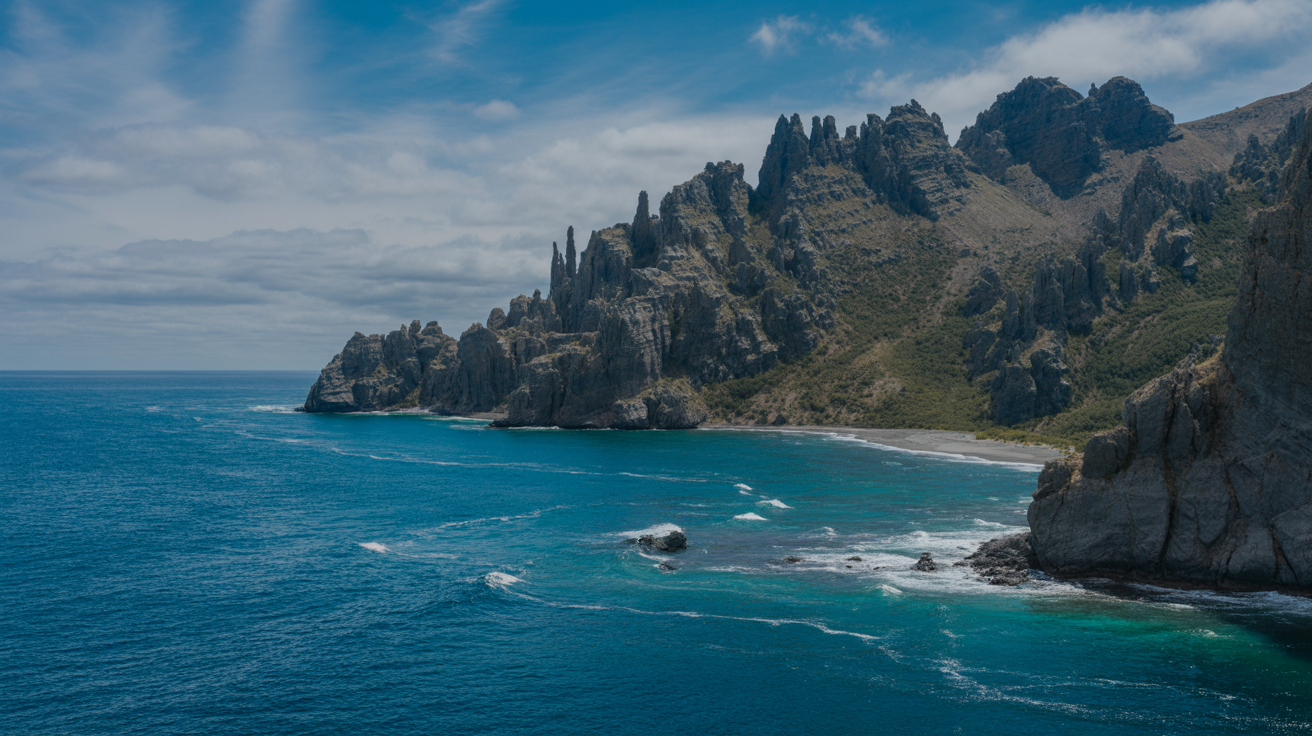
Coastal waters, seagrass beds, and coral reefs
Conservation
The Green Sea Turtle is currently classified as Endangered on the IUCN Red List.
Threats & challenges
Green sea turtles face numerous threats, including habitat loss from coastal development, degradation of nesting and foraging grounds, and climate change, which affects sex ratios and nesting success. Bycatch in fisheries, particularly from trawls, longlines, and gillnets, remains a significant mortality factor. Illegal harvesting of eggs, meat, and shells persists in some regions, despite legal protections. Marine pollution, such as ingestion of plastics and exposure to oil spills, poses additional risks. The species is also susceptible to fibropapillomatosis, a disease causing debilitating tumors linked to environmental stressors. Global populations have declined dramatically over the past century, though some nesting populations show signs of recovery due to conservation efforts. The IUCN lists the green sea turtle as Endangered, and it is included in Appendix I of CITES, prohibiting international trade.
Taxonomy
Scientific name
Chelonia mydas
- Kingdom
- Animalia
- Phylum
- Chordata
- Class
- Reptilia
- Order
- Testudines
- Family
- Cheloniidae
- Genus
- Chelonia
- Species
- mydas
Where to see a green sea turtle
8 zoos and aquariums in 2 countries are recorded as keeping this species.
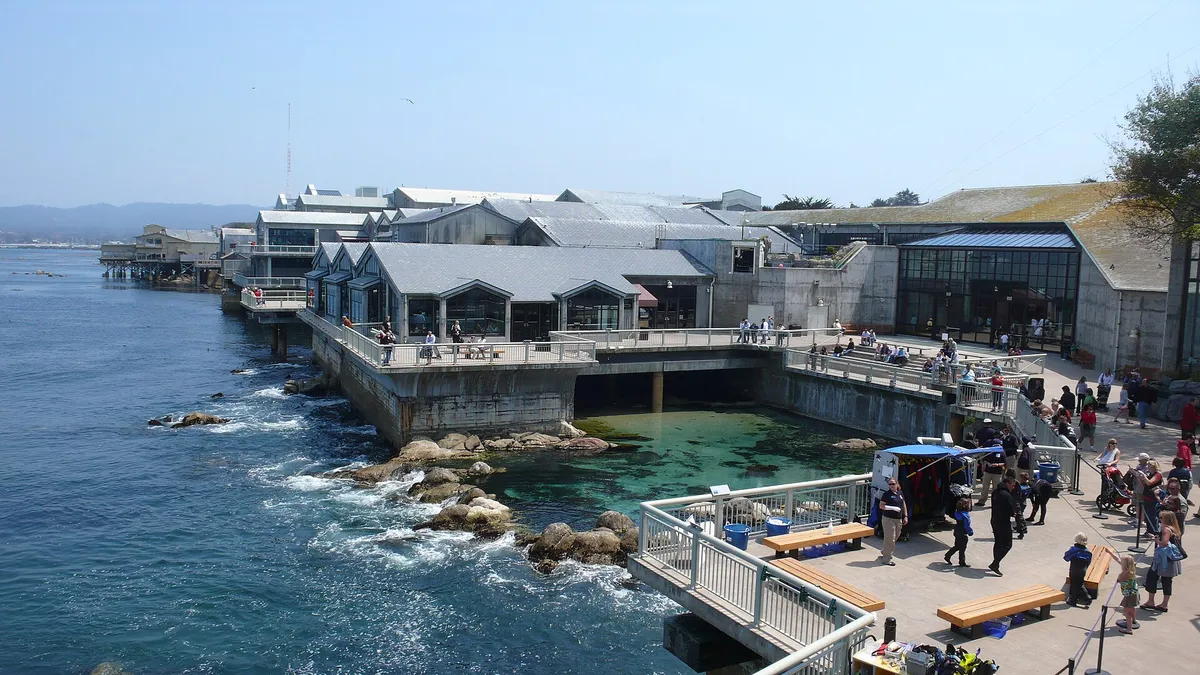 Monterey Bay Aquarium🇺🇸 Monterey, United States
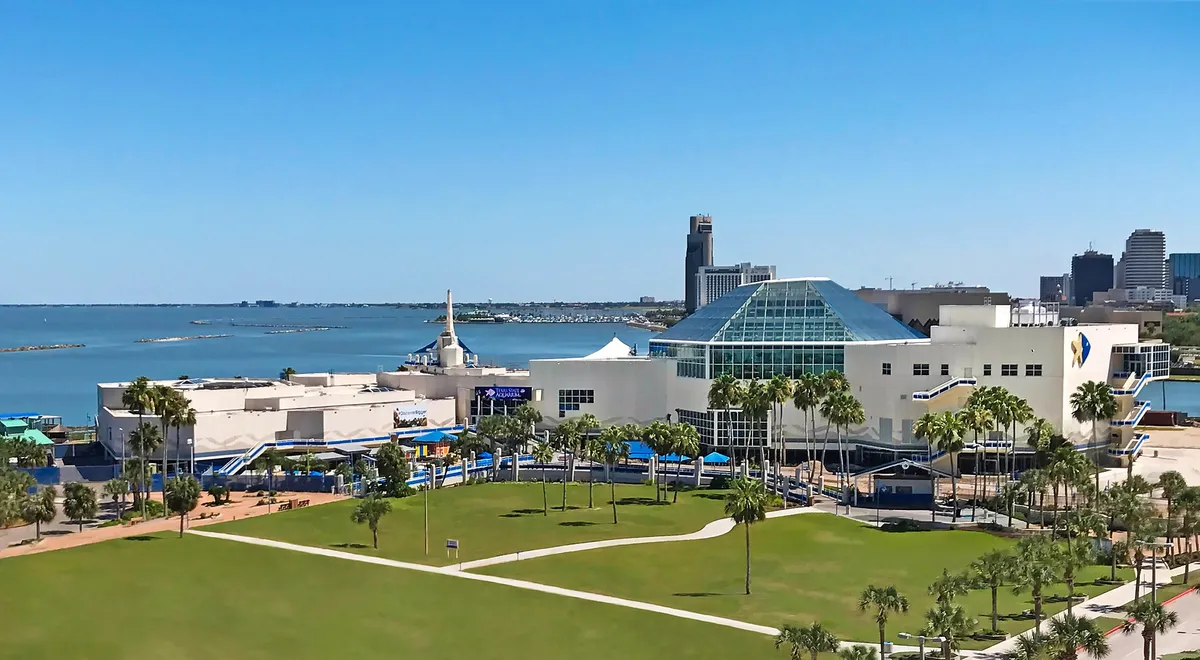 Texas State Aquarium🇺🇸 Corpus Christi, United States
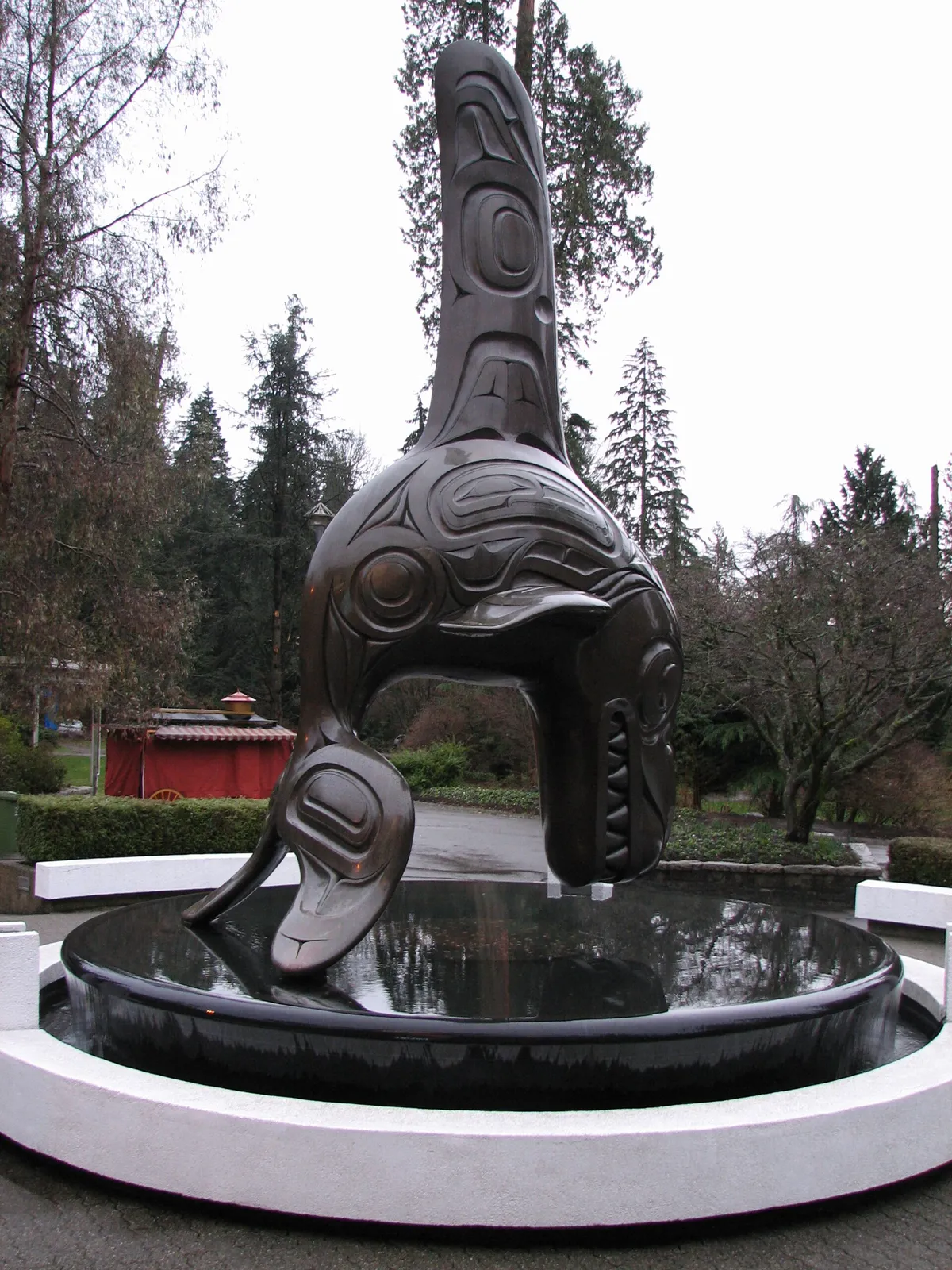 Vancouver Aquarium🇨🇦 Vancouver, Canada
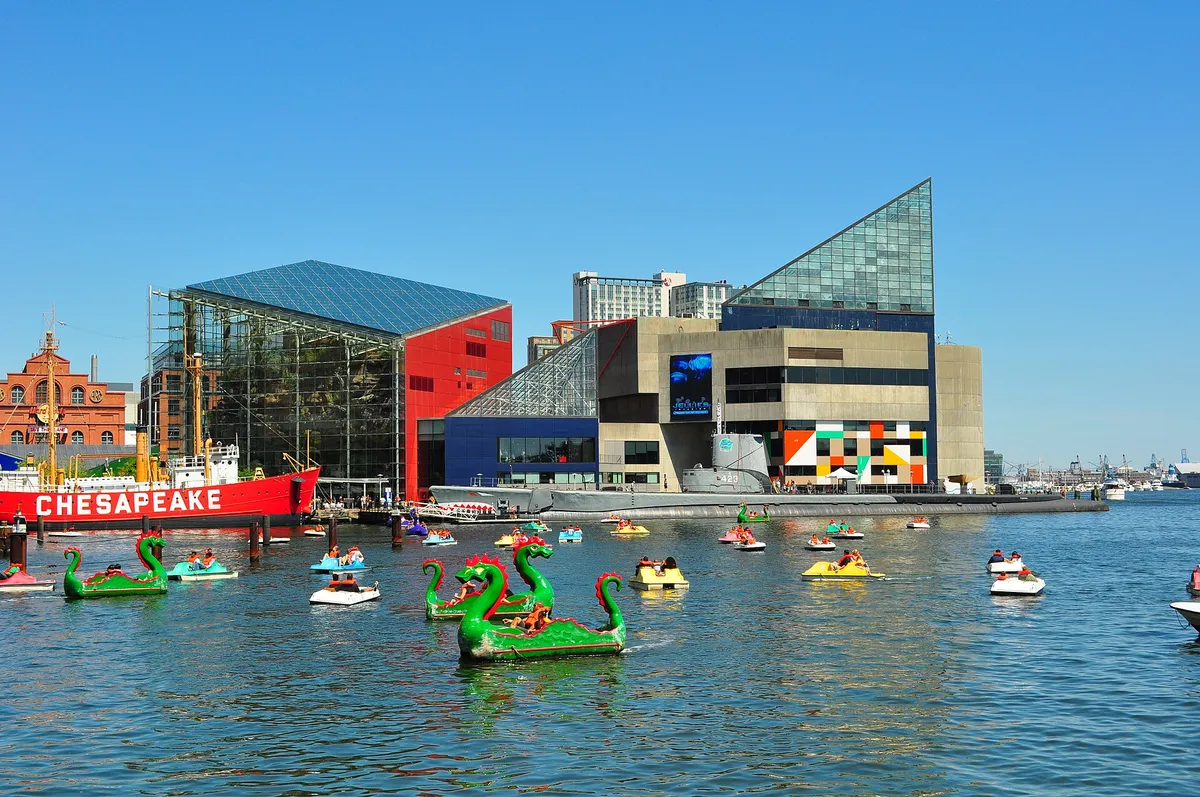 National Aquarium🇺🇸 Baltimore, United States
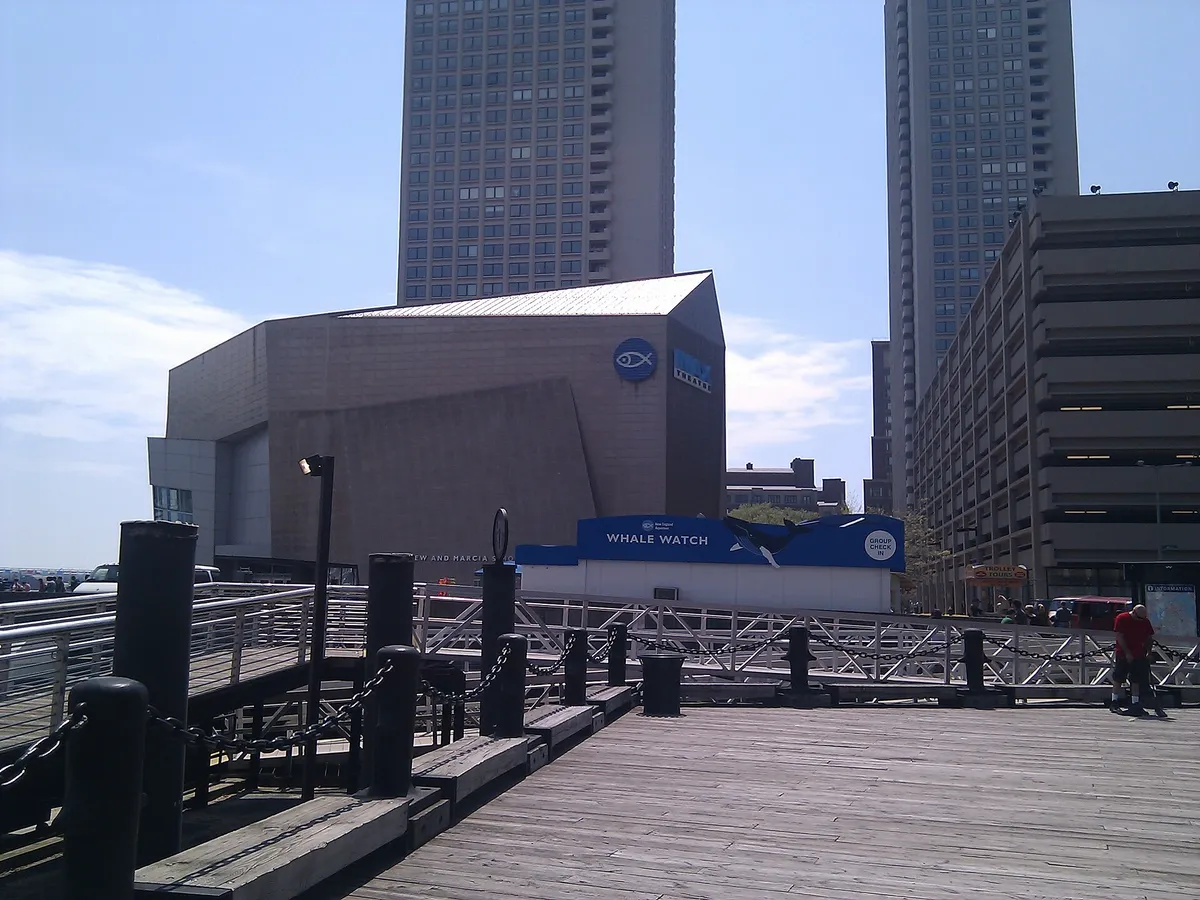 New England Aquarium🇺🇸 Boston, United States
Community notes
Share your observations about the Green Sea Turtle.
No community notes yet. Be the first!
Discover more wildlife
More fascinating animals from the encyclopedia.