
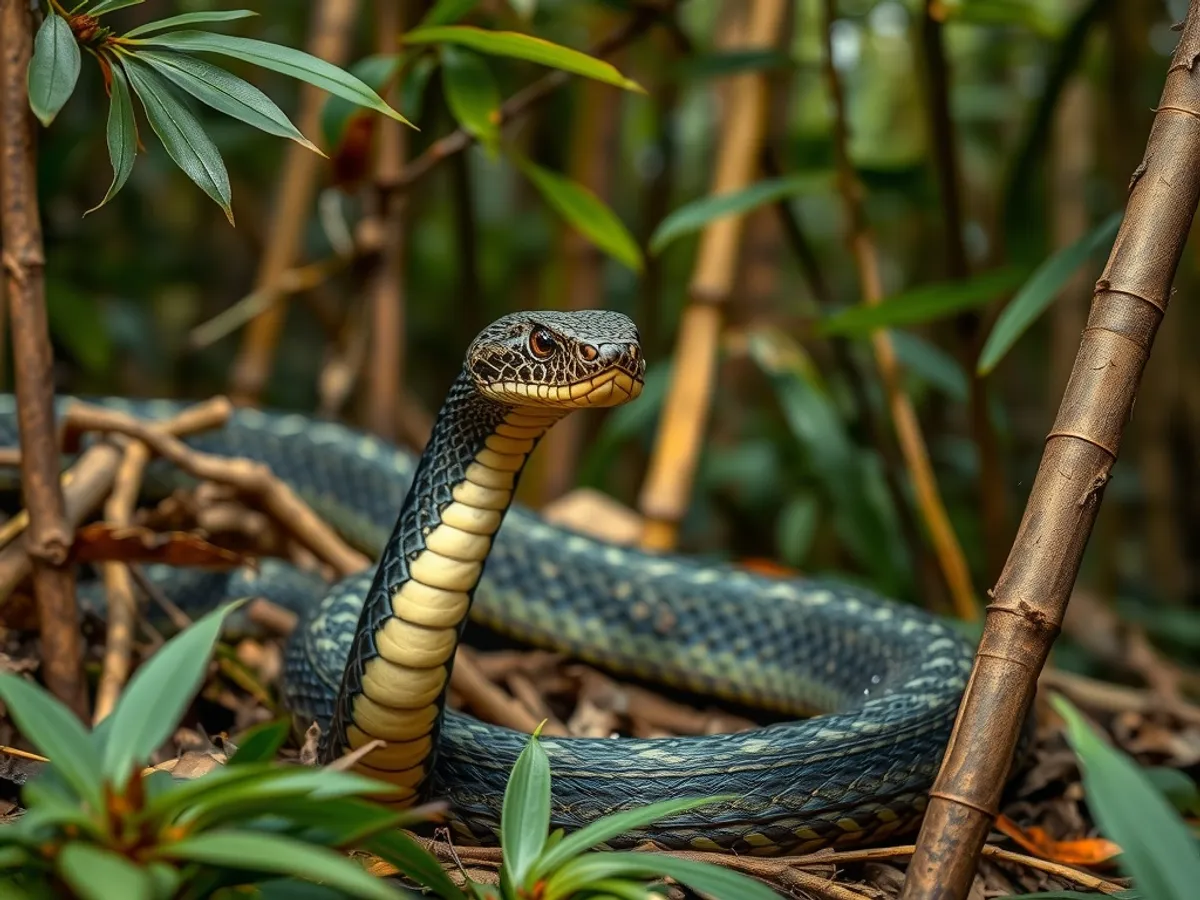
About the King Cobra
The King Cobra (Ophiophagus hannah) is the world's longest venomous snake, reaching lengths of up to 5.5 meters (18 feet). Native to the forests of Southeast Asia, this apex predator is predominantly found in countries such as India, Indonesia, and the Philippines. Unlike many other snakes, the King Cobra preys almost exclusively on other snakes, including its own species, which is reflected in its genus name 'Ophiophagus,' meaning 'snake-eater.' Its neurotoxic venom is potent enough to kill an elephant, yet the King Cobra is shy and avoids confrontation with humans when possible. The species is distinguished by its hood, which it flares when threatened, and its ability to 'stand up' by lifting a third of its body off the ground. King Cobras are also known for their complex social behaviors during mating, which is unusual among snakes. They are the only snake species known to build nests for their eggs, which they fiercely guard until hatching.
Fascinating facts
Longest Venomous Snake
King Cobras can grow up to 5.5 meters (18 feet) long, making them the longest venomous snakes on Earth.
Nesting Behavior
Female King Cobras are unique among snakes in that they build nests and fiercely guard their eggs until hatching.
Specialized Diet
Their diet consists almost entirely of other snakes, including rat snakes and even other venomous species.
Detailed description
The King Cobra (Ophiophagus hannah) is the largest venomous snake in the world, with adults commonly reaching lengths of 3.18 to 4 meters (10.4–13.1 ft), and exceptional individuals exceeding 5.5 meters (18 ft). Its body is slender yet powerfully muscled, with smooth, glossy scales that range in color from olive-green to tan or black, often marked by pale yellow or cream crossbands. The head is broad and distinct from the neck, with large, expressive eyes and round pupils. Unlike true cobras (genus Naja), the King Cobra's hood is narrower and longer, and it is the sole member of its genus, Ophiophagus, meaning 'snake-eater.' This species is highly intelligent, capable of complex behaviors such as threat assessment and memory of territory. King Cobras are primarily diurnal, actively hunting during the day. They possess a highly developed Jacobson’s organ for chemoreception, aiding in tracking prey. Socially, they are largely solitary except during the breeding season. Remarkably, the female King Cobra is the only snake known to construct a nest, using her coils and body to pile up leaves and debris, which she then guards aggressively until the eggs hatch. Their venom is a potent neurotoxin, but they typically avoid confrontation with humans, preferring escape or warning displays.
Did you know?
The King Cobra is the only snake species in the world known to build and guard a nest for its eggs.
Research & sources
Wikipedia summary
The king cobra is a species complex of snakes endemic to Asia. With an average of 3.18 to 4 m and a record length of 5.85 m (19.2 ft), it is the world's longest venomous snake and among the heaviest. Under the genus Ophiophagus, it is not phylogenetically a true cobra despite its common name and some resemblance. Spanning from the Indian Subcontinent through Southeastern Asia to Southern China, the king cobra is widely distributed albeit not commonly seen.
Behaviour & social structure
King Cobras exhibit complex behavioral patterns, including advanced threat displays such as raising up to one-third of their body off the ground, expanding their hood, and emitting a deep, resonant hiss. When hunting, they rely on acute vision and chemosensory cues to locate prey, primarily other snakes, including both non-venomous and venomous species such as kraits and rat snakes. Occasionally, they also consume lizards and small mammals. They are active hunters, often pursuing prey over considerable distances. King Cobras are territorial, especially males during the breeding season, and may engage in ritualized combat for access to females. They are generally solitary, with well-defined home ranges, and tend to avoid human settlements. Their daily routine involves basking in the morning to regulate body temperature, followed by hunting and patrolling their territory.
Reproduction & life cycle
The breeding season for King Cobras typically occurs from January to April. Courtship involves males competing for females through wrestling matches, where they attempt to pin each other to the ground. After mating, the female constructs a nest from leaf litter and debris, often up to 1 meter in diameter and 30–50 cm high. She lays 20–40 eggs, which are incubated for 60–90 days depending on ambient temperature. During this period, the female remains near or on the nest, aggressively defending it from potential predators. Upon hatching, the neonates are about 45–55 cm long, brightly marked, and highly venomous from birth. Parental care is limited to nest guarding; after the eggs hatch, the female departs and the young are independent.
Adaptations & survival
King Cobras possess several unique adaptations for survival. Their venom contains potent neurotoxins and cytotoxins, capable of subduing large prey and deterring predators. The elongated, flexible body allows them to climb trees and swim efficiently, aiding in both hunting and escape. Their large size provides a deterrent to most predators, while their hood and hissing serve as effective warning signals. The highly developed Jacobson’s organ enhances their ability to detect chemical cues, crucial for tracking prey. Their intelligence and memory aid in territory navigation and avoidance of danger. The construction and guarding of nests by females is an evolutionary specialization not seen in other snakes, increasing offspring survival.
Cultural significance
The King Cobra holds significant cultural and religious importance across its range. In Hindu mythology, it is associated with the god Shiva and revered as a symbol of power and protection. In Southeast Asia, it features in folklore and traditional medicine, sometimes believed to possess mystical properties. The species is also a subject of fascination and fear, often depicted in art, literature, and local rituals. Despite this, it is sometimes hunted for its skin, meat, and use in snake shows, contributing to its conservation challenges.
Recent research
Recent research has focused on the King Cobra’s complex venom composition, which varies geographically and may have potential biomedical applications. Genetic studies have revealed significant population structure and suggested the existence of a species complex, indicating possible cryptic diversity within Ophiophagus hannah. Ongoing radio-telemetry studies are shedding light on their spatial ecology, movement patterns, and habitat requirements, informing conservation strategies. Behavioral research has documented their advanced cognitive abilities, including problem-solving and learning. Conservationists are also investigating the impact of habitat corridors and protected areas on population viability.
Videos
Habitat
Dense forests, bamboo thickets, mangrove swamps
 Various Continental Regions
Grassland
Open areas dominated by grasses rather than trees, supporting numerous herbivores and their predators.
 Elevated Terrain
Mountain
High-altitude environments with varying climates and specialized wildlife adapted to rugged terrain and thin air.
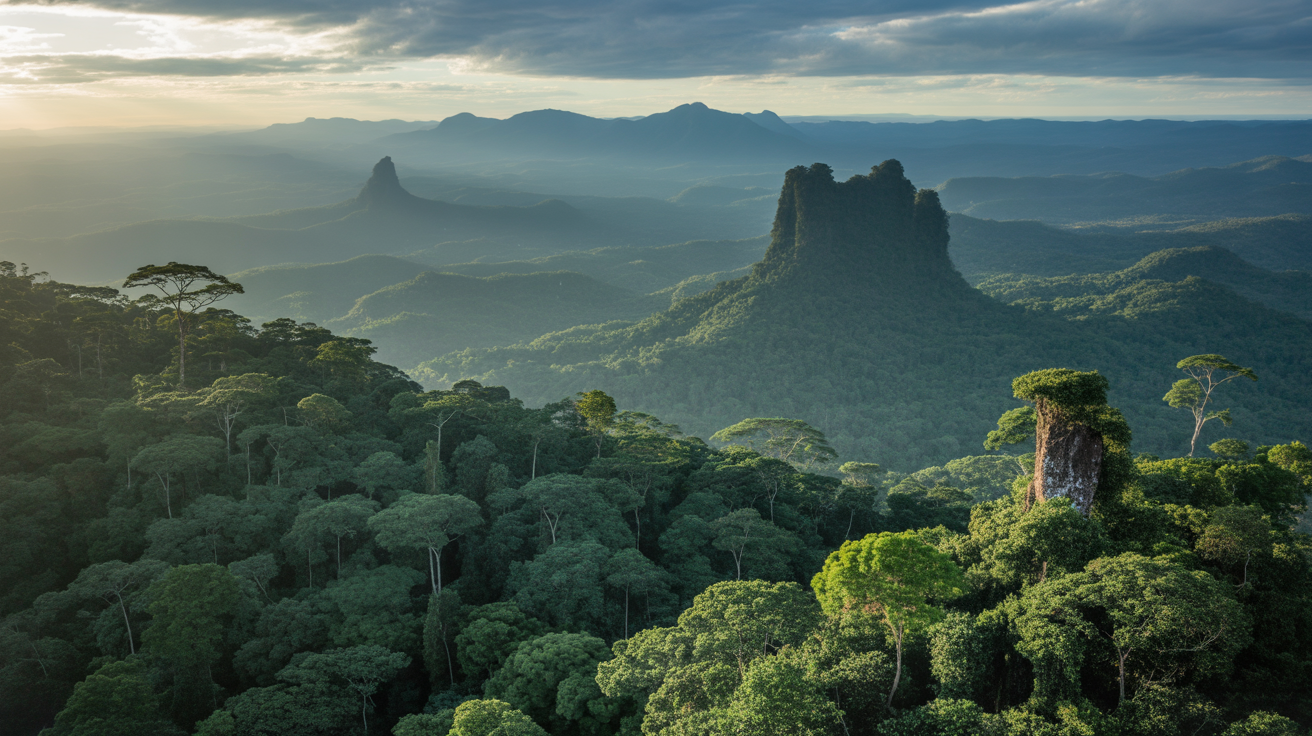 Tropical Regions
Rainforest
Dense, wet forests with the highest biodiversity on Earth, containing more than half of the world's plant and animal species.
 Global
Forest
Wooded areas with significant tree cover and diverse plant and animal communities.
Conservation
The King Cobra is currently classified as Vulnerable on the IUCN Red List.
Threats & challenges
Major threats to King Cobras include habitat loss due to deforestation, agricultural expansion, and urbanization, particularly in Southeast Asia. They are also at risk from direct persecution by humans, who often kill them out of fear, and from collection for the illegal wildlife trade. Road mortality and depletion of prey species further impact populations. Despite their wide distribution, King Cobras are considered Vulnerable by the IUCN, with declining population trends in many regions. Conservation challenges include habitat fragmentation, lack of public awareness, and insufficient legal protection in some areas.
Taxonomy
Scientific name
Ophiophagus hannah
- Kingdom
- Animalia
- Phylum
- Chordata
- Class
- Reptilia
- Order
- Squamata
- Family
- Elapidae
- Genus
- Ophiophagus
- Species
- hannah
Where to see a king cobra
4 zoos and aquariums in 2 countries are recorded as keeping this species.
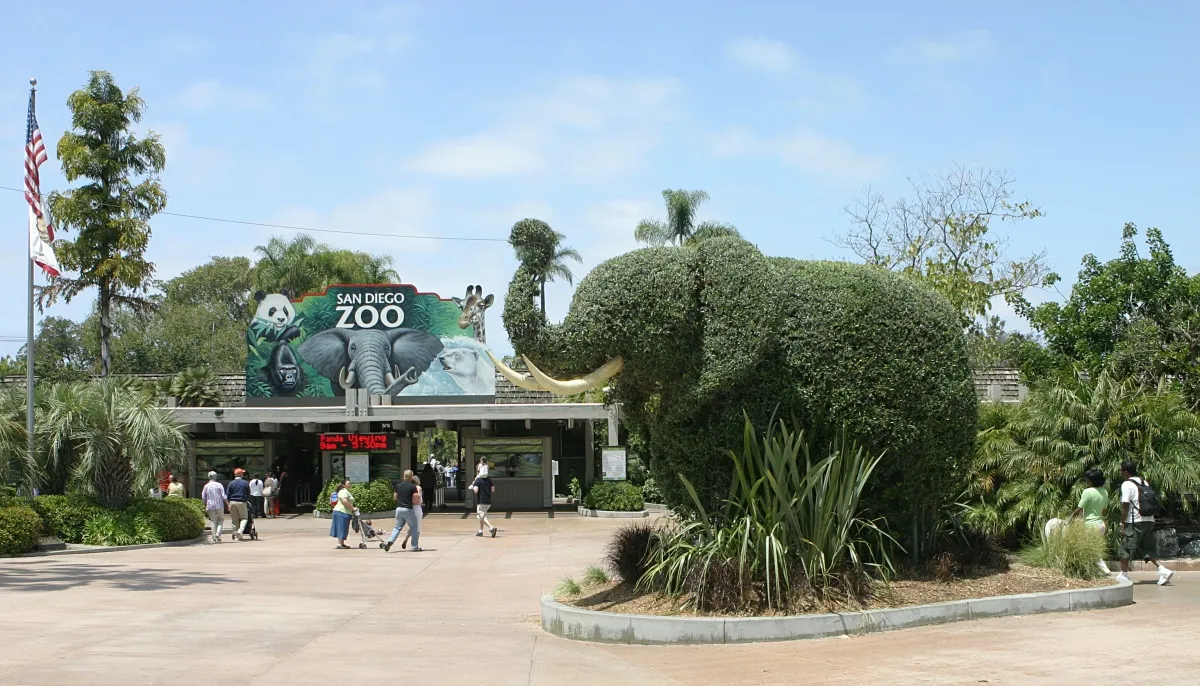 San Diego Zoo🇺🇸 San Diego, United States
 Fresno Chaffee Zoo🇺🇸 Fresno, United States
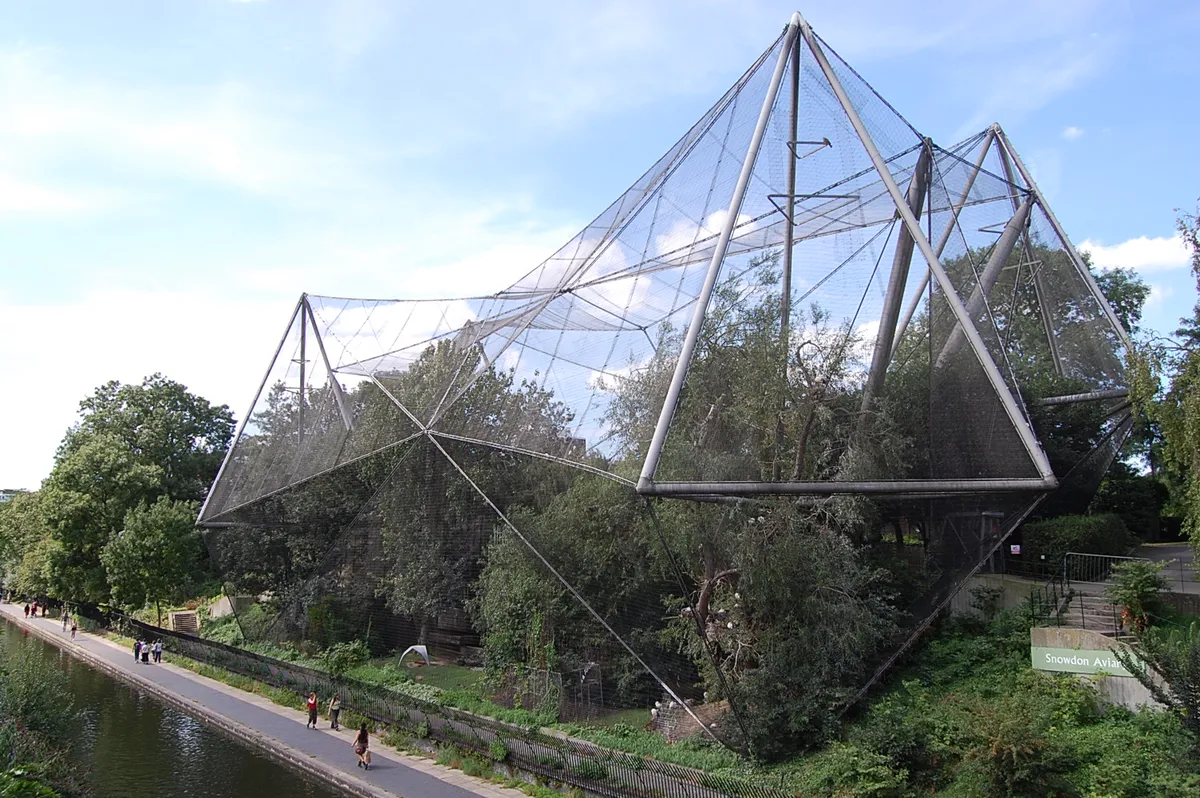 London Zoo🇬🇧 London, United Kingdom
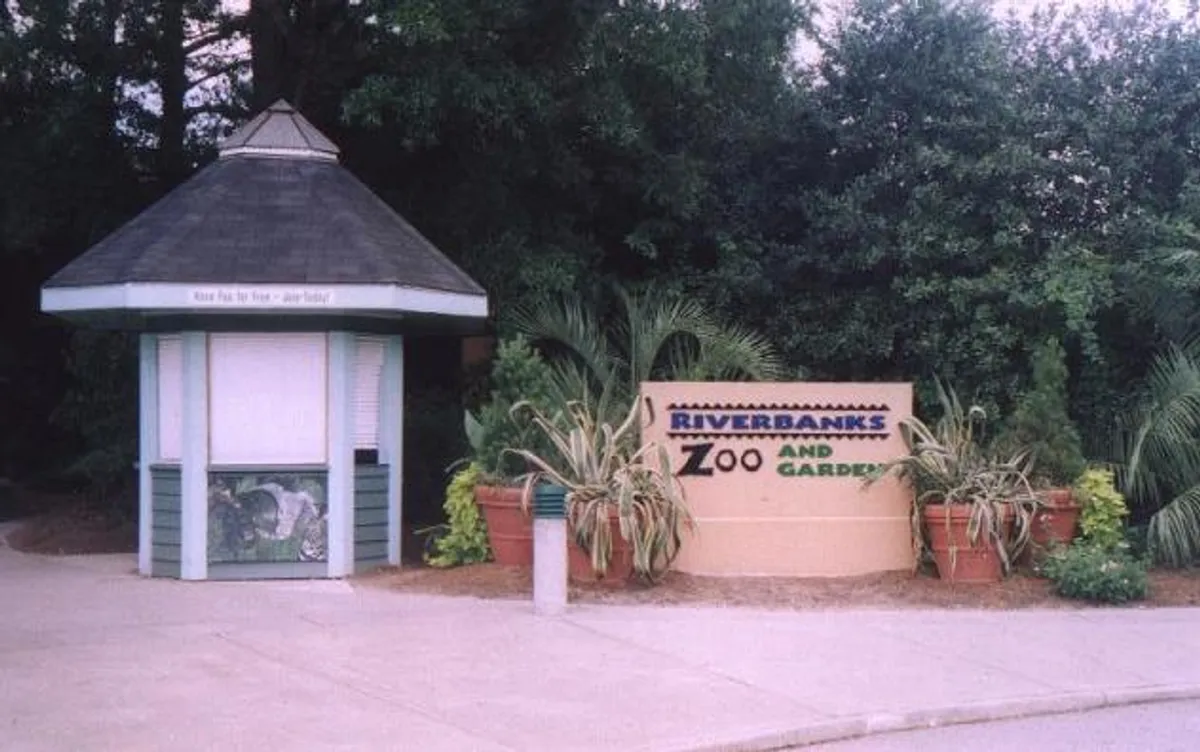 Riverbanks Zoo🇺🇸 Columbia, United States
Community notes
Share your observations about the King Cobra.
No community notes yet. Be the first!
Discover more wildlife
More fascinating animals from the encyclopedia.