
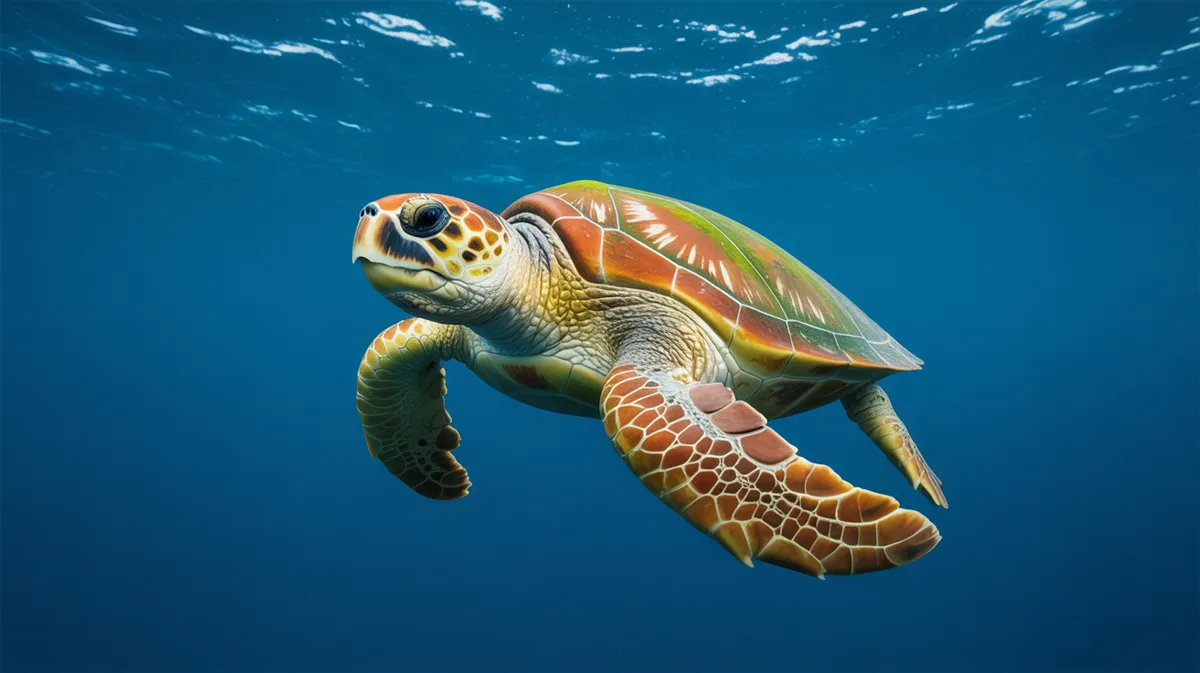
About the Loggerhead Sea Turtle
Caretta caretta has the most powerful bite of any sea turtle, driven by huge jaw adductor muscles that give the head its blunt, oversized look, and it uses it to crush conchs, whelks, horseshoe crabs and hard-shelled bivalves that other turtles cannot open. Its greater claim, though, is navigational. Loggerhead hatchlings from Florida enter the Atlantic and ride the North Atlantic Gyre for years - a loop of thousands of kilometres past the Azores and back - and then return, as adults, to nest on the beach where they hatched. Kenneth Lohmann's experiments showed they do this using a magnetic map: hatchlings placed in magnetic coils and exposed to the field signature of a specific location on the gyre swim in the direction that would keep them in the current at that location, without ever having been there. They read both magnetic inclination and intensity, giving them a two-coordinate positional sense, and they appear to imprint on the magnetic signature of their natal beach as hatchlings and use it to find it again decades later. Pacific loggerheads hatched in Japan cross the entire Pacific to feed off Baja California and cross back to breed, one of the longest migrations of any marine vertebrate.
Fascinating facts
Powerful Jaws
Loggerhead Sea Turtles have exceptionally strong jaws that allow them to crush hard-shelled prey like crabs, conchs, and whelks.
Remarkable Migration
Female loggerheads often migrate thousands of kilometers from feeding grounds to the beaches where they were born to lay eggs.
Nesting Behavior
A single female may lay up to 500 eggs in a season, divided among several nests dug in the sand.
Detailed description
The Loggerhead Sea Turtle (Caretta caretta) is a robust marine reptile distinguished by its large head and powerful jaws, adaptations for a durophagous (hard-shelled prey) diet. Adults typically reach a carapace length of 85–110 cm (33–43 in) and weigh between 80–200 kg (176–441 lb), with exceptional individuals exceeding 450 kg (1,000 lb). The carapace is heart-shaped, moderately domed, and colored reddish-brown, while the plastron is pale yellow. Loggerheads possess five pairs of costal scutes on the carapace and a relatively short tail in females, with males developing longer, thicker tails at maturity. Their limbs are modified into strong, paddle-like flippers, enabling efficient long-distance oceanic travel. Loggerheads are primarily solitary, except during breeding aggregations, and are highly migratory, traversing entire ocean basins between foraging grounds and nesting beaches. They exhibit strong natal homing, with females returning to their birth beaches to lay eggs. Loggerheads are primarily nocturnal nesters, and their life span in the wild can exceed 50 years. Their sensory systems, especially vision and magnetoreception, are highly developed, aiding in navigation and foraging.
Did you know?
Loggerhead Sea Turtles are the most widespread of all marine turtles, yet their populations are declining globally due to human activities.
Research & sources
Wikipedia summary
The loggerhead sea turtle is a species of oceanic turtle distributed throughout the world. It is a marine reptile, belonging to the family Cheloniidae. The average loggerhead measures around 90 cm (35 in) in carapace length when fully grown. The adult loggerhead sea turtle weighs approximately 135 kg (298 lb), with the largest specimens weighing in at more than 450 kg (1,000 lb). The skin ranges from yellow to brown in color, and the shell is typically reddish brown. No external differences in sex are seen until the turtle becomes an adult, the most obvious difference being the adult males have thicker tails and shorter plastrons than the females.
Behaviour & social structure
Loggerhead sea turtles are generally solitary outside of the breeding season, spending most of their lives in the open ocean or coastal areas. They are primarily crepuscular or nocturnal feeders, foraging at dusk and night. Their diet consists mainly of benthic invertebrates such as crabs, mollusks, sea urchins, and occasionally jellyfish and fish, which they crush using their massive jaws. Juveniles are more pelagic, feeding on floating prey like Sargassum-associated invertebrates. Loggerheads exhibit site fidelity to foraging areas and nesting beaches. During migration, they can travel thousands of kilometers, guided by geomagnetic cues. Social interactions are limited, mostly occurring during courtship and mating. Loggerheads are known to bask at the ocean surface and occasionally in shallow coastal waters. They are generally slow-moving but capable of rapid bursts of speed when threatened.
Reproduction & life cycle
Loggerhead reproduction is characterized by seasonal migrations to nesting beaches, with mating occurring in shallow coastal waters near nesting sites. The breeding season varies globally, but in the Northern Hemisphere, it typically spans from late spring to early summer. Females may mate with multiple males, resulting in clutches with mixed paternity. After mating, females come ashore at night to lay eggs, often returning to the same beach where they hatched (natal homing). Each female lays 2–6 clutches per season, with each clutch containing 80–120 eggs. The eggs incubate for 45–70 days, with temperature-dependent sex determination: warmer sand produces more females, cooler sand more males. There is no parental care after egg-laying. Hatchlings emerge at night and orient toward the brightest horizon, usually the ocean, but are vulnerable to predation and disorientation from artificial lights. Sexual maturity is reached at 17–33 years, depending on population and environmental conditions.
Adaptations & survival
Loggerheads possess several key adaptations for marine life. Their large, muscular jaws are specialized for crushing hard-shelled prey, a dietary niche that reduces competition with other sea turtles. The streamlined, hydrodynamic carapace and powerful forelimb flippers facilitate efficient long-distance swimming. Loggerheads have salt glands near their eyes to excrete excess salt from seawater ingestion, allowing them to maintain osmotic balance. Their magnetic sense enables precise long-distance navigation across ocean basins, a critical adaptation for migratory and natal homing behaviors. Hatchlings exhibit rapid, instinctive movement toward the ocean upon emergence, reducing predation risk. The species' temperature-dependent sex determination allows for flexible sex ratios in response to environmental conditions, though this also makes them vulnerable to climate change.
Cultural significance
Loggerhead sea turtles hold cultural and symbolic significance in many coastal societies. In ancient Greek and Roman mythology, sea turtles were associated with longevity and wisdom. In Japan, loggerheads are revered as symbols of good fortune and longevity, often depicted in art and folklore. In some indigenous cultures, loggerheads are featured in creation stories or as totems. Historically, loggerhead shells and eggs were exploited for food and ornamentation, though such practices are now largely prohibited. Conservation efforts have elevated the loggerhead as a flagship species for marine conservation, fostering ecotourism and community-based protection initiatives.
Recent research
Recent research has focused on loggerhead navigation, revealing that hatchlings and adults use Earth's magnetic field for orientation and long-distance migration. Genetic studies have clarified population structure and connectivity, emphasizing the importance of protecting distinct nesting populations. Satellite telemetry has provided detailed insights into migratory routes, foraging grounds, and habitat use, informing conservation strategies. Ongoing studies are assessing the impacts of climate change on sex ratios and nesting success. Innovative bycatch reduction technologies, such as turtle excluder devices (TEDs), have been developed and implemented in fisheries to mitigate accidental capture. Emerging research is also examining the effects of microplastic ingestion and environmental contaminants on loggerhead health and reproduction.
Videos
Habitat
Ocean
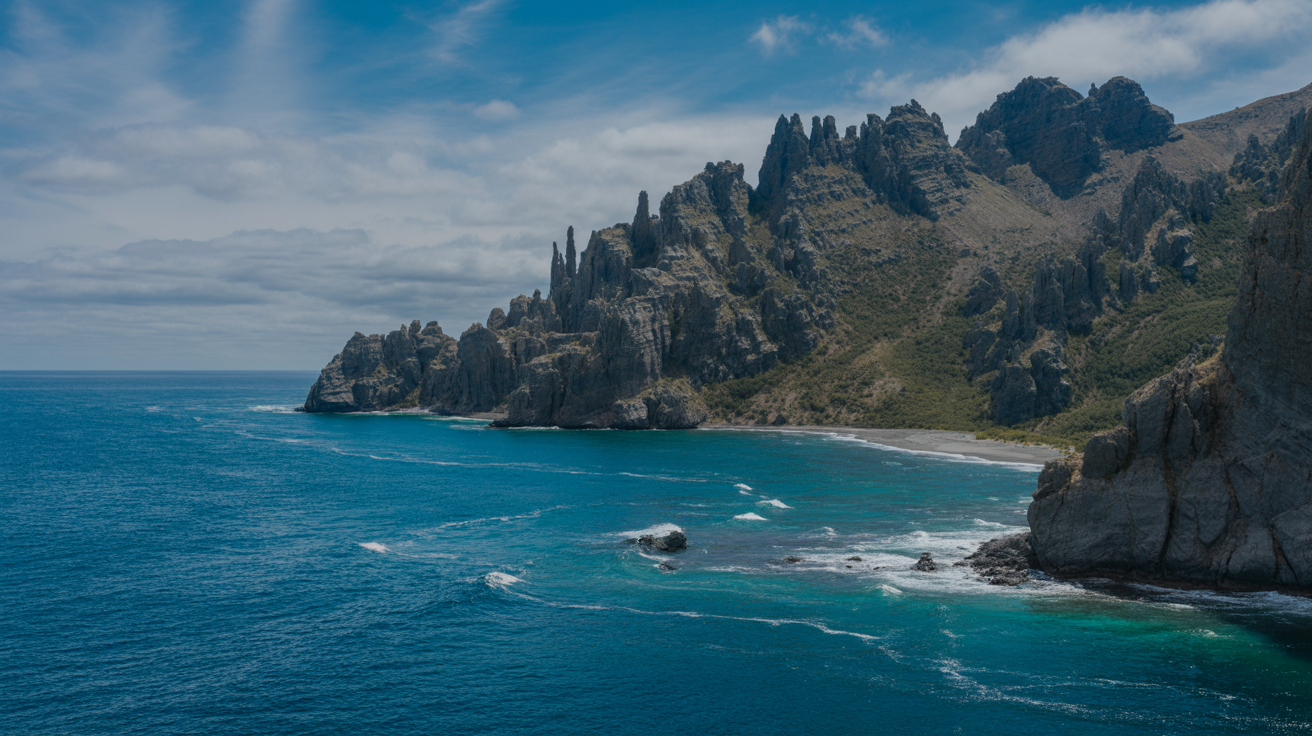
Conservation
The Loggerhead Sea Turtle is currently classified as Vulnerable on the IUCN Red List.
Threats & challenges
Loggerhead populations face numerous anthropogenic threats. Bycatch in commercial fisheries (especially trawling, longlining, and gillnets) is a leading cause of mortality, often resulting in drowning. Coastal development and beachfront lighting disrupt nesting and hatchling orientation, while habitat loss from erosion and rising sea levels reduces available nesting sites. Marine pollution, including plastic debris and oil spills, poses ingestion and entanglement risks. Climate change threatens to skew sex ratios due to warmer sand temperatures and may alter nesting phenology and habitat availability. Predation by invasive species (e.g., raccoons, feral pigs) on eggs and hatchlings further reduces recruitment. Global population trends are declining, leading to the species' classification as Vulnerable by the IUCN, though some regional populations are more severely threatened.
Taxonomy
Scientific name
Caretta caretta
- Kingdom
- Animalia
- Phylum
- Chordata
- Class
- Reptilia
- Order
- Testudines
- Family
- Cheloniidae
- Genus
- Caretta
- Species
- caretta
Where to see a loggerhead sea turtle
5 zoos and aquariums in 2 countries are recorded as keeping this species.
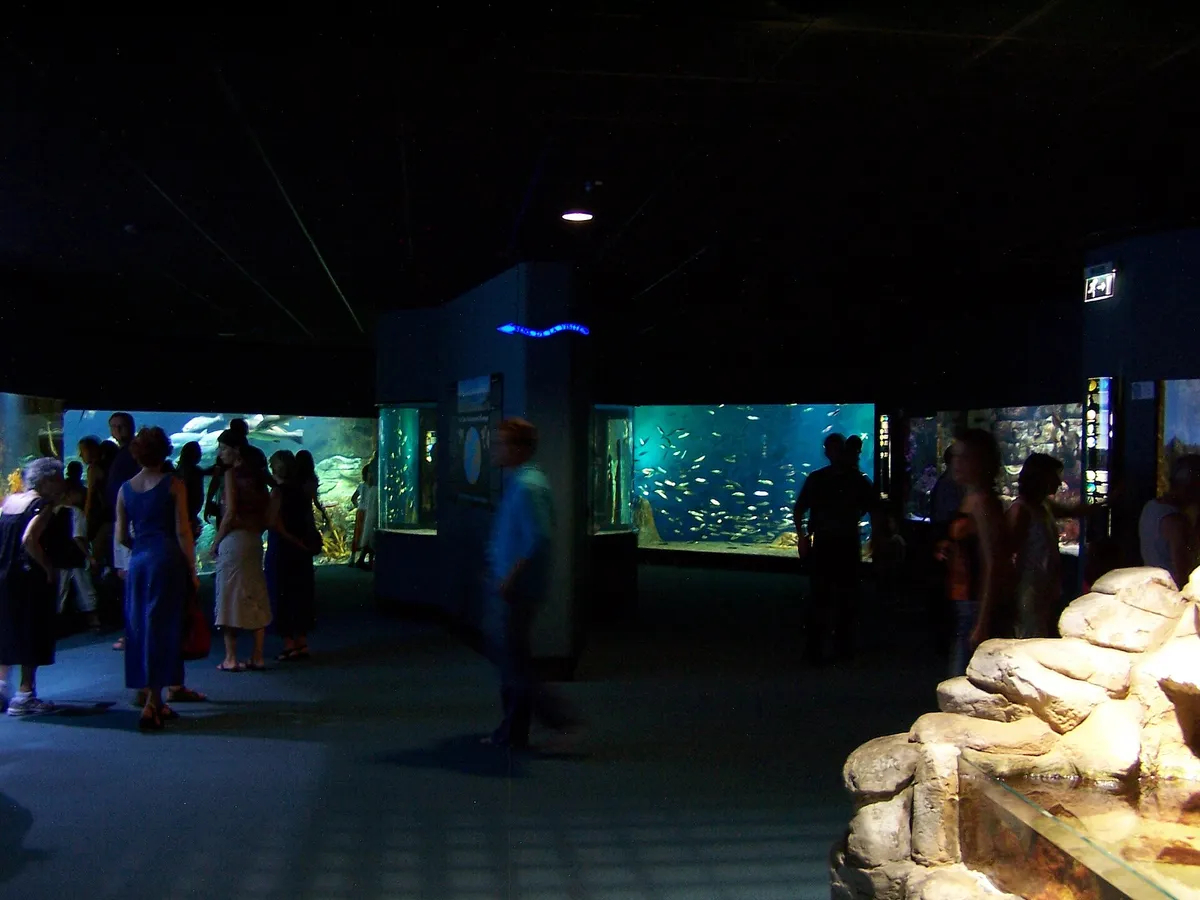 Aquarium de La Rochelle🇫🇷 La Rochelle, France
 Georgia Aquarium🇺🇸 Atlanta, United States
 Texas State Aquarium🇺🇸 Corpus Christi, United States
 New England Aquarium🇺🇸 Boston, United States
 Marineland (closed)🇫🇷 France
Community notes
Share your observations about the Loggerhead Sea Turtle.
No community notes yet. Be the first!
Discover more wildlife
More fascinating animals from the encyclopedia.