
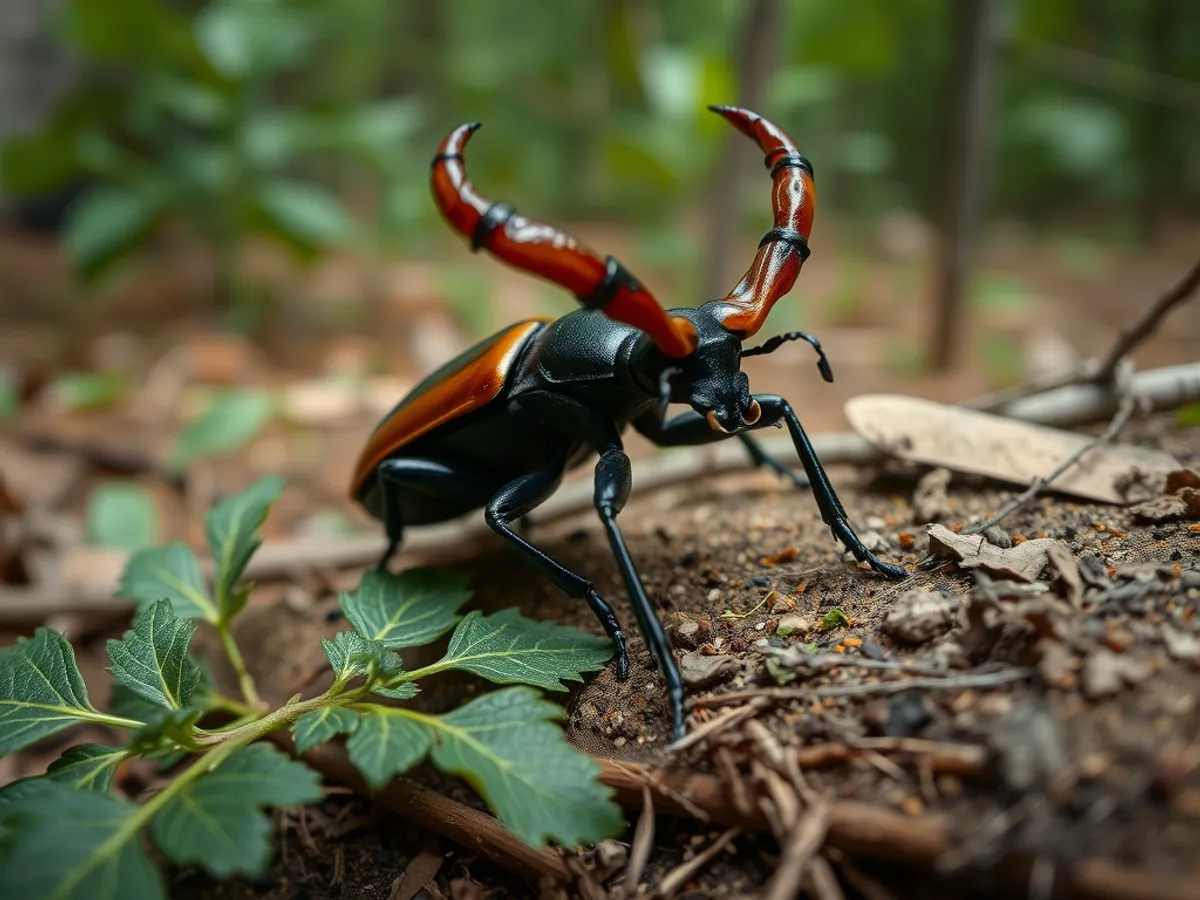
About the Longhorn Beetle
The Longhorn Beetle is a diverse family of beetles known for their extremely long antennae, often longer than their bodies. These beetles are found worldwide with over 35,000 species, and they vary greatly in size, color, and pattern. Adults are typically wood-boring and play a vital ecological role in breaking down dead and decaying trees. Some species are beautifully colored or mimic other insects to evade predators.
Fascinating facts
Antenna Length
The Longhorn Beetle's antennae can be up to three times the length of its body, helping them detect mates and navigate their environment.
Wood-Boring Larvae
Longhorn Beetle larvae bore into wood, where they feed and develop for months or even years, contributing to forest nutrient cycling.
Global Distribution
Longhorn Beetles are found on every continent except Antarctica and are especially diverse in tropical forests.
Detailed description
Longhorn beetles (family Cerambycidae) are a cosmopolitan group of beetles distinguished by their remarkably elongated antennae, which in many species can be two to three times the length of their bodies. Adult body sizes range from a few millimeters to over 17 centimeters in the largest tropical species, such as Titanus giganteus. Their exoskeletons exhibit a vast palette of colors and patterns, including cryptic browns and grays for camouflage, as well as vivid warning coloration and intricate mimicry of wasps or ants. The adult beetles are typically robust and cylindrical, with strong mandibles adapted for feeding on plant material, nectar, or pollen. Larvae, known as roundheaded borers, are soft-bodied, legless, and specialized for boring into wood, where they play a crucial role in nutrient cycling and forest decomposition. Most species are nocturnal, with adults being attracted to lights at night, while some diurnal species are active on flowers or tree trunks during the day. The life cycle can be prolonged, with larval development lasting from several months to over a decade, depending on species and environmental conditions. Longhorn beetles occupy a wide range of habitats, from temperate and tropical forests to grasslands and even arid environments, with some species adapted to highly specialized ecological niches. Their ecological roles extend beyond decomposition; some act as pollinators, while others are important prey for birds, mammals, and parasitic wasps.
Did you know?
The titan beetle (Titanus giganteus) of the Amazon, a member of this family, can grow up to 17 centimeters (almost 7 inches) long, making it one of the largest beetles on Earth.
Research & sources
Wikipedia summary
The longhorn beetles (Cerambycidae), also known as long-horned or longicorns, are a large family of beetles, with over 35,000 species described.
Behaviour & social structure
Longhorn beetles exhibit a variety of behavioral patterns depending on their subfamily and ecological context. Adults are generally solitary and spend much of their time searching for mates or suitable oviposition sites. Many species are crepuscular or nocturnal, using their well-developed olfactory senses to locate host plants or pheromones released by potential mates. Feeding behavior varies: while some adults feed on leaves, bark, or wood, others are florivorous, visiting flowers for nectar and pollen. Larvae are xylophagous, tunneling through wood and feeding on cellulose, lignin, and associated microorganisms. Some species exhibit thanatosis (death-feigning) as a defense mechanism, while others rely on aposematic coloration or mimicry to deter predators. Communication is primarily chemical, with pheromones playing a key role in mate attraction and species recognition. Adults are generally poor fliers, but some species are capable of strong, sustained flight, aiding in dispersal and colonization of new habitats.
Reproduction & life cycle
Reproductive strategies in Cerambycidae are diverse but generally involve elaborate courtship behaviors, often mediated by sex pheromones produced by females or males. Mating typically occurs on or near host plants, with males using their antennae to locate receptive females. After copulation, females lay eggs singly or in small clusters, often inserting them into crevices or under bark of dead or dying wood. The number of eggs laid can range from a few dozen to several hundred, depending on the species. Incubation periods are variable but generally last from several days to a few weeks. Larval development is the longest life stage, lasting from several months to over ten years in some large species. Pupation occurs within the wood, and adults emerge by chewing exit holes. Parental care is absent; larvae are independent from hatching. Breeding seasons are often synchronized with host plant phenology, peaking in spring or early summer in temperate regions, and may be continuous in tropical environments.
Adaptations & survival
Longhorn beetles have evolved a suite of adaptations for survival in woody environments. Their elongated antennae, packed with sensory receptors, enhance their ability to detect pheromones, host plant volatiles, and environmental cues. Larvae possess powerful mandibles and specialized gut enzymes, often aided by symbiotic microorganisms, to digest tough plant fibers and lignin. Many species exhibit cryptic coloration or mimicry, resembling twigs, bark, or stinging insects to avoid predation. Some produce chemical defenses, such as quinones or alkaloids, which deter predators and parasitoids. The ability to exploit a wide range of host plants, including living, dead, or decaying wood, has facilitated their diversification. Certain species are adapted to extreme environments, such as arid regions or high altitudes, by reducing water loss and synchronizing life cycles with seasonal resource availability.
Cultural significance
Longhorn beetles have featured in various cultures as symbols of strength, longevity, and transformation, likely due to their impressive size and metamorphic life cycle. In some Asian cultures, large species are collected and displayed as curiosities or used in traditional medicine. Their striking appearance has inspired art, jewelry, and even motifs in textiles. In scientific research, longhorn beetles are model organisms for studies of mimicry, chemical ecology, and wood decomposition. Conversely, their status as pests has made them subjects of regulatory and quarantine measures in forestry and agriculture.
Recent research
Recent research has focused on the chemical ecology of Cerambycidae, particularly the identification of pheromones and host plant volatiles for use in monitoring and controlling pest species. Genomic studies have revealed the evolutionary relationships within the family and the genetic basis of wood digestion. Ongoing work investigates the role of microbial symbionts in larval nutrition and the potential for biotechnological applications, such as lignocellulose degradation. Studies on invasive species continue to inform management strategies and biosecurity protocols. Additionally, longhorn beetles are increasingly used as bioindicators of forest health and biodiversity.
Videos
Habitat
Forests
 Various Continental Regions
Grassland
Open areas dominated by grasses rather than trees, supporting numerous herbivores and their predators.
 Elevated Terrain
Mountain
High-altitude environments with varying climates and specialized wildlife adapted to rugged terrain and thin air.
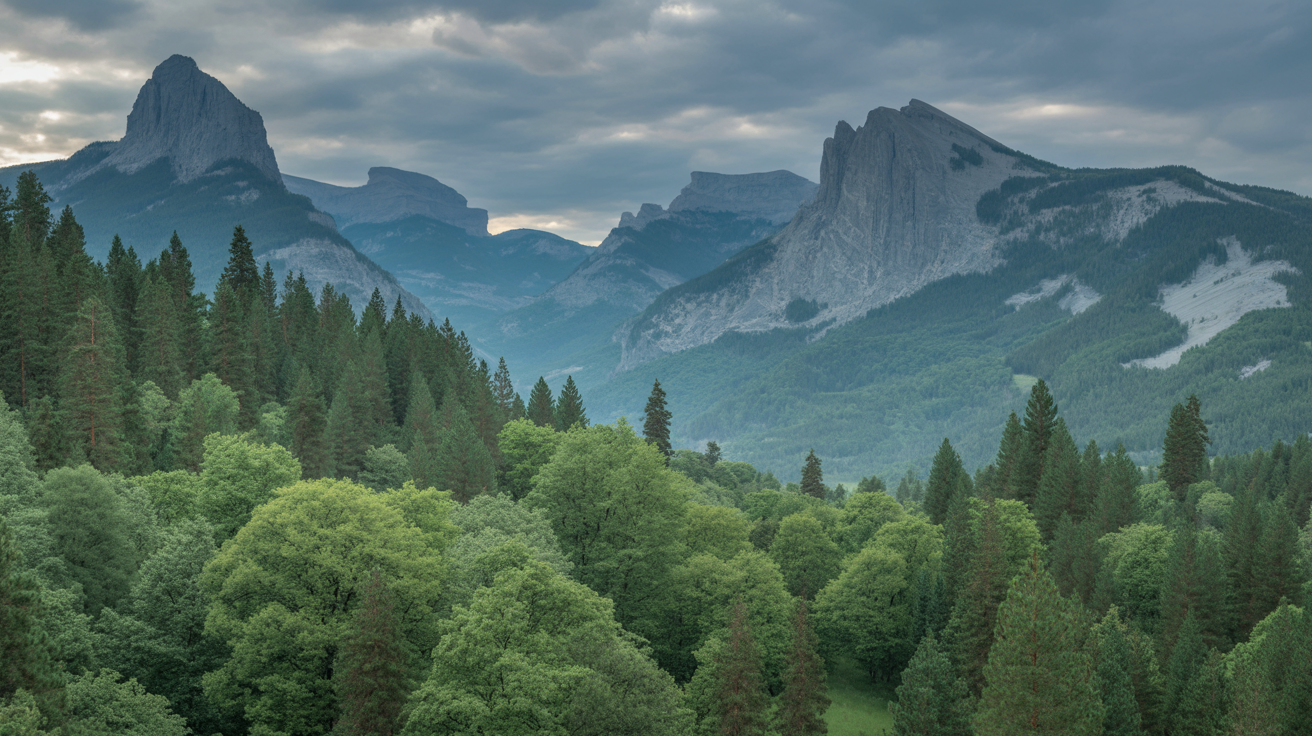 Global
Forest
Wooded areas with significant tree cover and diverse plant and animal communities.
Conservation
The Longhorn Beetle is currently classified as Least Concern on the IUCN Red List.
Threats & challenges
While most longhorn beetle species are not currently threatened and are classified as Least Concern, some face significant challenges due to habitat loss, deforestation, and fragmentation, particularly in tropical regions. Several species have become invasive pests outside their native ranges, such as the Asian longhorned beetle (Anoplophora glabripennis) and the citrus longhorned beetle (Anoplophora chinensis), causing extensive damage to forests and commercial timber. Climate change may alter the distribution and phenology of both native and invasive species, potentially increasing their impact on forest ecosystems. Pesticide use and removal of dead wood also reduce habitat availability for many saproxylic (wood-dependent) species. Conservation efforts focus on preserving old-growth forests, deadwood habitats, and monitoring invasive populations.
Taxonomy
Scientific name
Cerambycidae spp.
- Kingdom
- Animalia
- Phylum
- Arthropoda
- Class
- Insecta
- Order
- Coleoptera
- Family
- Cerambycidae
- Genus
- Varies (e.g., Anoplophora, Monochamus, Titanus)
- Species
- Varies
Community notes
Share your observations about the Longhorn Beetle.
No community notes yet. Be the first!
Discover more wildlife
More fascinating animals from the encyclopedia.