
About the Malachite Sunbird
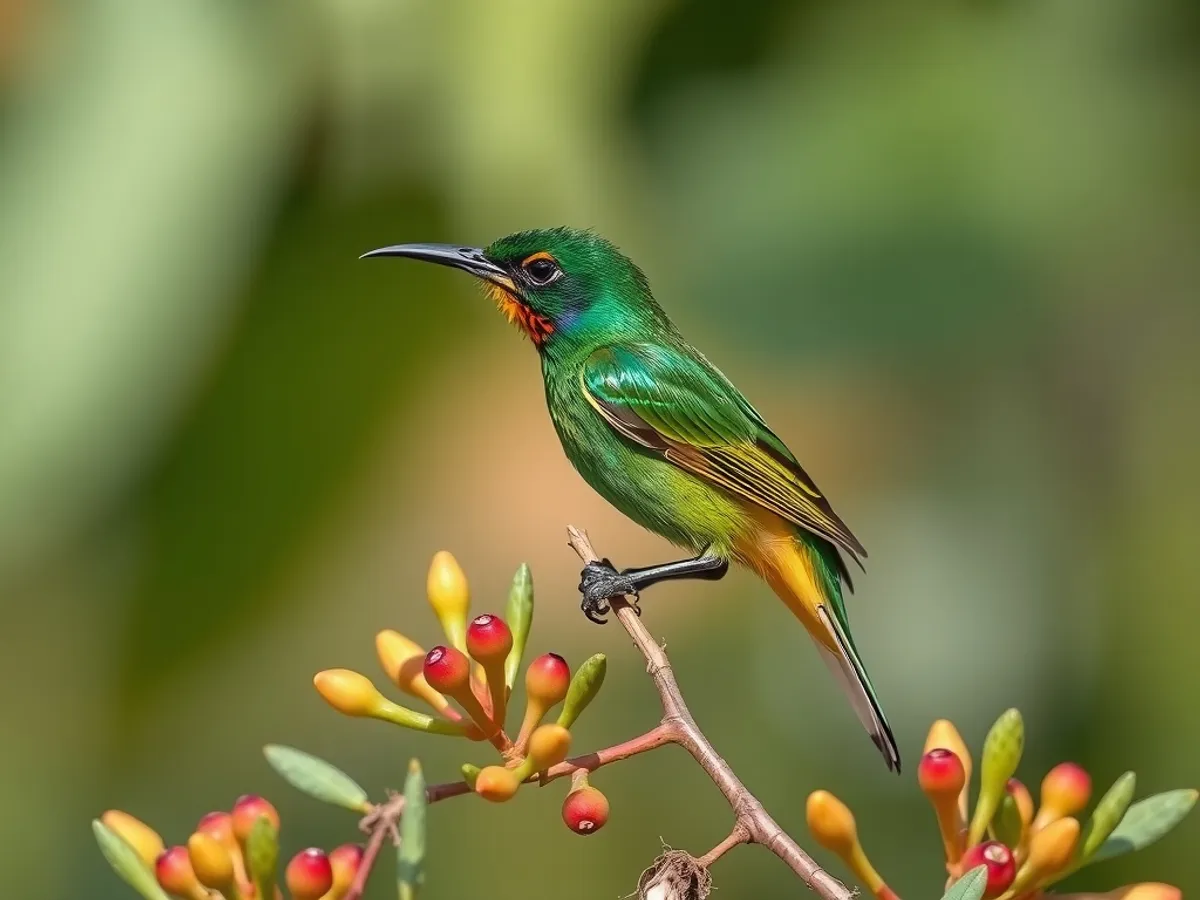
The Malachite Sunbird is a strikingly beautiful bird native to southern Africa, notable for the male's vibrant iridescent green plumage during the breeding season. This species exhibits pronounced sexual dimorphism, with females displaying more subdued olive coloration compared to the radiant males. Malachite Sunbirds are renowned for their long, decurved bills and elongated tail streamers, which are especially prominent in males. They are agile fliers and spend much of their time hovering around flowers to feed on nectar, playing a vital role in pollination. These sunbirds are commonly found in montane grasslands, fynbos, gardens, and heathlands.
Fascinating facts
Expert Pollinators
Malachite Sunbirds are key pollinators for many indigenous South African plant species, transferring pollen as they feed on nectar.
Dramatic Plumage Change
Males grow strikingly long tail feathers and develop a brilliant metallic green color during the breeding season to attract mates.
Diet Versatility
While their diet is mainly nectar, Malachite Sunbirds also consume insects and spiders, especially when feeding their young.
Detailed description
The Malachite Sunbird (Nectarinia famosa) is a medium-sized sunbird, measuring approximately 25–30 cm in length, with the male's elongated tail streamers contributing nearly half of this length. Males in breeding plumage display a brilliant metallic green coloration, while non-breeding males and females are mostly olive-brown with yellowish underparts and lack the long tail feathers. The species is characterized by a slender, decurved bill adapted for probing deep into tubular flowers, and a specialized brush-tipped tongue for efficient nectar extraction. Their wings are relatively short and rounded, facilitating agile hovering flight similar to that of hummingbirds, although they also frequently perch while feeding. The eyes are dark brown, and the legs and feet are black, adapted for gripping slender stems. Malachite Sunbirds are highly territorial, especially during the breeding season, with males aggressively defending flower-rich areas. They are vocal birds, producing a variety of high-pitched, tinkling calls and complex songs used in territory advertisement and courtship. Their diet, while primarily nectarivorous, includes insects and spiders, especially during the breeding season to provide protein for developing chicks. This species is an important pollinator for many indigenous plants, particularly those with long corolla tubes such as aloes, proteas, and ericas, and has co-evolved with several plant species in the Fynbos biome.
Did you know?
Outside of the breeding season, male Malachite Sunbirds molt into a much duller plumage that closely resembles the female's coloration.
Research & sources
Wikipedia summary
The malachite sunbird is a small nectarivorous bird found from the highlands of Ethiopia southwards to South Africa. They pollinate many flowering plants, particularly those with long corolla tubes, in the Fynbos.
Behaviour & social structure
Malachite Sunbirds are diurnal and exhibit a high degree of activity throughout the day, with peak foraging occurring in the early morning and late afternoon. They are adept at both hovering and perching while feeding, often moving rapidly between flower patches. Males are highly territorial, displaying aggressive behaviors such as chasing intruders and performing aerial displays to defend feeding and nesting sites. Outside the breeding season, they may form loose flocks, especially when food resources are abundant. Their feeding strategy involves probing flowers for nectar, but they also glean insects from foliage and catch flying insects mid-air (hawking), particularly during chick-rearing. Sunbathing and preening are common behaviors, and they frequently visit water sources to drink and bathe. Vocalizations include a sharp 'tsik-tsik' alarm call and a melodious, warbling song.
Reproduction & life cycle
Breeding occurs mainly from August to January in southern Africa, coinciding with the flowering season of many nectar plants. Malachite Sunbirds are monogamous within a breeding season, with pairs forming strong bonds. The female constructs a domed, oval nest from grass, plant fibers, and spider webs, typically suspended from a branch or among dense vegetation. Clutch size ranges from 1 to 3 eggs, which are pale greenish or bluish with brown speckling. The female alone incubates the eggs for about 13–15 days. After hatching, both parents participate in feeding the chicks, providing a diet rich in insects and spiders. Fledging occurs at around 15–21 days post-hatching, but juveniles may remain dependent on parental care for several weeks. Multiple broods may be raised in a single season if conditions are favorable.
Adaptations & survival
The Malachite Sunbird exhibits several adaptations for nectarivory, including a long, decurved bill and a tubular, brush-tipped tongue capable of rapid extension and retraction to extract nectar efficiently. Their iridescent plumage, especially in males, serves both as camouflage among foliage and as a signal in sexual selection. The elongated tail streamers of males are thought to play a role in mate attraction and may indicate individual fitness. Physiologically, they possess a high metabolic rate to support their energetically demanding lifestyle, and their kidneys are adapted to excrete excess water efficiently due to their liquid-rich diet. Behavioral adaptations include territoriality to secure food resources and the ability to switch to insectivory when nectar is scarce, particularly during chick-rearing.
Cultural significance
The Malachite Sunbird holds a prominent place in southern African natural heritage, often celebrated for its striking beauty and role as a pollinator. It is a favorite subject in birdwatching and eco-tourism, particularly in the Fynbos region. In some local cultures, sunbirds are associated with good fortune and the arrival of spring due to their appearance during the flowering season. The species is occasionally featured in local art and folklore, symbolizing vibrancy and renewal.
Recent research
Recent research has focused on the mutualistic relationship between Malachite Sunbirds and Fynbos flora, highlighting their role in the pollination of long-tubed flowers and the co-evolutionary dynamics involved. Studies using radio telemetry and stable isotope analysis have provided insights into their movement patterns, resource use, and seasonal shifts in diet. There is ongoing interest in the impact of urbanization on their breeding success and pollination services, as well as the potential effects of climate change on their phenology and range. Genetic studies are also underway to clarify the phylogenetic relationships within the Nectariniidae family.
Sources
Videos
Habitat
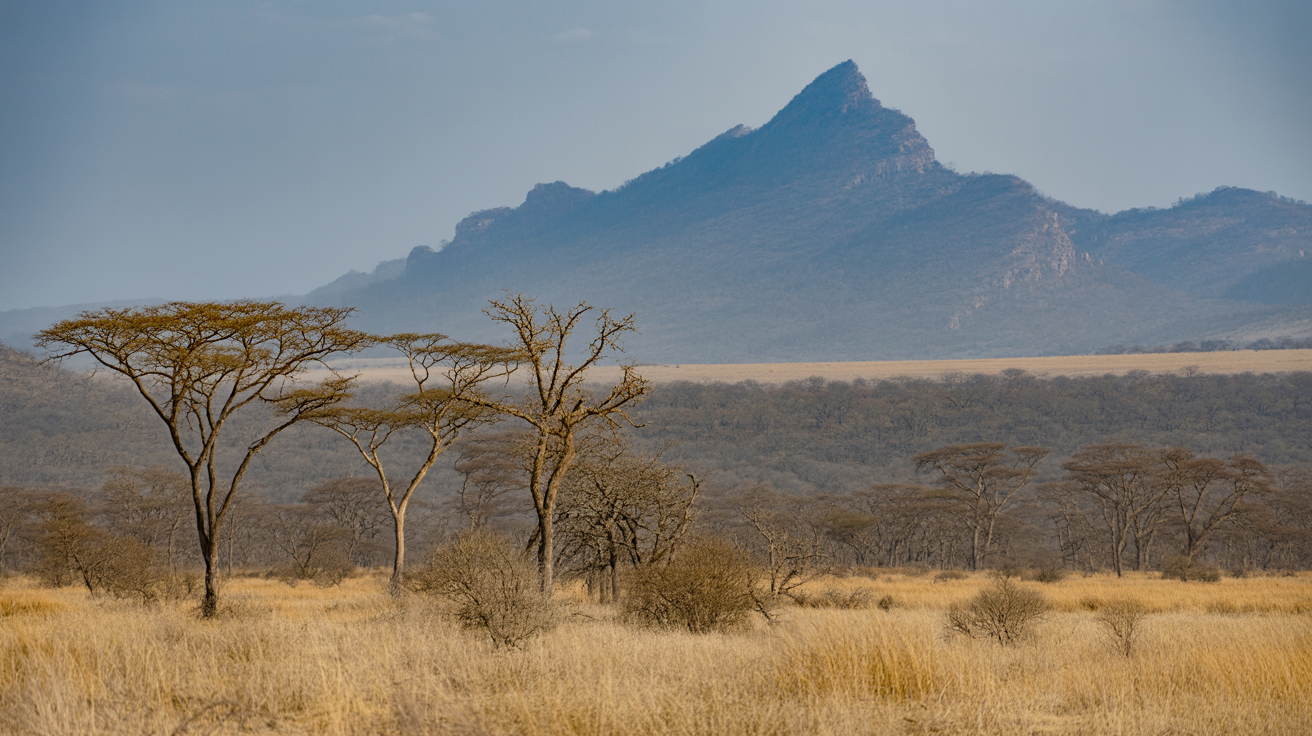
Montane grasslands, fynbos, heathlands, and gardens
 Africa
Savanna
Grasslands with scattered trees, characterized by seasonal rainfall and home to diverse grazing animals and predators.
 Various Continental Regions
Grassland
Open areas dominated by grasses rather than trees, supporting numerous herbivores and their predators.
 Elevated Terrain
Mountain
High-altitude environments with varying climates and specialized wildlife adapted to rugged terrain and thin air.
 Global
Forest
Wooded areas with significant tree cover and diverse plant and animal communities.
Conservation
The Malachite Sunbird is currently classified as Least Concern on the IUCN Red List.
Threats & challenges
Currently assessed as Least Concern by the IUCN, the Malachite Sunbird maintains stable populations across its range. However, localized threats include habitat loss due to agricultural expansion, urbanization, and the replacement of native flora with exotic plant species, which can reduce the availability of suitable nectar sources. Pesticide use poses an indirect threat by reducing insect prey. Climate change may also alter flowering times and the distribution of key plant species, potentially impacting food availability. Despite these challenges, the species shows resilience by adapting to gardens and urban green spaces, provided that suitable flowering plants are present.
Taxonomy
Scientific name
Nectarinia famosa
- Kingdom
- Animalia
- Phylum
- Chordata
- Class
- Aves
- Order
- Passeriformes
- Family
- Nectariniidae
- Genus
- Nectarinia
- Species
- famosa
Community notes
Share your observations about the Malachite Sunbird.
No community notes yet. Be the first!
Discover more wildlife
More fascinating animals from the encyclopedia.