
About the Marabou Stork
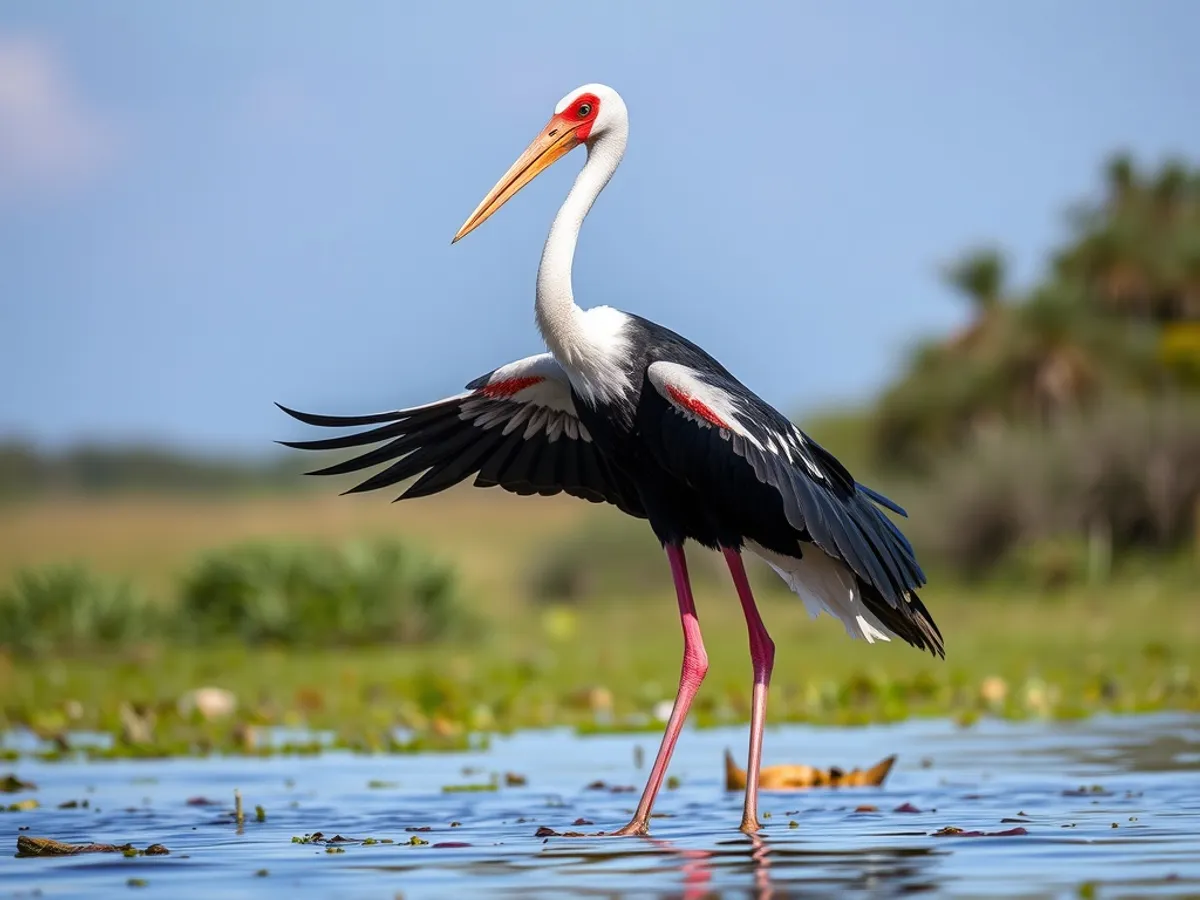
Leptoptilos crumenifer stands 1.5 m tall with a wingspan that can approach 3.2 m - among the largest of any land bird - and it is spectacularly ugly by design. The head and neck are bald because the bird pushes them deep into carcasses, and feathers there would mat with blood and rot. The long pink air sac dangling from the throat is not a crop or a food store: it connects to the nasal passages, inflates in display, and appears to help the bird shed heat. Marabous stand in the African sun for hours and cool themselves by urohidrosis, defecating onto their own legs so that evaporation carries away heat and leaving the legs coated in chalky white uric acid - which is why they always look as though they are wearing pale stockings. They are opportunists in the fullest sense: they scavenge alongside vultures at kills, wade for fish, hunt flamingo chicks, patrol rubbish dumps and abattoirs, and follow grass fires to snap up fleeing animals. Their soaring is superb, riding thermals for hours on those enormous wings with the neck retracted like a heron's. Marabou down was harvested for hat trim and dress ornament in the nineteenth and early twentieth centuries and the name "marabou" still attaches to the feather trim.
Fascinating facts
Record Wingspan
The Marabou Stork boasts one of the largest wingspans of any land bird, sometimes reaching up to 3.7 meters (12 feet).
Nature’s Clean-up Crew
They play a crucial ecological role by feeding on carcasses and waste, helping to keep their habitats clean and reduce the spread of disease.
Unusual Nests
Marabou Storks build massive nests in tall trees, often returning to the same nesting sites year after year and sometimes nesting in large colonies.
Detailed description
The Marabou Stork (Leptoptilos crumenifer) is one of the largest and most distinctive storks, reaching heights of 120–152 cm (4–5 ft) and weighing between 4 and 8 kg (8.8–17.6 lbs). Its wingspan is among the greatest of any land bird, typically 2.6–3.2 meters (8.5–10.5 ft). The species is characterized by a bare, pinkish-gray head and neck, an adaptation for its scavenging lifestyle, reducing feather fouling when feeding on carrion. A prominent inflatable throat sac (gular sac) hangs from the neck, used in thermoregulation and courtship displays. The bill is massive, straight, and dagger-like, measuring up to 35 cm (14 in), ideal for tearing flesh. Plumage is mostly dark gray to black on the wings and back, with contrasting white underparts and a distinctive white ruff at the base of the neck. Legs are long and pale, often appearing white due to urohidrosis (defecating on the legs to cool down). Juveniles are duller, with more feathering on the head and neck. Marabou Storks are highly gregarious, often forming large colonies, especially during breeding. Their flight is impressive; they soar on thermals with minimal wingbeats, aided by their broad wings and hollow leg and toe bones, which reduce weight. Their vocalizations are limited; instead, they communicate with bill-clattering and guttural croaks.
Did you know?
Despite their ungainly look, Marabou Storks are capable of soaring gracefully for hours, using thermals to travel vast distances with minimal energy.
Research & sources
Wikipedia summary
The marabou stork is a large wading bird in the stork family Ciconiidae native to sub-Saharan Africa. It breeds in both wet and arid habitats, often near human habitation, especially landfill sites. It is sometimes called the "undertaker bird" due to its shape from behind: cloak-like wings and back, skinny white legs, and sometimes a large white mass of "hair". It has often been credited with the largest wingspan of any land bird, with an average of 2.6 metres (8.5 ft) and some recorded examples of up to 3.2 metres (10 ft).
Behaviour & social structure
Marabou Storks are primarily scavengers, feeding on carrion, scraps, and refuse, but they are also opportunistic predators, consuming fish, frogs, insects, small mammals, birds, and even eggs. They often follow vultures to carcasses, using their size to dominate feeding sites. In urban areas, they frequent landfill sites and abattoirs, adapting well to human-altered environments. Their foraging is both solitary and social; at large food sources, they gather in groups, sometimes exceeding 100 individuals. Daily routines involve soaring on thermals during the heat of the day to search for food, roosting communally in tall trees at night. Social hierarchies are evident at feeding sites, with larger, older birds dominating. Marabou Storks are generally silent but may produce bill-clattering and low grunts during courtship or when threatened.
Reproduction & life cycle
Breeding occurs in the dry season, often coinciding with the end of the rains, when food is abundant due to receding water exposing stranded fish and increased carcass availability. They nest colonially in tall trees, sometimes alongside other waterbirds. Nests are large platforms of sticks, lined with softer materials. Courtship involves bill-clattering, throat sac inflation, and mutual preening. Females typically lay 2–3 chalky white eggs. Both parents incubate the eggs for 29–31 days. Chicks are altricial and require extensive parental care, with both adults feeding them by regurgitation. Fledging occurs at 95–115 days, but juveniles may remain dependent on parents for several more weeks. Breeding success is highly variable and influenced by food availability.
Adaptations & survival
Marabou Storks exhibit several unique adaptations. The bare head and neck minimize feather soiling when feeding on carcasses, similar to vultures. The large gular sac aids in thermoregulation and is used in courtship displays. Their long, strong bill is adapted for tearing flesh and handling a wide variety of food items. Urohidrosis (defecating on legs) helps cool the body in hot climates. Their hollow bones, especially in the legs and toes, reduce body weight, facilitating efficient soaring. Behavioral flexibility allows them to exploit both natural and anthropogenic food sources, contributing to their success in diverse habitats.
Cultural significance
Marabou Storks are often viewed with a mix of fascination and aversion due to their scavenging habits and striking appearance. In some African cultures, they are associated with death and the afterlife, earning the nickname 'undertaker bird.' Their presence at garbage dumps and alongside vultures reinforces their symbolic connection to decay and cleansing. In contrast, their ecological role as scavengers is increasingly recognized as vital for disease control and ecosystem health. Feathers and body parts have occasionally been used in traditional medicine and rituals.
Recent research
Recent research has focused on the Marabou Stork's role in urban ecosystems, particularly their adaptation to landfill environments and potential as bioindicators of environmental health. Studies have examined their diet composition in urban versus rural settings, revealing high plastic and anthropogenic waste ingestion in city populations. Genetic studies are exploring population structure across Africa, while behavioral ecologists investigate their social dynamics at feeding and nesting sites. There is growing interest in their interactions with other scavengers, such as vultures, and their potential role in zoonotic disease transmission.
Videos
Habitat
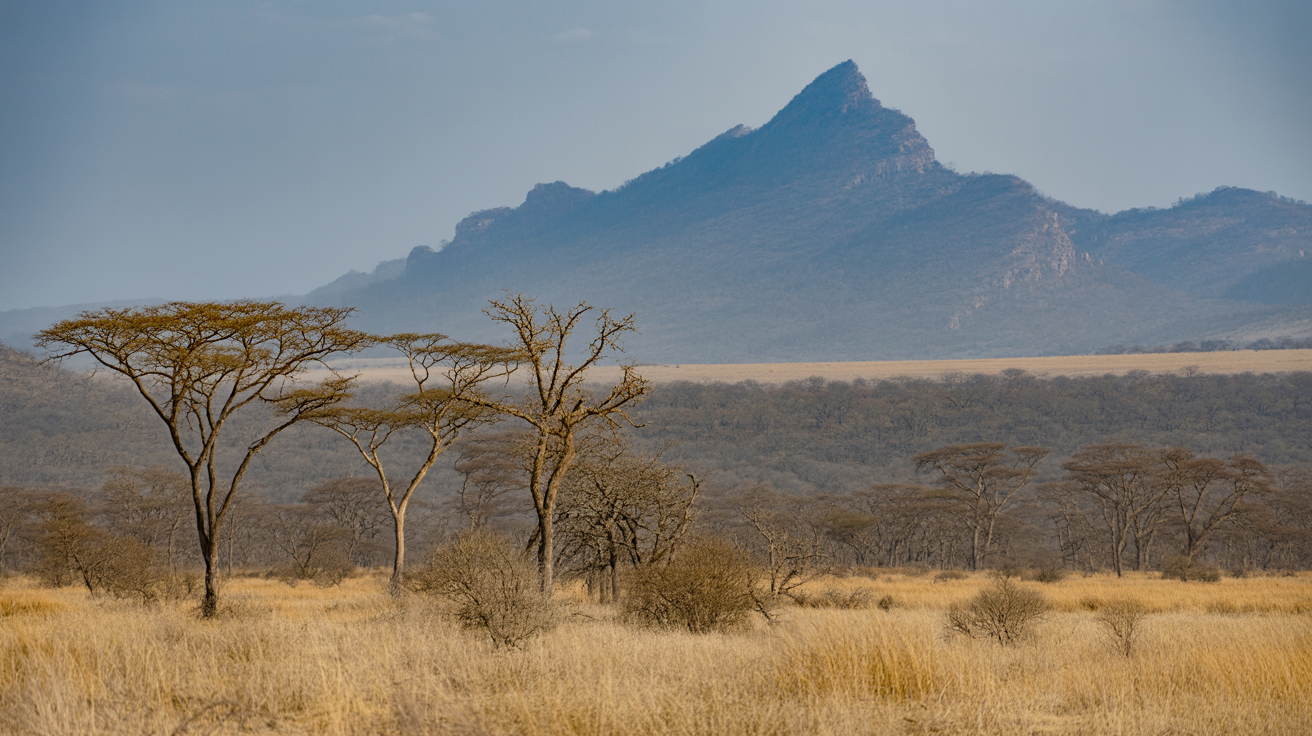
Wetlands and open savannas near water bodies
 Africa
Savanna
Grasslands with scattered trees, characterized by seasonal rainfall and home to diverse grazing animals and predators.
 Various Continental Regions
Grassland
Open areas dominated by grasses rather than trees, supporting numerous herbivores and their predators.
 Global
Forest
Wooded areas with significant tree cover and diverse plant and animal communities.
 Global
Freshwater
Lakes, rivers, and wetlands with diverse aquatic ecosystems.
Conservation
The Marabou Stork is currently classified as Least Concern on the IUCN Red List.
Threats & challenges
Although currently listed as Least Concern by the IUCN, Marabou Storks face localized threats. Habitat loss due to deforestation and wetland drainage can reduce nesting and foraging sites. Ingestion of toxic substances or plastics at landfill sites poses health risks. Human persecution occurs where they are considered pests or nuisances. However, their adaptability to urban environments and generalist diet have allowed populations to remain stable or even increase in some areas. Climate change and changes in waste management practices could impact future population trends.
Taxonomy
Scientific name
Leptoptilos crumenifer
- Kingdom
- Animalia
- Phylum
- Chordata
- Class
- Aves
- Order
- Ciconiiformes
- Family
- Ciconiidae
- Genus
- Leptoptilos
- Species
- crumenifer
Where to see a marabou stork
6 zoos and aquariums in 4 countries are recorded as keeping this species.
 San Diego Zoo🇺🇸 San Diego, United States
 Paignton Zoo🇬🇧 Paignton, United Kingdom
 Śląski Ogród Zoologiczny🇵🇱 Chorzów, Poland
 Brevard Zoo🇺🇸 Melbourne, United States
- 🦁Greater Vancouver Zoo🇨🇦 Canada
Community notes
Share your observations about the Marabou Stork.
No community notes yet. Be the first!
Discover more wildlife
More fascinating animals from the encyclopedia.