
About the Northern Spring Salamander
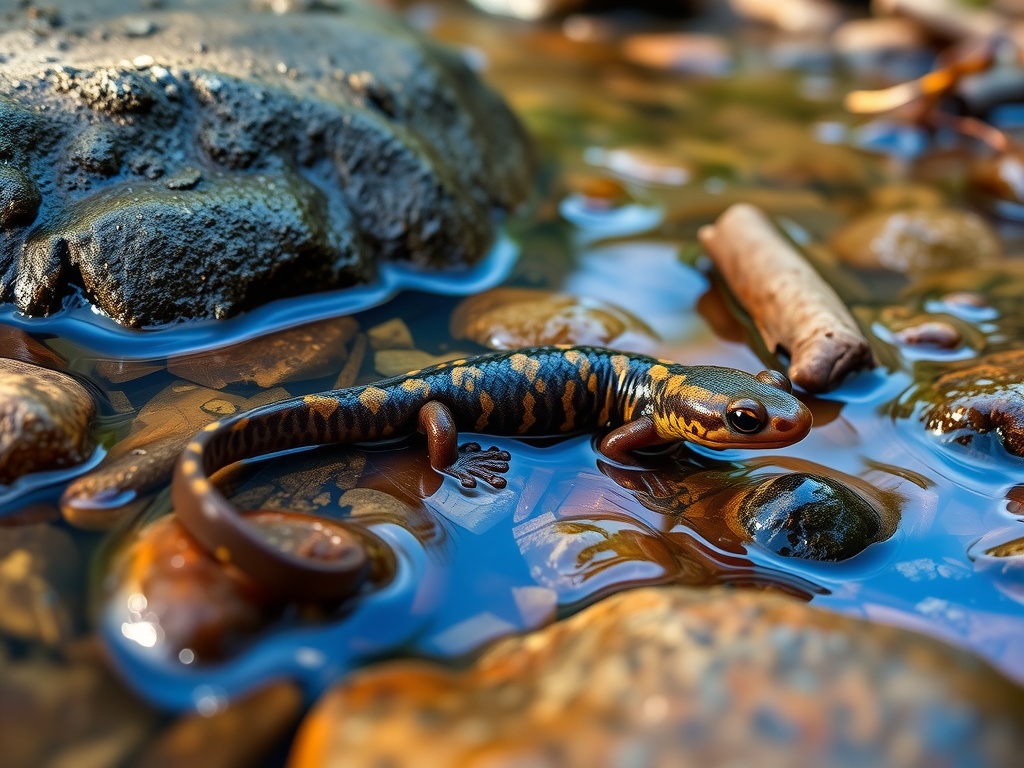
The Northern Spring Salamander is a slender, aquatic amphibian known for its pinkish to reddish coloration and faint dark spots along its body. It is a secretive species that primarily inhabits cold, clear, rocky streams and springs in the Appalachian Mountains and northeastern North America. Adapted to a life in cool, well-oxygenated water, this salamander is an adept swimmer and spends most of its life hidden under rocks or debris. Its sensitive skin and reliance on clean water make it a valuable indicator of freshwater ecosystem health.
Fascinating facts
Stream Specialist
This species is almost always found in cold, fast-flowing streams and springs with rocky bottoms, rarely venturing into still or warm waters.
Long Larval Stage
Spring salamander larvae can remain in their aquatic stage for up to five years before metamorphosing into adults, an unusually long period for amphibians.
Sensitive Skin
Their permeable skin makes them exceptionally sensitive to pollutants and changes in water quality, which is why their presence is a good sign of a healthy stream ecosystem.
Detailed description
The Northern Spring Salamander (Gyrinophilus porphyriticus) is a robust, elongate amphibian, typically measuring 12–19 cm (4.7–7.5 in) in total length, with some individuals reaching up to 22 cm (8.7 in). Its skin is smooth and moist, displaying a distinctive pinkish to salmon-red coloration, often mottled with small, irregular dark spots or flecks, and a pale yellowish belly. The head is broad and flattened, with a pronounced groove (nasolabial groove) running from the nostrils to the upper lip, an adaptation for chemoreception in aquatic environments. Eyes are relatively small and positioned dorsally, reflecting its preference for dimly lit, underwater habitats. Larvae are aquatic and can be distinguished by their bushy external gills and a pronounced tail fin, sometimes remaining in the larval stage for up to 5 years (paedomorphosis). Adults are primarily nocturnal and secretive, spending daylight hours concealed under rocks, logs, or leaf litter in cold, well-oxygenated streams and springs. The species is solitary outside of the breeding season, exhibiting territoriality, especially among adults. Its diet consists mainly of aquatic invertebrates, small crustaceans, and occasionally other amphibians, including conspecific larvae. The Northern Spring Salamander is highly sensitive to environmental changes, making it an important bioindicator for stream health and water quality.
Did you know?
Unlike many salamanders, the Northern Spring Salamander preys on other amphibians, including smaller salamanders and their larvae.
Research & sources
Behaviour & social structure
Northern Spring Salamanders are predominantly nocturnal, emerging from cover at dusk to forage along streambeds. They employ a sit-and-wait predatory strategy, remaining motionless and ambushing prey such as insect larvae, small crustaceans, worms, and occasionally small fish or other salamanders. Chemoreception via the nasolabial groove is crucial for detecting prey and conspecifics in low-visibility environments. Individuals are generally solitary and territorial, with adults defending prime foraging and shelter sites. Aggressive interactions, including biting and tail displays, have been observed during encounters over territory. During the day, they remain hidden under rocks or submerged debris to avoid predation and desiccation. Seasonal activity peaks in spring and fall, with reduced movement during the coldest winter months and the warmest summer periods.
Reproduction & life cycle
Breeding occurs primarily in late spring to early summer (April–July), though timing can vary with elevation and latitude. Courtship involves a series of tactile and chemical cues, with males engaging in tail undulations and nudging to attract females. Fertilization is internal; the male deposits a spermatophore on the substrate, which the female picks up with her cloaca. Females lay 20–110 eggs in concealed locations, such as under submerged rocks or within crevices, in cold, flowing water. Eggs are attached singly or in small clusters and guarded by the female until hatching, which occurs after 6–9 weeks, depending on water temperature. Larvae are fully aquatic and may remain in this stage for 3–5 years, with some populations exhibiting paedomorphosis, where individuals reach sexual maturity without undergoing full metamorphosis. Parental care is limited to egg guarding; after hatching, larvae are independent.
Adaptations & survival
Gyrinophilus porphyriticus exhibits several key adaptations for its cold, aquatic habitat. The nasolabial groove enhances chemosensory abilities, allowing detection of prey and mates in turbid or dark waters. Its flattened head and streamlined body facilitate movement under rocks and through swift currents. The skin is highly permeable, enabling efficient cutaneous respiration in oxygen-rich waters, which is critical as lungs are reduced or absent in adults. Larvae possess large, bushy external gills for aquatic respiration, and the extended larval period (neoteny) allows exploitation of stable aquatic niches. Cryptic coloration provides camouflage against the rocky streambed, reducing predation risk. Behavioral adaptations include nocturnality and secretive habits to avoid diurnal predators and minimize water loss.
Cultural significance
The Northern Spring Salamander has limited direct cultural significance, as it is a secretive species rarely encountered by the general public. However, it holds ecological importance as an indicator of stream health and is occasionally referenced in environmental education programs highlighting the importance of clean water and biodiversity in Appalachian and northeastern forest ecosystems. There are no known traditional uses, myths, or folklore specifically associated with this species.
Recent research
Recent research has focused on the species' role as a bioindicator for stream ecosystem health, with studies examining its sensitivity to pH changes, heavy metals, and sedimentation. Genetic analyses have clarified the phylogeography of Gyrinophilus porphyriticus, revealing cryptic diversity and potential subspecies distinctions across its range. Ongoing studies are investigating the impacts of climate change on larval development and distribution, as well as the effects of introduced fish species on population dynamics. Notably, the species' extended larval period and paedomorphic tendencies are of interest for understanding amphibian developmental plasticity and evolutionary adaptation to stable aquatic environments.
Sources
Gyrinophilus porphyriticus (Northern Spring Salamander): Natural History and Ecology
Petranka, J.W. (1998)
scientificGyrinophilus porphyriticus: The IUCN Red List of Threatened Species 2014
IUCN SSC Amphibian Specialist Group
conservationVideos
Habitat
Cold, clear, rocky streams and springs in forested mountain regions
 Elevated Terrain
Mountain
High-altitude environments with varying climates and specialized wildlife adapted to rugged terrain and thin air.
 Global
Forest
Wooded areas with significant tree cover and diverse plant and animal communities.
 Global
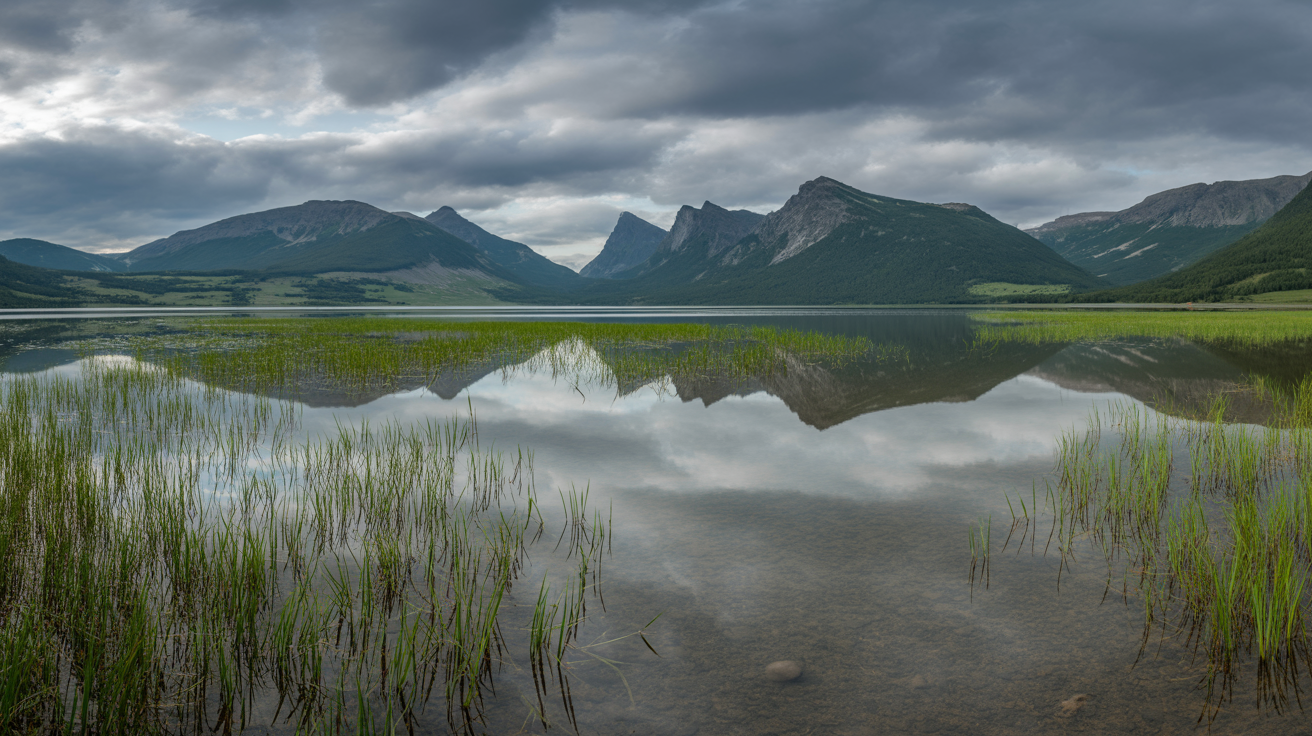
Freshwater
Lakes, rivers, and wetlands with diverse aquatic ecosystems.
Conservation
The Northern Spring Salamander is currently classified as Least Concern on the IUCN Red List.
Threats & challenges
Although currently listed as Least Concern by the IUCN, the Northern Spring Salamander faces several localized threats. Habitat degradation from logging, mining, road construction, and agriculture can increase sedimentation and pollution in streams, reducing water quality and oxygen levels. Acid rain and chemical runoff are particularly detrimental, given the species' reliance on clean, well-oxygenated water. Climate change poses a long-term threat by altering stream temperatures and flow regimes. Introduced predators, such as trout, may prey on larvae and juveniles. Population trends are generally stable across much of its range, but declines have been documented in areas with significant habitat disturbance. Conservation efforts focus on maintaining forested riparian buffers and protecting headwater streams.
Taxonomy
Scientific name
Gyrinophilus porphyriticus
- Kingdom
- Animalia
- Phylum
- Chordata
- Class
- Amphibia
- Order
- Caudata
- Family
- Plethodontidae
- Genus
- Gyrinophilus
- Species
- porphyriticus
Community notes
Share your observations about the Northern Spring Salamander.
No community notes yet. Be the first!
Discover more wildlife
More fascinating animals from the encyclopedia.