
About the Parson's Chameleon
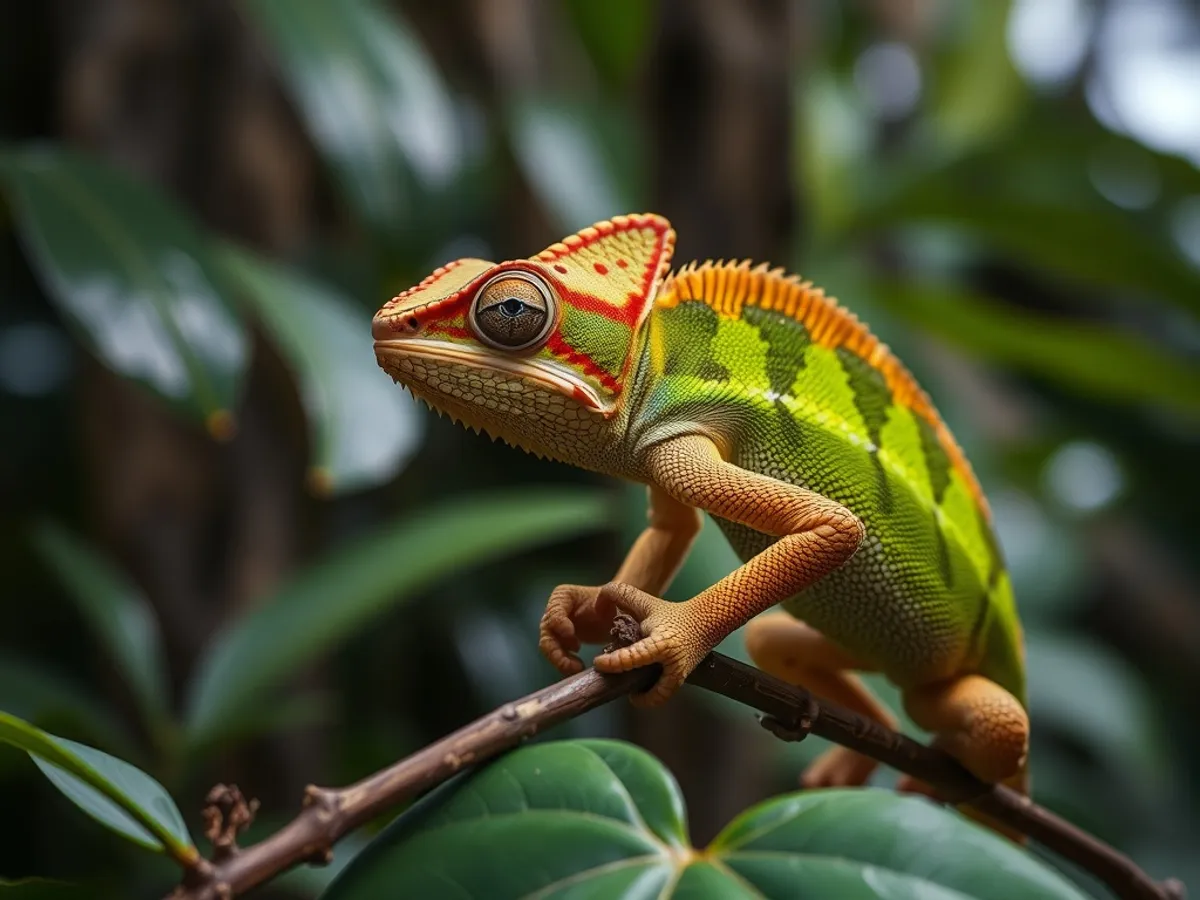
Parson's Chameleon is one of the largest and most impressive chameleons in the world, native exclusively to the rainforests of Madagascar. It is renowned for its robust build, vibrant coloration ranging from green and turquoise to yellow, and its bulbous casque on the head. This arboreal reptile is slow-moving and relies on its powerful tongue to catch prey from a distance. Parson's Chameleons are generally solitary and can live a surprisingly long life for a chameleon, making them a fascinating species for herpetologists and animal enthusiasts alike.
Fascinating facts
Independent Eyes
Each eye of Parson's Chameleon can move independently, giving it a full 360-degree field of vision to spot both prey and predators.
Giant Among Chameleons
Parson's Chameleon is one of the largest chameleons, with some individuals reaching lengths of up to 68 cm (27 inches) from nose to tail.
Record-Breaking Eggs
Females lay some of the largest eggs in the chameleon world, which can take up to 24 months to hatch—one of the longest incubation periods of any reptile.
Detailed description
Parson's Chameleon (Calumma parsonii) is among the largest extant chameleon species, with adult males typically reaching total lengths of 48–68 cm (19–27 in) and females slightly smaller, averaging 35–45 cm (14–18 in). The species is robustly built, with a laterally compressed body, a prominent casque (helmet-like crest) on the head, and a prehensile tail that aids in arboreal locomotion. Coloration is highly variable and can include vibrant greens, blues, yellows, and turquoise, with some individuals displaying orange or yellow eye rings, particularly in the 'orange eye' variant. The skin is granular and capable of subtle color changes for communication and thermoregulation, though not as dramatic as in some other chameleons. The eyes are large, turreted, and move independently, providing a near 360-degree field of vision. Parson's Chameleons possess zygodactylous feet—two toes pointing forward and two backward—allowing for a strong grip on branches. Their long, projectile tongue can extend up to twice the body length and is used to capture a variety of invertebrate prey. The species is primarily diurnal and arboreal, spending most of its life in the mid to upper canopy of humid primary forests. Lifespans in the wild are estimated at 8–12 years, with some individuals in captivity documented to live up to 14 years, making them exceptionally long-lived for chameleons.
Did you know?
Unlike many chameleons, Parson's Chameleon does not change color dramatically for camouflage, but rather uses subtle color changes for communication and temperature regulation.
Research & sources
Wikipedia summary
Parson's chameleon is a species of chameleon in the family Chamaeleonidae that is endemic to eastern and northern Madagascar. It is found from lowlands to an altitude of 1,195 m (3,920 ft) above sea level and mainly inhabits humid primary forest, but can also occur in disturbed habitats with trees. For a chameleon, it is very large, long-lived and slow-reproducing.
Behaviour & social structure
Parson's Chameleons are solitary and territorial, with individuals maintaining defined home ranges. They are slow-moving and deliberate, relying on cryptic coloration and minimal movement to avoid detection by predators. Hunting is primarily sit-and-wait; the chameleon remains motionless until prey, such as insects, spiders, or occasionally small vertebrates, comes within range. The rapid, sticky tongue is then launched to capture prey with remarkable accuracy. Social interactions are limited outside of the breeding season and can be antagonistic, especially between males. Threat displays include lateral body flattening, color intensification, and gaping. Activity peaks during daylight hours, with individuals basking in the morning to regulate body temperature and seeking shelter in dense foliage at night. Parson's Chameleons are generally silent, but may hiss or display when threatened.
Reproduction & life cycle
Reproduction in Parson's Chameleon is characterized by a slow and infrequent cycle. Mating typically occurs at the onset of the rainy season (November to March). Males court females with head bobbing and color displays, but courtship can be aggressive. Females are oviparous, laying a single clutch of 20–50 eggs in a shallow nest dug into moist soil. Notably, the incubation period is exceptionally long—ranging from 400 to over 600 days (13–20 months), one of the longest among reptiles. Females do not provide parental care after egg-laying. Sexual maturity is reached at 2–3 years, and females may only breed once every two years, contributing to the species' slow population growth.
Adaptations & survival
Parson's Chameleon exhibits several specialized adaptations for arboreal life. Its zygodactylous feet and prehensile tail provide secure grasping ability in the forest canopy. The independently rotating eyes allow for simultaneous scanning of different visual fields, enhancing prey detection and predator avoidance. The projectile tongue is a highly evolved feeding adaptation, capable of rapid extension and retraction to capture prey at distances up to twice the animal's body length. Color change is used primarily for communication and thermoregulation rather than camouflage. The robust body and large size may deter some predators. Slow metabolism and long lifespan are likely evolutionary responses to the stable, resource-rich rainforest environment.
Cultural significance
In Malagasy culture, chameleons are often regarded with a mix of reverence and superstition. They are sometimes associated with omens or considered taboo (fady) in certain regions, leading to both protection and persecution depending on local beliefs. Parson's Chameleon, due to its size and striking appearance, is occasionally featured in ecotourism and wildlife documentaries, contributing to global awareness of Madagascar's unique biodiversity. There is no significant evidence of traditional medicinal or utilitarian use of this species.
Recent research
Recent research on Parson's Chameleon has focused on its reproductive biology, particularly the extraordinary length of egg incubation and the physiological mechanisms underlying embryonic development. Genetic studies have revealed significant population structure and potential cryptic diversity within the species, prompting discussions about possible subspecies or species-level splits. Conservation research is ongoing, with habitat mapping and population monitoring being conducted to inform management strategies. Studies on the species' thermal ecology and color change mechanisms have provided insights into chameleon physiology and evolutionary adaptation.
Videos
Habitat
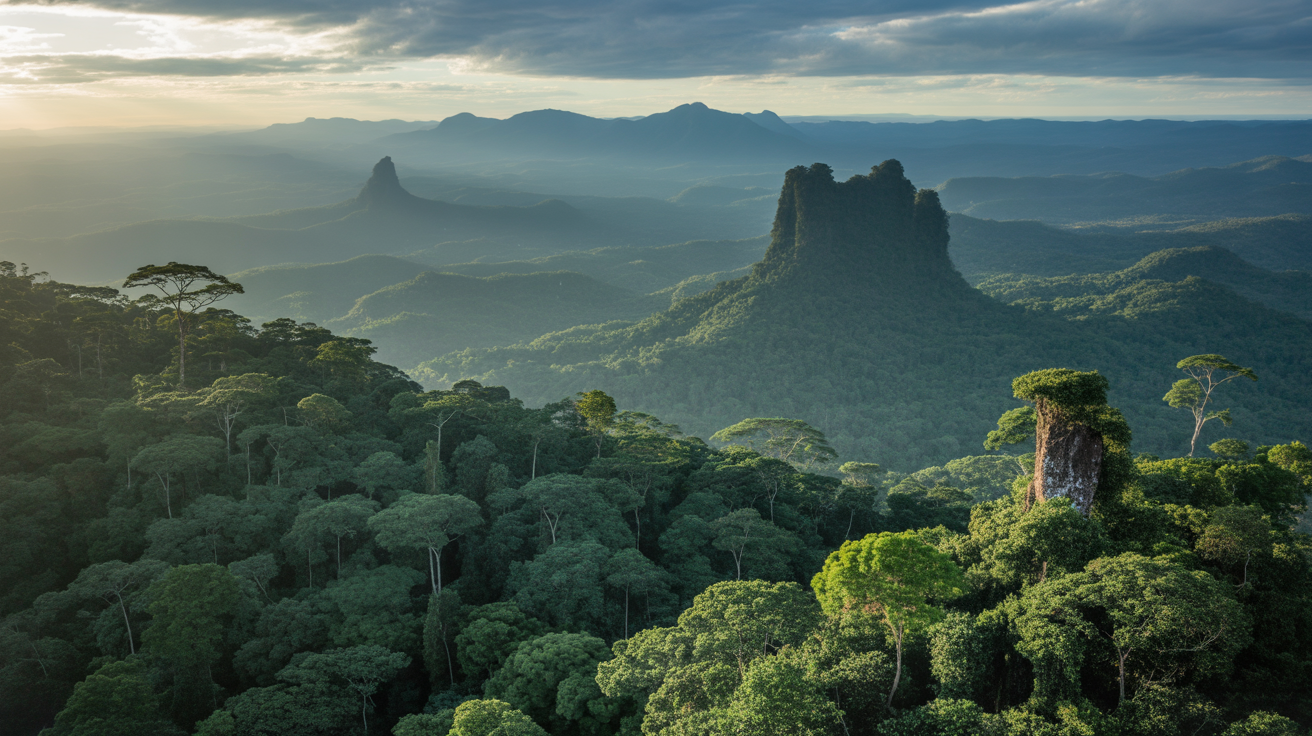
Tropical rainforest
 Elevated Terrain
Mountain
High-altitude environments with varying climates and specialized wildlife adapted to rugged terrain and thin air.
 Tropical Regions
Rainforest
Dense, wet forests with the highest biodiversity on Earth, containing more than half of the world's plant and animal species.
 Global
Forest
Wooded areas with significant tree cover and diverse plant and animal communities.
Conservation
The Parson's Chameleon is currently classified as Near Threatened on the IUCN Red List.
Threats & challenges
The primary threats to Parson's Chameleon are habitat loss and fragmentation due to deforestation for agriculture, logging, and expanding human settlements in Madagascar. Although the species can tolerate some habitat disturbance, it is highly dependent on mature forest with abundant tree cover. Illegal collection for the international pet trade has historically impacted populations, though export is now strictly regulated under CITES Appendix II. The species' slow reproductive rate and long incubation period make recovery from population declines particularly challenging. Climate change poses additional risks by altering rainfall patterns and forest structure. Current population trends are decreasing, and the species is classified as Near Threatened by the IUCN.
Taxonomy
Scientific name
Calumma parsonii
- Kingdom
- Animalia
- Phylum
- Chordata
- Class
- Reptilia
- Order
- Squamata
- Family
- Chamaeleonidae
- Genus
- Calumma
- Species
- parsonii
Where to see a parson's chameleon
1 zoo and aquarium in 1 country are recorded as keeping this species.
Community notes
Share your observations about the Parson's Chameleon.
No community notes yet. Be the first!
Discover more wildlife
More fascinating animals from the encyclopedia.