
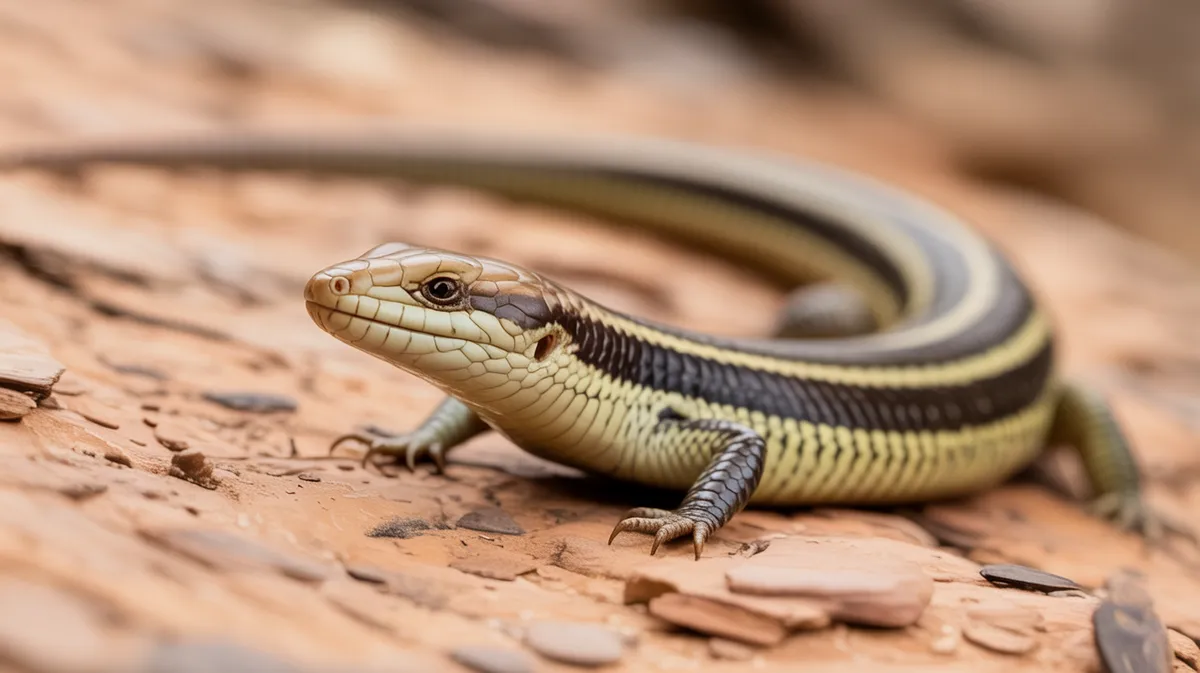
About the Peter's Banded Skink
Peter's Banded Skink is a small, terrestrial lizard native to arid regions of northwestern Africa. Recognized by its distinctive dark and light banding across a stout, smooth-scaled body, this skink is highly adapted for life in desert environments. Its nocturnal habits and burrowing behavior help it avoid extreme daytime temperatures. Peter's Banded Skink is a shy and secretive reptile, often spending much of its time hidden beneath rocks or within sandy burrows. It is popular in the pet trade due to its manageable size and striking appearance.
Fascinating facts
Distinctive Banded Pattern
The skink's alternating light and dark bands provide camouflage in the dappled light of its desert habitat.
Nocturnal Lifestyle
Peter's Banded Skink is primarily active at night, helping it avoid the extreme heat and potential predators during the day.
Burrowing Behavior
This skink is a proficient burrower, using its strong limbs and wedge-shaped body to dig and create shelters in loose sand.
Detailed description
Peter's Banded Skink (Scincopus fasciatus) is a small, robust lizard typically measuring 10–14 cm in total length, with a body mass rarely exceeding 20 grams. Its smooth, glossy scales reduce water loss and facilitate movement through loose sand. The species is easily recognized by its alternating dark brown to black and pale yellow to cream bands, which provide effective camouflage against the dappled light of rocky and sandy desert substrates. The head is wedge-shaped with relatively small, lidless eyes adapted for nocturnal activity, and the limbs are short but strong, aiding in rapid burrowing. The tail is thick and can serve as a fat storage organ, critical for survival during periods of food scarcity. Peter's Banded Skink is primarily nocturnal and crepuscular, emerging at dusk to forage and retreating to self-dug burrows or natural crevices during the day. Its secretive nature and cryptic coloration make field observations challenging. The species is solitary outside of the breeding season and exhibits territorial behavior, particularly among males. Reproduction is oviparous, with females laying small clutches of eggs in moist, protected sites. This skink is highly specialized for desert life, with physiological and behavioral adaptations that minimize water loss and maximize survival in harsh, arid environments.
Did you know?
Peter's Banded Skink can autotomize, or shed, its tail to escape predators, later regenerating a new one.
Research & sources
Behaviour & social structure
Peter's Banded Skink is predominantly nocturnal, emerging at dusk to hunt for invertebrates such as beetles, termites, spiders, and other arthropods. It employs a sit-and-wait strategy, relying on its camouflage and rapid bursts of speed to ambush prey. Foraging is typically solitary, and individuals are highly territorial, using chemical cues to mark and recognize their burrow entrances. During the day, the skink remains hidden in self-excavated burrows or beneath rocks to avoid predators and extreme temperatures. Social interactions are minimal outside of the breeding season, with occasional aggressive displays between males. When threatened, the skink may exhibit tail autotomy (self-amputation) as a defensive mechanism, allowing escape from predators. Daily routines are closely tied to ambient temperature and humidity, with activity peaks during cooler, more humid nights.
Reproduction & life cycle
Breeding in Scincopus fasciatus typically occurs during the late spring and early summer, coinciding with increased insect abundance and occasional rainfall. Males engage in ritualized combat and display behaviors to establish dominance and access to receptive females. Females lay 2–5 eggs per clutch, usually in moist, sheltered locations such as under rocks or within deep burrows to prevent desiccation. Incubation lasts approximately 45–60 days, depending on environmental conditions. There is no parental care post-oviposition; hatchlings are fully independent and must fend for themselves immediately. Sexual maturity is reached within 1–2 years, depending on food availability and environmental stability.
Adaptations & survival
Peter's Banded Skink exhibits a suite of adaptations for desert survival. Its smooth, overlapping scales reduce evaporative water loss, while the ability to burrow rapidly allows it to escape surface heat and predators. The thick, banded tail serves as both a fat reserve and a decoy for predators, as it can be shed and regenerated. Behavioral thermoregulation—such as basking briefly at dawn or dusk and remaining underground during peak heat—helps maintain optimal body temperature. The species has a low metabolic rate and can survive extended periods of food and water scarcity by relying on stored fat. Specialized nasal passages and cloacal reabsorption further conserve water.
Cultural significance
There is limited evidence of significant cultural or symbolic importance for Peter's Banded Skink in local North African communities. However, its striking appearance and docile nature have made it increasingly popular in the exotic pet trade in Europe and North America. No traditional medicinal or culinary uses are documented, and it does not feature prominently in regional folklore or mythology.
Recent research
Recent herpetological studies have focused on the phylogenetics and evolutionary history of Scincopus fasciatus, clarifying its placement as the sole member of the genus Scincopus and its divergence from other Saharan skinks. Ongoing research is examining the species' physiological adaptations to extreme aridity, particularly mechanisms of water conservation and heat tolerance. Population genetics studies are underway to assess the impact of habitat fragmentation and the pet trade on genetic diversity. Field surveys continue to refine knowledge of its distribution, microhabitat preferences, and reproductive ecology.
Sources
Taxonomic revision and natural history of Scincopus fasciatus
Schmitz, A., Ineich, I., Chirio, L., & LeBreton, M. (2005)
scientificScincopus fasciatus: The IUCN Red List of Threatened Species 2021
IUCN SSC Amphibian and Reptile Specialist Group
conservationA Review of the Genus Scincopus Peters, 1864 (Squamata: Scincidae) with Notes on Its Ecology and Distribution
M. Wilms, S. Böhme, et al. (2012)
scientificScincopus fasciatus: The IUCN Red List of Threatened Species 2021
IUCN SSC Amphibian and Reptile Specialist Group
conservationVideos
Habitat
Arid desert and semi-desert regions
 Arid Regions
Desert
Arid lands with minimal rainfall, extreme temperatures, and specialized wildlife adapted to harsh conditions.
 Africa
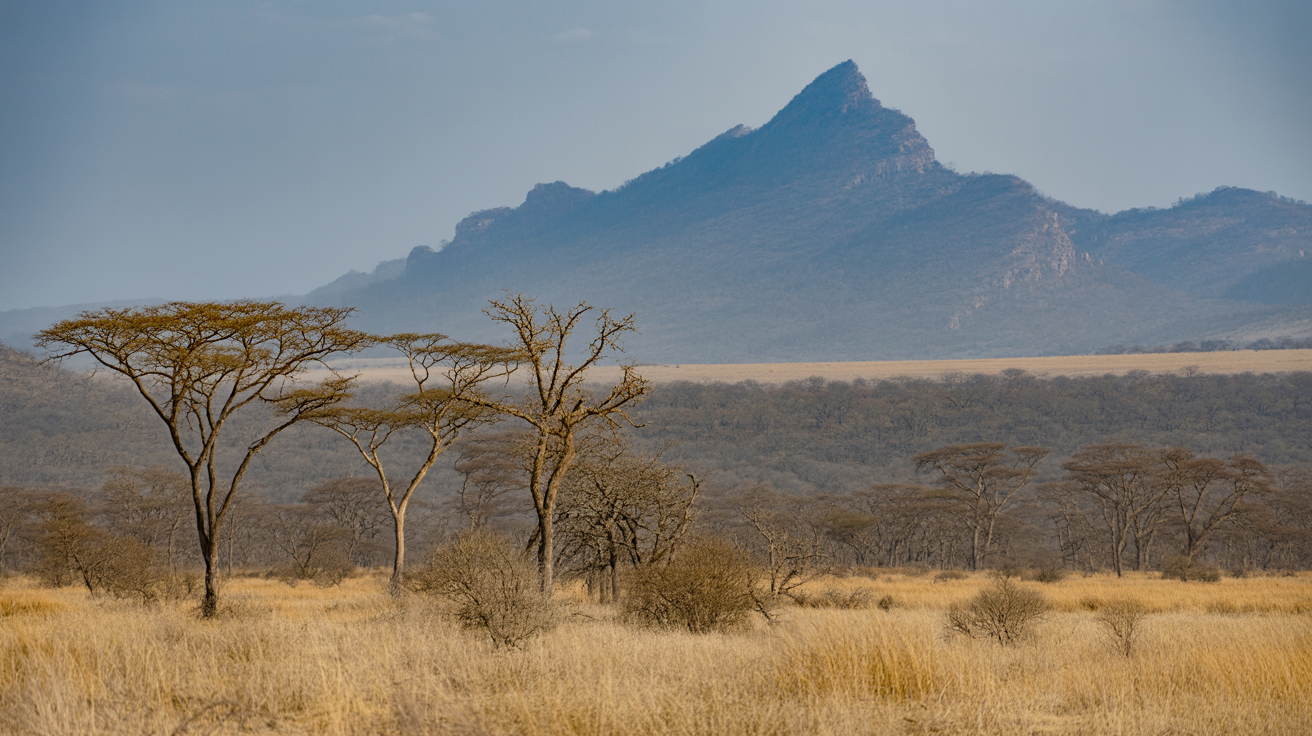
Savanna
Grasslands with scattered trees, characterized by seasonal rainfall and home to diverse grazing animals and predators.
 Various Continental Regions
Grassland
Open areas dominated by grasses rather than trees, supporting numerous herbivores and their predators.
Conservation
The Peter's Banded Skink is currently classified as Least Concern on the IUCN Red List.
Threats & challenges
Currently assessed as Least Concern by the IUCN, Peter's Banded Skink faces localized threats from habitat degradation due to overgrazing, agricultural expansion, and urbanization. Collection for the international pet trade is increasing but does not yet appear to significantly impact wild populations. Climate change poses a potential long-term threat by altering precipitation patterns and increasing desertification, which could affect prey availability and suitable microhabitats. Predation by birds, snakes, and small mammals is a natural mortality factor, but population trends remain stable across most of its range.
Taxonomy
Scientific name
Scincopus fasciatus
- Kingdom
- Animalia
- Phylum
- Chordata
- Class
- Reptilia
- Order
- Squamata
- Family
- Scincidae
- Genus
- Scincopus
- Species
- fasciatus
Community notes
Share your observations about the Peter's Banded Skink.
No community notes yet. Be the first!
Discover more wildlife
More fascinating animals from the encyclopedia.