
About the Quagga
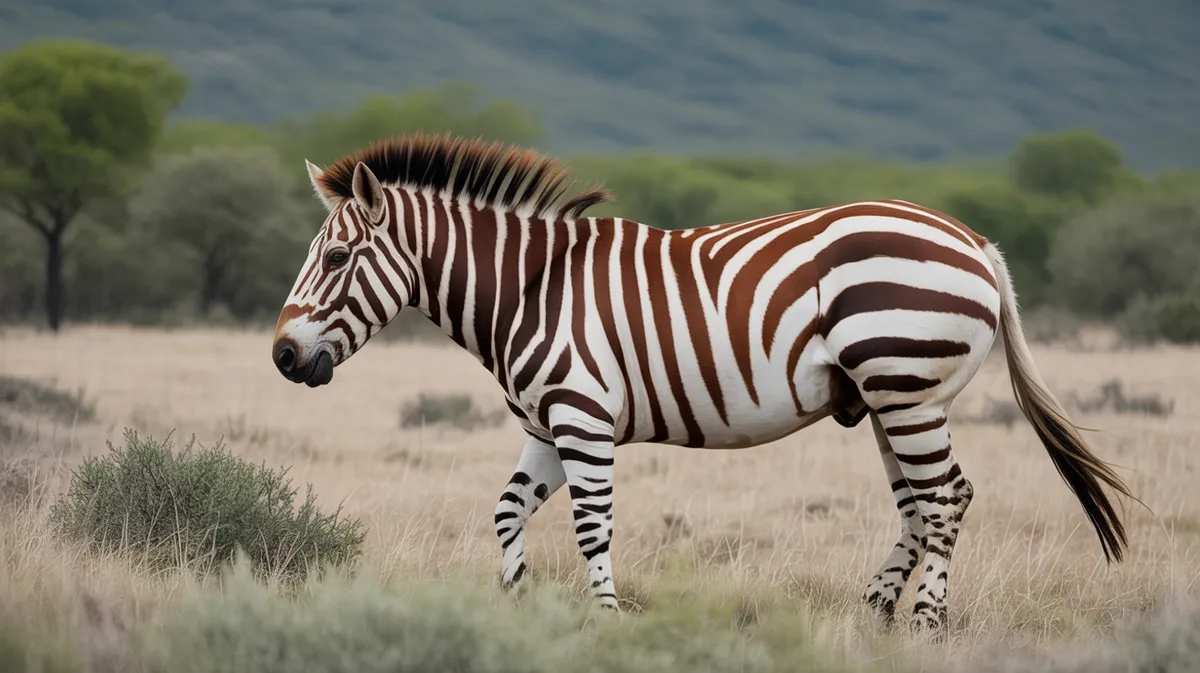
The quagga was a unique subspecies of the plains zebra that inhabited South Africa's grasslands. Notable for its distinct coat, the quagga's front half had bold zebra stripes while its hindquarters were mostly brown and unstriped, giving it a striking two-toned appearance. Quaggas lived in herds and grazed on grasses, playing a vital role in their ecosystem. Sadly, the quagga was hunted to extinction in the late 19th century, with the last known individual dying in 1883. Today, efforts are underway to revive some of its traits through selective breeding programs.
Fascinating facts
Unique Appearance
The quagga's coat had vivid stripes only on its head, neck, and shoulders, while the rest of its body was brown and unstriped, unlike any other zebra.
Extinction
The quagga was declared extinct in the wild in the 1870s due to overhunting for its meat and hides, and competition from livestock.
Genetic Research
DNA analysis of preserved quagga skins in the 1980s confirmed its close relation to the plains zebra, changing how scientists classified the subspecies.
Detailed description
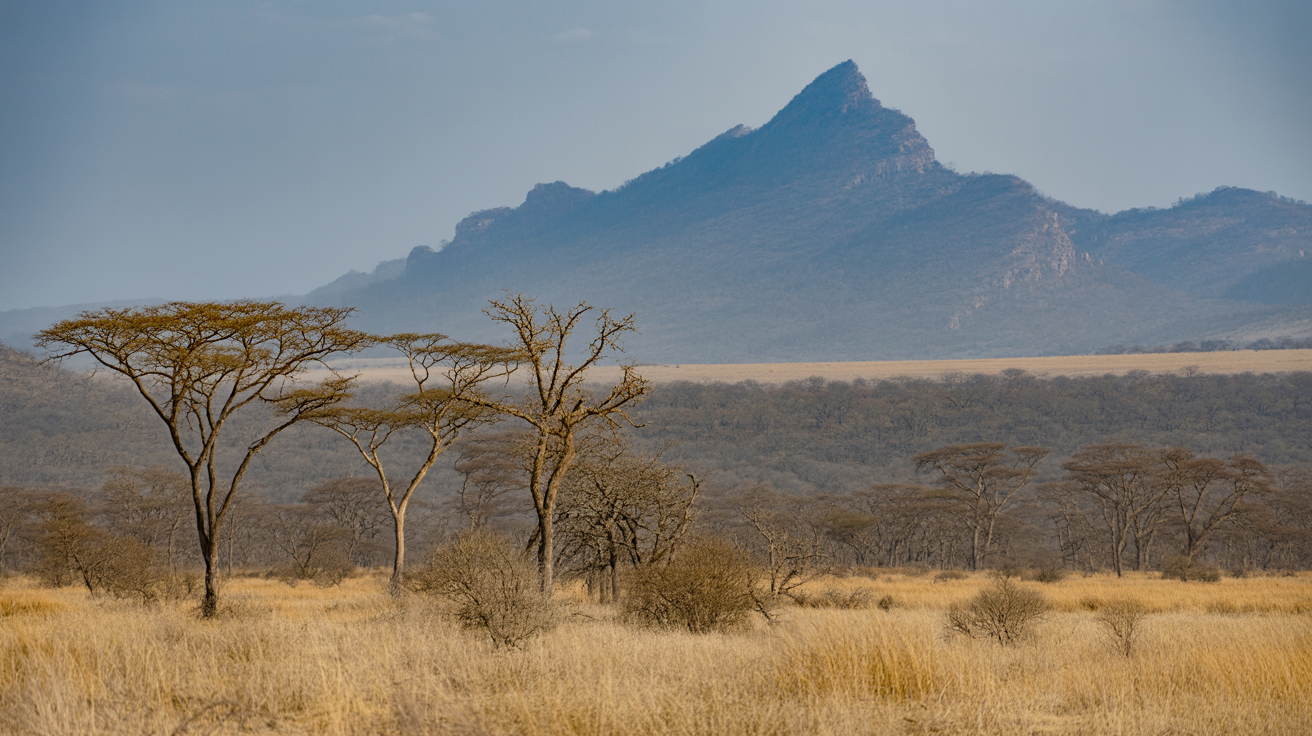
The quagga (Equus quagga quagga) was a distinctive subspecies of the plains zebra, notable for its unique pelage pattern: the anterior (front) portion of the body bore bold, dark brown and white stripes, while the posterior (hindquarters) faded to a uniform brown with little or no striping. Adult quaggas measured approximately 1.25–1.35 meters at the shoulder and weighed between 250–300 kilograms. Their skulls were robust, with pronounced nasal bones and a slightly convex profile, similar to other zebras but distinguishable by subtle cranial differences. Quaggas were highly social, forming herds of 30–50 individuals, often comprising a dominant stallion, several mares, and their offspring. These herds exhibited fission-fusion dynamics, frequently joining or splitting in response to resource availability and predation risk. Quaggas were obligate grazers, adapted to the nutrient-poor, arid grasslands of the Karoo and southern Highveld, with high-crowned teeth suited for processing tough grasses. Their keen senses of sight and hearing facilitated early detection of predators. Quaggas communicated through vocalizations, body postures, and facial expressions, and engaged in mutual grooming to reinforce social bonds. Their reproductive cycle was similar to other plains zebras, with a single foal born after a gestation of about 12–13 months. The quagga's striking appearance and ecological role made it a keystone grazer in its native habitat, influencing grassland structure and nutrient cycling.
Did you know?
The quagga was the first extinct animal to have its DNA analyzed, making it a pioneer in the field of ancient DNA research.
Research & sources
Wikipedia summary
The quagga is an extinct subspecies of the plains zebra that was endemic to South Africa until it was hunted to extinction in the late 19th century. It was long thought to be a distinct species, but mtDNA studies have supported it being a subspecies of plains zebra. A more recent study suggested that it was the southernmost cline or ecotype of the species.
Behaviour & social structure
Quaggas were diurnal, spending most daylight hours grazing in loose, mobile herds. They exhibited strong social cohesion, with individuals maintaining close proximity and engaging in frequent affiliative behaviors such as grooming and nuzzling. Herds were led by a dominant stallion, who defended the group from predators and rival males through displays of aggression, including biting, kicking, and vocalizations. Quaggas migrated seasonally in search of fresh grazing, often following rainfall patterns. They relied on vigilance and group alarm calls to detect and evade predators such as lions and hyenas. Unlike some zebra subspecies, quaggas were less water-dependent and could travel significant distances between water sources. Feeding occurred primarily during early morning and late afternoon, with midday periods spent resting and ruminating.
Reproduction & life cycle
Quaggas practiced a polygynous mating system, with dominant males monopolizing access to receptive females within their herd. Breeding was likely non-seasonal, as observed in extant plains zebras, though peaks may have occurred following periods of abundant forage. After a gestation period of approximately 12–13 months, mares gave birth to a single foal, which was able to stand and follow the mother within an hour of birth. Foals were nursed for up to a year and remained closely bonded to their mothers. Parental care was primarily provided by the mare, though the herd structure offered protection to vulnerable young. Sexual maturity was reached at around 2–3 years for females and 3–5 years for males.
Adaptations & survival
The quagga's reduced striping on the hindquarters is hypothesized to be an adaptation to the open, arid grasslands of southern Africa, possibly providing camouflage in drier habitats or aiding in thermoregulation. Their high-crowned, hypsodont teeth were specialized for grazing on coarse, fibrous grasses. Quaggas possessed strong limbs and hooves adapted for long-distance travel across hard, stony ground. Social adaptations included complex vocalizations and visual signals for communication, as well as coordinated group defense against predators. Their digestive system was efficient at extracting nutrients from low-quality forage, allowing survival in resource-poor environments.
Cultural significance
The quagga held significance in indigenous Khoisan cultures, featuring in oral traditions and as a source of meat and hides. In colonial times, it was both a curiosity and a symbol of the African wilderness, frequently depicted in art and literature. The quagga's extinction became an early example of human-driven species loss, influencing conservation awareness and policy in South Africa. The animal's name, derived from the Khoikhoi word for its call ('kwa-ha-ha'), remains in use for various organizations and projects dedicated to its memory and legacy.
Recent research
Recent genetic studies using mitochondrial DNA have confirmed the quagga as a subspecies of the plains zebra, rather than a separate species. Nuclear DNA analyses have further clarified its position as the southernmost ecotype of Equus quagga, with gradual clinal variation in striping patterns across the species' range. The Quagga Project, initiated in 1987, employs selective breeding of plains zebras to produce individuals with reduced striping, mimicking the quagga's appearance, though these animals are not genetically identical to the extinct subspecies. Ongoing research focuses on ancient DNA, population genetics, and the ecological role of quaggas in historical grassland ecosystems.
Videos
Habitat
Grassland
Conservation
The Quagga is currently classified as Extinct on the IUCN Red List.
Threats & challenges
The primary threat leading to the quagga's extinction was overhunting by European settlers for meat, hides, and to reduce competition with livestock. Habitat loss due to agricultural expansion further reduced their numbers. By the 1870s, wild populations had collapsed, and the last known individual died in captivity in Amsterdam in 1883. No direct threats exist today due to extinction, but related conservation challenges include genetic erosion in surviving plains zebra populations and debates over de-extinction or selective breeding projects (e.g., the Quagga Project), which aim to recreate quagga-like phenotypes but cannot restore the original genotype.
Taxonomy
Scientific name
Equus quagga quagga
- Kingdom
- Animalia
- Phylum
- Chordata
- Class
- Mammalia
- Order
- Perissodactyla
- Family
- Equidae
- Genus
- Equus
- Species
- quagga
Community notes
Share your observations about the Quagga.
No community notes yet. Be the first!
Discover more wildlife
More fascinating animals from the encyclopedia.