
About the Red-headed Agama
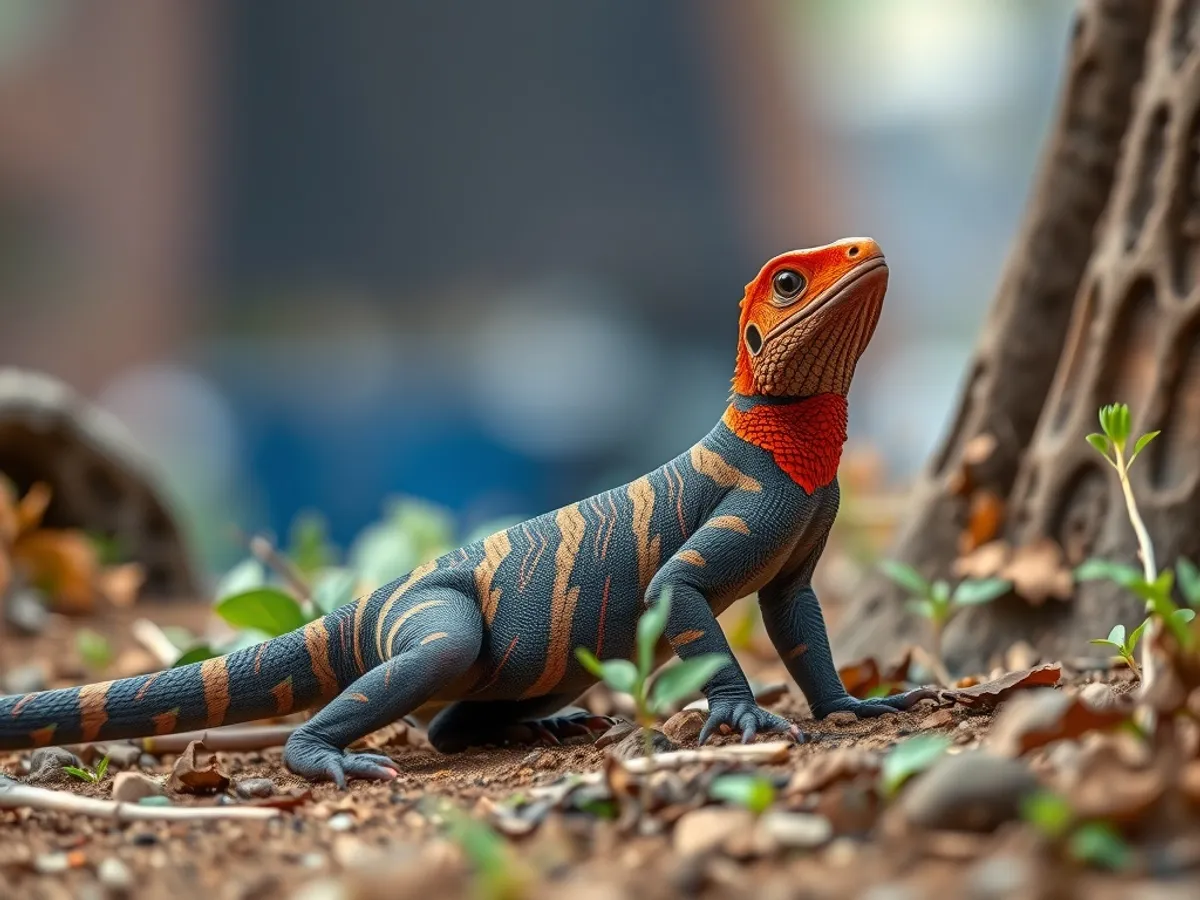
The Red-headed Agama is a striking lizard commonly found across sub-Saharan Africa, known for its vivid coloration and dynamic social behavior. Males are especially noticeable due to their bright orange to red heads and blue bodies during the breeding season, while females and non-dominant males are more subdued in color. These reptiles are highly adaptable, often seen basking on rocks, walls, and rooftops in both rural and urban settings. Agile and territorial, they communicate through head-bobbing displays and rapid movements to assert dominance or attract mates. Their ability to thrive around human habitation has contributed to their widespread presence.
Fascinating facts
Colorful Displays
Dominant males develop brilliant red or orange heads and blue bodies to attract females and deter rivals.
Urban Adaptation
Red-headed Agamas are commonly found in cities and towns, taking advantage of buildings and gardens as basking and hunting grounds.
Rapid Movements
These agamas are quick and agile, using sudden sprints and vertical jumps to escape predators or chase prey.
Detailed description
The Red-headed Agama (Agama agama) is a medium-sized lizard, typically reaching a total length of 30–40 cm, with males generally larger and more robust than females. Its most distinctive feature is the sexually dimorphic coloration: dominant breeding males display a vivid orange to red head, deep blue body, and tail, while females and subordinate males are usually brownish or olive with faint markings, providing camouflage. The species has a triangular head, well-developed limbs with sharp claws for climbing, and a laterally compressed tail aiding in balance and agility. Agama agama is diurnal, relying on keen vision to detect prey and predators. It is highly territorial, with males defending prime basking and feeding sites through visual displays such as head-bobbing, push-ups, and lateral flattening. Social structure is typically polygynous, with a dominant male presiding over a group of females and subordinate males. The species is oviparous, with females laying clutches of 5–12 eggs in moist, sandy soil. Adapted to both natural and anthropogenic environments, Red-headed Agamas are often observed basking on rocks, walls, or rooftops, and they exhibit remarkable tolerance to urbanization. Their skin can change shade slightly to regulate body temperature or signal mood, and they possess autotomy, the ability to shed their tail to escape predators. The species is widespread across sub-Saharan Africa and has been introduced to several non-native regions, including parts of the Caribbean and Florida.
Did you know?
Red-headed Agamas are so adaptable that they have established populations far outside their native range, including in Florida, USA.
Research & sources
Behaviour & social structure
Red-headed Agamas are primarily insectivorous, actively foraging during the day for ants, beetles, grasshoppers, termites, and occasionally small vertebrates or plant matter. They employ a sit-and-wait hunting strategy, remaining motionless before rapidly lunging at prey. Social interactions are complex; males establish and defend territories using a combination of visual signals (head-bobbing, body inflation, color display) and occasional physical combat. Females and juveniles form loose groups within a dominant male's territory, with a clear social hierarchy. Daily routines include early morning basking to raise body temperature, followed by periods of active foraging, interspersed with basking and social interactions. At night, they seek shelter in crevices, under rocks, or in wall cracks to avoid nocturnal predators and temperature extremes.
Reproduction & life cycle
Breeding occurs during the rainy season, which varies regionally but often spans from March to October. Males intensify their coloration and display behaviors to attract females and deter rivals. Courtship involves elaborate head-bobbing and chasing. After mating, females excavate shallow nests in loose, moist soil, laying 5–12 eggs per clutch, with up to three clutches per season depending on environmental conditions. Incubation lasts 8–10 weeks, influenced by temperature and humidity. There is no parental care post-oviposition; hatchlings are independent and vulnerable to predation. Sexual maturity is typically reached at 14–18 months.
Adaptations & survival
Agama agama exhibits several adaptations for survival in diverse environments. Its cryptic coloration in females and juveniles offers camouflage from predators, while the bright colors of dominant males serve as both a deterrent to rivals and an attractant to females. The species' robust limbs and claws facilitate climbing and rapid escape. Behavioral thermoregulation, such as basking and seeking shade, allows them to maintain optimal body temperature. Tail autotomy provides an effective escape mechanism from predators. Their tolerance for disturbed habitats and ability to exploit urban structures for basking and nesting have enabled them to thrive in human-altered landscapes.
Cultural significance
In several West African cultures, the Red-headed Agama is associated with vitality and agility, sometimes appearing in folklore as a symbol of alertness or transformation. Its striking appearance has made it a subject of curiosity and admiration, and in some regions, it is believed to bring good luck if seen basking near homes. However, there is little evidence of significant traditional medicinal or economic use. In modern times, it is sometimes kept as an exotic pet, and its presence in urban areas has contributed to its recognition as a charismatic urban wildlife species.
Recent research
Recent studies have focused on the species' rapid adaptation to urban environments, including changes in diet, behavior, and microhabitat selection. Genetic analyses have revealed considerable diversity across its range, suggesting ongoing speciation and adaptation. Research in introduced populations (e.g., Florida, USA) has examined ecological impacts and potential competition with native lizards. Behavioral studies have detailed the role of coloration in social signaling and mate selection, while physiological research has explored thermoregulation and stress responses in urban versus rural populations.
Sources
The Agama agama complex: systematics, distribution and ecology
Wagner, P., Wilms, T., Böhme, W. (2009)
scientificAgama agama: The IUCN Red List of Threatened Species 2021
IUCN SSC Amphibian and Reptile Specialist Group
conservationAgama agama (Linnaeus, 1758): Taxonomy, Distribution, and Ecology
Uetz, P., Freed, P., & Hošek, J. (Eds.) (2023)
scientificAgama agama: The IUCN Red List of Threatened Species 2021
IUCN SSC Amphibian Specialist Group
conservationVideos
Habitat
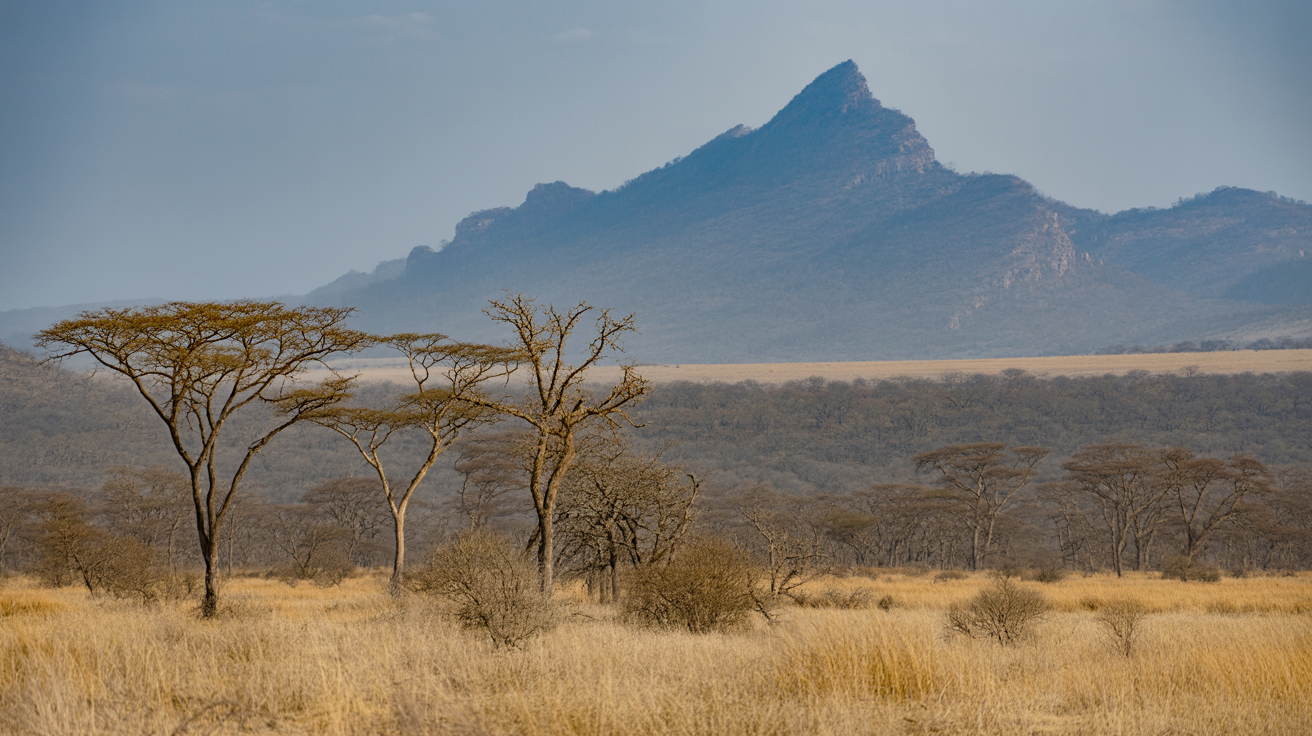
Savanna and urban areas
 Africa
Savanna
Grasslands with scattered trees, characterized by seasonal rainfall and home to diverse grazing animals and predators.
 Various Continental Regions
Grassland
Open areas dominated by grasses rather than trees, supporting numerous herbivores and their predators.
 Global
Forest
Wooded areas with significant tree cover and diverse plant and animal communities.
Conservation
The Red-headed Agama is currently classified as Least Concern on the IUCN Red List.
Threats & challenges
Currently assessed as Least Concern by the IUCN, Agama agama faces localized threats from habitat destruction, urban expansion, and predation by domestic animals such as cats and dogs. In some regions, they are collected for the pet trade, but this has not significantly impacted wild populations. Introduced populations in non-native areas may face competition with local species or become invasive. Climate change poses a potential long-term threat by altering habitat suitability and prey availability. Overall, populations remain stable, with adaptability to urban environments mitigating many traditional threats.
Taxonomy
Scientific name
Agama agama
- Kingdom
- Animalia
- Phylum
- Chordata
- Class
- Reptilia
- Order
- Squamata
- Family
- Agamidae
- Genus
- Agama
- Species
- agama
Community notes
Share your observations about the Red-headed Agama.
No community notes yet. Be the first!
Discover more wildlife
More fascinating animals from the encyclopedia.