
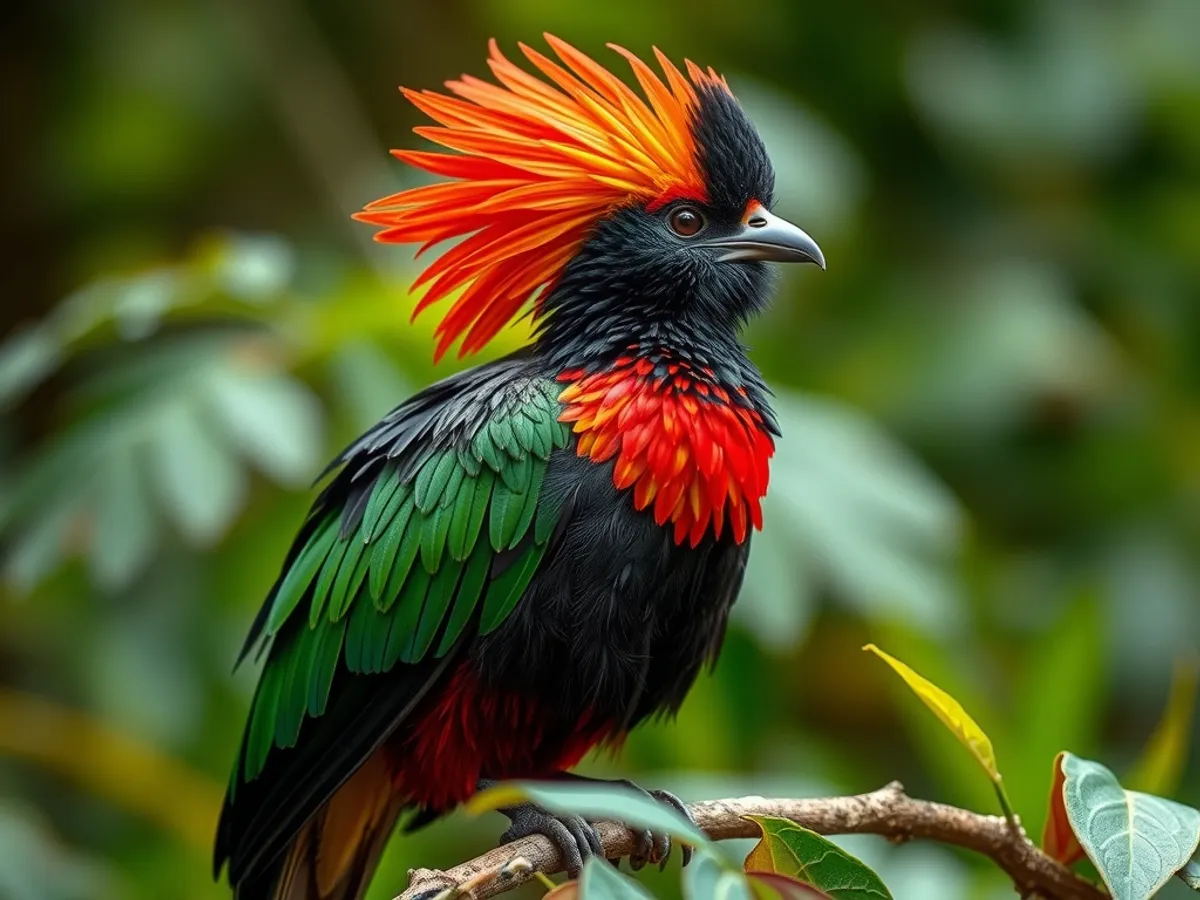
About the Resplendent Quetzal
Pharomachrus mocinno is famous for a tail it does not actually have. The metre-long streamers trailing behind a breeding male are not tail feathers at all — they are enormously elongated upper tail coverts, the feathers that normally just cover the base of the tail, and they grow fresh each breeding season and are moulted afterward. The green is structural, produced by melanin platelets in the feather barbules that scatter light, so the bird flashes from emerald to gold to violet-blue depending on the angle, while the breast is pigmented crimson. Quetzals nest in cavities in soft, rotting trees, which they excavate or enlarge with a bill too weak to work sound wood — so the species depends on standing dead trees, and clearing them is as damaging as clearing the forest. The male sits on the eggs with his streamers folded forward out of the hole and hanging down the trunk outside, which is often the only visible sign of a nest. Quetzals are largely frugivorous, and a keystone food is the wild avocado of the genus Ocotea, swallowed whole and the stone regurgitated, which makes the bird one of the few dispersers large enough to move those seeds. It was sacred to the Maya and Aztec, whose rulers wore its plumes; the bird was captured, plucked and released, and killing one was reportedly a capital offence.
Fascinating facts
Spectacular Plumage
Male Resplendent Quetzals have iridescent green feathers and extremely long tail coverts, making them among the most spectacularly adorned birds in the world.
Fruit Specialist
Quetzals play a key ecological role by eating wild avocados and dispersing their seeds throughout the forest.
Cloud Forest Resident
They inhabit humid, montane cloud forests at elevations between 1,000 and 3,000 meters in Central America, especially in Guatemala and Costa Rica.
Detailed description
The Resplendent Quetzal (Pharomachrus mocinno) is a medium-sized trogon, measuring 36–40 cm (14–16 in) in body length, with adult males displaying tail streamers that can extend up to 65 cm (26 in) beyond the body. Males are renowned for their iridescent emerald-green plumage, golden-green mantle, and vibrant crimson breast and belly, while females are generally duller with shorter tails and less pronounced coloration, exhibiting olive-green upperparts and a grayish breast. The species has a short, broad bill—yellow in males and black in females—adapted for fruit consumption. Quetzals are primarily arboreal, spending most of their lives in the mid to upper canopy of montane cloud forests at elevations between 1,000 and 3,000 meters. They are solitary or found in pairs, except during the breeding season. Their large, forward-facing eyes provide excellent binocular vision for navigating dense foliage. The species is known for its quiet, unobtrusive behavior, but males become more conspicuous during courtship displays, performing undulating flights to showcase their tail feathers. The Resplendent Quetzal is a cavity nester, relying on decaying trees or abandoned woodpecker holes for breeding. Its specialized diet, primarily consisting of fruits from the Lauraceae family, plays a crucial ecological role in seed dispersal within cloud forest ecosystems. Despite their striking appearance, quetzals are elusive and sensitive to habitat disturbance, making them challenging to observe in the wild.
Did you know?
The name 'quetzal' comes from Nahuatl, meaning 'precious' or 'sacred', reflecting the bird's importance in ancient Mesoamerican civilizations.
Research & sources
Wikipedia summary
The resplendent quetzal is a small bird found in Central America and southern Mexico that lives in tropical forests, particularly montane cloud forests. They are part of the family Trogonidae and have two recognized subspecies, P. m. mocinno and P. m. costaricensis. Like other quetzals, the resplendent is mostly omnivorous; its diet mainly consists of fruits of plants in the laurel family, Lauraceae, but it occasionally also preys on insects, lizards, frogs and snails.
Behaviour & social structure
Resplendent Quetzals are diurnal and spend most of their active hours foraging in the canopy, rarely descending to the forest floor. Their feeding behavior is characterized by short sallies from perches to pluck fruits, particularly wild avocados (Persea spp.), which they swallow whole before regurgitating the seeds. They supplement their diet with insects (such as beetles and wasps), small vertebrates (frogs, lizards), and snails, especially during the breeding season when protein demand increases. Quetzals are generally solitary but may form loose associations around abundant fruiting trees. Males are territorial during the breeding season, defending nesting sites and performing elaborate aerial displays accompanied by melodious calls. Daily routines include preening, sunning, and periods of inactivity, often remaining motionless for extended periods to avoid detection by predators.
Reproduction & life cycle
The breeding season varies geographically but typically occurs from March to June, coinciding with the onset of the rainy season and peak fruit availability. Quetzals are monogamous during the breeding season, with pairs cooperating in nest excavation—usually in decaying trees or using abandoned woodpecker holes 5–30 meters above ground. The female lays 1–2 pale blue eggs, which are incubated by both parents for 17–19 days. After hatching, both parents share feeding duties, regurgitating fruit pulp and occasionally bringing animal prey to the chicks. Nestlings fledge after about 23–31 days but may remain near the nest for several days as they develop flight skills. High nest predation rates and limited availability of suitable nesting sites are significant reproductive constraints.
Adaptations & survival
The Resplendent Quetzal exhibits several adaptations for life in the cloud forest canopy. Its zygodactyl feet (two toes facing forward, two backward) provide a strong grip on branches, aiding in maneuverability among dense foliage. The iridescent plumage not only serves as camouflage among sun-dappled leaves but also plays a role in sexual selection. The short, broad bill is specialized for consuming large fruits, and the digestive tract is adapted for rapid seed passage, facilitating effective seed dispersal. Quetzals have a relatively low metabolic rate, which is advantageous in the cool, humid montane environment. Their cryptic behavior and preference for high, dense canopy reduce predation risk.
Cultural significance
The Resplendent Quetzal holds profound cultural and symbolic significance throughout Mesoamerica. Revered by ancient Maya and Aztec civilizations, the bird was considered a symbol of liberty, wealth, and divine power. Its tail feathers were highly prized, reserved for royalty and religious ceremonies, and never used to kill the bird, as it was believed to die in captivity. The quetzal is the national bird of Guatemala, featured on the country's flag, coat of arms, and currency (the quetzal). It continues to inspire art, folklore, and conservation efforts, embodying the spirit of freedom and the importance of preserving natural heritage.
Recent research
Recent research has focused on the quetzal's role as a keystone seed disperser in cloud forest ecosystems, highlighting its dependence on Lauraceae fruiting cycles and the mutualistic relationship with these trees. Studies using radio telemetry and camera traps have provided new insights into movement patterns, habitat use, and nesting success. Genetic analyses have clarified the distinction between the two recognized subspecies (P. m. mocinno and P. m. costaricensis), revealing subtle morphological and vocal differences. Conservation research emphasizes the importance of transboundary protected areas and ecological corridors to ensure population viability. Ongoing studies are investigating the impacts of climate change on cloud forest phenology and quetzal reproductive success.
Videos
Habitat
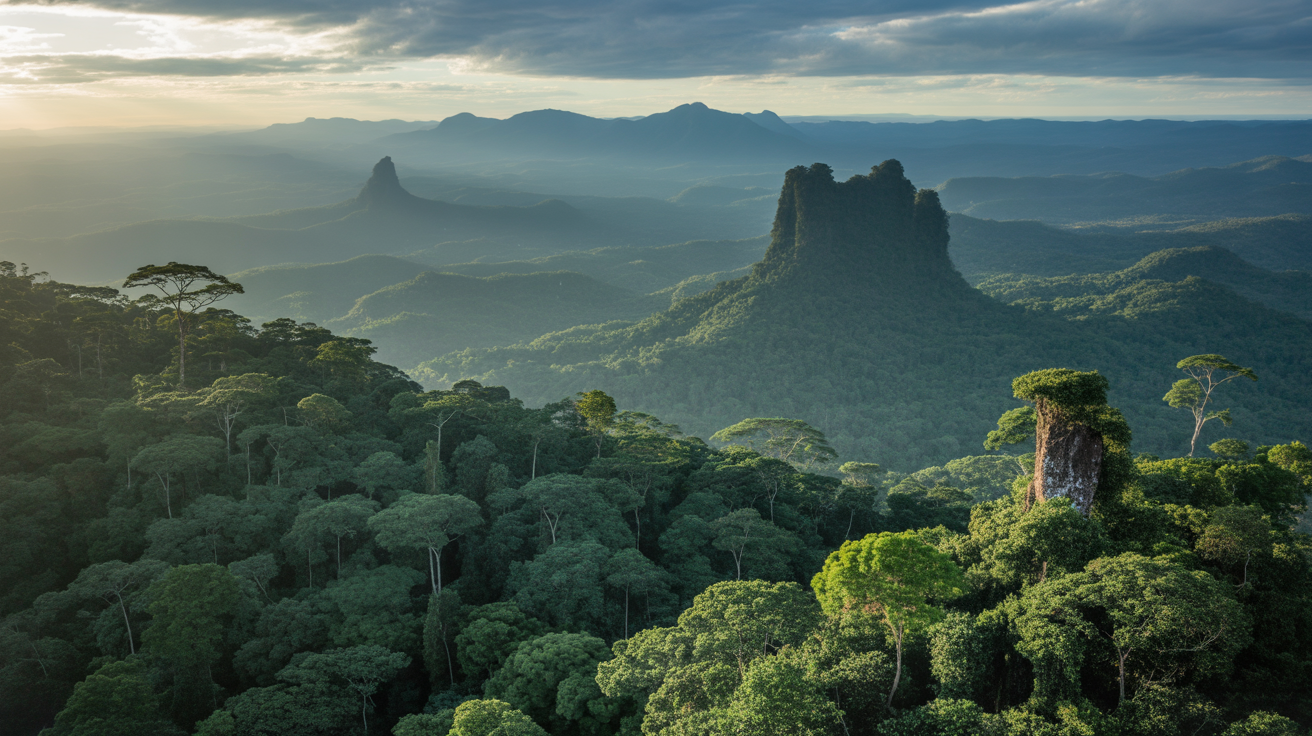
Cloud forests
 Elevated Terrain
Mountain
High-altitude environments with varying climates and specialized wildlife adapted to rugged terrain and thin air.
 Tropical Regions
Rainforest
Dense, wet forests with the highest biodiversity on Earth, containing more than half of the world's plant and animal species.
 Global
Forest
Wooded areas with significant tree cover and diverse plant and animal communities.
Conservation
The Resplendent Quetzal is currently classified as Near Threatened on the IUCN Red List.
Threats & challenges
The primary threat to the Resplendent Quetzal is habitat loss and fragmentation due to deforestation for agriculture, logging, and infrastructure development. The species is highly sensitive to changes in forest structure, especially the loss of mature trees needed for nesting. Climate change poses additional risks by altering cloud forest dynamics and fruiting phenology. Illegal capture for the pet trade and collection of tail feathers, though less common today, have historically impacted populations. Current population trends are declining, with estimates suggesting fewer than 50,000 mature individuals remaining. Conservation challenges include protecting remaining cloud forest habitats, maintaining habitat connectivity, and promoting sustainable land use practices in the region.
Taxonomy
Scientific name
Pharomachrus mocinno
- Kingdom
- Animalia
- Phylum
- Chordata
- Class
- Aves
- Order
- Trogoniformes
- Family
- Trogonidae
- Genus
- Pharomachrus
- Species
- mocinno
Community notes
Share your observations about the Resplendent Quetzal.
No community notes yet. Be the first!
Discover more wildlife
More fascinating animals from the encyclopedia.