
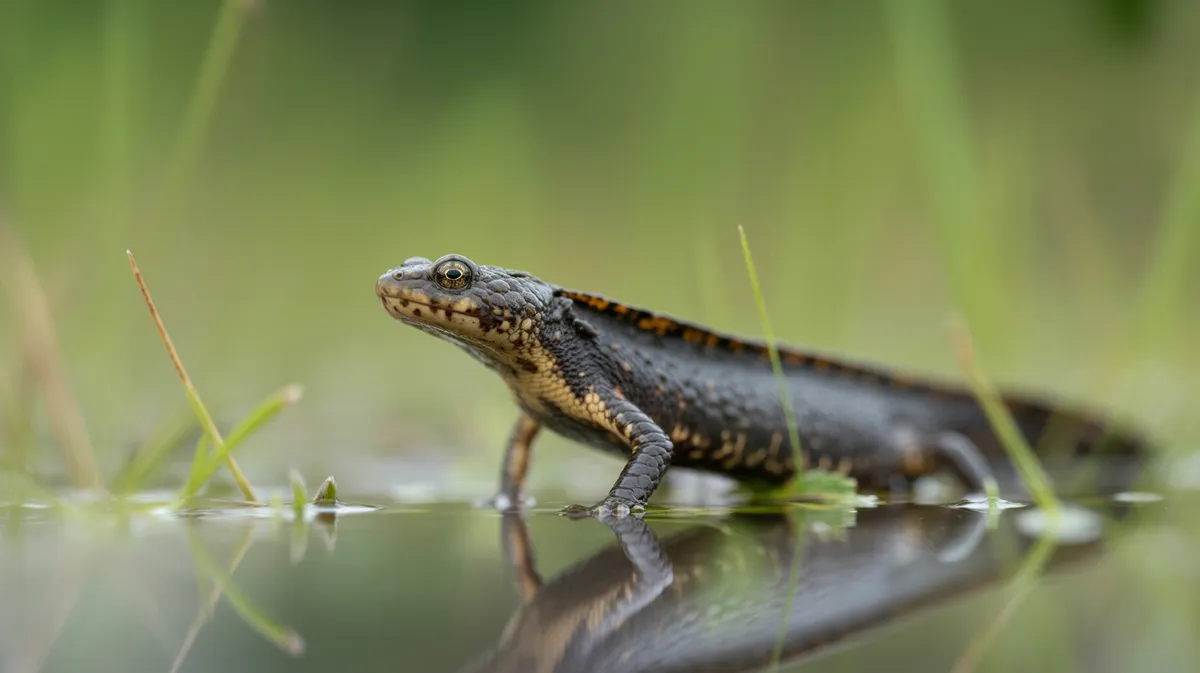
About the Romanian Crested Newt
The Romanian Crested Newt is a subspecies of the Northern Crested Newt, distinguished by its elongated body and strikingly jagged crest running along the back and tail of males during the breeding season. It inhabits lowland freshwater wetlands, ponds, and slow-moving waters primarily in Romania and adjacent parts of the eastern Danube basin. Its dark, warty skin often features yellow or orange belly coloration, adorned with black spots. This amphibian spends the majority of its life on land, returning to water only to breed, and is highly sensitive to habitat disturbance. Its populations are threatened by wetland drainage, pollution, and habitat fragmentation.
Fascinating facts
Impressive Crest
During the breeding season, males develop a tall, jagged crest that runs from the head to the tail, which helps them attract mates.
Land and Water
Although they breed in water, Romanian Crested Newts spend much of the year on land, often hiding under logs, stones, or leaf litter.
Indicator Species
Their presence indicates good water quality and healthy wetland habitats, making them important for ecosystem monitoring.
Detailed description
The Romanian Crested Newt (Triturus cristatus dobrogicus) is a robust, semi-aquatic amphibian distinguished by its elongated, laterally compressed body, which can reach lengths of 14–18 cm, with females generally larger than males. Its skin is granular and dark brown to black dorsally, often with lighter speckling, while the ventral surface is bright yellow to orange, marked with irregular black spots unique to each individual. During the breeding season, males develop a prominent, jagged dorsal crest that extends from the head to the tail, interrupted only at the base of the tail, and a silvery-blue flash along the tail sides, both serving as visual cues in courtship. The limbs are relatively long and strong, aiding in both terrestrial locomotion and swimming. Outside the breeding season, the crest regresses and the coloration becomes duller, providing camouflage in terrestrial habitats. The species is primarily nocturnal, seeking shelter under logs, stones, or dense vegetation during the day. It is a solitary animal except during the breeding season, when temporary aggregations form in aquatic habitats. The Romanian Crested Newt is highly sensitive to water quality and relies on unpolluted, fish-free ponds for successful breeding. Its life cycle is marked by a pronounced terrestrial phase, with individuals spending up to three-quarters of the year on land, often traveling considerable distances between aquatic and terrestrial habitats.
Did you know?
The Romanian Crested Newt is a strict habitat specialist and can be used as an indicator species for the health of wetland ecosystems.
Research & sources
Behaviour & social structure
Romanian Crested Newts are predominantly nocturnal, emerging at dusk to forage for invertebrates such as earthworms, insects, mollusks, and crustaceans. They employ a sit-and-wait hunting strategy, remaining motionless and ambushing prey with rapid tongue projection. Outside the breeding season, individuals are highly secretive and solitary, minimizing encounters with conspecifics. During the aquatic breeding phase, males display elaborate courtship rituals, including tail-fanning and undulating movements to attract females and direct pheromones toward them. Territorial disputes among males are common, involving visual displays and occasional physical contact. Daily routines involve alternating periods of foraging and sheltering, with increased activity during humid or rainy nights. On land, they utilize burrows or natural crevices for protection from desiccation and predators.
Reproduction & life cycle
Breeding occurs from March to May, triggered by rising temperatures and increased rainfall. Males arrive at breeding ponds first and establish territories. Courtship involves complex displays, with the male performing tail-fanning and body undulations to entice the female. Fertilization is internal; the male deposits a spermatophore, which the female picks up with her cloaca. Females lay between 200 and 400 eggs per season, attaching each egg individually to submerged aquatic vegetation. The eggs hatch after 10–20 days, depending on water temperature. Larvae are fully aquatic, possessing external gills and a prominent tail fin, and undergo metamorphosis after 2–4 months. There is no parental care after egg deposition. Juveniles leave the water and adopt a terrestrial lifestyle until sexual maturity, which is reached after 3–4 years.
Adaptations & survival
The Romanian Crested Newt exhibits several adaptations for its dual aquatic-terrestrial lifestyle. Its granular skin secretes toxins that deter many predators and helps prevent desiccation. The striking breeding crest and tail coloration in males are evolutionary adaptations for sexual selection, enhancing reproductive success. The ability to absorb oxygen through the skin allows survival in low-oxygen aquatic environments. During terrestrial phases, the newt can tolerate periods of drought by seeking moist refuges and reducing metabolic activity. Its cryptic coloration outside the breeding season provides camouflage against terrestrial predators. The species' strong homing instinct enables individuals to return to the same breeding sites annually, even after long terrestrial migrations.
Cultural significance
While the Romanian Crested Newt does not have a prominent role in Romanian folklore or mythology, it is increasingly recognized as a flagship species for wetland conservation in the Danube basin. Its presence is often used as an indicator of healthy aquatic ecosystems, and it features in environmental education programs aimed at raising awareness about amphibian conservation. In some rural areas, newts have historically been associated with superstitions or used in traditional remedies, though such practices are now rare and discouraged by conservationists.
Recent research
Recent genetic studies have clarified the taxonomic status of T. c. dobrogicus, confirming its distinction from other Triturus cristatus subspecies based on mitochondrial DNA and morphometric analyses. Ongoing research focuses on the species' population genetics, dispersal patterns, and habitat requirements, with radio-tracking studies revealing extensive terrestrial movements and the importance of habitat connectivity. Conservation projects in Romania and neighboring countries are testing the effectiveness of pond restoration and fish removal in boosting breeding success. Climate change vulnerability assessments are underway to model future range shifts and inform adaptive management strategies.
Sources
The Crested Newt Triturus cristatus superspecies: new taxa, distribution and conservation
Arntzen, J.W. & Wallis, G.P. (1999)
scientificTriturus cristatus: The IUCN Red List of Threatened Species 2020
IUCN SSC Amphibian Specialist Group
conservationThe crested newt Triturus cristatus superspecies: new taxa, distribution and conservation
Arntzen, J.W., Wallis, G.P. (1999)
scientificTriturus cristatus. The IUCN Red List of Threatened Species 2023
IUCN SSC Amphibian Specialist Group
conservationVideos
Habitat
Lowland freshwater wetlands, ponds, and marshes
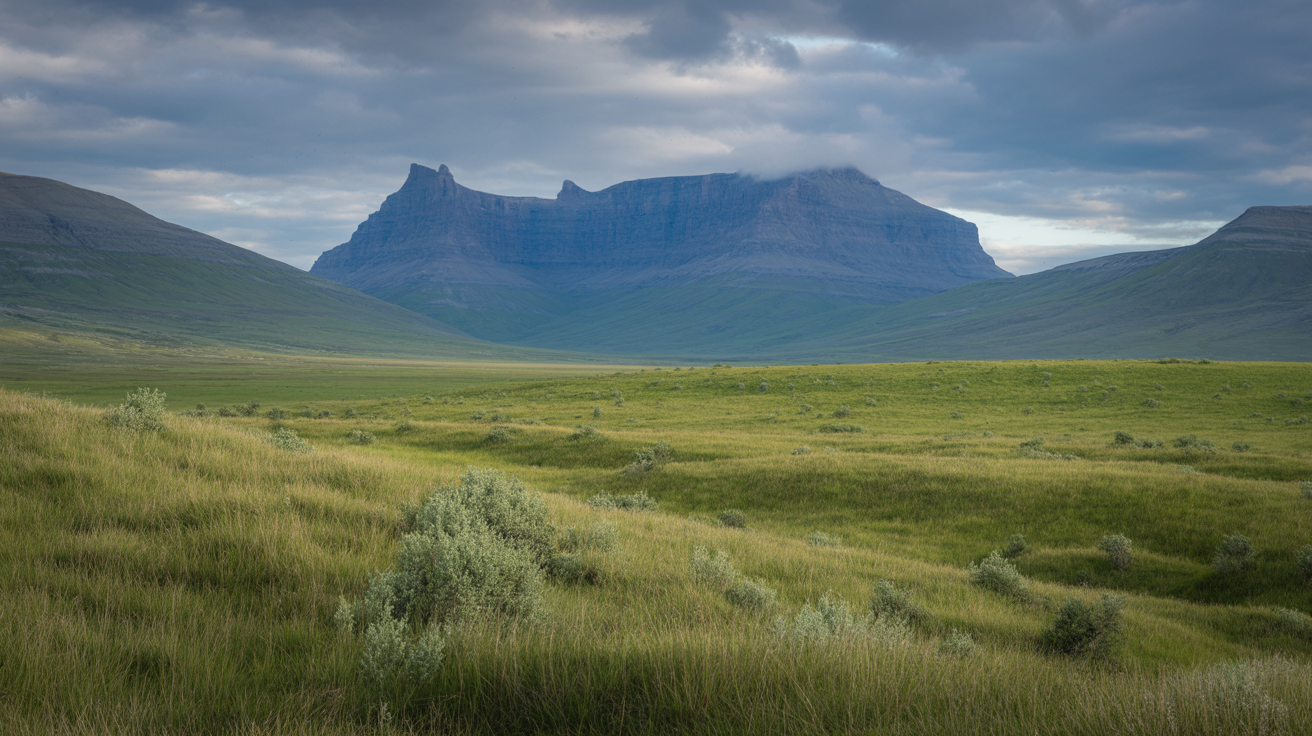 Various Continental Regions
Grassland
Open areas dominated by grasses rather than trees, supporting numerous herbivores and their predators.
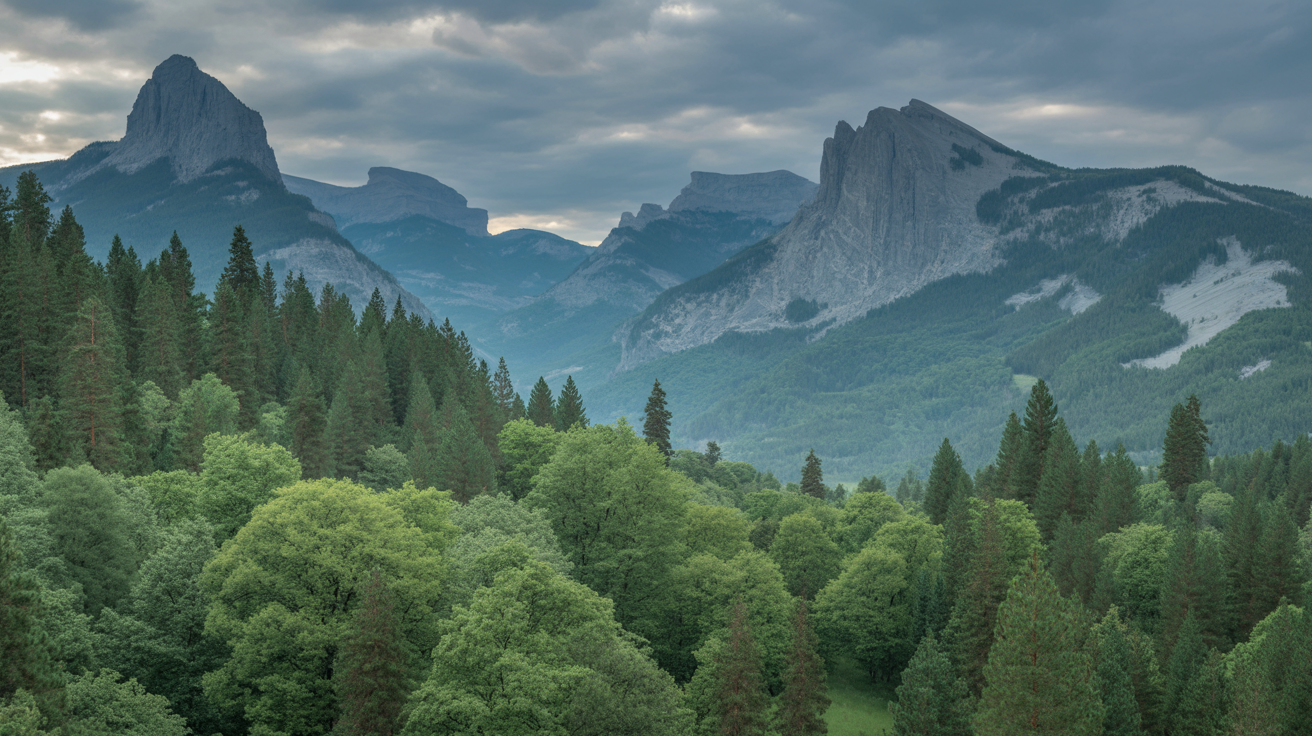 Global
Forest
Wooded areas with significant tree cover and diverse plant and animal communities.
 Global
Freshwater
Lakes, rivers, and wetlands with diverse aquatic ecosystems.
Conservation
The Romanian Crested Newt is currently classified as Vulnerable on the IUCN Red List.
Threats & challenges
Major threats include habitat loss due to wetland drainage, agricultural expansion, and urban development, which fragment and degrade essential breeding and terrestrial habitats. Pollution from pesticides, fertilizers, and industrial runoff reduces water quality and egg/larval survival rates. Introduction of predatory fish and invasive species into breeding ponds leads to high larval mortality. Climate change poses additional risks by altering hydrological regimes and increasing the frequency of droughts. Road mortality during seasonal migrations and genetic isolation due to habitat fragmentation further threaten population viability. Recent surveys indicate declining populations across much of its range, with local extinctions reported in heavily modified landscapes.
Taxonomy
Scientific name
Triturus cristatus dobrogicus
- Kingdom
- Animalia
- Phylum
- Chordata
- Class
- Amphibia
- Order
- Urodela
- Family
- Salamandridae
- Genus
- Triturus
- Species
- dobrogicus
Community notes
Share your observations about the Romanian Crested Newt.
No community notes yet. Be the first!
Discover more wildlife
More fascinating animals from the encyclopedia.