
About the Rose Hair Tarantula
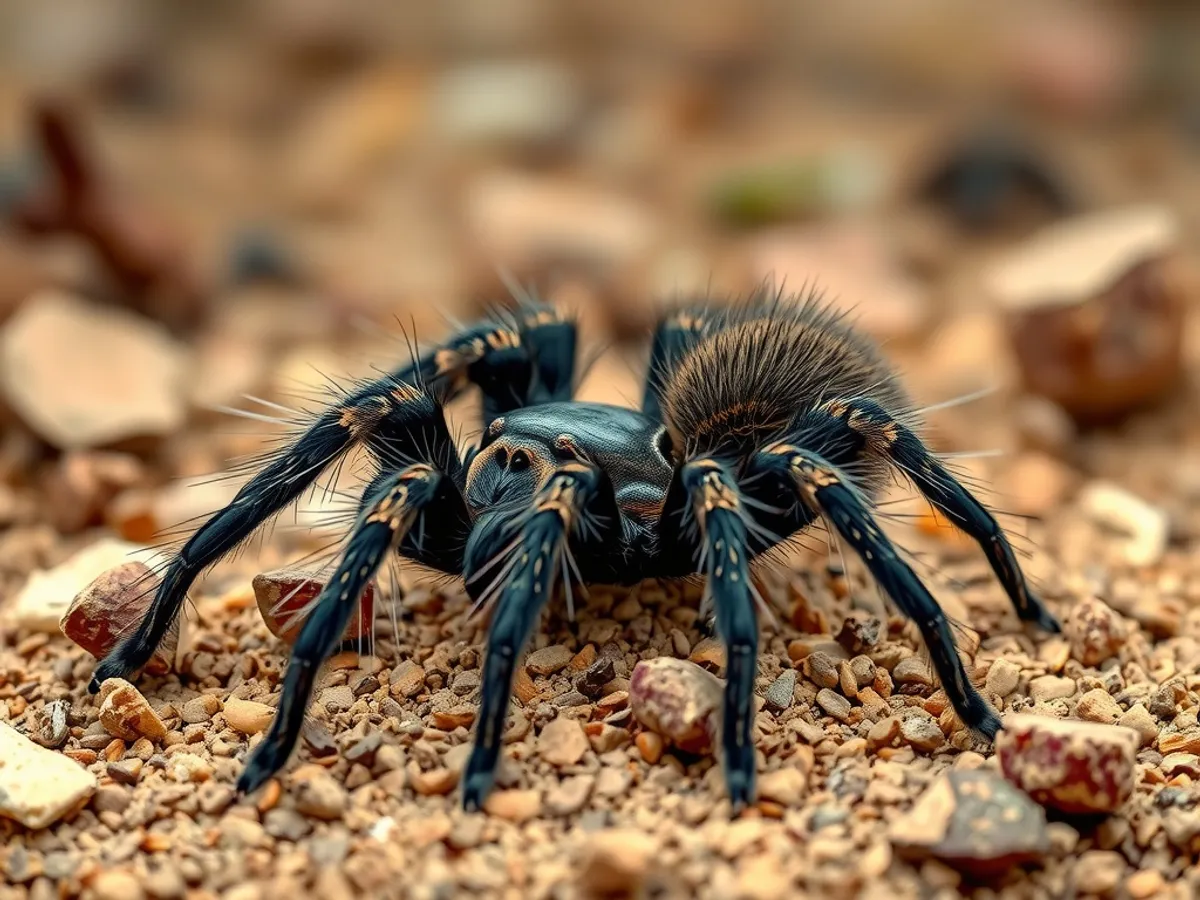
The rose hair tarantula's first line of defence is not its fangs. Like most New World tarantulas it carries urticating hairs on its abdomen, and when threatened it turns its back on the danger and kicks them off in a cloud with its hind legs — barbed, irritating hairs that lodge in the eyes, nose and airways of a would-be predator and make the whole experience emphatically not worth repeating. Biting is a last resort, and its venom is medically insignificant to humans; the bald patch that appears on an older spider's abdomen is simply where it has flicked its hairs away. It spins silk, but never to catch anything — no tarantula builds a snare web. It lines a burrow instead and waits, detecting prey by vibration rather than sight, then closes the last distance in a rush. It grows by moulting, shedding its entire exoskeleton — including the lining of its lungs and stomach — and can regrow a lost leg over successive moults. Females are remarkably long-lived, often passing twenty years, while males usually die within months of reaching maturity.
Fascinating facts
Docile Nature
Rose Hair Tarantulas are renowned for their calm demeanor, making them one of the most popular tarantulas in the pet trade.
Desert Adapted
They are well adapted to survive in arid environments with sparse vegetation in South America.
Voracious Eater
Their diet consists of insects and small invertebrates, which they ambush using their speed and stealth.
Detailed description
The Rose Hair Tarantula (Grammostola rosea) is a robust terrestrial spider, typically reaching a leg span of 12–15 cm (4.7–6 in) and weighing between 15–20 grams. Its carapace and legs are covered in fine, rose-tinted setae (hairs), which can appear pink, copper, or even grayish depending on the individual and lighting. The species possesses eight eyes arranged in two rows, providing limited but effective vision, while tactile and vibrational senses are highly developed. The chelicerae house strong fangs capable of subduing prey, and the tarantula’s venom, though mild to humans, is potent enough to immobilize insects and small vertebrates. Rose Hair Tarantulas are solitary and territorial, spending most of their lives in silk-lined burrows that they excavate or occupy under rocks and fallen logs. They are primarily nocturnal, emerging at dusk to ambush prey. Molting, a critical process for growth and regeneration, occurs several times throughout their lifespan, which can exceed 15 years in captivity. Sexual dimorphism is subtle, with mature males generally having longer legs and smaller abdomens compared to females. Their calm demeanor and relatively slow movement contribute to their popularity in the exotic pet trade.
Did you know?
When threatened, Rose Hair Tarantulas may rear up and display their fangs, but they rarely bite and their venom is mild to humans.
Research & sources
Behaviour & social structure
Grammostola rosea is a sit-and-wait predator, relying on stealth and patience to capture prey such as insects, small lizards, and occasionally small mammals. It uses sensitive leg hairs to detect vibrations and chemical cues in the environment. When threatened, it may rear up and display its fangs, but more commonly it uses its hind legs to flick urticating hairs from its abdomen as a defensive measure, which can irritate the skin and mucous membranes of potential predators. Social interactions are minimal outside of mating, and individuals are highly territorial, often engaging in aggressive displays if another tarantula encroaches on their burrow. Daily activity is largely crepuscular or nocturnal, with individuals spending daylight hours hidden and emerging at night to hunt or explore. Feeding is infrequent, and the species can endure long periods (weeks to months) without food, especially during pre-molt fasting.
Reproduction & life cycle
Mating typically occurs during the austral spring and summer (September to March), when mature males leave their burrows in search of receptive females. Courtship involves a series of leg-tapping and vibrational signals to avoid being mistaken for prey. After successful mating, the female may produce an egg sac containing 100–400 eggs, which she guards vigilantly within her burrow for 6–8 weeks. Spiderlings emerge fully formed and remain in the maternal burrow for a short period before dispersing. There is no parental care beyond egg sac protection, and cannibalism of males by females post-mating has been observed, though it is not universal. Sexual maturity is reached in 3–5 years, with males generally having a shorter lifespan post-maturity (1–2 years) compared to females, which may live over 15 years.
Adaptations & survival
Rose Hair Tarantulas possess several adaptations for arid environments, including a low metabolic rate and the ability to conserve water by minimizing activity during the heat of the day. Their burrowing behavior provides stable microclimates and protection from predators. Urticating hairs serve as an effective defense against mammals and birds. The tarantula’s exoskeleton is highly resistant to desiccation, and its book lungs are adapted for efficient gas exchange in dry conditions. Their cryptic coloration aids in camouflage among rocks and soil. Behavioral adaptations include fasting during unfavorable conditions and the ability to regenerate lost limbs during molting.
Cultural significance
In South American folklore, tarantulas are often misunderstood and associated with fear or superstition, though Grammostola rosea itself does not feature prominently in indigenous mythology. In modern culture, it is celebrated among arachnid enthusiasts for its docility and ease of care, becoming one of the most popular tarantula species in the global pet trade. Educational programs and zoos frequently use this species to promote arachnid conservation and dispel myths about spider aggression and danger.
Recent research
Recent studies have focused on the species’ venom composition, revealing a complex mixture of peptides with potential biomedical applications, including antimicrobial and analgesic properties. Research into their molting cycles and growth rates has provided insights into tarantula longevity and health in captivity. Ongoing ecological studies are examining the impact of habitat fragmentation on population genetics and dispersal. Additionally, behavioral research has explored stress responses in captive versus wild individuals, informing best practices for husbandry and welfare.
Sources
The Biology, Husbandry, and Veterinary Care of the Chilean Rose Tarantula (Grammostola rosea)
Stanley A. Schultz, Marguerite J. Schultz (2009)
scientificThe Biology, Husbandry, and Veterinary Care of Tarantulas
Stanley A. Schultz & Marguerite J. Schultz (2009)
scientificVideos
Habitat
Arid scrublands and deserts


Conservation
The Rose Hair Tarantula is currently classified as Least Concern on the IUCN Red List.
Threats & challenges
While currently listed as Least Concern by the IUCN, Grammostola rosea faces localized threats from habitat destruction due to agriculture, mining, and urbanization in its native range. Over-collection for the pet trade has historically impacted wild populations, though most captive individuals are now bred in captivity. Pesticide use and climate change pose additional risks by altering habitat quality and prey availability. Population trends are stable, but continued monitoring is necessary to ensure sustainable management, particularly as demand in the exotic pet market persists.
Taxonomy
Scientific name
Grammostola rosea
- Kingdom
- Animalia
- Phylum
- Arthropoda
- Class
- Arachnida
- Order
- Araneae
- Family
- Theraphosidae
- Genus
- Grammostola
- Species
- rosea
Where to see a rose hair tarantula
10 zoos and aquariums in 1 country are recorded as keeping this species.
 Santa Barbara Zoological Gardens🇺🇸 Santa Barbara, United States
- 🦁Big Bear Alpine Zoo🇺🇸 Big Bear Lake, United States
- 🦁Dakota Zoo🇺🇸 Bismarck, United States
 Louisville Zoo🇺🇸 United States
 Oakland Zoo🇺🇸 United States
Community notes
Share your observations about the Rose Hair Tarantula.
No community notes yet. Be the first!
Discover more wildlife
More fascinating animals from the encyclopedia.