
About the Saharan Silver Ant
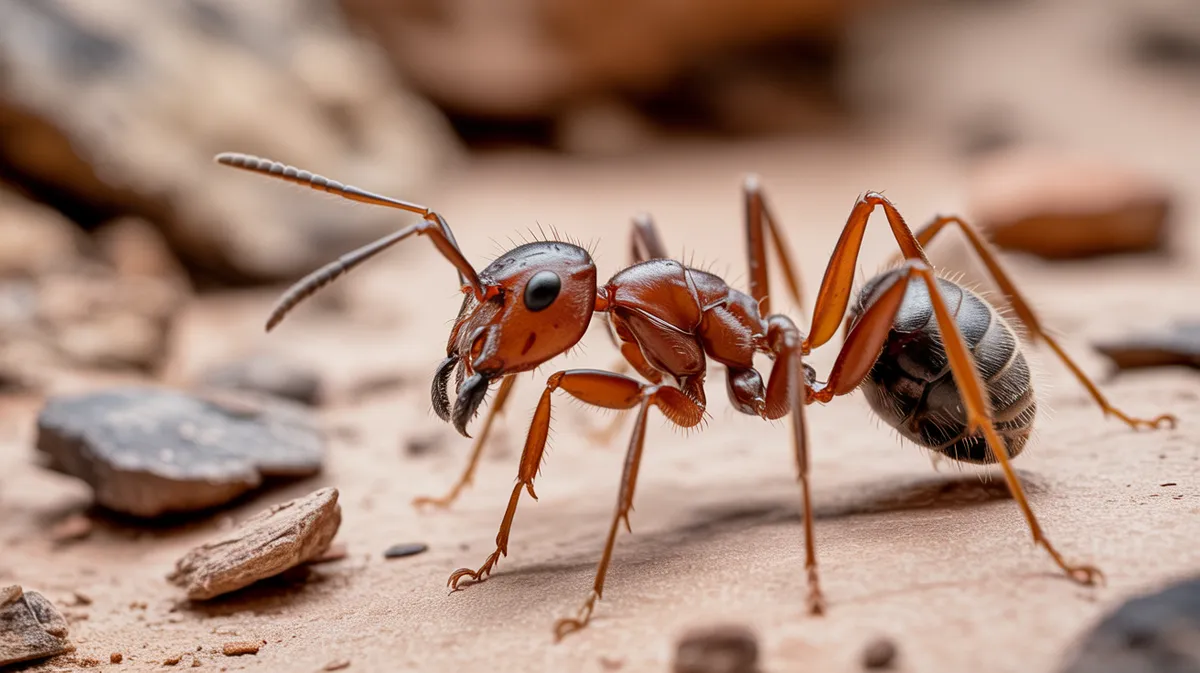
Cataglyphis bombycina is the fastest ant ever measured, clocked at 855 mm per second — about 108 times its own body length every second, which in relative terms beats a cheetah by a huge margin — and it achieves this with a gait so extreme that at full speed all six legs are airborne simultaneously. It needs the speed because it lives in a lethally narrow window. It forages on the surface of the Sahara at the hottest part of the day, when sand can exceed 60 C, precisely because that is the only time its own predators, desert lizards, are forced into shade. It survives by having one of the highest known thermal tolerances of any insect, near 53 C body temperature, and by hoarding heat-shock proteins in advance of leaving the nest. Its silver sheen is not pigment: the ant is covered in triangular, prism-shaped hairs that reflect visible and near-infrared light and simultaneously radiate heat away in the mid-infrared, a passive cooling system that keeps it several degrees cooler than a shaved control ant. It scavenges the corpses of insects that failed to survive the heat, and it must return to the nest within roughly ten minutes or it will cook. It navigates back by path integration — counting steps and tracking the sun's polarisation pattern — and runs straight home rather than retracing its route.
Fascinating facts
Extreme Heat Tolerance
Saharan Silver Ants can survive at temperatures higher than any other terrestrial animal, venturing out when surface sand reaches 70°C (158°F).
Super-Fast Sprinting
These ants are among the fastest ants in the world, running up to 108 times their body length per second to avoid lethal heat.
Reflective Armor
Their silvery, hair-covered bodies reflect sunlight, greatly reducing heat absorption and allowing them to forage in extreme conditions.
Detailed description
The Saharan Silver Ant (Cataglyphis bombycina) is a medium-sized ant species, with workers typically measuring 7–10 mm in length. Its most distinctive feature is the dense covering of uniquely shaped, triangular silver hairs on the dorsal surface of its body, which reflect visible and near-infrared sunlight, dramatically reducing heat absorption. The ant's long, spindly legs elevate its body above the scorching sand, minimizing contact with the substrate and facilitating rapid movement—recorded at speeds up to 855 mm/s (about 108 times its body length per second), making it one of the fastest terrestrial insects. Cataglyphis bombycina is diurnal but restricts its foraging to the hottest midday hours, when surface temperatures can exceed 60°C (140°F), a time when most predators and competitors are inactive. Colonies are typically composed of a single queen and several hundred to a few thousand workers, with a clear division of labor. The ants exhibit remarkable navigational abilities, using polarized light from the sun and visual landmarks to return directly to their nest after foraging. Their diet consists mainly of the carcasses of heat-killed insects, especially other ants and flies, which they locate quickly before decomposition or removal by other scavengers. The species' life cycle includes a nuptial flight, after which mated queens establish new colonies. Their physiological and behavioral adaptations to extreme heat have made them a model organism for studies on thermoregulation, navigation, and desert survival.
Did you know?
Unlike most ants, the Saharan Silver Ant forages almost exclusively during the hottest part of the day, when even its predators—like desert lizards—are forced to seek shelter.
Research & sources
Behaviour & social structure
Saharan Silver Ants are solitary foragers, with individual workers venturing out alone rather than in groups. Foraging occurs during a narrow thermal window, typically lasting only 10–20 minutes per day, when surface temperatures are lethal to most other animals. Ants exhibit a zigzag search pattern while hunting for food, rapidly scanning the terrain for dead arthropods. Upon finding prey, they quickly dissect and transport manageable pieces back to the nest. Social interactions within the colony are structured, with workers engaging in trophallaxis (food sharing) and cooperative brood care. Aggression is observed towards non-nestmates, and colonies are territorial. Daily routines are dictated by temperature, with activity ceasing as soon as the sand cools or becomes too hot even for their tolerance. Ants rely heavily on visual cues and path integration for navigation, and have been shown to count steps to estimate distance traveled.
Reproduction & life cycle
Reproduction in Cataglyphis bombycina follows a typical ant pattern, with a single queen responsible for laying eggs. Nuptial flights occur during brief windows following rare desert rains, usually in late spring or early summer. During these flights, winged males and females mate in the air. Mated queens shed their wings and seek suitable nesting sites, often in sandy areas with sparse vegetation. The queen lays eggs that develop into larvae, pupae, and eventually adult workers or reproductive forms. There is no true gestation period, but the development from egg to adult can take several weeks, depending on temperature and humidity. Queens provide initial care for the first brood, after which workers assume all brood-rearing duties. Colonies can persist for several years, with queens living significantly longer than workers.
Adaptations & survival
Cataglyphis bombycina exhibits several extraordinary adaptations to desert life. The silver, triangular hairs on their dorsal surfaces reflect up to 95% of visible light and much of the infrared spectrum, reducing heat gain. Their long legs, up to 4 mm, elevate the body above the sand, decreasing conductive heat transfer and allowing for rapid locomotion. The ants possess heat shock proteins and unique cellular mechanisms that enable them to survive brief exposures to body temperatures up to 53.6°C (128.5°F). Behaviorally, they time their foraging to periods of minimal competition and predation. Their navigation system combines polarized light detection, step counting, and landmark recognition, allowing precise homing even in featureless terrain. They also exhibit rapid cooling behavior, retreating to the nest as soon as their critical thermal maximum is approached.
Cultural significance
The Saharan Silver Ant has limited direct cultural significance to local human populations, but it has become a symbol of extreme adaptation and resilience in scientific literature and popular science. Its remarkable heat tolerance and navigational skills have inspired biomimetic research, including the development of reflective materials and robotic navigation systems. In some Saharan folklore, ants are admired for their industriousness, though Cataglyphis bombycina itself is not a central figure in traditional stories.
Recent research
Recent research has focused on the ant's unique cuticular structures and their optical properties, revealing how the triangular hairs create a photonic effect that enhances reflectivity and thermal regulation (Shi et al., 2015, PNAS). Studies on their navigation have elucidated the use of celestial cues and step integration, providing insights into animal spatial cognition. Ongoing research investigates their molecular heat shock response and potential applications in materials science. Cataglyphis bombycina continues to serve as a model organism for understanding extreme thermotolerance, navigation, and desert ecology.
Sources
Saharan silver ants keep cool by combining enhanced optical reflection and radiative heat dissipation
N. Shi, D. Tsai, et al. (2015)
scientificPath integration in desert ants, Cataglyphis bombycina: how do they estimate step length?
R. Wehner, S. Michel, P. Antonsen (1996)
scientificExtreme Adaptation of Cataglyphis Ants to Hot Desert Environments
Rüdiger Wehner, et al. (2016)
scientificSaharan Silver Ants Keep Cool by Combining Enhanced Optical Reflection and Radiative Heat Dissipation
Mohammed S. A. Abdelkader, et al. (2015)
scientificVideos
Habitat
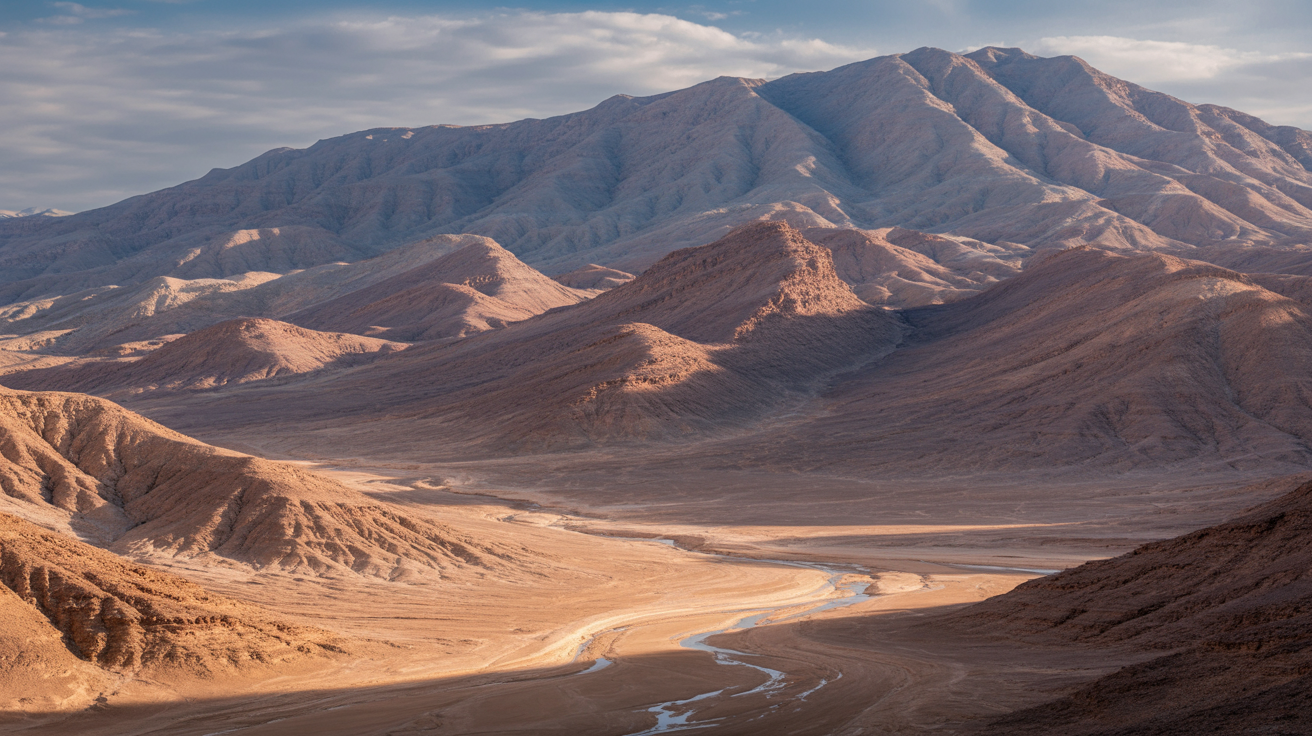
Desert
Conservation
The Saharan Silver Ant is currently classified as Least Concern on the IUCN Red List.
Threats & challenges
Currently, Cataglyphis bombycina faces few direct threats due to its extreme habitat specialization and the inhospitable nature of its environment. However, climate change poses a potential long-term risk by altering desert temperatures and rainfall patterns, which could impact the delicate balance of their foraging window and prey availability. Human activities such as off-road vehicle use, mining, and habitat disturbance can locally disrupt colonies. The species is not currently considered threatened and is listed as Least Concern, but its specialized niche makes it vulnerable to rapid environmental changes.
Taxonomy
Scientific name
Cataglyphis bombycina
- Kingdom
- Animalia
- Phylum
- Arthropoda
- Class
- Insecta
- Order
- Hymenoptera
- Family
- Formicidae
- Genus
- Cataglyphis
- Species
- bombycina
Community notes
Share your observations about the Saharan Silver Ant.
No community notes yet. Be the first!
Discover more wildlife
More fascinating animals from the encyclopedia.