
About the Savannah Monitor
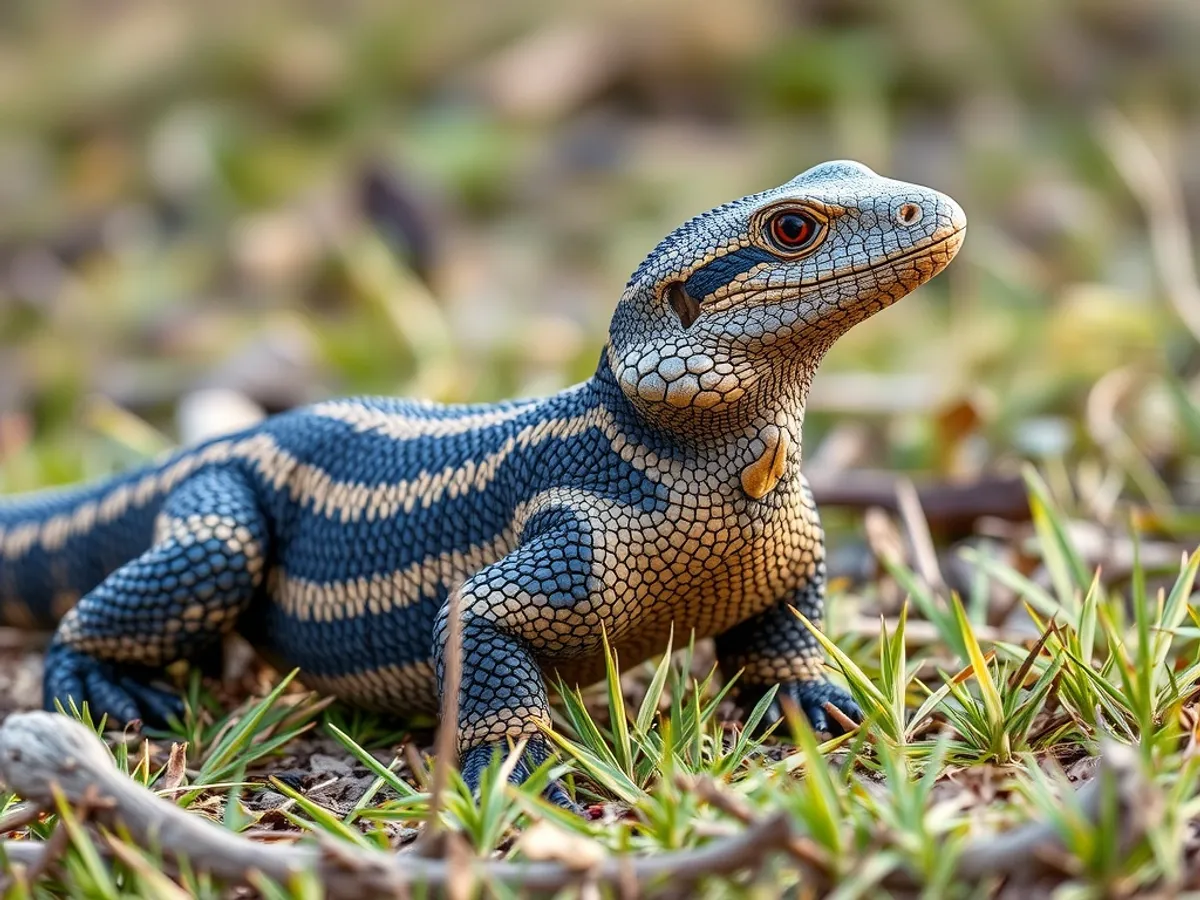
The Savannah Monitor is a robust and stocky lizard native to the savannas and grasslands of sub-Saharan Africa. It has a powerful body, short limbs, and a broad head, with a coloration of gray to brown and yellowish spots that provide excellent camouflage in its environment. Savannah Monitors are known for their intelligence and curiosity, often using their strong claws to dig for prey or shelter. In the wild, they are mainly ground-dwelling and are most active during the day, relying on their keen senses to hunt and avoid predators. Their adaptability and relatively docile nature have also made them popular in the pet trade, though they require specialized care.
Fascinating facts
Strong Digging Skills
Savannah Monitors are excellent diggers, using their muscular forelimbs to excavate burrows for shelter or to hunt for insects underground.
Forked Tongue
Like snakes, they possess a forked tongue that helps them detect scent trails and locate prey with remarkable accuracy.
Powerful Bite
Their jaws and blunt, peg-like teeth are adapted to crushing the shells of hard-bodied prey such as snails and beetles.
Detailed description
The Savannah Monitor (Varanus exanthematicus) is a medium-sized, robust lizard, typically reaching 85–105 cm (33–41 in) in total length, with some individuals exceeding 120 cm (47 in) in exceptional cases. Adults can weigh between 1.2 and 6 kg (2.6–13.2 lbs), with males generally larger and bulkier than females. The species is characterized by a broad, triangular head, powerful jaws, and a short, thick neck. Its skin is covered in small, bead-like scales, with a coloration ranging from grayish-brown to yellowish-tan, often adorned with pale ocelli or spots that provide camouflage against the savanna substrate. The limbs are strong and equipped with sharp claws adapted for digging and climbing. The tail is muscular and laterally compressed, aiding in defense and balance. Savannah Monitors possess a forked tongue and highly developed Jacobson's organ, allowing them to detect chemical cues in their environment. Their eyes are positioned laterally, providing a wide field of vision. Internally, they have a well-developed digestive system capable of processing tough, protein-rich prey. These lizards are primarily terrestrial, spending much of their time on or under the ground, but are also capable of limited climbing. Their behavior is largely solitary, except during the breeding season or in areas with abundant resources.
Did you know?
The Savannah Monitor can consume animals with hard shells, such as snails and beetles, thanks to its powerful jaws and specialized teeth.
Research & sources
Wikipedia summary
The savannah monitor is a medium-sized species of monitor lizard native to Africa. The species is known as Bosc's monitor in Europe, since French scientist Louis Bosc first described the species. It belongs to the subgenus Polydaedalus.
Behaviour & social structure
Savannah Monitors are diurnal, exhibiting peak activity during the morning and late afternoon when temperatures are optimal. They are opportunistic carnivores, with a diet in the wild dominated by invertebrates such as beetles, snails, orthopterans, and occasionally small vertebrates including rodents, birds, and other reptiles. Foraging involves active searching and digging, using their acute sense of smell and strong forelimbs to unearth hidden prey. They have been observed using their claws to break open snail shells and insect nests. Social interactions are minimal; individuals are territorial and may display threat postures, tail whipping, or hissing if approached by conspecifics. Basking is a key daily routine, as they rely on external heat sources to regulate their body temperature. At night or during extreme heat, they retreat to self-dug burrows or natural shelters to avoid predators and desiccation. In captivity, they exhibit problem-solving abilities and can learn to recognize keepers, indicating a high level of intelligence among varanids.
Reproduction & life cycle
Breeding in Savannah Monitors is seasonal, typically coinciding with the onset of the rainy season (May to August) in their native range. Males engage in combat for access to receptive females, displaying biting and wrestling behaviors. Courtship involves head bobbing and tactile stimulation. Females lay clutches of 15–50 eggs in deep burrows, termite mounds, or rotting logs, where humidity and temperature are stable. Incubation lasts 5–6 months (150–180 days), depending on environmental conditions, with eggs requiring temperatures of 28–32°C (82–90°F) for successful development. Hatchlings are precocial, emerging fully independent and measuring about 10–12 cm (4–5 in) in length. There is no parental care post-oviposition. Sexual maturity is reached at 2–3 years of age, depending on growth rates and resource availability.
Adaptations & survival
Savannah Monitors exhibit several adaptations for survival in arid and semi-arid environments. Their thick, keratinized skin reduces water loss and provides protection from abrasive substrates. The ability to dig extensive burrows allows them to escape extreme temperatures and predators. Their kidneys are efficient at conserving water, producing uric acid rather than urea. The species’ strong jaws and teeth are specialized for crushing hard-shelled prey like snails and beetles, a dietary niche that reduces competition with other predators. Their forked tongue and acute chemosensory abilities enable them to locate prey underground. Behavioral thermoregulation, such as basking and burrow use, allows them to maintain optimal body temperature despite fluctuating environmental conditions. The tail serves as both a defensive weapon and a fat storage organ, supporting survival during periods of food scarcity.
Cultural significance
In West African cultures, Savannah Monitors are sometimes associated with traditional medicine, where their fat, skin, or organs are believed to have healing properties or are used in rituals. In some local folklore, they are regarded as symbols of strength or cunning due to their elusive nature and formidable appearance. The species is also a source of bushmeat in rural communities. Internationally, Savannah Monitors have gained popularity in the exotic pet trade due to their manageable size and generally docile temperament, though their specialized care requirements are often underestimated. They have also featured in educational programs and documentaries highlighting African biodiversity.
Recent research
Recent research has focused on the species’ ecological role as a mesopredator in savanna ecosystems, its dietary specialization, and the impact of the pet trade on wild populations. Studies using radio telemetry have revealed home range sizes of 1–3 hectares and highlighted the importance of burrow networks for thermoregulation and predator avoidance. Genetic analyses have clarified relationships within the Polydaedalus subgenus and suggested possible cryptic species within the V. exanthematicus complex. Investigations into captive husbandry have improved understanding of their nutritional needs, particularly the importance of calcium and vitamin D3 to prevent metabolic bone disease. Ongoing studies are assessing the long-term sustainability of wild harvests and the effectiveness of captive breeding programs.
Sources
The Ecology and Natural History of the Savannah Monitor Lizard (Varanus exanthematicus) in Ghana
Daniel Bennett (1999)
scientificVideos
Habitat
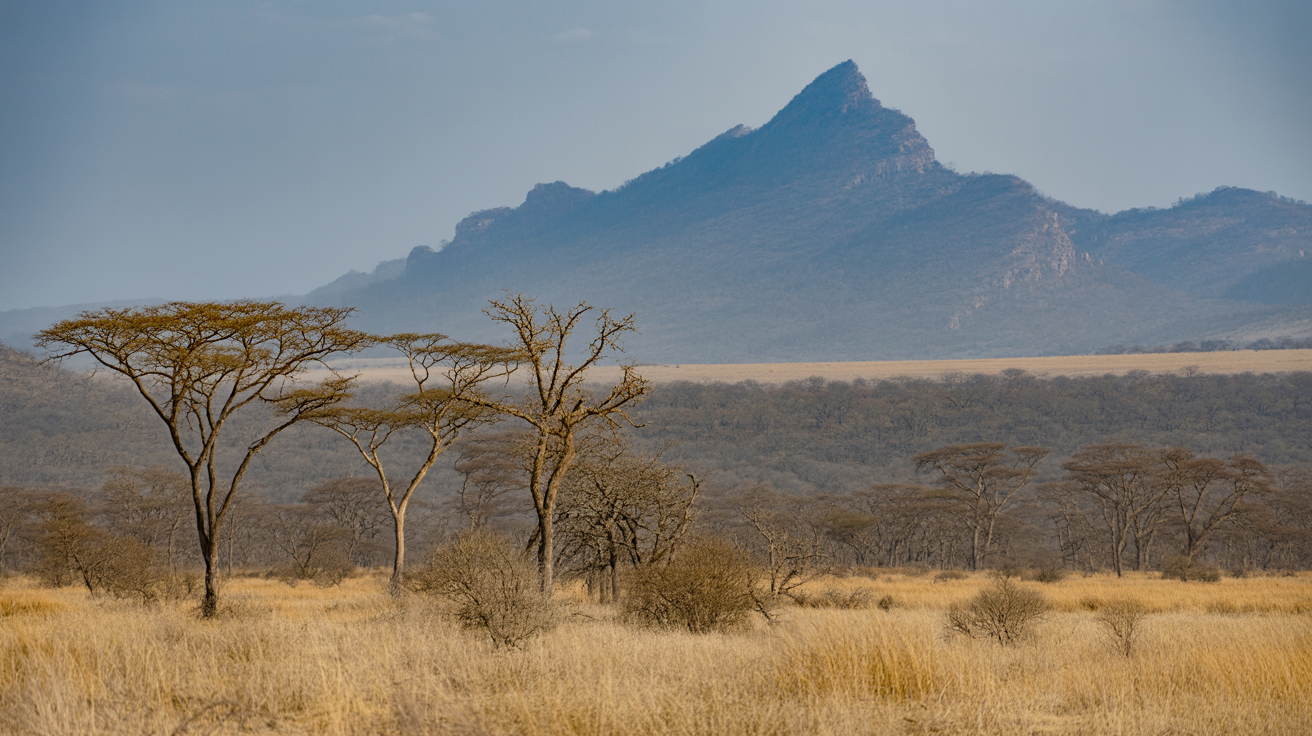
Savanna and grassland
 Africa
Savanna
Grasslands with scattered trees, characterized by seasonal rainfall and home to diverse grazing animals and predators.
 Various Continental Regions
Grassland
Open areas dominated by grasses rather than trees, supporting numerous herbivores and their predators.
 Global
Forest
Wooded areas with significant tree cover and diverse plant and animal communities.
Conservation
The Savannah Monitor is currently classified as Least Concern on the IUCN Red List.
Threats & challenges
Although currently listed as Least Concern by the IUCN, Savannah Monitors face several localized threats. Habitat degradation due to agricultural expansion, overgrazing, and urbanization reduces available territory and prey populations. They are heavily collected for the international pet trade and for their skins, with tens of thousands exported annually from West Africa, particularly Ghana, Togo, and Benin. Overharvesting of wild populations can lead to local declines, especially where reproductive rates are low. In some regions, they are hunted for bushmeat or traditional medicine. Climate change poses a long-term threat by altering rainfall patterns and habitat suitability. Despite these pressures, the species remains widespread and adaptable, but ongoing monitoring is necessary to detect potential population declines.
Taxonomy
Scientific name
Varanus exanthematicus
- Kingdom
- Animalia
- Phylum
- Chordata
- Class
- Reptilia
- Order
- Squamata
- Family
- Varanidae
- Genus
- Varanus
- Species
- exanthematicus
Where to see a savannah monitor
1 zoo and aquarium in 1 country are recorded as keeping this species.

Community notes
Share your observations about the Savannah Monitor.
No community notes yet. Be the first!
Discover more wildlife
More fascinating animals from the encyclopedia.