
About the Scarab Beetle
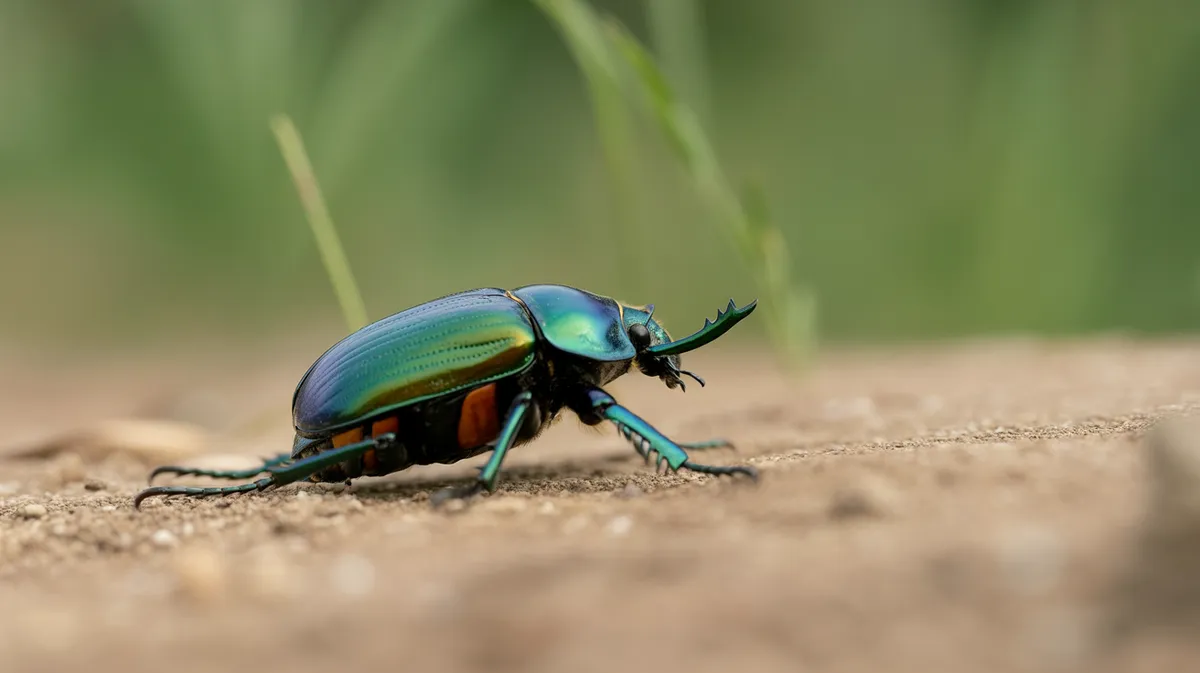
The scarabs (family Scarabaeidae) include the dung beetles, and the ball-rolling species are responsible for one of the most surprising discoveries in animal navigation. A beetle that has carved a ball from a dung pat must get it away from the pile fast, before rivals steal it, and the cheapest way to leave is to roll in a dead-straight line. Experiments published in 2013 showed that African dung beetles hold that line at night by reading the Milky Way: beetles in a planetarium under a projected galaxy rolled straight, and those under a starless sky wandered in circles. By day they use the polarisation pattern of sunlight instead, and before setting off a beetle climbs on top of its ball and performs a slow "orientation dance" to take a celestial bearing. Ground temperatures on sunlit African soil can exceed 60 degrees Celsius, and some species climb onto the ball simply to cool their feet, using it as a parasol; wiping their forelegs across their faces spreads regurgitated fluid that cools them further. Not all scarabs roll: tunnellers bury dung directly beneath the pat, and dwellers simply live inside it. Ancient Egyptians modelled the god Khepri on this behaviour, imagining the sun pushed across the sky like a ball of dung.
Fascinating facts
Dung Ball Rollers
Scarab beetles are renowned for rolling dung into balls, which they bury as a food source or to lay their eggs inside.
Star Navigation
Some species of scarab beetles use the stars, especially the Milky Way, to navigate in straight lines at night.
Ancient Symbolism
In ancient Egypt, the scarab beetle was a sacred symbol often associated with the sun god Ra and used in jewelry and amulets.
Detailed description
Scarabaeus sacer, commonly known as the sacred scarab beetle, is a robust insect typically measuring 20–30 mm in length. Its body is oval, convex, and heavily sclerotized, with a glossy black or dark brown exoskeleton that provides protection from predators and environmental stress. The beetle's head is equipped with specialized, shovel-like forelegs adapted for digging and manipulating dung. Its antennae are lamellate, ending in a fan of plates that can be opened or closed, allowing for acute detection of odors, especially those of animal dung. Scarab beetles are renowned for their unique behavior of forming dung into nearly spherical balls, which they roll away from the original pile. These balls serve both as food reserves and as brood chambers for their offspring. Adults are primarily nocturnal, relying on celestial cues such as the Milky Way for navigation. Scarabaeus sacer exhibits solitary behavior outside of mating and feeding, with limited direct social interaction. The species is sexually dimorphic, with males often possessing slightly larger forelegs for more efficient dung ball manipulation. Scarab beetles play a crucial ecological role in nutrient cycling, aerating soil, and controlling parasites by removing dung from the environment.
Did you know?
Scarab beetles have been found in tombs dating back over 3,000 years, often crafted as amulets and seals.
Research & sources
Behaviour & social structure
Scarab beetles are primarily crepuscular to nocturnal, emerging at dusk to locate fresh dung using their highly sensitive olfactory antennae. Upon finding a suitable dung source, individuals rapidly form a ball, often competing with conspecifics for the best material. Once a ball is formed, the beetle uses its hind legs to roll it away in a straight line, sometimes over considerable distances (up to 10 meters), to avoid competition. Males may attract females by constructing larger or higher-quality dung balls. After mating, the female buries the dung ball and lays a single egg inside. Scarabaeus sacer exhibits remarkable orientation abilities, using polarized light and even the Milky Way for navigation. Adults feed primarily on the liquid components of dung, while larvae consume the solid material within the brood ball. Social interactions are generally limited to brief encounters during competition for dung or mating opportunities.
Reproduction & life cycle
Reproduction in Scarabaeus sacer is seasonal, typically coinciding with the onset of warm, wet weather when dung is abundant. Courtship involves the male presenting a dung ball to a prospective mate; if accepted, the pair may roll the ball together before burying it. The female excavates a chamber beneath the soil, where she deposits a single egg inside the dung ball. The incubation period lasts approximately 2–4 weeks, depending on temperature and humidity. Larvae develop within the dung ball, feeding on its contents and undergoing three instar stages over 1–3 months. Pupation occurs within the same chamber, with the adult emerging after a total development time of 3–4 months. There is minimal parental care beyond the initial provisioning of the brood ball, but the carefully constructed chamber offers protection from predators and desiccation.
Adaptations & survival
Scarabaeus sacer exhibits several key adaptations for its dung-rolling lifestyle. Its forelegs are broadened and toothed, ideal for cutting and shaping dung. The hind legs are elongated and strong, providing leverage for rolling balls much heavier than the beetle itself. The lamellate antennae are highly sensitive to volatile organic compounds, enabling the beetle to detect dung from considerable distances. Behavioral adaptations include celestial navigation, allowing the beetle to move in straight lines even in complete darkness. The beetle's robust exoskeleton reduces water loss and offers protection from predators and environmental extremes. Additionally, the ability to bury dung balls reduces competition and predation risk for developing larvae.
Cultural significance
Scarabaeus sacer holds immense cultural significance, particularly in ancient Egyptian society, where it symbolized rebirth, transformation, and the daily journey of the sun god Ra. Scarab amulets were used as protective talismans, seals, and jewelry, often inscribed with prayers or spells. The beetle's dung-rolling behavior was interpreted as a metaphor for the sun's movement across the sky. Scarab imagery persists in modern art, jewelry, and literature, reflecting its enduring symbolic power. The sacred scarab is also referenced in Greco-Roman and later European traditions, often associated with themes of resurrection and immortality.
Recent research
Recent research has focused on the scarab beetle's remarkable navigation abilities, revealing that Scarabaeus sacer can orient itself using the polarization pattern of moonlight and even the Milky Way, a rare example of celestial navigation in insects. Studies have also examined the beetle's role in ecosystem functioning, highlighting its contribution to nutrient cycling, soil aeration, and parasite suppression. Ongoing genetic research aims to clarify the evolutionary relationships within the Scarabaeidae family. Conservation studies are monitoring the impacts of land use change and climate variability on dung beetle diversity and ecosystem services.
Videos
Habitat
Grasslands and open forests
 Arid Regions
Desert
Arid lands with minimal rainfall, extreme temperatures, and specialized wildlife adapted to harsh conditions.
 Africa
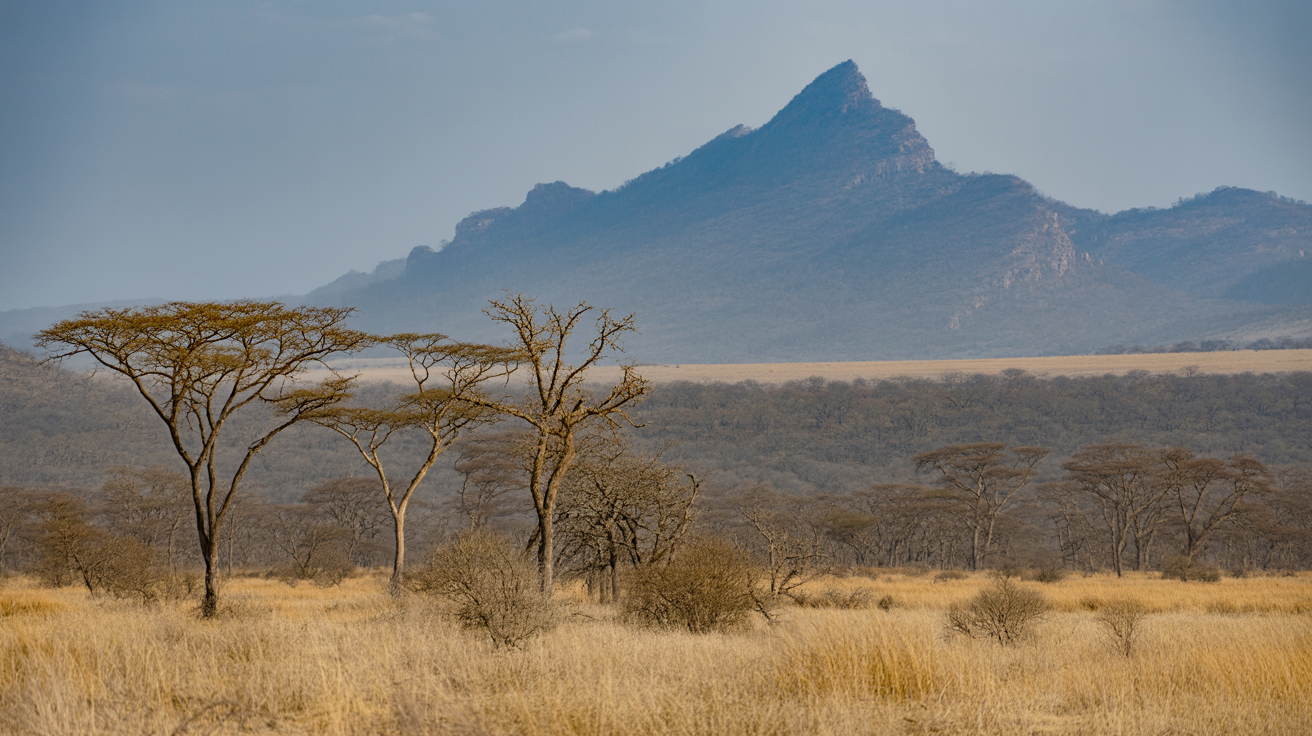
Savanna
Grasslands with scattered trees, characterized by seasonal rainfall and home to diverse grazing animals and predators.
 Various Continental Regions
Grassland
Open areas dominated by grasses rather than trees, supporting numerous herbivores and their predators.
 Global
Forest
Wooded areas with significant tree cover and diverse plant and animal communities.
Conservation
The Scarab Beetle is currently classified as Least Concern on the IUCN Red List.
Threats & challenges
Currently, Scarabaeus sacer is classified as Least Concern by the IUCN, with stable populations across its range in North Africa, southern Europe, and the Middle East. However, localized threats include habitat loss due to agricultural expansion, pesticide use, and the decline of large mammalian herbivores, which reduces dung availability. Climate change may also impact breeding cycles and habitat suitability. In some regions, overgrazing and soil compaction hinder the beetle's ability to bury dung balls. Despite these challenges, the species remains widespread and resilient, benefiting from its adaptability to various open habitats.
Taxonomy
Scientific name
Scarabaeus sacer
- Kingdom
- Animalia
- Phylum
- Arthropoda
- Class
- Insecta
- Order
- Coleoptera
- Family
- Scarabaeidae
- Genus
- Scarabaeus
- Species
- sacer
Community notes
Share your observations about the Scarab Beetle.
No community notes yet. Be the first!
Discover more wildlife
More fascinating animals from the encyclopedia.