
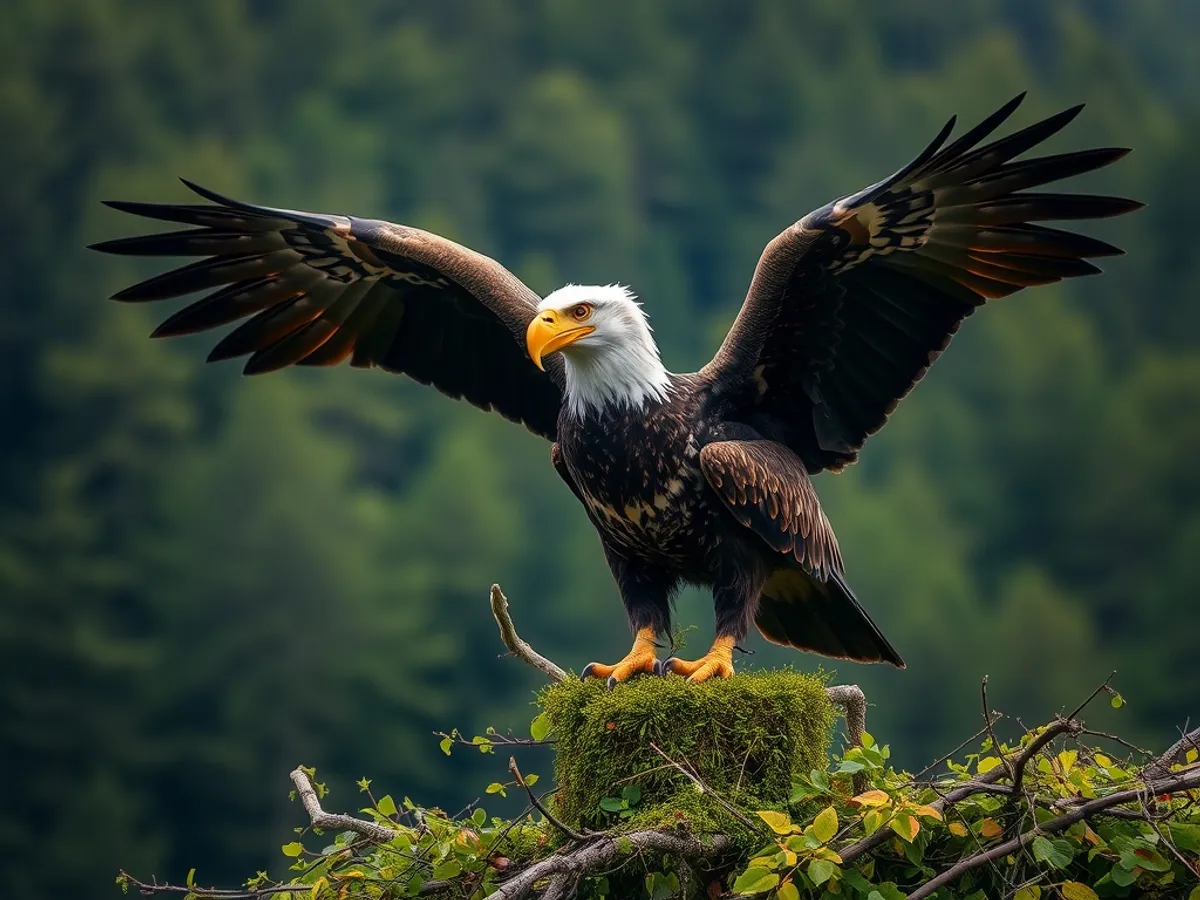
About the Steller's Sea Eagle
Steller's sea eagle (Haliaeetus pelagicus) is the heaviest eagle in the world, with big females reaching 9 kilograms, and it carries the most massive bill of any eagle, a deep, bright yellow hook out of all proportion to its head. It breeds around the Sea of Okhotsk, chiefly on the Kamchatka Peninsula and along the lower Amur, where it nests in huge stick platforms in coastal trees and feeds heavily on spawning salmon. In winter much of the population moves south to Hokkaido, and the birds gather along the drift ice off the Shiretoko Peninsula, feeding on fish, on seabirds and on the carcasses of sika deer, which they will also take from hunters' gut piles. That carrion habit is now the eagle's main killer: lead fragments from rifle bullets left in deer carcasses cause fatal lead poisoning, and after dozens of eagles died Hokkaido banned lead ammunition for deer hunting, one of the first such bans in Asia. The total population is roughly 4,000 birds and declining, and it is further threatened by logging of nest trees and by development of the Russian coast. In 2020 a single wandering individual appeared in Alaska and then spent two years touring Canada and New England, drawing crowds of birders thousands of kilometres from any other member of its species.
Fascinating facts
Enormous Wingspan
Steller's Sea Eagle boasts a wingspan of up to 2.5 meters (over 8 feet), making it one of the largest eagles in the world.
Fish Specialist
This eagle's diet is primarily composed of fish, especially salmon, which it catches with its powerful talons in coastal and river habitats.
Remote Habitat
Steller's Sea Eagle is found in remote, cold regions of northeastern Asia, with most of the population residing on the Kamchatka Peninsula and along the Sea of Okhotsk.
Detailed description
Steller's Sea Eagle (Haliaeetus pelagicus) is among the largest and most powerful raptors globally, with adults typically measuring 85–105 cm (33–41 in) in length and boasting an impressive wingspan of 1.95–2.5 m (6.4–8.2 ft). Females, as in most raptors, are larger than males, with weights ranging from 6.8 to 9 kg (15–20 lb), while males average 4.9 to 6 kg (11–13 lb). Its plumage is predominantly dark brown to blackish, contrasted by striking white shoulders, thighs, tail, and upper wing coverts. The massive, deep yellow bill is highly adapted for tearing flesh, and the legs and talons are equally robust. This eagle exhibits keen eyesight, essential for spotting prey from great distances. Steller's Sea Eagles are primarily solitary outside the breeding season but may congregate in significant numbers at rich food sources, especially during salmon runs. Their vocalizations are loud and harsh, used for communication during breeding or territorial disputes. They are long-lived birds, with lifespans in the wild estimated at 20–25 years, though some individuals in captivity have lived over 40 years. Their presence is largely restricted to the Russian Far East, with wintering populations reaching Japan, Korea, and occasionally China.
Did you know?
Despite its formidable size, Steller's Sea Eagle sometimes loses its catch to other eagles or even crows due to kleptoparasitism.
Research & sources
Wikipedia summary
Steller's sea eagle, also known as the Pacific sea eagle or white-shouldered eagle, is a very large diurnal bird of prey in the family Accipitridae. It was described first by Peter Simon Pallas in 1811. No subspecies are recognised. A sturdy eagle, it has dark brown plumage with white wings and tail, a yellow beak, and yellow talons. Typically, it is the heaviest eagle in the world, at about 5 to 10 kg, but in some standard measurements, may be ranked below the harpy eagle and the Philippine eagle. Steller's sea eagle females are bigger than males.
Behaviour & social structure
Steller's Sea Eagles are diurnal and exhibit both solitary and loosely social behaviors depending on food availability. During the breeding season, pairs are highly territorial, defending large stretches of river or coastline. Outside of breeding, especially during winter, they may gather in groups of up to several hundred individuals at abundant food sources, such as salmon spawning grounds or ice floes with stranded fish. Their hunting technique is primarily perch-and-wait or low soaring over water, using their exceptional vision to spot fish near the surface. They snatch prey with their powerful talons, often carrying fish weighing up to 2–3 kg (4.4–6.6 lb). While fish, especially Pacific salmon and trout, constitute the bulk of their diet, they are opportunistic and will take waterfowl, small mammals, carrion, and even steal prey from other birds (kleptoparasitism). Daily activity peaks at dawn and dusk, coinciding with fish activity. Steller's Sea Eagles are known for their complex aerial displays during courtship and for aggressive interactions with conspecifics and other raptors.
Reproduction & life cycle
Breeding occurs from late March to early May. Steller's Sea Eagles are monogamous, forming long-term pair bonds. Nests are massive stick platforms, often reused and enlarged each year, and are typically built in tall trees or on rocky outcrops near water. Nests can reach up to 2.5 m (8.2 ft) in diameter and 1.2 m (4 ft) deep. Females lay 1–3 eggs (most commonly 2), which are incubated primarily by the female for 38–45 days. Both parents participate in feeding the chicks, which hatch asynchronously. Fledging occurs at 70–80 days, but juveniles remain dependent on parents for several weeks post-fledging. Breeding success is closely tied to food availability, particularly the abundance of salmon. Steller's Sea Eagles reach sexual maturity at 4–5 years of age.
Adaptations & survival
Steller's Sea Eagles possess several adaptations for their piscivorous lifestyle. Their powerful, hooked bill and strong talons are specialized for grasping and tearing slippery fish. Dense, water-repellent plumage insulates them against the cold, wet environments of their northern range. Their large size provides thermal inertia, aiding survival in harsh climates. The eagle's acute vision allows detection of prey from considerable distances, even through water glare. Behavioral flexibility, such as shifting to waterfowl or carrion when fish are scarce, enhances survival. Their ability to nest in both trees and cliffs provides resilience against habitat changes.
Cultural significance
Steller's Sea Eagle holds significant cultural importance in the Russian Far East, where it is regarded as a symbol of wilderness and strength. It features in indigenous folklore, often depicted as a guardian spirit or a harbinger of fortune. In Japan, where the eagle is a winter visitor, it attracts ecotourism and is a subject of traditional art and photography. The species is protected under Russian and Japanese law and is listed in CITES Appendix II, reflecting its international conservation significance.
Recent research
Recent research has focused on the eagle's migratory patterns using satellite telemetry, revealing complex seasonal movements between breeding and wintering grounds. Studies on diet and foraging ecology highlight the eagle's dependence on healthy salmon runs, making it a sentinel species for riverine ecosystem health. Genetic analyses show low genetic diversity, raising concerns about long-term viability. Ongoing monitoring programs in Russia and Japan track population trends and reproductive success. Notably, climate-driven changes in prey availability and habitat are active areas of study, with implications for future conservation strategies.
Sources
Videos
Habitat
Coastal forests and river mouths


Conservation
The Steller's Sea Eagle is currently classified as Vulnerable on the IUCN Red List.
Threats & challenges
The primary threats to Steller's Sea Eagle include habitat loss from logging and development, overfishing (reducing prey availability), pollution (notably heavy metals and organochlorines), and human disturbance at nesting sites. Climate change poses emerging risks by altering salmon populations and riverine ecosystems. Lead poisoning from ingestion of spent ammunition in carrion is a documented mortality factor. The global population is estimated at 4,000–5,000 individuals and is considered Vulnerable by the IUCN, with a declining trend. Conservation efforts focus on habitat protection, pollution control, and public awareness, but enforcement and transboundary cooperation remain challenging.
Taxonomy
Scientific name
Haliaeetus pelagicus
- Kingdom
- Animalia
- Phylum
- Chordata
- Class
- Aves
- Order
- Accipitriformes
- Family
- Accipitridae
- Genus
- Haliaeetus
- Species
- pelagicus
Where to see a steller's sea eagle
5 zoos and aquariums in 4 countries are recorded as keeping this species.
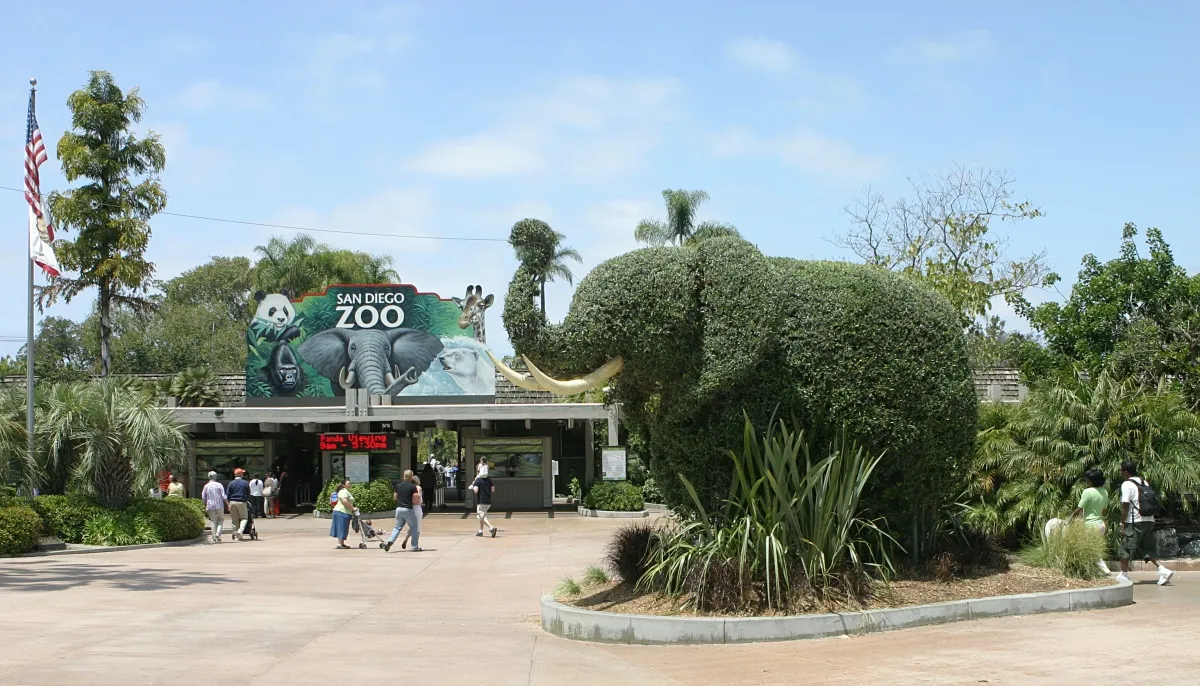 San Diego Zoo🇺🇸 San Diego, United States
 Tallinn Zoo🇪🇪 Tallinn, Estonia
 Louisville Zoo🇺🇸 United States
 Dierenpark ZieZoo🇳🇱 Netherlands
 Izhevsk Zoo🇷🇺 Russia
Community notes
Share your observations about the Steller's Sea Eagle.
No community notes yet. Be the first!
Discover more wildlife
More fascinating animals from the encyclopedia.