
About the Vinegaroon
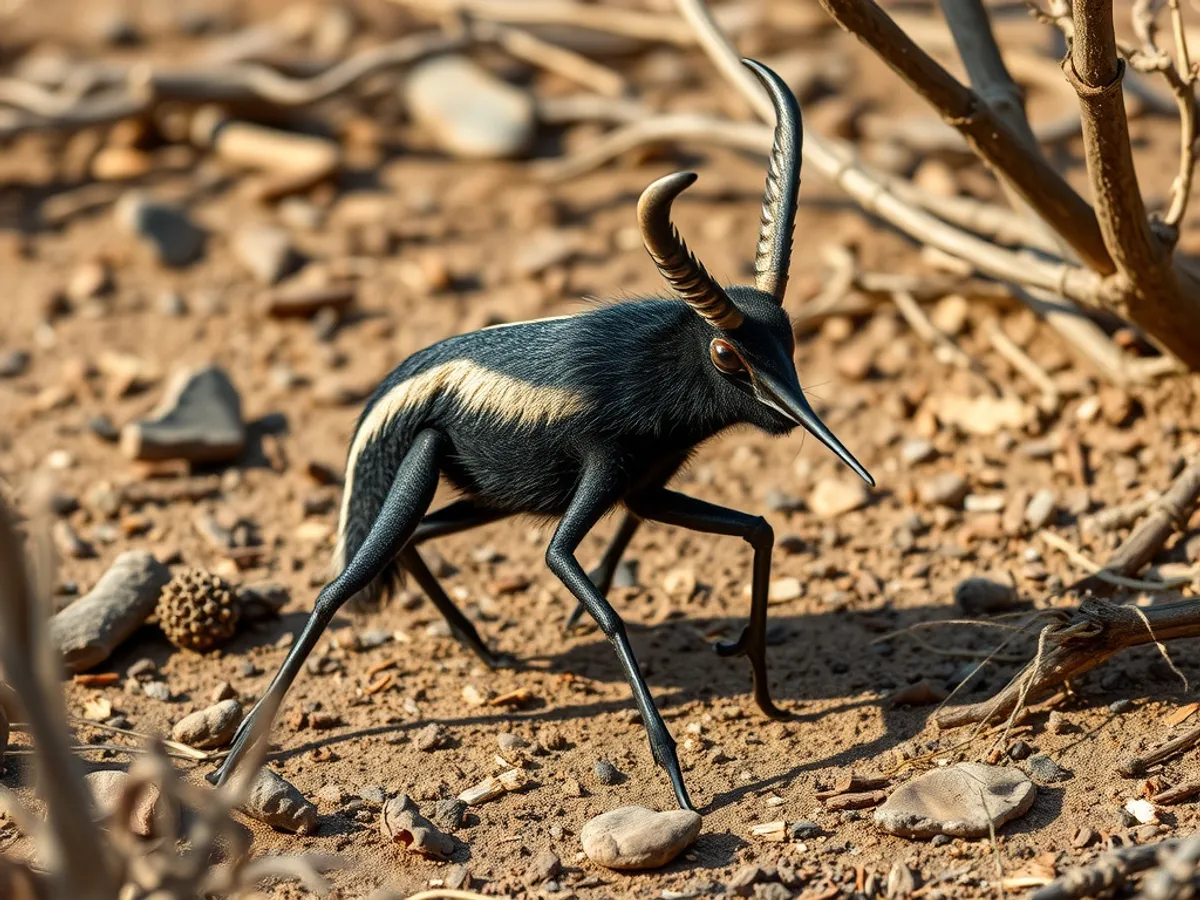
The vinegaroon or whip scorpion (order Thelyphonida, and in North America the giant Mastigoproctus giganteus) looks like a nightmare and is close to harmless. It has no venom at all, and the long thread trailing from the end of its abdomen, which people take for a sting, is a flagellum, a sensory organ covered in receptors that the animal waves about like an antenna. What it does have is a chemical gun. A gland at the base of the tail can be aimed by swivelling the abdomen, and it sprays an acidic mist that is roughly 85 per cent acetic acid, the reason the animal smells strongly of vinegar when handled. The formulation is cleverer than it looks: the spray also contains octanoic acid, a fatty acid that dissolves the waxy cuticle of an attacking insect, letting the acetic acid penetrate and do real damage, a solvent-and-payload combination. Against a mammal it is merely painful and can burn the eyes. Vinegaroons are nocturnal ambush predators of the American southwest and the tropics, crushing insects, millipedes and other arachnids with massive pedipalps rather than with fangs. The female carries her eggs in a translucent sac beneath her body, refusing to feed, and then carries the white hatchlings on her back until their first moult, after which she usually dies.
Fascinating facts
Whip-like Tail
The vinegaroon's long, thin tail is not used for stinging but serves as a sensory organ to detect vibrations and navigate its environment.
Chemical Defense
When threatened, the vinegaroon sprays a mixture containing up to 85% acetic acid, the same component found in household vinegar.
Nocturnal Hunter
Active mainly at night, vinegaroons emerge from their burrows to hunt insects, spiders, and other invertebrates.
Detailed description
Mastigoproctus giganteus, commonly known as the vinegaroon or giant whip scorpion, is the largest species of whip scorpion in North America, with adults typically reaching lengths of 40–85 mm (1.6–3.3 in), excluding the whip-like flagellum. Its body is divided into a prosoma (cephalothorax) and opisthosoma (abdomen), covered by a tough, chitinous exoskeleton that is dark brown to black in color. The most distinctive feature is its long, thin, non-venomous tail, or flagellum, which is highly sensitive to vibrations and chemical cues. Vinegaroons possess robust, raptorial pedipalps equipped with spines for grasping prey, and their first pair of legs are elongated and function as sensory antennae, aiding in navigation and prey detection. Despite their fearsome appearance, they lack venom glands and rely on their chemical spray, composed of up to 85% acetic acid and other compounds, for defense. Vinegaroons are primarily nocturnal, emerging at night to hunt a variety of arthropods, including insects, millipedes, and even small vertebrates. They are solitary and territorial, spending daylight hours in self-dug burrows or under rocks and logs. Their respiratory system consists of book lungs, and they are highly adapted to arid and semi-arid environments, with physiological mechanisms to minimize water loss. The species is long-lived for an arachnid, with lifespans of up to 7–8 years in the wild.
Did you know?
The acetic acid spray that gives the vinegaroon its name can be detected by humans from several feet away!
Research & sources
Wikipedia summary
Uropygi is an arachnid order comprising invertebrates commonly known as whip scorpions or vinegaroons. They are often called uropygids. The name "whip scorpion" refers to their resemblance to true scorpions and possession of a whiplike tail, and "vinegaroon" refers to their ability when attacked to discharge an offensive, vinegar-smelling liquid, which contains acetic acid. The order may also be called Thelyphonida. Both names, Uropygi and Thelyphonida, may be used either in a narrow sense for the order of whip scorpions, or in a broad sense which includes the order Schizomida.
Behaviour & social structure
Vinegaroons are strictly nocturnal, avoiding daytime heat and desiccation by remaining in moist microhabitats or burrows. They are ambush predators, relying on stealth and their sensitive antenniform legs to detect vibrations and chemical signals from prey. When hunting, they slowly stalk or wait for prey to approach, then rapidly seize it with their powerful pedipalps. Feeding involves external digestion: they macerate prey and secrete digestive enzymes, then ingest the liquefied tissues. Vinegaroons are solitary, exhibiting aggressive territorial behavior toward conspecifics, especially during the breeding season. They communicate primarily through tactile and chemical cues. When threatened, they raise their pedipalps and tail in a defensive posture and may spray their characteristic acetic acid mixture. Daily routines are centered around foraging, burrow maintenance, and moisture-seeking behaviors, especially in arid habitats.
Reproduction & life cycle
Mating in Mastigoproctus giganteus involves a complex courtship ritual, during which the male uses his pedipalps and antenniform legs to interact with the female and assess her receptivity. The male deposits a spermatophore on the substrate, which he then guides the female over to facilitate sperm uptake. Females lay 30–40 eggs in a burrow, which are carried in a membranous sac attached to the underside of the opisthosoma. The incubation period lasts approximately 1–3 months, depending on environmental conditions. After hatching, the first instar nymphs climb onto the mother's back, where they remain for 2–4 weeks, receiving protection and moisture until their first molt. Maternal care is pronounced during this period, after which the juveniles disperse to establish their own territories. Sexual maturity is typically reached after 3–4 years and multiple molts.
Adaptations & survival
Vinegaroons exhibit several key adaptations for survival in arid and variable environments. Their exoskeleton is highly sclerotized, reducing water loss, and they are capable of sealing their burrows to maintain humidity. The elongated antenniform legs are highly sensitive to touch and chemical cues, compensating for their poor vision. The ability to spray acetic acid and caprylic acid from pygidial glands serves as an effective deterrent against predators, including mammals, reptiles, and birds. Burrowing behavior provides refuge from extreme temperatures and desiccation. Their slow metabolism and nocturnal activity patterns further reduce water and energy requirements. Evolutionarily, their lack of venom is offset by their robust pedipalps and chemical defenses.
Cultural significance
Vinegaroons have featured in indigenous folklore and local traditions, often regarded with a mixture of fear and fascination due to their unusual appearance and defensive spray. In some cultures, they are believed to possess medicinal or protective properties, though there is no scientific basis for these claims. They are sometimes used in educational settings to teach about arachnid diversity and chemical defenses. In popular culture, vinegaroons occasionally appear in media and literature as symbols of mystery or as misunderstood creatures.
Recent research
Recent research has focused on the chemical composition and biosynthesis of the defensive spray, with studies revealing the enzymatic pathways involved in acetic acid production. Behavioral ecology studies have examined their role as apex invertebrate predators in arid ecosystems and their interactions with sympatric arthropod species. Molecular phylogenetic work has helped clarify the evolutionary relationships within Uropygi and between related arachnid orders. Ongoing research is investigating the effects of environmental stressors, such as drought and habitat fragmentation, on population dynamics and reproductive success. There is also interest in the potential biomedical applications of their antimicrobial secretions.
Sources
Catalogue of the Smaller Arachnid Orders of the World: Amblypygi, Uropygi, Schizomida, Palpigradi, Ricinulei and Solifugae
Mark S. Harvey (2003)
scientificDefensive Chemistry of the Giant Whip Scorpion (Mastigoproctus giganteus): Identification of Acetic and Caprylic Acid
Eisner, T., et al. (1961)
scientificVideos
Habitat
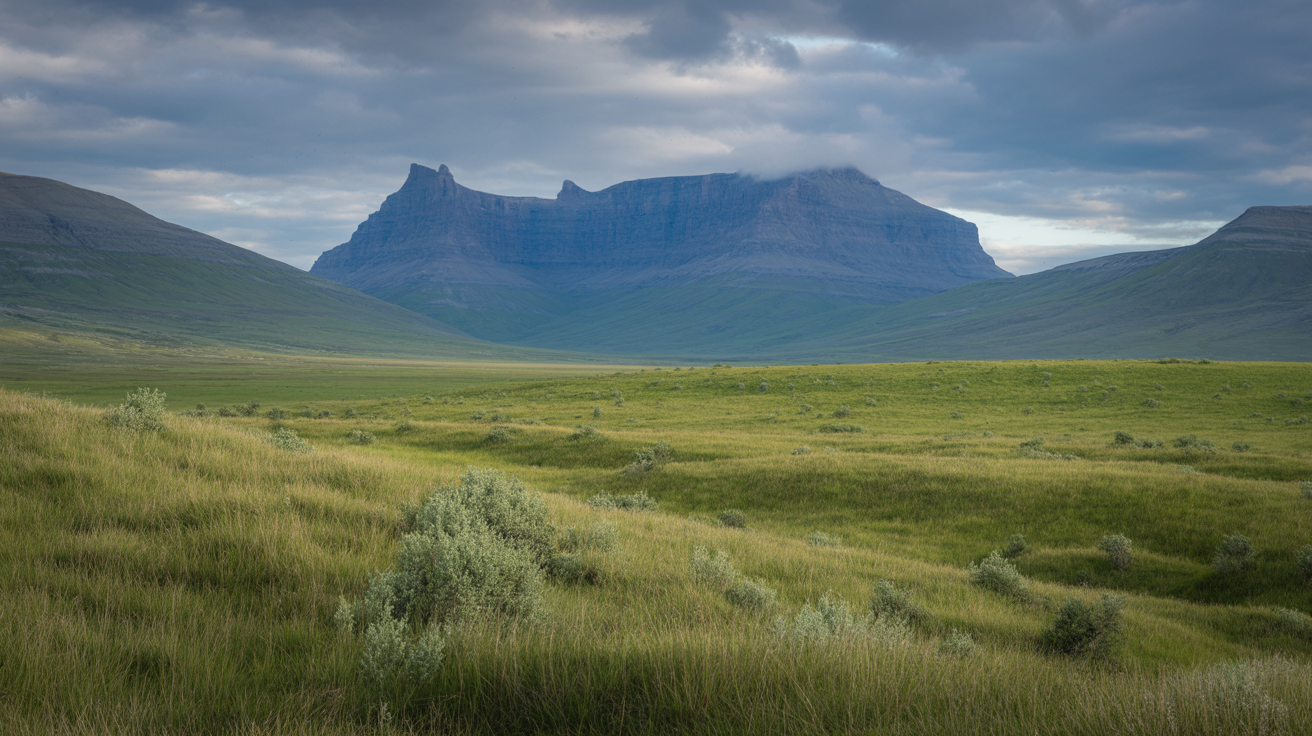
Arid deserts, scrublands, and forests
 Arid Regions
Desert
Arid lands with minimal rainfall, extreme temperatures, and specialized wildlife adapted to harsh conditions.
 Various Continental Regions
Grassland
Open areas dominated by grasses rather than trees, supporting numerous herbivores and their predators.
 Global
Forest
Wooded areas with significant tree cover and diverse plant and animal communities.
Conservation
The Vinegaroon is currently classified as Least Concern on the IUCN Red List.
Threats & challenges
Currently, Mastigoproctus giganteus is classified as Least Concern, with stable populations across its range in the southern United States, Mexico, and Central America. However, localized threats include habitat loss due to urbanization, agriculture, and land development, which can reduce the availability of suitable burrowing sites and prey. Pesticide use may indirectly impact populations by reducing prey abundance or causing direct toxicity. Climate change poses a long-term threat by altering the arid habitats on which they depend. Collection for the pet trade is not considered a major threat but may impact local populations if unmanaged.
Taxonomy
Scientific name
Mastigoproctus giganteus
- Kingdom
- Animalia
- Phylum
- Arthropoda
- Class
- Arachnida
- Order
- Thelyphonida
- Family
- Thelyphonidae
- Genus
- Mastigoproctus
- Species
- giganteus
Where to see a vinegaroon
1 zoo and aquarium in 1 country are recorded as keeping this species.

Community notes
Share your observations about the Vinegaroon.
No community notes yet. Be the first!
Discover more wildlife
More fascinating animals from the encyclopedia.