
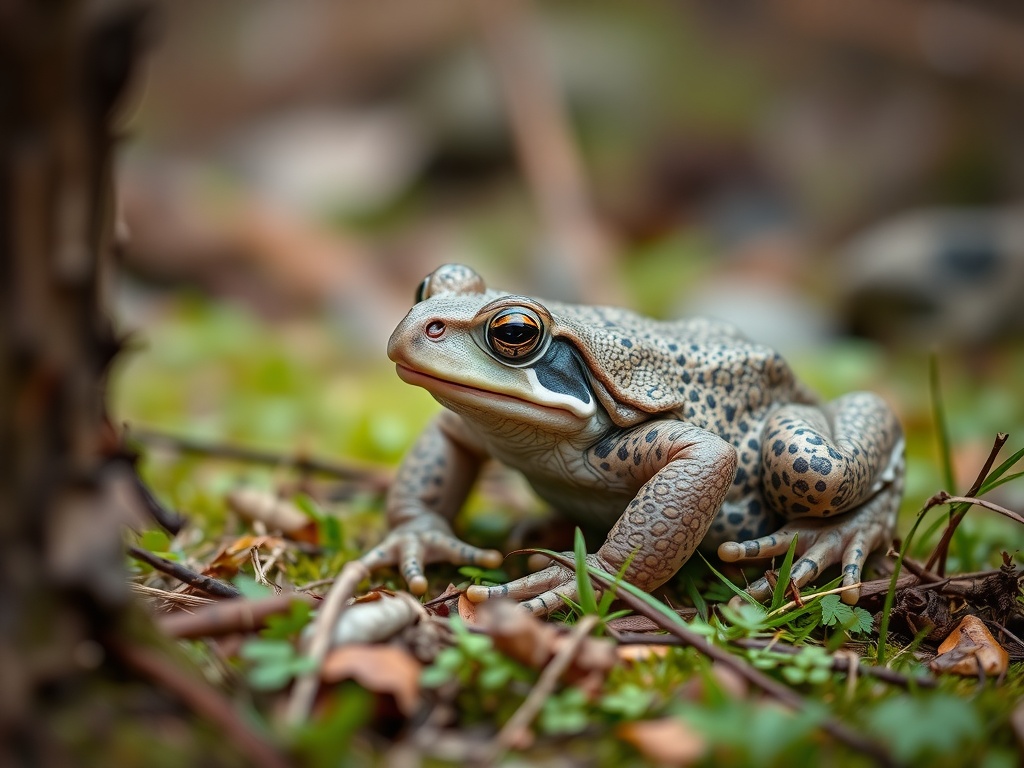
About the Western Toad
The Western Toad is a medium-sized amphibian native to western North America, easily recognized by its dry, warty skin and prominent white or cream dorsal stripe. Adults typically range in color from olive green to brown or gray, providing camouflage in their terrestrial habitats. During the breeding season, they migrate to shallow, slow-moving water bodies such as ponds and marshes to lay long, string-like egg masses. Western Toads are primarily nocturnal and are known for their defensive toxins, which deter many predators. Although adaptable, their populations are declining in several regions due to habitat loss, disease, and environmental changes.
Fascinating facts
Distinct Dorsal Stripe
Western Toads are easily identified by the white or cream-colored stripe running down the center of their backs.
Unique Egg Laying
Females lay eggs in long gelatinous strings, which can contain thousands of eggs each breeding season.
Chytrid Fungus Threat
Populations have declined in some areas due to the chytrid fungus, a deadly pathogen affecting amphibians worldwide.
Detailed description
The Western Toad (Anaxyrus boreas) is a robust, medium-to-large toad species, with adults typically measuring 5.6 to 13 cm in snout-vent length. Its skin is dry and densely covered with prominent warts, which are often surrounded by darker pigment. A distinctive white or cream-colored dorsal stripe runs along the midline of the back, aiding in species identification. The parotoid glands, located behind the eyes, are large and oval, secreting bufotoxins as a defense against predators. The coloration of Western Toads varies from olive green to brown or gray, often matching their terrestrial surroundings for camouflage. The ventral surface is pale, sometimes with dark mottling. Their limbs are relatively short, but they are capable of making surprisingly long jumps for a toad, an adaptation for rapid escape. The tympanum (external eardrum) is visible but not as prominent as in some other anurans. Unlike many toads, males lack vocal sacs and do not produce loud advertisement calls, relying instead on tactile cues during breeding. Western Toads are primarily nocturnal but may be active during the day in cool, moist conditions.
Did you know?
Despite being called 'toads,' Western Toads actually lack the typical 'toad call'—males are nearly silent during breeding.
Research & sources
Wikipedia summary
The western toad is a large toad species, between 5.6 and 13 cm long, native to western North America. A. boreas is frequently encountered during the wet season on roads, or near water at other times. It can jump a considerable distance for a toad. Breeding occurs between March and July in mountainous areas, and as early as January in lower-elevation regions. The female lays up to 17,000 eggs stuck together in strings that adhere to vegetation and other objects along water edges.
Behaviour & social structure
Western Toads are generally solitary outside of the breeding season, exhibiting limited social interaction except during mass migrations to breeding sites. They are primarily nocturnal, emerging at dusk to forage for invertebrates such as beetles, ants, spiders, and earthworms, which they capture using a rapid flick of their sticky tongues. During the day, they seek shelter under logs, rocks, or in rodent burrows to avoid desiccation and predation. Their movement patterns are influenced by humidity and temperature; they are more active during wet weather. When threatened, Western Toads adopt a defensive posture, inflating their bodies and secreting toxins from their parotoid glands. They may also exhibit a 'unken reflex,' arching their backs to display the dorsal stripe and glands. During the breeding season, large aggregations form at aquatic sites, but outside this period, individuals maintain defined home ranges.
Reproduction & life cycle
Breeding in Western Toads is highly seasonal and synchronized with environmental conditions. In lower elevations, breeding may begin as early as January, while in mountainous regions it typically occurs from March to July, often triggered by snowmelt and rising water levels. Males migrate first to breeding sites and await the arrival of females. Unlike many anurans, male Western Toads do not produce loud advertisement calls, instead relying on physical contact and a soft release call during amplexus. Females lay between 3,000 and 17,000 eggs in long, gelatinous strings, which are attached to submerged vegetation or debris in shallow water. Embryonic development is rapid, with hatching occurring in 3–12 days depending on temperature. Tadpoles are black and form large, dense schools, an anti-predator adaptation. Metamorphosis into juvenile toads occurs after 1–3 months. There is no parental care post-oviposition; survival of offspring is highly dependent on environmental conditions and predation rates.
Adaptations & survival
Western Toads possess several adaptations for survival in variable environments. Their warty, cryptic skin provides camouflage and reduces water loss, while the parotoid glands secrete potent bufotoxins that deter most vertebrate predators. The ability to make long jumps is unusual among toads and aids in escaping threats. They exhibit behavioral plasticity, adjusting activity patterns to avoid desiccation and extreme temperatures. Tadpoles form large aggregations, which may reduce individual predation risk and facilitate thermoregulation. Adults can tolerate a wide range of habitats, from arid sagebrush steppe to subalpine meadows, demonstrating ecological versatility. Their breeding strategy—laying thousands of eggs in ephemeral water bodies—maximizes reproductive output in unpredictable environments.
Cultural significance
While the Western Toad does not have a prominent role in widespread mythology, it is recognized in some Indigenous cultures of western North America as a symbol of transformation and renewal, likely due to its dramatic metamorphosis. In traditional ecological knowledge, the presence of Western Toads is often seen as an indicator of healthy wetlands and seasonal cycles. The species has also been used in educational programs to highlight amphibian conservation and the importance of wetland habitats. There are no known widespread traditional uses of Western Toads in medicine or cuisine, likely due to their toxic skin secretions.
Recent research
Recent research on Western Toads has focused on the impacts of chytridiomycosis, with studies documenting population declines and altered life history traits in affected areas. Genetic studies have revealed significant population structure across their range, with some evidence of local adaptation to environmental conditions. Ongoing research is investigating the effects of climate change on breeding phenology and larval development, as well as the efficacy of habitat restoration projects. Studies on road ecology have quantified the scale of migration-related mortality and informed the design of amphibian tunnels and barriers. There is also active research into the chemical composition and ecological function of their skin toxins.
Videos
Habitat
Forests, grasslands, meadows, and wetlands near freshwater sources
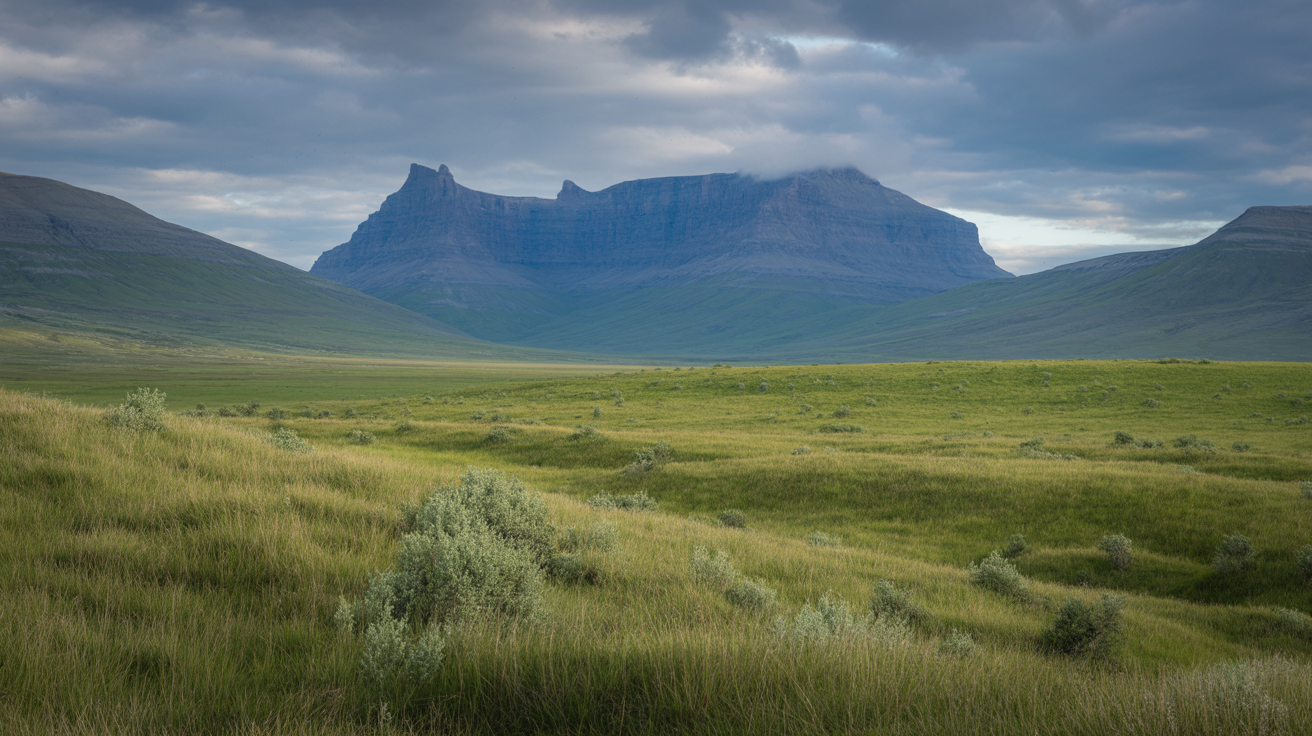 Various Continental Regions
Grassland
Open areas dominated by grasses rather than trees, supporting numerous herbivores and their predators.
 Elevated Terrain
Mountain
High-altitude environments with varying climates and specialized wildlife adapted to rugged terrain and thin air.
 Global
Forest
Wooded areas with significant tree cover and diverse plant and animal communities.
 Global
Freshwater
Lakes, rivers, and wetlands with diverse aquatic ecosystems.
Conservation
The Western Toad is currently classified as Near Threatened on the IUCN Red List.
Threats & challenges
Despite being classified as Least Concern globally, Western Toad populations are experiencing declines in parts of their range. Major threats include habitat loss and fragmentation due to urbanization, agriculture, and road construction, which disrupt migratory routes and breeding habitats. Exposure to pesticides and pollutants can cause direct mortality or developmental abnormalities. The spread of the chytrid fungus (Batrachochytrium dendrobatidis) has been linked to mass die-offs and population declines, particularly in montane regions. Climate change poses additional risks by altering hydrological regimes, reducing breeding site availability, and increasing the frequency of droughts. Road mortality during breeding migrations is a significant localized threat. Conservation efforts focus on habitat protection, disease monitoring, and mitigation of road impacts.
Taxonomy
Scientific name
Anaxyrus boreas
- Kingdom
- Animalia
- Phylum
- Chordata
- Class
- Amphibia
- Order
- Anura
- Family
- Bufonidae
- Genus
- Anaxyrus
- Species
- boreas
Where to see a western toad
1 zoo and aquarium in 1 country are recorded as keeping this species.
Community notes
Share your observations about the Western Toad.
No community notes yet. Be the first!
Discover more wildlife
More fascinating animals from the encyclopedia.