
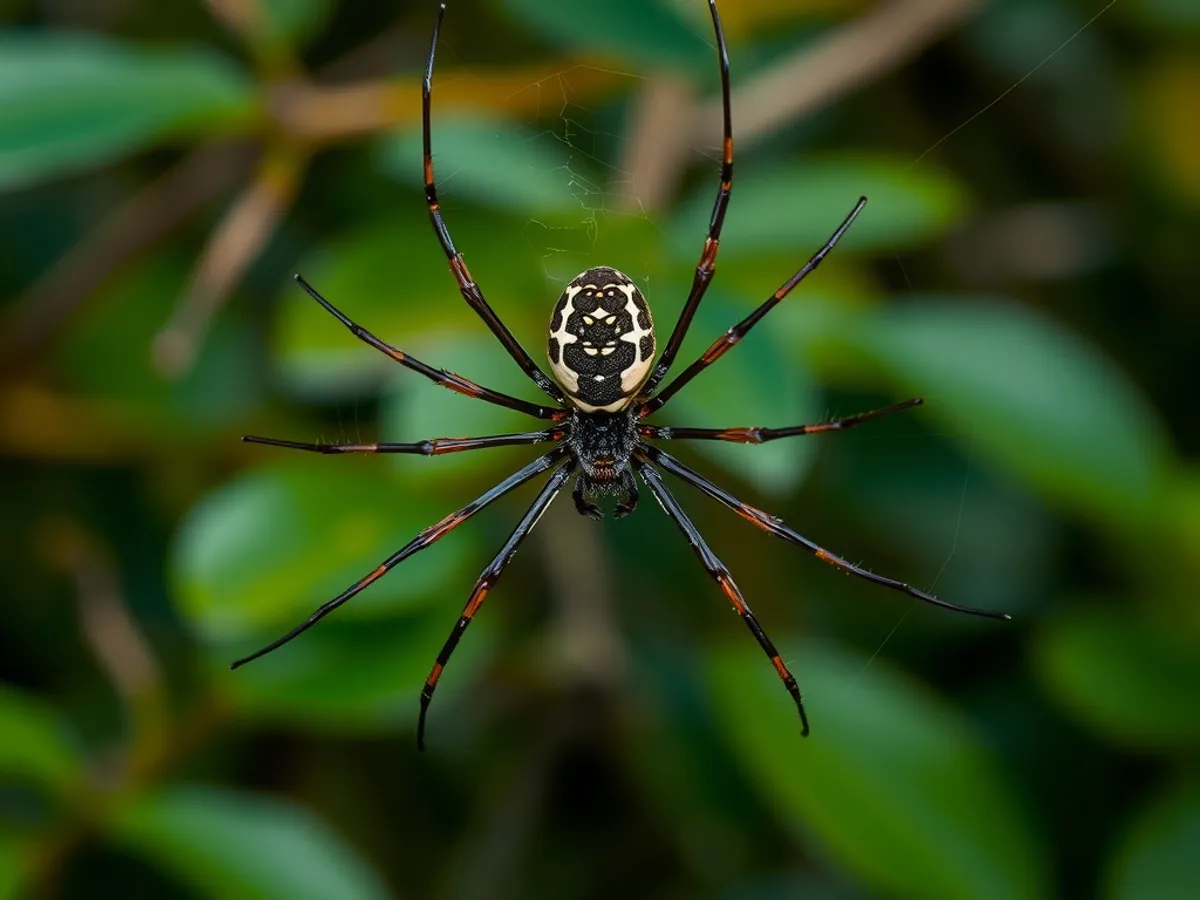
About the Whip Spider
The whip spider, also known as the tailless whip scorpion, is an unusual arachnid distinguished by its flat body, long whip-like front legs, and lack of a tail or venom. Despite their fearsome appearance, whip spiders are harmless to humans and use their elongated legs as sensory organs to navigate dark environments. These nocturnal hunters rely on stealth and speed to capture prey such as insects and small invertebrates. Whip spiders play an important role in their ecosystem by controlling insect populations and providing food for larger predators.
Fascinating facts
Sensory Legs
The first pair of legs on a whip spider are elongated and act as sensory organs, helping them detect prey and navigate their environment.
No Venom
Whip spiders do not possess venom glands or silk-producing organs like true spiders, making them harmless to humans.
Family Ties
Female whip spiders exhibit maternal care by carrying their offspring on their backs until they are old enough to survive alone.
Detailed description
Damon diadema, commonly known as the tailless whip spider or whip scorpion, is a member of the order Amblypygi, characterized by a dorsoventrally flattened body that typically measures 4–6 cm in length, with a leg span reaching up to 20 cm. Its most distinctive features are the extremely elongated, antenniform first pair of legs, which can be up to five times the body length and function as highly sensitive tactile organs. The body is divided into a broad prosoma and a segmented opisthosoma, lacking both a tail and venom glands. The pedipalps are robust, raptorial appendages equipped with spines, used for grasping prey. Damon diadema is primarily nocturnal, emerging at night to hunt and explore, while spending daylight hours concealed in crevices or under bark. This species exhibits complex behaviors, including sophisticated navigation and communication through tactile and chemical cues. Social interactions, especially among juveniles and during courtship, are more nuanced than in many other arachnids. Reproduction involves an elaborate courtship dance, and females demonstrate extended maternal care by carrying offspring on their back until the first molt. Damon diadema is highly adapted to life in humid, cluttered environments, relying on its sensory legs for spatial orientation and prey detection. Its cryptic coloration and flattened form allow it to squeeze into narrow spaces, evading predators and environmental extremes. As an apex invertebrate predator in its microhabitat, it plays a crucial ecological role in regulating populations of insects and other arthropods.
Did you know?
Despite being called 'whip spiders' and 'tailless whip scorpions,' they are neither true spiders nor true scorpions, but belong to their own unique order, Amblypygi.
Research & sources
Behaviour & social structure
Damon diadema is a solitary and primarily nocturnal species, spending daylight hours hidden in cracks, under rocks, or within tree bark. At night, it becomes active, using its elongated antenniform legs to probe the environment for prey and obstacles. These legs are covered in thousands of mechanoreceptive and chemoreceptive sensilla, allowing the animal to detect minute vibrations and chemical signals. Hunting is typically ambush-based: the whip spider remains motionless until prey approaches, then quickly seizes it with its spined pedipalps. Diet consists mainly of insects such as cockroaches, crickets, and termites, but may include other small arthropods. Social interactions are generally limited, but juveniles may aggregate temporarily, and adults exhibit ritualized, non-lethal confrontations to establish territory. Grooming behaviors are frequent, especially after feeding or molting. Daily routines are strongly influenced by humidity and temperature, with activity peaking during warm, moist nights.
Reproduction & life cycle
Mating in Damon diadema involves a complex courtship ritual, where the male uses his antenniform legs to gently touch and communicate with the female, followed by a display of his pedipalps. The male deposits a spermatophore on the substrate and guides the female over it, facilitating sperm uptake. Females lay between 20–60 eggs, which are carried in a brood sac attached to the ventral side of the opisthosoma. Incubation lasts approximately 3–4 weeks, depending on ambient temperature and humidity. Upon hatching, the white, soft-bodied young climb onto the mother's back, where they remain for about 10 days until their first molt. Maternal care is pronounced, with the female protecting and transporting the young during this vulnerable period. Sexual maturity is reached after 6–8 molts, which can take 1–2 years, and breeding may occur year-round in stable tropical environments.
Adaptations & survival
Damon diadema exhibits several key adaptations for survival in its microhabitat. Its flattened body allows it to access narrow crevices for shelter and ambush. The elongated, whip-like first pair of legs function as sophisticated sensory appendages, compensating for poor vision and enabling navigation in complete darkness. The pedipalps are modified into powerful, spined grasping organs for subduing prey. Cryptic coloration and irregular body margins provide camouflage against bark and rock surfaces. Behavioral adaptations include nocturnal activity to avoid diurnal predators and desiccation, as well as the ability to remain motionless for extended periods. Evolutionary specializations such as maternal care and complex courtship rituals enhance offspring survival and reproductive success.
Cultural significance
Whip spiders, including Damon diadema, have a limited but intriguing presence in human culture. In some African and Caribbean folklore, they are regarded with fear or superstition due to their unusual appearance, but are generally not associated with venom or harm. In modern times, they have gained popularity in the exotic pet trade and are occasionally featured in educational programs and media to illustrate arachnid diversity and sensory adaptations. Their harmless nature and unique morphology make them subjects of fascination rather than fear in most contexts.
Recent research
Recent research on Damon diadema has focused on its sensory biology, particularly the function of the antenniform legs in spatial navigation and communication. Studies using neurophysiological techniques have revealed complex sensory processing capabilities, including the ability to detect airborne and substrate-borne vibrations. Behavioral experiments have demonstrated advanced spatial memory and learning, challenging assumptions about cognitive limits in arachnids. Ongoing research also explores the species' role in forest ecosystems as a regulator of insect populations and its potential as a model organism for studying arachnid sociality and parental care. Conservation genetics studies are beginning to assess population structure and connectivity across fragmented habitats.
Sources
The Biology of Whip Spiders (Amblypygi) with Special Reference to Damon diadema
Peter Weygoldt (2000)
scientificSensory biology and navigation in the whip spider Damon diadema
Santer, R.D. & Hebets, E.A. (2011)
scientificThe Biology of Whip Spiders (Arachnida, Amblypygi): Patterns and Processes
Peter Weygoldt (2000)
scientificSensory Biology of Whip Spiders: Antenniform Leg Function and Evolution
Prashant P. Sharma et al. (2017)
scientificAmblypygi (Arachnida): Patterns of Behavior, Sensory Biology, and Evolution
Peter Weygoldt (2000)
scientificVideos
Habitat
Tropical and subtropical forests


Conservation
The Whip Spider is currently classified as Least Concern on the IUCN Red List.
Threats & challenges
Currently, Damon diadema faces minimal direct threats and is classified as Least Concern by the IUCN. However, localized habitat loss due to deforestation, logging, and land conversion can impact populations, particularly in fragmented forest regions of East Africa and Madagascar. Collection for the exotic pet trade poses a minor but increasing risk in some areas. Climate change, resulting in altered humidity and temperature regimes, may also affect microhabitat suitability. Despite these pressures, the species remains relatively widespread and resilient, with stable populations in protected and undisturbed habitats.
Taxonomy
Scientific name
Damon diadema
- Kingdom
- Animalia
- Phylum
- Arthropoda
- Class
- Arachnida
- Order
- Amblypygi
- Family
- Phrynichidae
- Genus
- Damon
- Species
- diadema
Community notes
Share your observations about the Whip Spider.
No community notes yet. Be the first!
Discover more wildlife
More fascinating animals from the encyclopedia.