
About the White-capped Albatross
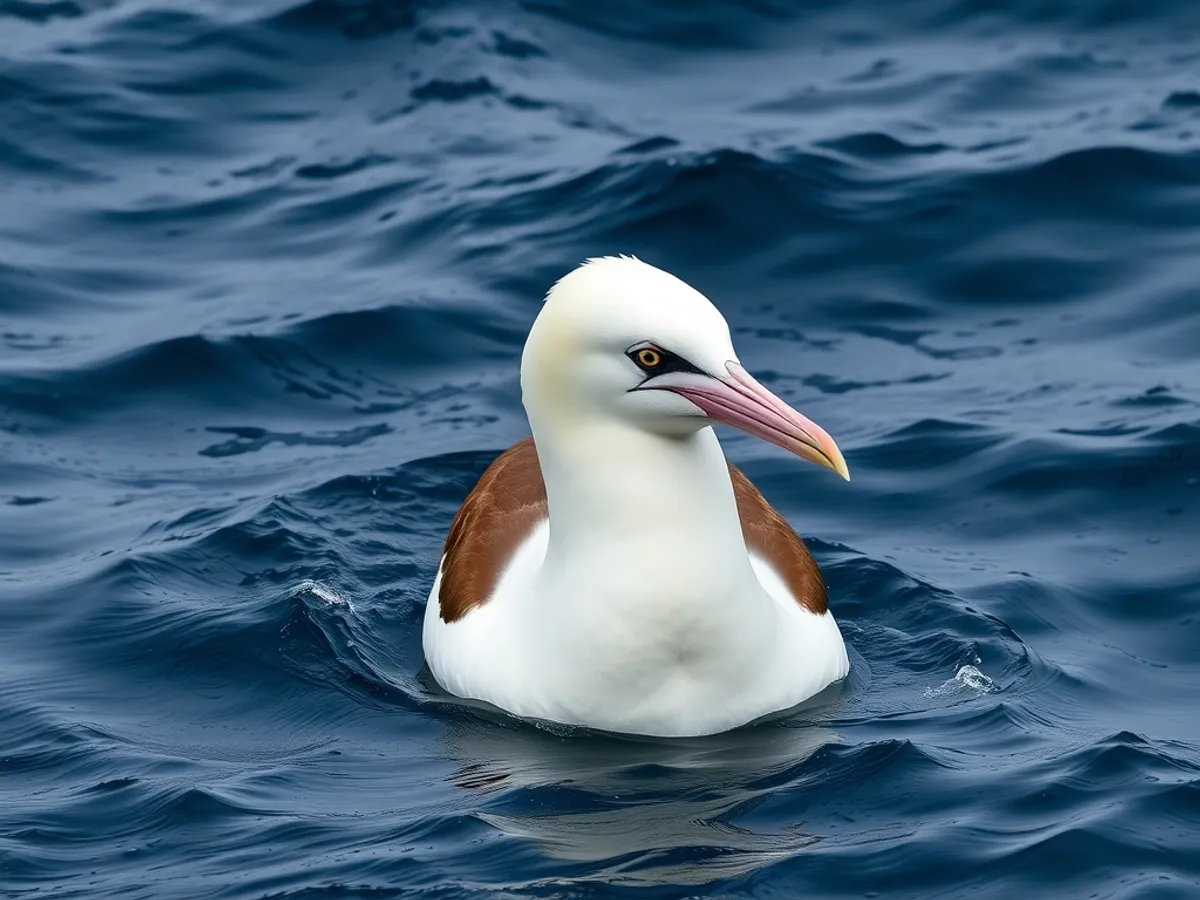
The White-capped Albatross is a large seabird found predominantly in the southern oceans, especially around New Zealand’s subantarctic islands. It is characterized by its striking white head and cap, contrasting sharply with its dark gray back and wings, and a pale yellowish bill. These birds are exceptional long-distance flyers, gliding effortlessly over vast stretches of the open ocean. White-capped Albatrosses are known for their lifelong pair bonds and elaborate courtship displays. They play a crucial ecological role in marine environments as apex predators and scavengers.
Fascinating facts
Massive Wingspan
The White-capped Albatross boasts a wingspan of up to 2.5 meters (over 8 feet), which aids in their ability to travel great distances across open oceans with minimal effort.
Oceanic Lifestyle
These albatrosses spend the vast majority of their lives at sea, coming to land only to breed on remote subantarctic islands.
Diet of Marine Prey
Their diet consists mainly of squid, fish, and crustaceans, which they catch by surface seizing and occasionally diving.
Detailed description
The White-capped Albatross (Thalassarche steadi) is a large, robust seabird, with adults typically measuring 90–100 cm in length and possessing an impressive wingspan of 220–256 cm, making it the largest of the mollymawks. Its most distinctive feature is the brilliant white cap and head, sharply demarcated from the slate-gray mantle, back, and upperwings. The underparts are pure white, while the underwings display a narrow black margin. The bill is pale yellow with a darker tip, and the legs and feet are bluish-gray. Juveniles resemble adults but have a darker bill and less sharply defined head coloration. White-capped Albatrosses are highly pelagic, spending most of their lives soaring over the open Southern Ocean, exploiting dynamic wind conditions with minimal energy expenditure. Their flight is characterized by long, gliding arcs interspersed with short flaps, allowing them to cover thousands of kilometers between feeding and breeding grounds. Socially, they are often solitary or found in small groups at sea, but form dense colonies during breeding. Their vocalizations include a range of cackles, whistles, and bill-clapping, especially during courtship. This species is known for its longevity, with individuals living up to 40–50 years in the wild.
Did you know?
Despite their graceful flight, White-capped Albatrosses are clumsy on land, often stumbling while walking due to their large size and webbed feet.
Research & sources
Wikipedia summary
The white-capped albatross is a mollymawk that breeds on the islands off of New Zealand. Not all experts agree that this form should be recognized as a separate species from the shy albatross, Thalassarche cauta. It is a medium-sized black, slate gray, and white albatross and is the largest of the mollymawks.
Behaviour & social structure
White-capped Albatrosses are primarily diurnal but may forage at night, especially during the breeding season. They are surface feeders, employing a combination of surface seizing and shallow plunging to capture prey, which includes fish (notably myctophids), squid, and crustaceans. They are also known to scavenge discards from fishing vessels, which can lead to dangerous interactions. At sea, they are generally solitary or loosely associated with other seabirds, but at breeding colonies, they exhibit complex social behaviors, including ritualized displays such as sky-pointing, bill-circling, and mutual preening. These displays reinforce pair bonds and help maintain social cohesion within dense nesting areas. Daily routines at sea involve extensive periods of gliding interspersed with feeding bouts, while on land, adults alternate between nest attendance and long foraging trips.
Reproduction & life cycle
Breeding occurs annually, primarily on the subantarctic Auckland Islands, with smaller populations on the Antipodes Islands. The breeding season begins in late September to early October, when pairs reunite at traditional nesting sites. Nests are constructed from mud, grass, and peat on open slopes or among tussock grass. A single large, white egg is laid, typically in late October or early November. Both parents share incubation duties, which last about 70–74 days. After hatching, chicks are brooded and guarded for several weeks before both parents begin alternating long foraging trips to provision the chick. Fledging occurs after 120–130 days, usually between March and April. White-capped Albatrosses exhibit strong site fidelity and lifelong monogamy, with pairs reuniting each season unless one partner dies.
Adaptations & survival
White-capped Albatrosses possess several adaptations for their oceanic lifestyle. Their long, narrow wings enable dynamic soaring, allowing them to exploit wind gradients above the waves for energy-efficient flight. The tubular nostrils (naricorns) on their bill enhance olfactory sensitivity, aiding in the detection of prey over vast distances. Their salt glands, located above the nasal passages, excrete excess salt from ingesting seawater, maintaining osmotic balance. The dense, waterproof plumage insulates against cold and wet conditions typical of subantarctic environments. Behaviorally, their delayed sexual maturity (7–10 years) and low reproductive rate are offset by high adult survival, a common trait among long-lived seabirds.
Cultural significance
While the White-capped Albatross does not have the same deep-rooted cultural symbolism as some other seabirds, it features in the maritime folklore of New Zealand and the Southern Ocean, often representing endurance and the wildness of the open sea. Albatrosses in general are seen as omens or symbols of good luck among sailors. There is no significant evidence of traditional hunting or use by indigenous peoples, likely due to the remote and inhospitable nature of their breeding sites.
Recent research
Recent genetic and morphological studies have clarified the taxonomic status of the White-capped Albatross, distinguishing it from the closely related Shy Albatross (Thalassarche cauta) of the Indian Ocean, though some taxonomic debate persists. Satellite tracking has revealed extensive foraging ranges, with individuals traveling as far as the South American coast. Ongoing research focuses on the impact of fisheries bycatch and the effectiveness of mitigation measures. Long-term monitoring on the Auckland Islands provides valuable data on population trends, breeding success, and the effects of climate variability. Stable isotope analysis is also being used to investigate changes in diet and foraging ecology over time.
Videos
Habitat
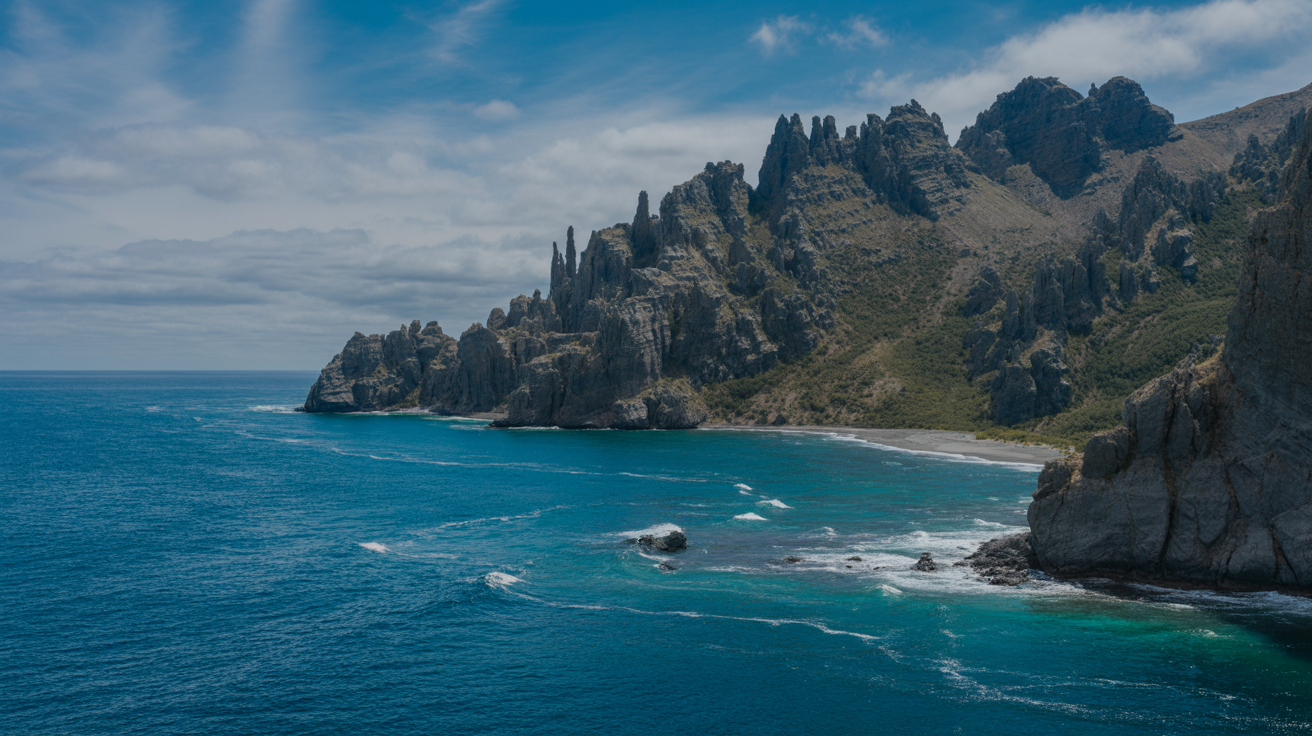
Open ocean and subantarctic islands

Conservation
The White-capped Albatross is currently classified as Near Threatened on the IUCN Red List.
Threats & challenges
The primary threats to White-capped Albatrosses include bycatch mortality in longline and trawl fisheries, which can cause significant adult mortality. Habitat degradation, introduced predators (such as pigs and cats on breeding islands), and climate change also pose risks, particularly through altered prey availability and increased storm frequency. Plastic ingestion and oil pollution are emerging concerns. The global population is estimated at 100,000–120,000 mature individuals, but trends suggest a slow decline, prompting the IUCN to classify the species as Near Threatened. Conservation measures include bycatch mitigation in fisheries, invasive species control on breeding islands, and international agreements such as ACAP (Agreement on the Conservation of Albatrosses and Petrels).
Taxonomy
Scientific name
Thalassarche steadi
- Kingdom
- Animalia
- Phylum
- Chordata
- Class
- Aves
- Order
- Procellariiformes
- Family
- Diomedeidae
- Genus
- Thalassarche
- Species
- steadi
Community notes
Share your observations about the White-capped Albatross.
No community notes yet. Be the first!
Discover more wildlife
More fascinating animals from the encyclopedia.