
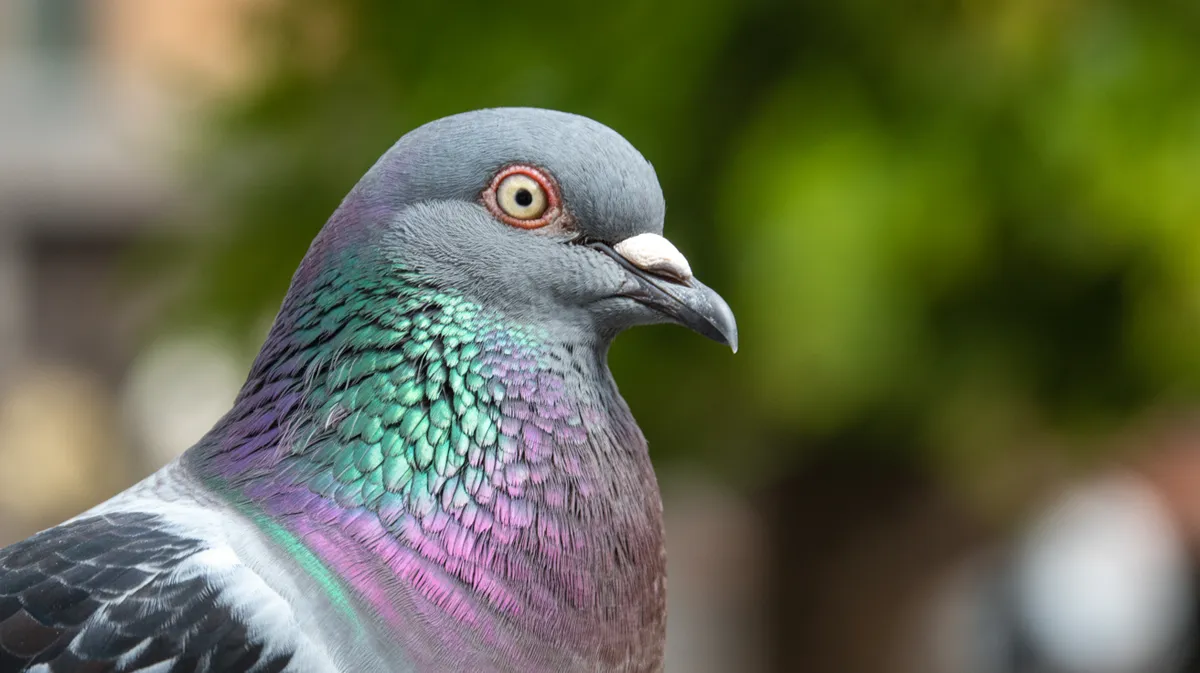
Few city dwellers get less respect than the pigeon — dismissed as a dirty, brainless "rat with wings." The truth is that pigeons are intelligent, historically heroic, and far cleaner than their reputation suggests. This entry in our Animal Myths, Debunked series rehabilitates one of the most underappreciated birds on Earth.
These are the same birds that carried life-saving messages in two world wars and can recognise themselves in a mirror. Here are seven myths worth dropping. See also frogs and rats in the series.
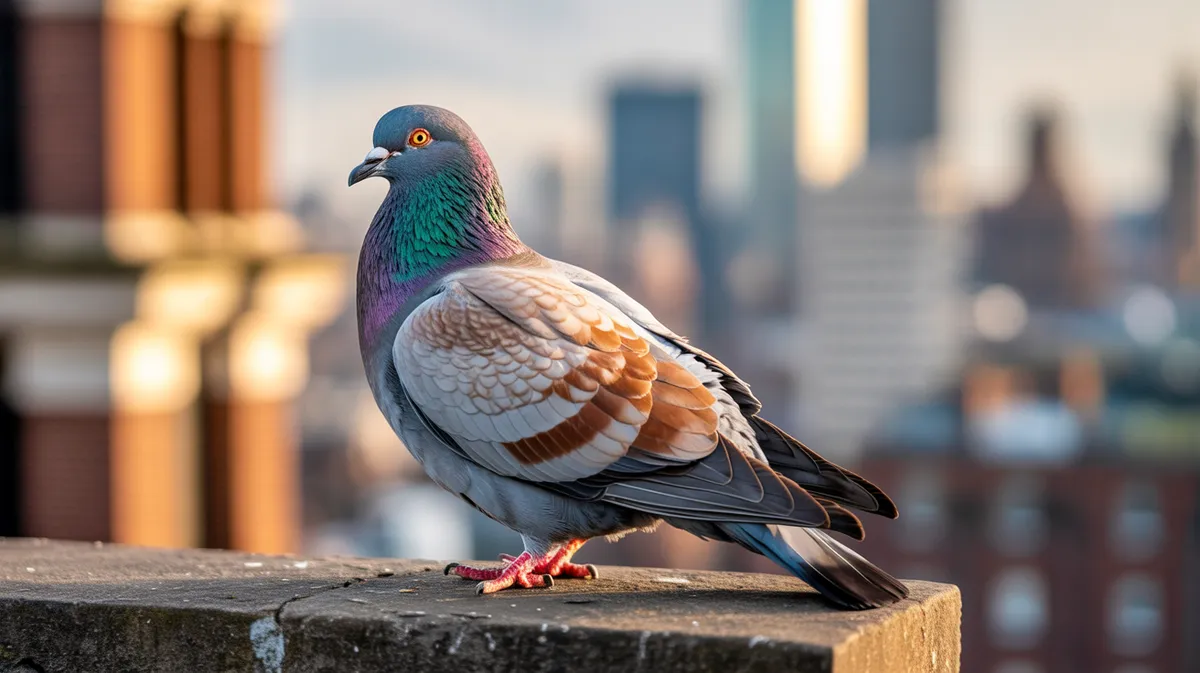
Myth 1: Pigeons are "rats with wings"
The insult casts pigeons as flying vermin spreading filth and disease.
In reality the risk of catching anything from a pigeon is very low; transmission of disease to healthy people is rare. Like most wild birds, they simply go about their lives near us.
The "rats with wings" label says more about our discomfort with city wildlife than about the birds themselves.
The phrase was actually popularised by a 1980s film, not by any real public-health finding.
Myth 2: Pigeons are stupid
Their head-bobbing waddle makes pigeons look a little dim.
They're anything but. Pigeons can recognise themselves in mirrors, tell individual humans apart, distinguish paintings by different artists, and even learn to identify letters of the alphabet in lab tests.
Their legendary homing ability — finding their way back over hundreds of miles — reflects a navigational brain most birds can't match.
In experiments, pigeons have even been trained to spot tumours in medical scans about as accurately as human experts.

Myth 3: Pigeons are wild birds
We treat the city pigeon as just another piece of urban wildlife.
In fact feral pigeons descend from domesticated rock doves that humans bred for food, messaging, and sport over thousands of years. Today's flocks are essentially escaped domestic animals.
That long history with people is exactly why pigeons are so comfortable living in our cities.
Their ancestors nested on coastal cliffs, which is exactly why pigeons feel so at home on the ledges and rooftops of our concrete canyons.
Myth 4: Feeding pigeons rice makes them explode
A widespread warning claims uncooked rice swells inside birds and makes them burst.
It's completely false. Birds eat rice and other dry grains in the wild all the time with no ill effects — their digestive systems handle it just fine.
The myth even led some places to ban throwing rice at weddings for nothing; birdseed and rice are equally harmless to the birds.
Cooked or raw, rice simply passes through a bird the way any grain does — the old wedding-rice ban was based on nothing.
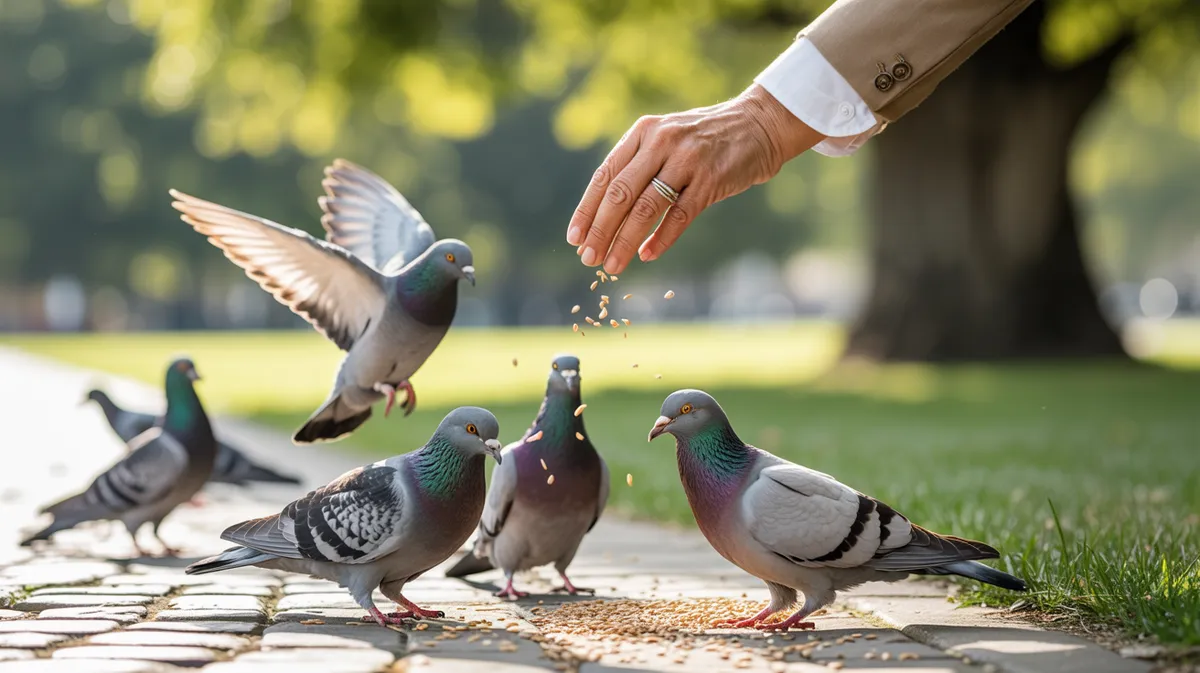
Myth 5: Pigeons are crawling with diseases that will infect you
Many people give pigeons a wide berth for fear of catching something.
The actual risk to a healthy person is very small, and serious pigeon-borne infections in humans are uncommon. Basic hygiene — not panic — is all that's needed around them.
Statistically, your pet or your kitchen sponge poses a far greater everyday health risk than a park pigeon.
The few illnesses linked to pigeons mostly affect people with weakened immune systems and rarely arise from ordinary contact.
Myth 6: Pigeons are useless pests
It's easy to write pigeons off as good for nothing but mess.
Yet homing pigeons are genuine war heroes: birds like Cher Ami and G.I. Joe carried messages that saved hundreds of soldiers' lives, and many were awarded medals for bravery.
For centuries, long before telephones, pigeon post was one of the fastest and most reliable ways to send urgent news across great distances.
Thirty-two pigeons have received the Dickin Medal, the animal equivalent of a top military honour, for their bravery in wartime.
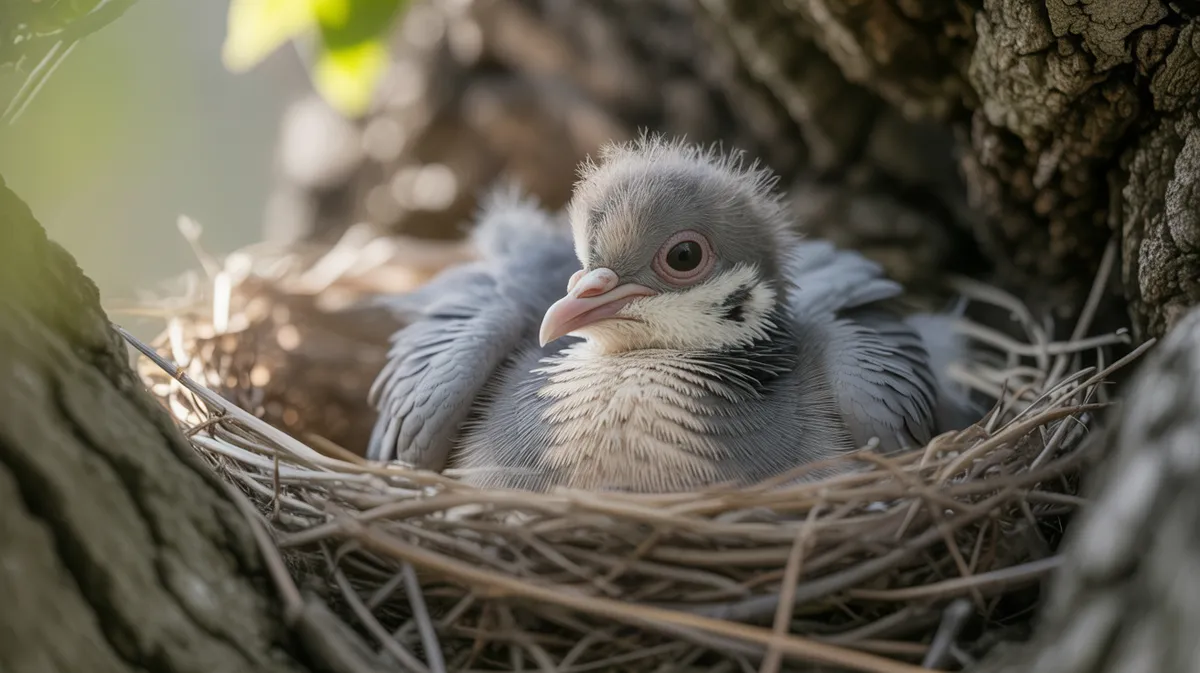
Myth 7: Baby pigeons don't exist
A running joke insists no one has ever seen a baby pigeon, as if they don't exist.
They certainly do — they're called squabs. Pigeons simply keep their young hidden in tucked-away nests for an unusually long time.
By the time a young pigeon leaves the nest, it's nearly adult-sized and almost indistinguishable from the grown birds, which is why you never seem to spot a "baby" one.
Squabs grow startlingly fast on a rich "crop milk" both parents produce, reaching nearly adult size before they are ever seen outside the nest.
Three more myths, quickly
"Pigeons never clean themselves" — They bathe regularly and preen meticulously, and produce a fine "powder down" that helps keep their feathers clean and waterproof.
"Homing pigeons navigate by sight" — Sight is only the final step. They rely on the Earth's magnetic field, the position of the sun, and even smell to find their way home.
"Pigeons have no self-awareness" — They are among the small handful of animals to have passed versions of the mirror test, alongside apes, dolphins, and elephants.
Why pigeons deserve a second look
Behind the city pigeon is a clever, capable, historically important bird that we domesticated and then learned to scorn. A little knowledge turns the "flying rat" back into the remarkable animal it has always been.
Frequently asked questions
Are pigeons dirty and full of disease? No — the risk of catching anything from a pigeon is very low for healthy people.
Does rice make pigeons explode? No, that's a myth. Birds eat dry grains, including rice, without harm.
Why don't we see baby pigeons? They exist (called squabs) but stay hidden in nests until they're nearly adult-sized.
How long do pigeons live? Often only a few years in a city, but they can reach 15 or more when safe from predators and traffic.
Do pigeons mate for life? Generally yes. Pairs stay together, and both parents share incubation and feeding duties.
What is pigeon "crop milk"? A rich secretion produced in the crop that both parents feed to their squabs — very few birds make anything like it.
Should I feed pigeons? Occasional feeding does little harm, but heavy feeding causes overcrowding and tends to create conflict with neighbours.
That's three more myths busted. Revisit crows, bats, and cats — and watch for more in the Animal Myths, Debunked series.