
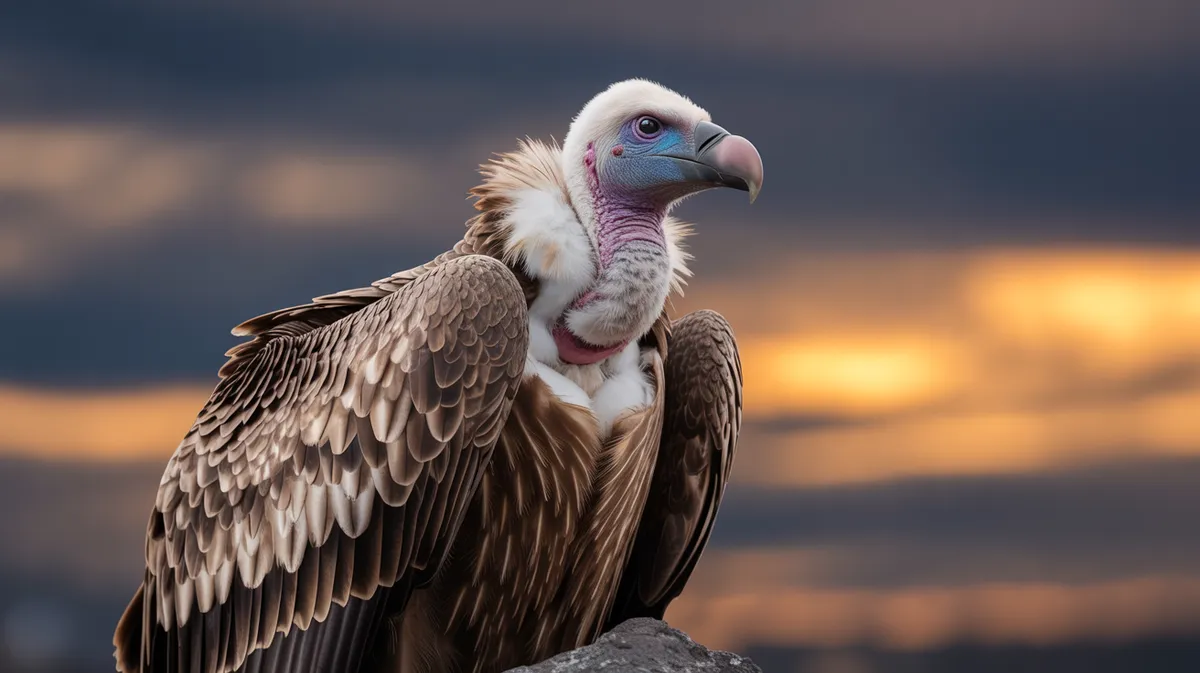
Vultures might be the most unfairly reviled birds alive — cast as filthy, disease-ridden harbingers of death that circle the dying. The reality flips that script almost completely: vultures are nature's clean-up crew, and losing them is a genuine public-health disaster. This entry in our Animal Myths, Debunked series rehabilitates one of the most important and undervalued birds on Earth.
Far from spreading disease, vultures stop it — and some are clever enough to use tools. Here are seven myths to bury for good. See also goats and moths in the series.

Myth 1: Vultures circle dying animals waiting for them to die
The image of vultures wheeling ominously over a doomed creature is a movie staple.
In reality, circling vultures are simply riding rising columns of warm air, called thermals, to gain height and scan huge areas for food they can already smell or see.
A spiral of vultures usually means a free thermal and an existing carcass, not a death foretold below.
Other vultures watch a descending bird from miles away and converge on it, which is how a fresh carcass can draw a crowd within minutes of the first arrival.
Myth 2: Vultures are dirty and spread disease
Their bald heads and carrion diet make vultures look like walking germ factories.
They're the exact opposite — a frontline defence against disease. By stripping carcasses fast, vultures stop rotting flesh from contaminating water and breeding sickness.
Their stomach acid is so ferociously strong it destroys anthrax, rabies, cholera, and botulism toxins that would kill almost any other animal that ate the same meal.
When India's vultures collapsed, carcasses piled up and feral dog and rat numbers exploded, contributing to a surge in rabies that killed tens of thousands of people.
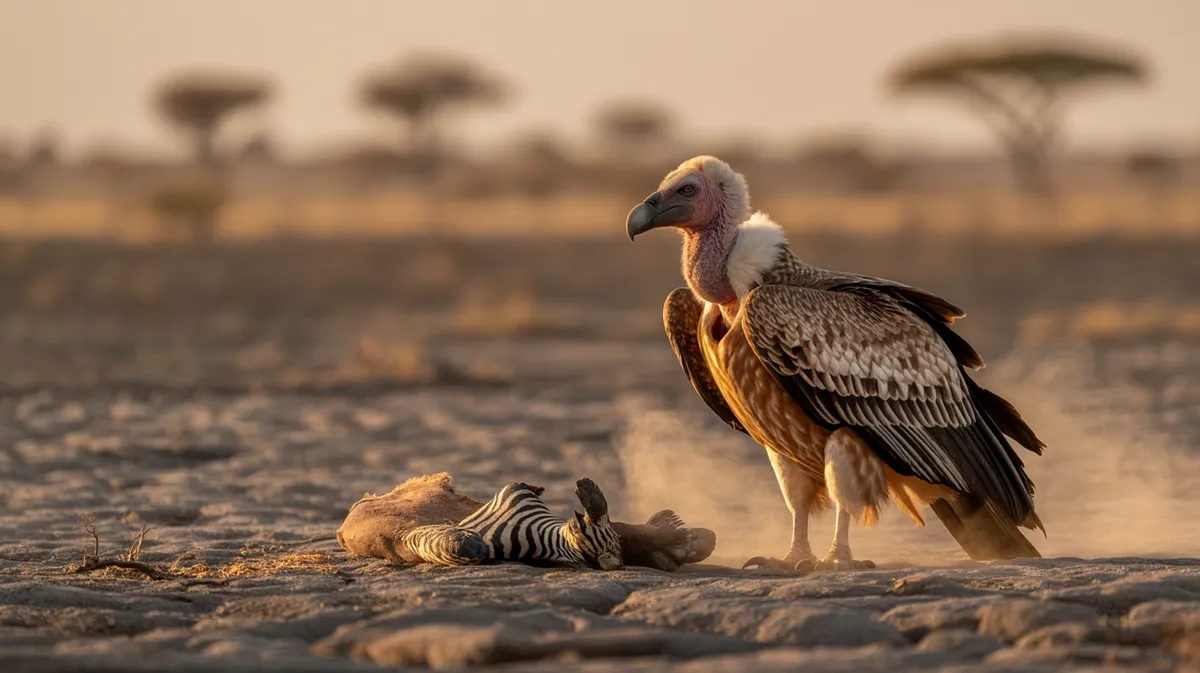
Myth 3: Vultures hunt and kill prey
People often picture vultures swooping down to kill like eagles or hawks.
Vultures are almost exclusively scavengers, built to find and process the already-dead. Their feet are relatively weak and flat — fine for walking on a carcass, useless for seizing live prey.
The whole vulture body plan is engineered for soaring and scavenging, not for the chase.
At most a few species will take a sickly or newborn animal, but the overwhelming majority of every vulture's diet is already dead when they find it.
Myth 4: Vultures are bad omens or evil
Folklore worldwide ties vultures to death, decay, and bad luck.
That reputation is undeserved cultural baggage. Many societies have honoured vultures instead — ancient Egyptians associated them with protection and motherhood, and some traditions rely on them for sacred "sky burials."
An animal that recycles death back into life is closer to a hero than a villain.
In Zoroastrian and Tibetan traditions vultures are honoured for returning the dead to nature — a role of deep respect rather than dread.
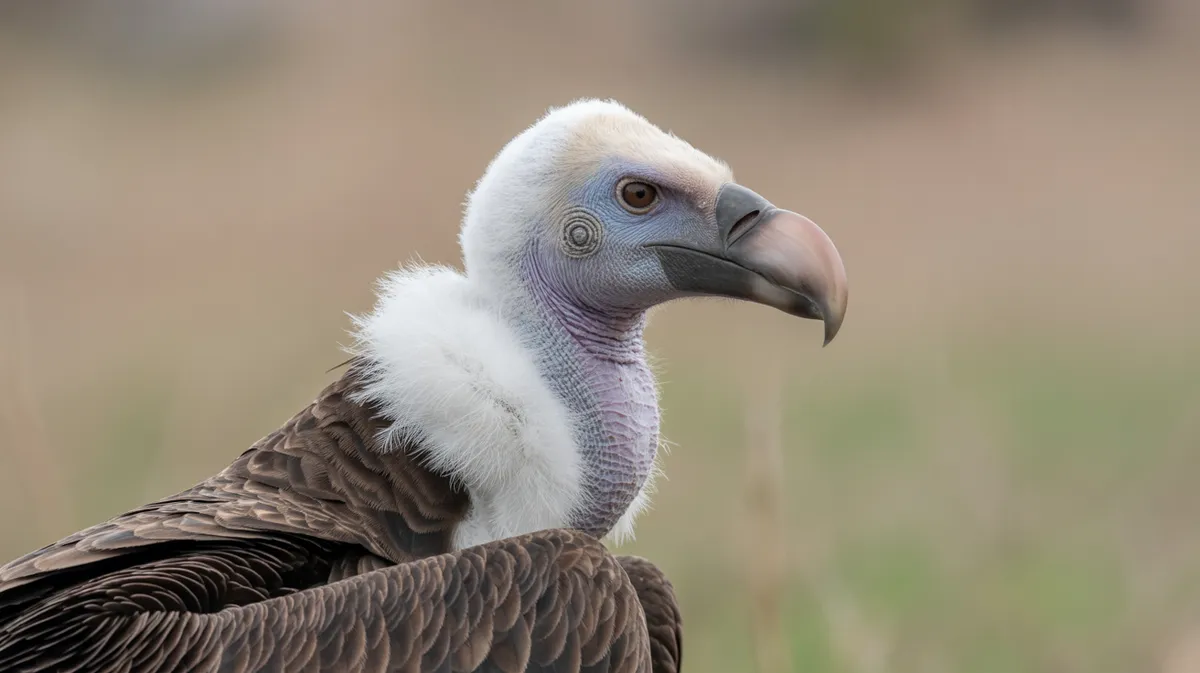
Myth 5: A vulture's bald head is just ugly
The naked head reads to many as grotesque and pointless.
It's a clever adaptation. A featherless head stays far cleaner when a vulture plunges it deep inside a carcass, leaving no feathers to trap bacteria and gore.
That bare skin also helps the bird regulate its temperature, flushing to release heat or tucking down to conserve it.
Some species can even adjust the blood flow to that bare skin, using it like a built-in radiator to shed heat after a long, hot soar.
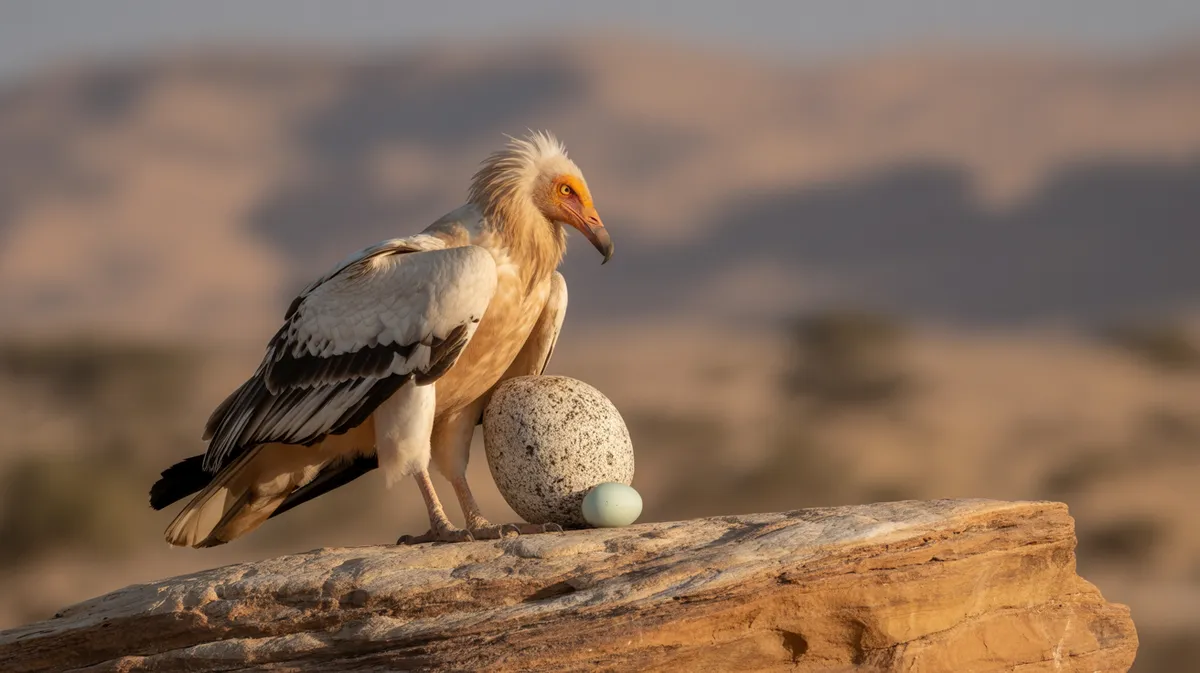
Myth 6: Vultures are stupid
Their hunched, brooding look gets mistaken for dim-wittedness.
Vultures are actually intelligent and social, with sharp memories for where food reliably turns up.
The Egyptian vulture is even a tool user, picking up stones and hurling them at thick ostrich eggs to crack them open — a rare and sophisticated skill in the bird world.
Young vultures spend years learning the landscape and the habits of other scavengers, building a mental map of where and when meals tend to appear.
Myth 7: All vultures are doing fine
Because they seem common in films and savanna footage, vultures are assumed to be thriving.
Many species are in catastrophic decline and rank among the most endangered birds on Earth. In South Asia, vulture numbers crashed by over 95% after they were poisoned by a livestock drug, diclofenac, in carcasses they fed on.
Their collapse let rotting carcasses and feral dogs multiply, fuelling disease — a stark lesson in how much these "ugly" birds quietly do for us.
Conservationists now run "vulture restaurants" — safe feeding stations stocked with untainted carcasses — to help the survivors slowly recover.
Three more myths, quickly
"Vultures find food by sight alone" — The turkey vulture has an extraordinary sense of smell and can detect a carcass hidden beneath a dense forest canopy from far away.
"Vultures are a kind of eagle" — New World and Old World vultures are not even closely related to each other, let alone to eagles — a textbook case of convergent evolution.
"Vultures vomit to attack you" — They vomit to shed weight for a fast take-off when startled. It doubles as a deterrent, but it is not an assault.
Why vultures deserve our respect
Strip away the superstition and you find efficient, intelligent, ecologically priceless birds that protect human health every single day. The vulture isn't an omen of death — it's one of the reasons death doesn't spread.
Frequently asked questions
Do circling vultures mean something is dying? No — they're usually just riding thermals to gain height and scan for food.
Do vultures spread disease? No, they prevent it — their stomach acid destroys deadly pathogens in carcasses.
Are vultures endangered? Many species are critically endangered, especially in Asia after poisoning by the drug diclofenac.
How many vulture species are there? Around 23, split between New World and Old World groups that are not closely related to each other.
How do vultures avoid getting sick? Ferociously acidic stomach juices destroy the bacteria and toxins that would kill almost any other animal.
Do vultures kill livestock? Essentially never. They lack the feet and the strength to take live prey of any size.
Why are vultures endangered? Poisoning is the main driver — especially the veterinary drug diclofenac in carcasses — along with habitat loss.
That's three more myths busted. Revisit crows, bats, and pigeons — and watch for more in the Animal Myths, Debunked series.