
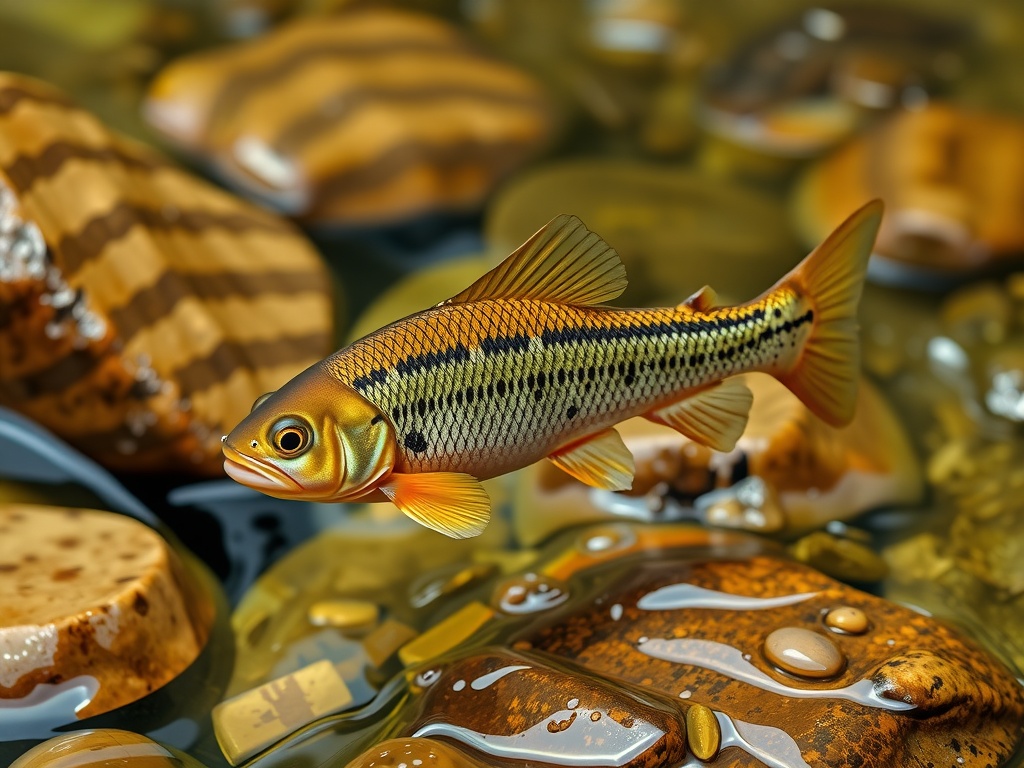
About the Denison barb
The Denison barb, also known as the red-line torpedo barb or Roseline shark, is a striking freshwater fish native to the fast-flowing streams and rivers of the Western Ghats in southern India. Distinguished by its vibrant red stripe running from the snout through the eye and along the body, this species is prized in the aquarium trade for its dynamic coloration and active schooling behavior. Denison barbs are streamlined and agile, often found darting among submerged rocks and aquatic vegetation. Their popularity has contributed to significant pressures on wild populations, prompting conservation concerns.
Fascinating facts
Endemic Habitat
Denison barbs are endemic to the Western Ghats, a biodiversity hotspot in southern India, and are found nowhere else in the wild.
Schooling Behavior
They are highly social fish, preferring to live and move in groups of at least six individuals for optimal health and natural behavior.
Red Stripe
The vivid red horizontal stripe along their body is a key feature for mate selection and communication within their species.
Detailed description
The Denison barb (Sahyadria denisonii), also known as the red-line torpedo barb, is a medium-sized cyprinid fish reaching up to 11 cm in standard length, with a slender, torpedo-shaped body adapted for swift movement in fast-flowing waters. Its most distinctive feature is a vivid, iridescent red stripe that runs from the snout, through the eye, and along the midline of the body, often accompanied by a black lateral stripe below and a yellow or gold dorsal stripe above. The fins are typically translucent, with the caudal fin displaying black and yellow markings and a bright red patch at the base. Scales are cycloid and tightly packed, providing a smooth, hydrodynamic surface. The mouth is subterminal, equipped with two pairs of short barbels, aiding in substrate foraging. Denison barbs are highly social, forming tight shoals of 6–20 individuals, which enhances their ability to evade predators and forage efficiently. They are diurnal, displaying peak activity during daylight hours, and are agile swimmers, often seen darting among rocks and aquatic plants. Their coloration intensifies during social interactions and breeding. In the wild, they inhabit clear, oxygen-rich streams with rocky substrates and dense riparian vegetation, which provide both shelter and feeding grounds. Juveniles exhibit less intense coloration, gaining their full adult pattern as they mature.
Did you know?
The Denison barb was only scientifically described in 1865, but became globally popular in the aquarium trade more than a century later, leading to its rapid population decline in the wild.
Research & sources
Wikipedia summary
The Denison barb, Denison's barb, Miss Kerala, red-line torpedo barb, or roseline shark is an endangered species of cyprinid fish endemic to the fast-flowing hill streams and rivers of the Western Ghats in India. It is commonly seen in the aquarium trade; pet collection caused it to become endangered and is its single major threat.
Behaviour & social structure
Denison barbs are schooling fish that exhibit complex social behaviors, including coordinated swimming and hierarchical interactions within groups. Shoaling provides safety in numbers and increases foraging success. They are omnivorous, feeding on a varied diet of aquatic invertebrates, insect larvae, small crustaceans, algae, and detritus. Foraging is typically substrate-oriented, with individuals sifting through gravel and leaf litter. Aggression is minimal, though mild territorial disputes may occur, especially during breeding. They communicate through body postures and rapid color changes, particularly during courtship or when startled. Denison barbs are crepuscular feeders, most active during early morning and late afternoon. Rest periods are observed at night, when they seek shelter among rocks or dense vegetation.
Reproduction & life cycle
Reproduction in Denison barbs is seasonal, coinciding with the onset of the southwest monsoon (June–August) in the Western Ghats. Spawning is triggered by increased water flow, temperature changes, and photoperiod. They are egg scatterers, releasing adhesive eggs among submerged vegetation or rocky crevices. Courtship involves males displaying intensified coloration and chasing females. Females can lay several hundred eggs per spawning event. There is no parental care; eggs are left to develop and hatch independently. Incubation lasts approximately 24–36 hours at optimal temperatures (24–26°C). Fry are free-swimming within 3–4 days and begin feeding on microplankton and fine detritus. Sexual maturity is typically reached at 12–15 months.
Adaptations & survival
Denison barbs possess several adaptations for life in fast-flowing streams. Their streamlined, fusiform body reduces drag, enabling rapid swimming and maneuverability. Enlarged pectoral and caudal fins provide stability and propulsion in strong currents. The subterminal mouth and barbels facilitate benthic foraging. Their acute lateral line system detects water vibrations, aiding in predator avoidance and shoal cohesion. Bright coloration serves both as a social signal and a possible deterrent to predators by indicating unpalatability or vigor. Physiologically, they are tolerant of high oxygen concentrations and fluctuating water temperatures typical of hill streams.
Cultural significance
Locally known as 'Miss Kerala,' the Denison barb holds symbolic value in Kerala, where it is celebrated for its beauty and ecological importance. It has featured in regional conservation campaigns and is sometimes used as a mascot for freshwater biodiversity awareness. There are no significant traditional uses, but its popularity in the ornamental fish trade has made it an economic resource for local communities, albeit with conservation concerns.
Recent research
Recent research has focused on the genetic diversity and population structure of Denison barbs, revealing significant genetic fragmentation due to habitat loss. Studies on captive breeding have improved understanding of reproductive biology and larval development, aiding ex-situ conservation efforts. Ecological research has highlighted their role as bioindicators of stream health in the Western Ghats. Ongoing projects are assessing the effectiveness of protected areas and community-based management in sustaining wild populations. Advances in molecular phylogenetics have clarified their taxonomic placement, leading to the current genus Sahyadria (formerly Dawkinsia and Puntius).
Sources
Videos
Habitat
Clear, fast-flowing freshwater streams and rivers
 Elevated Terrain
Mountain
High-altitude environments with varying climates and specialized wildlife adapted to rugged terrain and thin air.
 Global
Forest
Wooded areas with significant tree cover and diverse plant and animal communities.
 Global
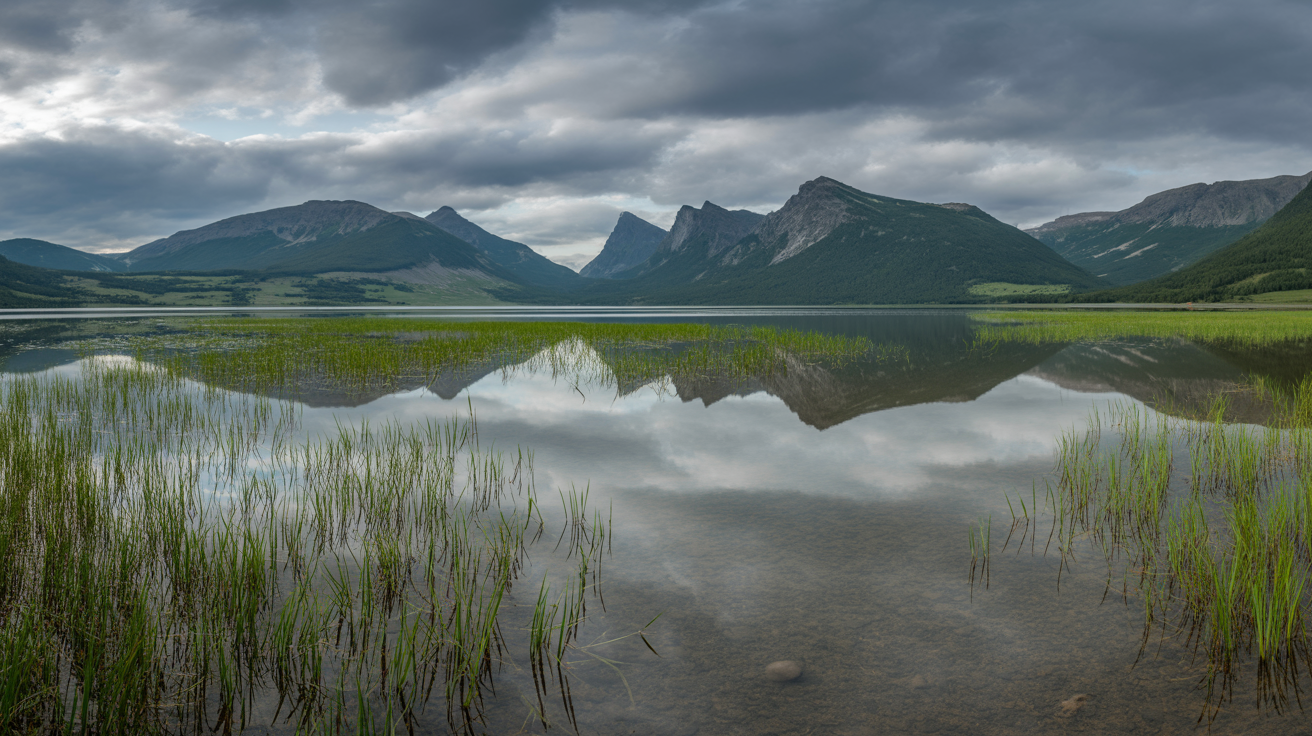
Freshwater
Lakes, rivers, and wetlands with diverse aquatic ecosystems.
Conservation
The Denison barb is currently classified as Endangered on the IUCN Red List.
Threats & challenges
The primary threat to Denison barb populations is overexploitation for the international aquarium trade, which has led to dramatic population declines since the 1990s. Habitat degradation from deforestation, agricultural runoff, dam construction, and pollution further exacerbates their vulnerability. Fragmentation of river systems restricts gene flow and reduces suitable breeding habitats. Invasive species and climate change pose additional risks. Despite legal protections and inclusion in India’s Wildlife Protection Act, enforcement is inconsistent. Captive breeding programs have been initiated, but wild populations remain endangered, with an estimated decline of over 50% in the last decade.
Taxonomy
Scientific name
Sahyadria denisonii
- Kingdom
- Animalia
- Phylum
- Chordata
- Class
- Actinopterygii
- Order
- Cypriniformes
- Family
- Cyprinidae
- Genus
- Sahyadria
- Species
- denisonii
Community notes
Share your observations about the Denison barb.
No community notes yet. Be the first!
Discover more wildlife
More fascinating animals from the encyclopedia.