
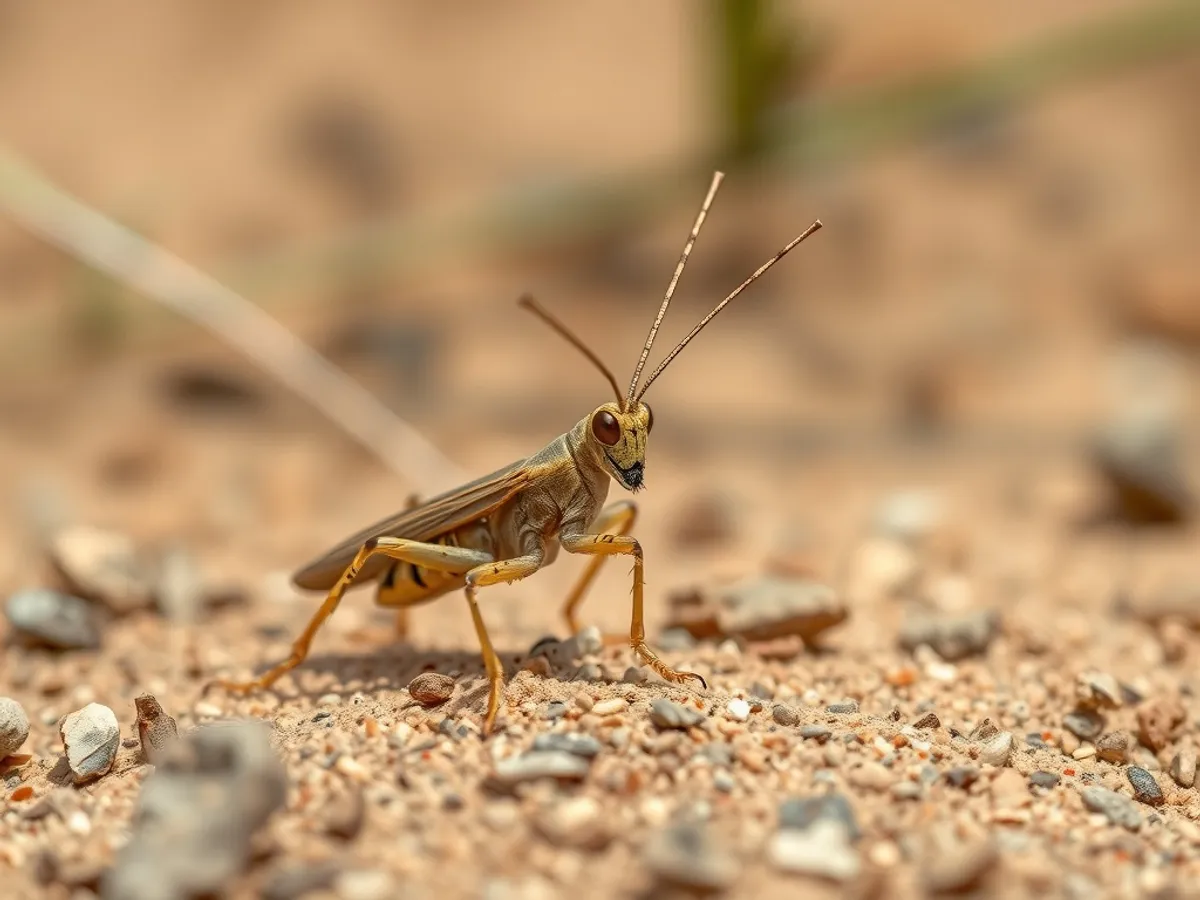
About the Desert Locust
Schistocerca gregaria is not really one animal but two, and the switch between them is one of the most dramatic transformations in the insect world. In its solitarious phase it is a shy, green or sandy, well-camouflaged grasshopper that actively avoids other locusts. Crowd it — specifically, repeatedly touch the hairs on the outside of its hind femur, which happens when locusts jostle on a shrinking patch of vegetation — and a surge of serotonin in the nervous system flips it into the gregarious phase within a couple of hours. The gregarious form is a different creature: black and yellow instead of cryptic, actively attracted to other locusts, with a bigger flight muscle and a smaller brainpower-to-body ratio devoted to solitary caution, and it will breed a next generation that hatches already gregarious. A mature swarm may hold 40-80 million insects per square kilometre, eats roughly its own body weight in vegetation each day, and rides prevailing winds into the convergence zones where rain falls, which is exactly where fresh green growth will be. The 2019-2021 upsurge across East Africa, Arabia and Southwest Asia was the worst in decades and was set off by unusual cyclone-driven rainfall in the empty deserts of the Arabian Peninsula, where the buildup went unseen.
Fascinating facts
Swarm Power
Desert Locust swarms can contain up to 80 million locusts per square kilometer, stripping fields of vegetation in hours.
Phase Polymorphism
Desert Locusts exhibit phase polymorphism—shifting from solitary to gregarious forms with changes in size, color, and behavior.
Wide Range
Their range covers about 60 countries, threatening the livelihoods of one-tenth of the world’s population.
Detailed description
The Desert Locust (Schistocerca gregaria) is a medium-sized grasshopper species, typically measuring 60–80 mm in length as adults, with females generally larger than males. Its body coloration and morphology are highly variable, depending on its phase: solitary locusts are cryptically colored in browns and greens, while gregarious locusts exhibit bright yellow and black markings in adults and striking black and yellow in nymphs. The species possesses strong, elongated hind legs adapted for jumping, and well-developed wings that enable sustained long-distance flight. Desert Locusts are renowned for their phase polyphenism, shifting between solitary and gregarious forms in response to population density and environmental cues. In the gregarious phase, individuals become more social, form cohesive swarms, and undergo physiological changes including increased serotonin levels and changes in body size and shape. Their life cycle consists of egg, nymph (hopper), and adult stages, with nymphs undergoing five to six molts before reaching maturity. Adults are highly migratory, capable of traveling up to 150 km per day, and swarms can contain billions of individuals, covering areas of several hundred square kilometers. The species is adapted to arid and semi-arid habitats, often exploiting ephemeral vegetation following rainfall. Desert Locusts are generalist herbivores, feeding on a wide variety of plants, including cereals, grasses, and forbs, making them a significant threat to agriculture. Their reproductive output is high, with a single female laying up to 100–300 eggs per clutch, and multiple clutches per season under optimal conditions. The species' ability to rapidly increase population size and form destructive swarms is a key factor in its status as one of the world’s most notorious agricultural pests.
Did you know?
Desert Locust swarms have been reported to destroy enough crops in a day to feed 35,000 people.
Research & sources
Wikipedia summary
The desert locust is a species of locust, a periodically swarming, short-horned grasshopper in the family Acrididae. They are found primarily in the deserts and dry areas of northern and eastern Africa, Arabia, and southwest Asia. During population surge years, they may extend north into parts of Southern Europe, south into Eastern Africa, and east in northern India. The desert locust shows periodic changes in its body form and can change in response to environmental conditions, over several generations, from a solitary, shorter-winged, highly fecund, non-migratory form to a gregarious, long-winged, and migratory phase in which they may travel long distances into new areas. In some years, they may thus form locust plagues, invading new areas, where they may consume all vegetation including crops, and at other times, they may live unnoticed in small numbers.
Behaviour & social structure
Desert Locusts exhibit marked behavioral differences between their solitary and gregarious phases. Solitary individuals are cryptic, avoid conspecifics, and are primarily active during the day, feeding and moving independently. In contrast, gregarious locusts display pronounced social behavior, forming dense bands as nymphs and coordinated swarms as adults. Swarming behavior is triggered by tactile stimulation of the hind legs and increased serotonin, leading to aggregation and synchronized movement. Feeding is indiscriminate and voracious, with swarms consuming nearly all available green vegetation in their path, including crops, trees, and pastureland. Locusts are primarily diurnal, with peak activity during the early morning and late afternoon. Swarms take off en masse at sunrise, travel with prevailing winds, and settle at dusk to feed and rest. Locusts also exhibit thermoregulatory behaviors, basking to raise body temperature before flight. Communication is primarily tactile and visual, with chemical cues (pheromones) playing a role in aggregation and mating.
Reproduction & life cycle
Reproduction in Desert Locusts is closely tied to environmental conditions, particularly rainfall, which triggers vegetation growth and suitable oviposition sites. Mating involves prolonged courtship, with males mounting females and copulation lasting several hours. Females lay eggs in moist sandy soil, depositing 100–300 eggs per pod at a depth of 5–10 cm. Under favorable conditions, females may lay up to three pods at intervals of 5–7 days. Incubation lasts 10–20 days, depending on temperature and soil moisture. Upon hatching, nymphs (hoppers) form bands and undergo five to six molts over 30–40 days before reaching adulthood. There is no parental care; eggs and nymphs are left to develop independently. Breeding can occur year-round in some regions, but is typically synchronized with seasonal rains, leading to rapid population increases and potential outbreaks.
Adaptations & survival
Desert Locusts possess a suite of adaptations for survival in harsh, unpredictable environments. Phase polyphenism allows them to switch between solitary and gregarious forms, optimizing survival and reproduction under varying population densities. Their strong flight muscles and aerodynamic wings enable long-distance migration, allowing swarms to exploit transient resources and escape deteriorating conditions. Locusts have a highly efficient digestive system capable of processing a wide range of plant material, and their rapid reproductive cycle enables explosive population growth. Behavioral adaptations include aggregation in response to tactile and chemical cues, synchronized hatching and molting, and thermoregulatory basking. Eggs are resistant to desiccation, and nymphs can survive on minimal vegetation. The ability to detect and respond to environmental cues, such as rainfall and vegetation greenness, is crucial for timing reproduction and migration.
Cultural significance
Desert Locusts have played a significant role in human history and culture, often symbolizing destruction and divine punishment in religious texts, such as the biblical plagues of Egypt. In many African and Middle Eastern societies, locust swarms are associated with famine and hardship. However, in some cultures, locusts are harvested as a food source, valued for their high protein content and nutritional value. Traditional knowledge and early warning systems have been developed in locust-prone regions to predict and mitigate outbreaks. Locusts also feature in folklore, art, and literature, reflecting their profound impact on agriculture and livelihoods.
Recent research
Recent research has focused on the molecular and neurobiological mechanisms underlying phase polyphenism, particularly the role of serotonin in triggering gregarization. Advances in remote sensing, geographic information systems (GIS), and climate modeling have improved early warning and monitoring of locust populations. Biological control methods, such as the use of entomopathogenic fungi (Metarhizium acridum), are being developed as environmentally friendly alternatives to chemical pesticides. Genomic studies have provided insights into the genetic basis of phase change, flight endurance, and adaptation to arid environments. Ongoing research also examines the impact of climate change on locust distribution and outbreak dynamics, as well as the socioeconomic effects of locust plagues on food security.
Videos
Habitat
Desert and arid grasslands
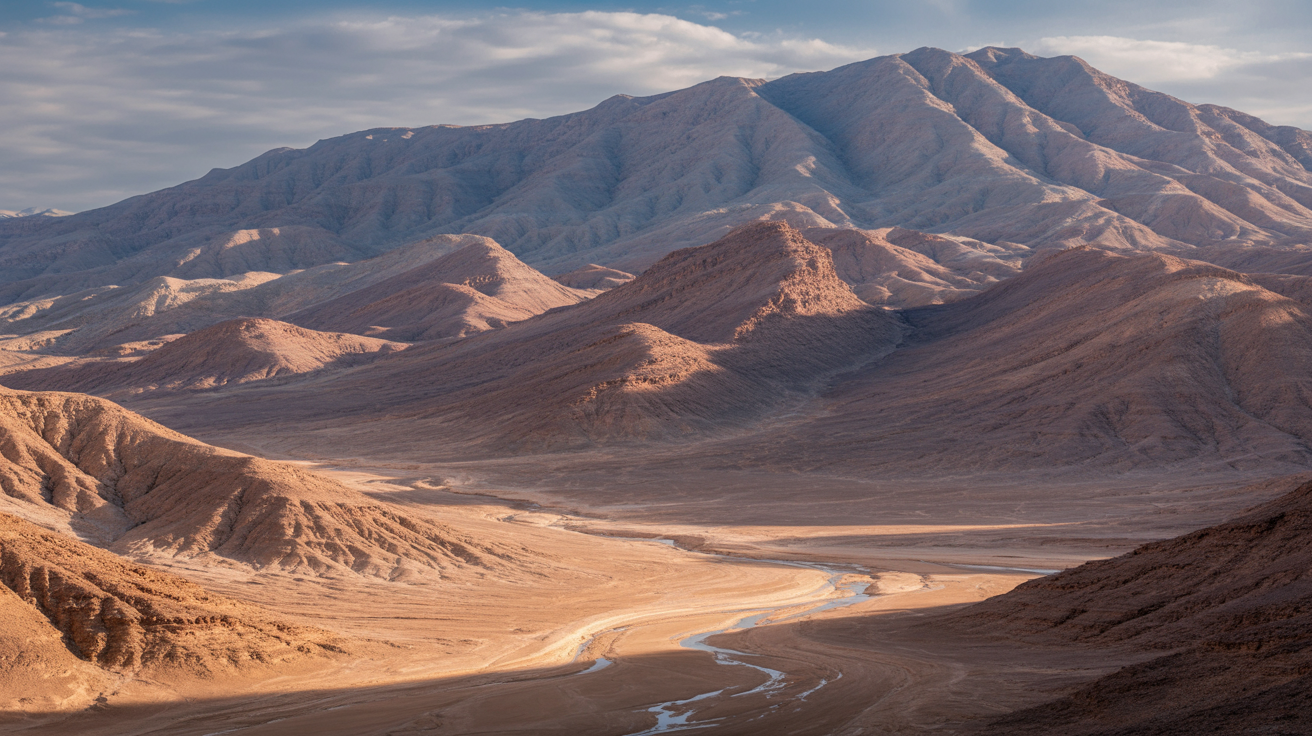 Arid Regions
Desert
Arid lands with minimal rainfall, extreme temperatures, and specialized wildlife adapted to harsh conditions.
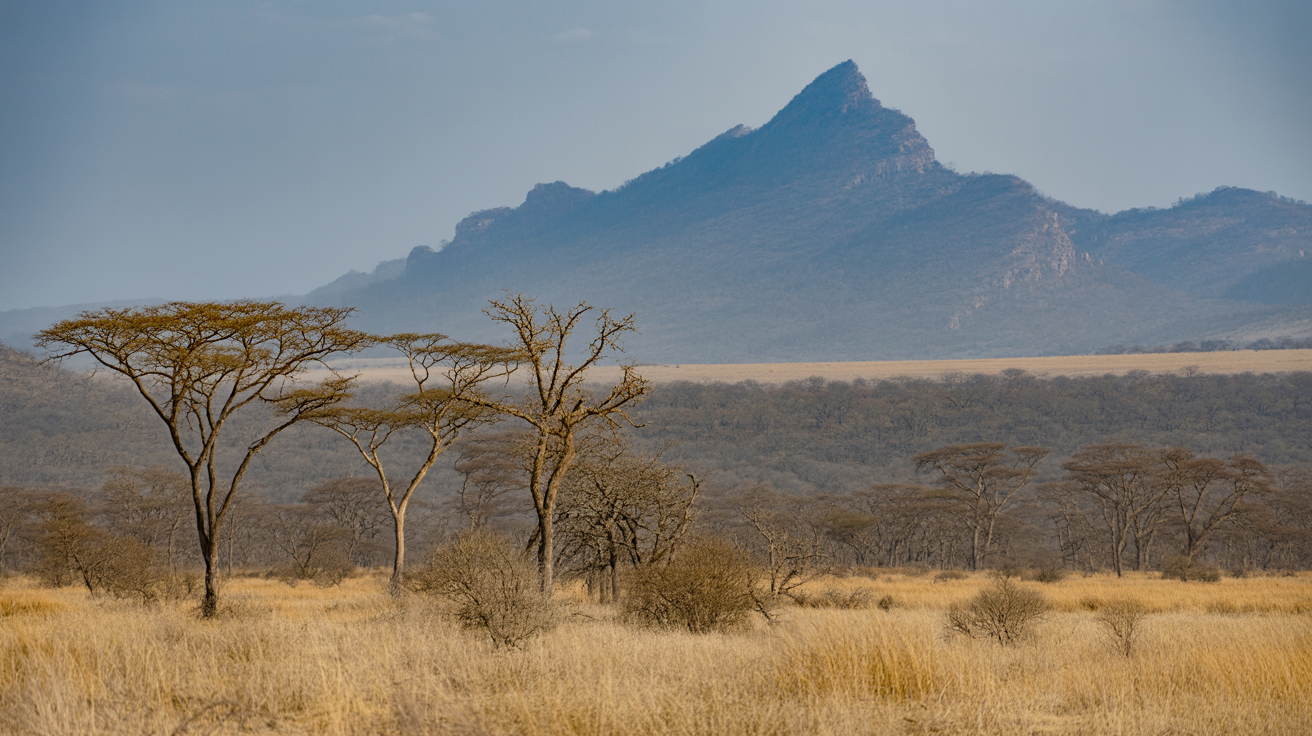 Africa
Savanna
Grasslands with scattered trees, characterized by seasonal rainfall and home to diverse grazing animals and predators.
 Various Continental Regions
Grassland
Open areas dominated by grasses rather than trees, supporting numerous herbivores and their predators.
Conservation
The Desert Locust is currently classified as Least Concern on the IUCN Red List.
Threats & challenges
While the Desert Locust is classified as Least Concern by the IUCN due to its wide distribution and high reproductive potential, it faces localized threats from habitat loss, climate variability, and intensive control measures. Human interventions, such as large-scale pesticide application, can reduce populations but also pose risks to non-target species and ecosystems. Climate change may alter rainfall patterns, potentially affecting breeding cycles and outbreak frequency. Natural predators (birds, reptiles, parasitoids) and pathogens (fungi, nematodes) exert some population control, but are generally insufficient to prevent plagues. The main conservation challenge is balancing effective locust management with environmental protection and food security for affected human populations.
Taxonomy
Scientific name
Schistocerca gregaria
- Kingdom
- Animalia
- Phylum
- Arthropoda
- Class
- Insecta
- Order
- Orthoptera
- Family
- Acrididae
- Genus
- Schistocerca
- Species
- gregaria
Where to see a desert locust
1 zoo and aquarium in 1 country are recorded as keeping this species.
Community notes
Share your observations about the Desert Locust.
No community notes yet. Be the first!
Discover more wildlife
More fascinating animals from the encyclopedia.