
About the Emperor Scorpion
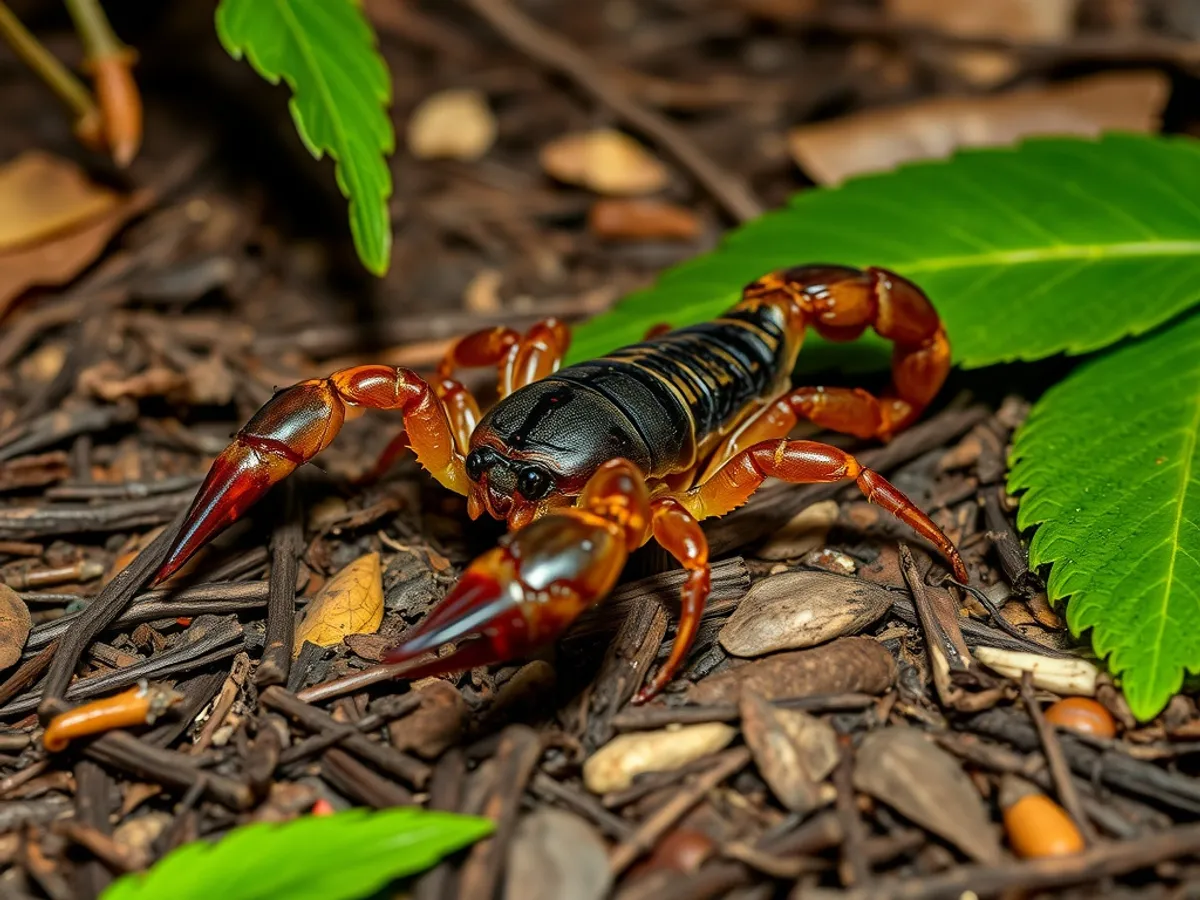
Pandinus imperator of West African rainforest is among the largest scorpions alive, up to about 20 cm, and it is also one of the least dangerous. That is not a coincidence. Its enormous, crab-like pedipalps are strong enough to crush a beetle or a small vertebrate outright, so it has never needed potent venom, and across scorpions generally there is a broad trade-off — big claws, weak venom; slim claws, dangerous sting. Its sting is comparable to a bee's for most people. Like every scorpion, it glows an eerie blue-green under ultraviolet light, a fluorescence produced by compounds in the thin hyaline layer of the cuticle. The function is still unresolved; suggestions include the scorpion using its whole body as a light sensor to judge how much moonlight is falling on it, since scorpions avoid foraging under a bright moon. Emperor scorpions are viviparous, giving birth to live young that climb onto the mother's back as pale, soft-bodied scorplings and stay there until their first moult. They are also unusually social for a scorpion, tolerating relatives in a shared burrow, and they often live in and around termite mounds where the soil is workable and prey is plentiful.
Fascinating facts
Impressive Size
Emperor Scorpions can grow up to 20 centimeters (about 8 inches) in length, making them one of the largest scorpions in the world.
Glows in the Dark
Their exoskeleton glows a striking blue-green color when exposed to ultraviolet (UV) light, a trait common to many scorpion species.
Burrowing Experts
Emperor Scorpions are skilled diggers, creating intricate burrows to escape predators, regulate temperature, and ambush prey.
Detailed description
The emperor scorpion (Pandinus imperator) is among the largest scorpion species, with adults typically reaching 18–21 cm (7–8.3 in) in length and weighing up to 30 g (1 oz). Its robust body is covered by a thick, glossy black exoskeleton, which provides protection and helps retain moisture in its humid native habitats. The pedipalps (pincers) are massive and textured, used primarily for grasping and crushing prey. The metasoma (tail) is relatively slender compared to other scorpions, ending in a telson equipped with a venomous stinger. Emperor scorpions possess eight legs and a pair of sensory appendages called pectines on the underside, which detect chemical cues and vibrations in the substrate. Their chelicerae (mouthparts) are adapted for tearing prey. Notably, their exoskeleton fluoresces blue-green under ultraviolet light due to the presence of beta-carboline compounds, a trait shared with most scorpions. Emperor scorpions are largely nocturnal, spending daylight hours in burrows or under debris to avoid predators and desiccation. They exhibit relatively docile temperaments, rarely using their sting except in defense or when subduing large prey. Their lifespan in the wild is typically 6–8 years, though some individuals in captivity have lived up to 10 years.
Did you know?
The Emperor Scorpion’s venom is so mild that a bee sting is often more painful to humans.
Research & sources
Wikipedia summary
The emperor scorpion (Pandinus imperator) is a species of scorpion native to rainforests and savannas in West Africa. It is one of the largest scorpions in the world and lives for six to eight years. Its body is black, but like other scorpions it glows pastel green or blue under ultraviolet light. It is a popular species in the pet trade, and is protected by CITES to prevent over-collecting that might affect the species' survival.
Behaviour & social structure
Emperor scorpions are primarily solitary but may tolerate conspecifics, especially juveniles, in overlapping burrow systems. They are crepuscular to nocturnal, emerging at dusk to forage. Their hunting strategy relies on stealth and ambush, using their sensitive pectines and mechanoreceptive hairs to detect prey such as insects, spiders, and small vertebrates. Prey is subdued mainly with the powerful pincers; the sting is reserved for larger or more resistant prey. They exhibit complex burrowing behavior, constructing multi-chambered tunnels up to 1 m deep, which provide stable humidity and temperature. Social interactions are generally limited to mating or occasional cannibalism, particularly under crowded or resource-scarce conditions. Defensive behaviors include rearing up, spreading pincers, and stridulation (producing a rasping sound by rubbing body parts together) to deter predators.
Reproduction & life cycle
Mating in emperor scorpions involves a complex courtship dance, where the male grasps the female's pincers and leads her in search of a suitable substrate for spermatophore deposition. The male deposits a spermatophore on the ground, then maneuvers the female over it to facilitate uptake. Gestation is notably long for an arachnid, lasting 7–9 months. Females give live birth to broods of 8–32 young, which are born white and soft, immediately climbing onto the mother's back for protection. The young undergo their first molt on the mother's back within 1–2 weeks, after which they disperse. Maternal care is pronounced during this period, with the mother defending her brood aggressively. Sexual maturity is reached at 3–4 years of age, depending on environmental conditions.
Adaptations & survival
Emperor scorpions are highly adapted to the humid, variable environments of West African forests and savannas. Their thick exoskeleton reduces water loss, while burrowing behavior helps them avoid temperature extremes and predators. The large, muscular pincers allow them to subdue prey with minimal use of venom, conserving metabolic resources. Their pectines are among the most sensitive in scorpions, enabling detection of prey and mates via substrate-borne cues. Fluorescence under UV light may play a role in communication or camouflage, though its function remains debated. Behavioral plasticity, such as tolerance of conspecifics and flexible diet, enhances survival in fluctuating environments.
Cultural significance
Emperor scorpions hold a place in West African folklore, often symbolizing strength, resilience, and protection. In some cultures, they are associated with spiritual or medicinal practices, though there is limited documentation of widespread traditional use. Globally, they are popular in the exotic pet trade due to their impressive size and relatively docile nature. Their striking appearance and fluorescence have made them subjects of fascination in scientific outreach and education.
Recent research
Recent research has focused on the emperor scorpion's sensory biology, particularly the function of pectines and mechanoreceptors in prey detection and mate finding. Studies on venom composition reveal a complex mixture of peptides with potential antimicrobial and therapeutic properties, though their venom is less potent than many other scorpions. Genetic analyses have clarified relationships within the Scorpionidae family and highlighted the need for taxonomic revision in the genus Pandinus. Conservation genetics studies are underway to assess population structure and inform sustainable management. Ongoing ecological research aims to better understand their role in soil aeration and invertebrate community dynamics.
Sources
Videos
Habitat
Tropical rainforest floor and savanna regions
 Africa
Savanna
Grasslands with scattered trees, characterized by seasonal rainfall and home to diverse grazing animals and predators.
 Tropical Regions
Rainforest
Dense, wet forests with the highest biodiversity on Earth, containing more than half of the world's plant and animal species.
 Global
Forest
Wooded areas with significant tree cover and diverse plant and animal communities.
Conservation
The Emperor Scorpion is currently classified as Near Threatened on the IUCN Red List.
Threats & challenges
The primary threats to emperor scorpions are habitat loss due to deforestation, agricultural expansion, and mining in West Africa. Over-collection for the international pet trade has historically impacted populations, prompting their inclusion in CITES Appendix II. While their venom is not medically significant to humans, they are sometimes killed out of fear. Climate change poses additional risks by altering habitat suitability. Population trends are difficult to assess due to their secretive nature, but localized declines have been reported in heavily exploited regions. Conservation measures focus on habitat protection, trade regulation, and captive breeding programs.
Taxonomy
Scientific name
Pandinus imperator
- Kingdom
- Animalia
- Phylum
- Arthropoda
- Class
- Arachnida
- Order
- Scorpiones
- Family
- Scorpionidae
- Genus
- Pandinus
- Species
- imperator
Where to see an emperor scorpion
8 zoos and aquariums in 3 countries are recorded as keeping this species.
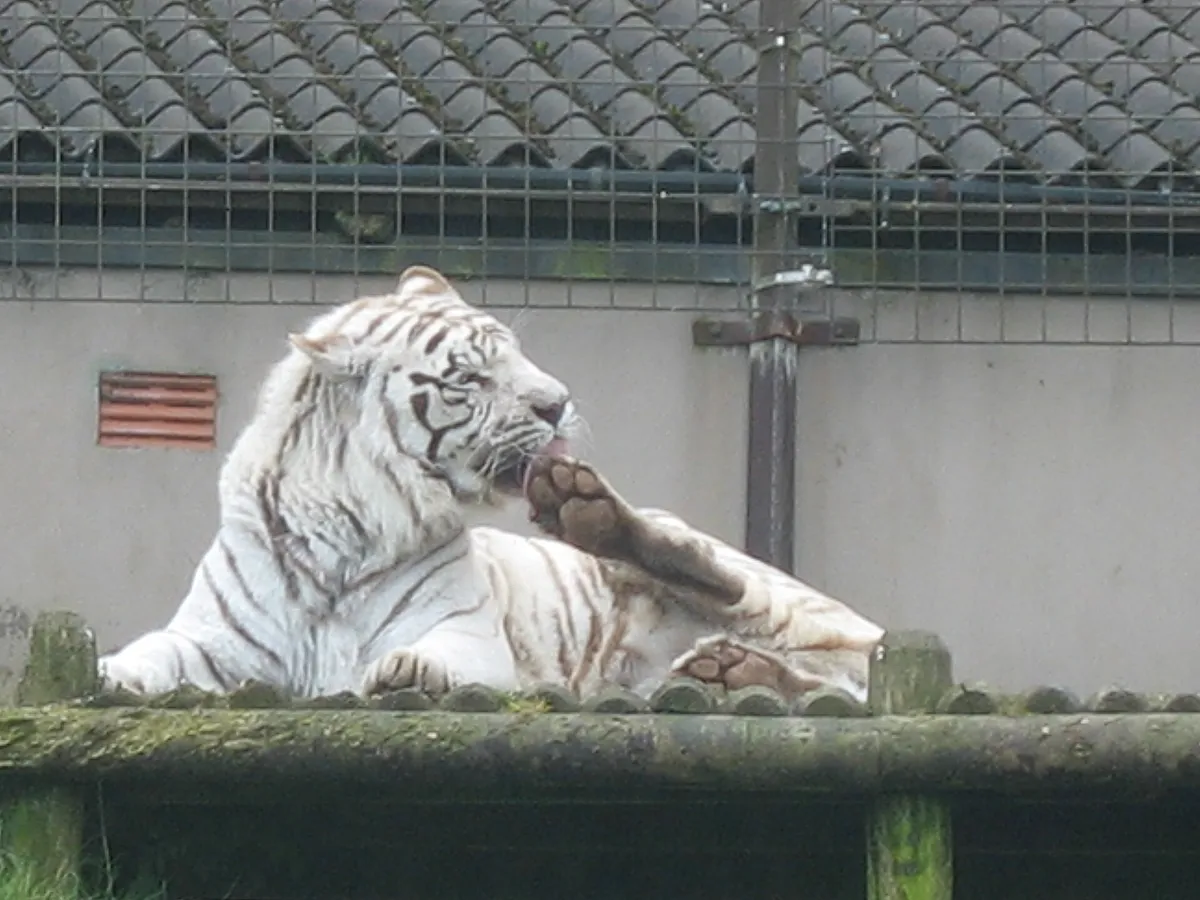 Belfast Zoo🇬🇧 Belfast, United Kingdom
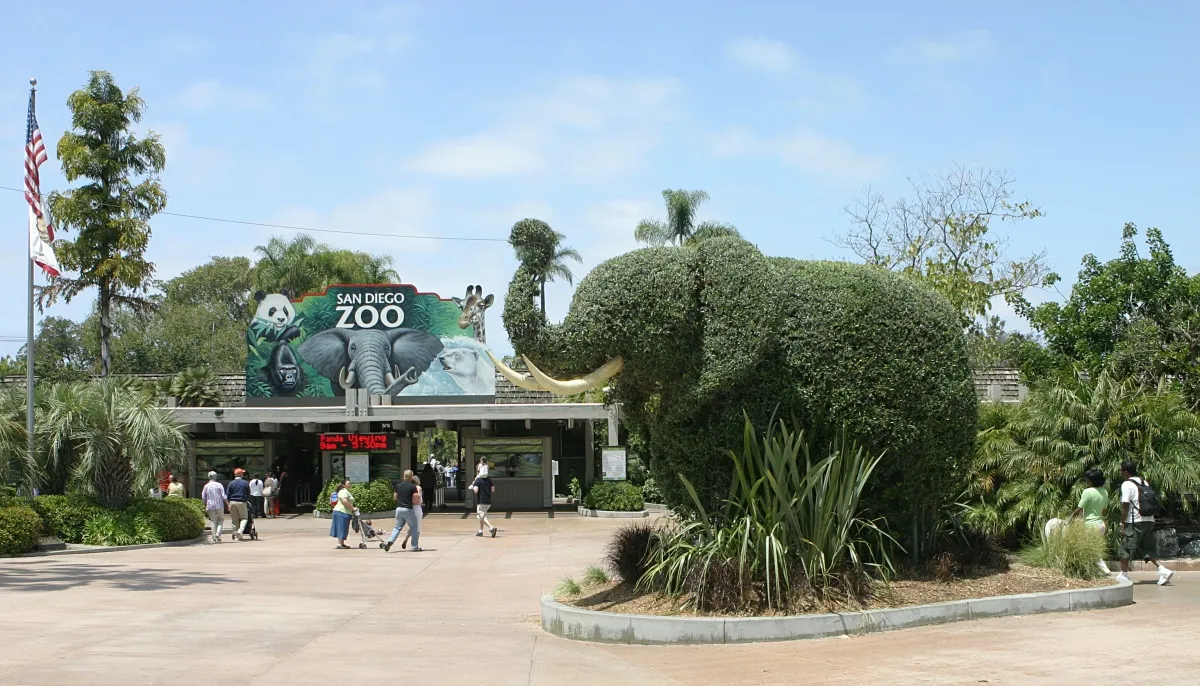 San Diego Zoo🇺🇸 San Diego, United States
 Brevard Zoo🇺🇸 Melbourne, United States
 London Zoo🇬🇧 London, United Kingdom
- 🦁Dakota Zoo🇺🇸 Bismarck, United States
Community notes
Share your observations about the Emperor Scorpion.
No community notes yet. Be the first!
Discover more wildlife
More fascinating animals from the encyclopedia.