
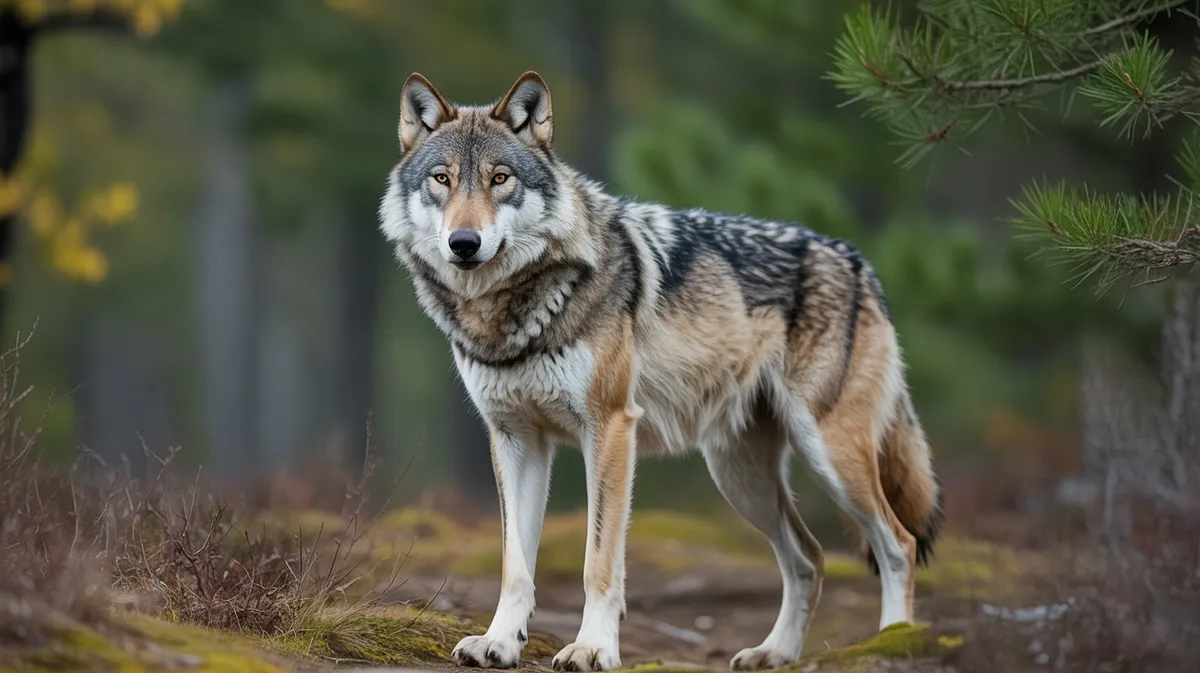
About the Gray Wolf
The Gray Wolf (Canis lupus) is a formidable apex predator native to vast regions across Eurasia and North America, with more than thirty recognized subspecies. It stands out as the largest member of the Canidae family, with adult males typically weighing between 30 to 80 kilograms (66 to 176 pounds) and measuring up to 160 centimeters (63 inches) in length, including the tail. Unlike other Canis species, Gray Wolves have a more robust build with less pointed ears and a broader muzzle, adaptations that enhance their sensory capabilities and aid in hunting. Their fur, a complex blend of white, brown, gray, and black, provides camouflage across diverse environments, from dense forests to open tundra. In Arctic regions, the nearly all-white subspecies, such as the Arctic wolf, exemplify the evolutionary advantage of blending into snowy landscapes to stalk prey. These wolves exhibit highly social behavior, forming packs that rely on cooperative hunting strategies to take down large ungulates like elk and moose. Their ability to interbreed with closely related species, such as coyotes and domestic dogs, underscores their genetic flexibility and evolutionary success.
Fascinating facts
Pack Life
Gray wolves live and hunt in packs that are typically family units led by an alpha male and female.
Diet and Hunting
Wolves primarily hunt large ungulates such as deer, elk, and moose, but will also eat smaller mammals, carrion, and even some plant material when food is scarce.
Global Distribution
Gray wolves are native to North America, Europe, and Asia, making them one of the most widely distributed mammals in the world.
Detailed description
The gray wolf (Canis lupus) is a large, highly adaptable carnivore and the largest extant member of the family Canidae. Adult males typically weigh between 30 and 50 kg (66–110 lbs), while females are slightly smaller, averaging 23–40 kg (51–88 lbs), though individuals exceeding 70 kg (154 lbs) have been recorded in northern populations. Their body length ranges from 105 to 160 cm (41–63 in), with a bushy tail adding another 30–50 cm (12–20 in). Wolves possess a dense, double-layered coat that provides insulation against extreme cold, with coloration varying from pure white in Arctic subspecies to mixtures of gray, brown, black, and even reddish hues in temperate regions. Anatomically, they have powerful jaws with a bite force of up to 1,500 psi, long legs adapted for endurance running, and large paws that act as snowshoes in winter. Socially, wolves live in complex, hierarchical packs typically consisting of an alpha breeding pair and their offspring, often numbering between 5 and 11 individuals, though larger packs occur in prey-rich areas. Their communication is multifaceted, involving vocalizations (howls, barks, growls), body language, and scent marking. Wolves are territorial and maintain large home ranges, which can span from 80 km² (31 mi²) in productive habitats to over 2,500 km² (965 mi²) in less fertile regions. They are apex predators, primarily preying on ungulates such as deer, elk, moose, and caribou, but their diet can include smaller mammals, birds, and carrion. Reproduction is seasonal, with pups born in spring after a gestation of about 63 days. Gray wolves play a keystone role in ecosystem regulation, influencing prey populations and facilitating biodiversity.
Did you know?
Gray wolves have one of the widest natural ranges of any land mammal, spanning much of North America, Europe, and Asia.
Research & sources
Wikipedia summary
The wolf, also known as the grey wolf or gray wolf, is a canine native to Eurasia and North America. More than thirty subspecies of Canis lupus have been recognized, including the dog and dingo, though grey wolves, as popularly understood, only comprise naturally-occurring wild subspecies. The wolf is the largest wild extant member of the family Canidae, and is further distinguished from other Canis species by its less pointed ears and muzzle, as well as a shorter torso and a longer tail. The wolf is nonetheless related closely enough to smaller Canis species, such as the coyote and the golden jackal, to produce fertile hybrids with them. The wolf's fur is usually mottled white, brown, grey, and black, although subspecies in the arctic region may be nearly all white.
Behaviour & social structure
Gray wolves are crepuscular, most active at dawn and dusk, though activity patterns vary with prey availability and human disturbance. Hunting is a cooperative endeavor, with pack members coordinating to pursue, encircle, and bring down large prey, often targeting the young, old, or infirm. Wolves can travel up to 30–50 km (19–31 mi) in a day and reach speeds of 50–60 km/h (31–37 mph) in short bursts. Social interactions within the pack are governed by dominance hierarchies, reinforced through ritualized displays, submissive postures, and affiliative behaviors such as grooming and play. Howling serves multiple functions: maintaining pack cohesion, advertising territory, and coordinating group activities. Scent marking with urine and feces delineates territorial boundaries. Wolves cache surplus food and may return to kills over several days. Dispersal is common among subadults, who may travel hundreds of kilometers to establish new territories or join other packs.
Reproduction & life cycle
Gray wolves are monogamous, with the dominant alpha pair typically the only breeders in a pack. Mating occurs once a year, usually between January and March, depending on latitude. After a gestation period of 62–65 days, the female gives birth to a litter of 4–7 pups (range: 1–11) in a den, often an enlarged burrow or natural cavity. Pups are born blind and deaf, weighing about 0.5 kg (1.1 lbs), and are entirely dependent on the mother for the first three weeks. All pack members participate in pup rearing, providing food through regurgitation and protection from predators. Pups are weaned at 5–10 weeks and begin to accompany adults on hunting trips by 10–12 weeks. Sexual maturity is reached at 2–3 years, though many disperse before breeding.
Adaptations & survival
Gray wolves exhibit numerous adaptations for survival in diverse environments. Their thick, water-resistant underfur and coarse guard hairs provide insulation and camouflage. Large, webbed paws distribute weight for efficient movement across snow and soft substrates. Acute senses of smell, hearing, and vision aid in detecting prey and conspecifics over long distances. Social hunting strategies enable them to exploit large, dangerous prey that would be inaccessible to solitary predators. Behavioral flexibility allows wolves to adjust pack size, hunting tactics, and diet in response to environmental conditions. Physiologically, wolves can endure long periods without food, surviving on fat reserves, and can consume up to 9 kg (20 lbs) of meat in a single meal.
Cultural significance
The gray wolf holds profound significance in human culture, mythology, and folklore across Eurasia and North America. Revered as a symbol of wilderness, strength, and loyalty, wolves feature prominently in Native American traditions, Norse mythology (e.g., Fenrir), and Roman legend (the she-wolf nursing Romulus and Remus). Conversely, they have been vilified in European folklore as dangerous predators or omens. Wolves have inspired countless works of art, literature, and film, and are central to debates on wildlife management and rewilding. In some indigenous cultures, wolves are regarded as teachers or spirit animals, embodying family values and cooperation.
Recent research
Recent genomic studies have clarified the evolutionary relationships among wolf populations and their close relatives, including domestic dogs and dingoes. Ongoing research investigates wolf ecology in human-dominated landscapes, the role of wolves in trophic cascades (e.g., Yellowstone National Park), and the effects of reintroduction on ecosystem health. Behavioral studies using GPS collars and camera traps have revealed complex social dynamics, territoriality, and dispersal patterns. Conservation genetics is increasingly used to monitor population structure and gene flow, particularly in fragmented habitats. Emerging research addresses the impacts of climate change on wolf-prey dynamics and the potential for coexistence with expanding human populations.
Videos
Habitat
Forests, grasslands, tundra, and mountainous regions
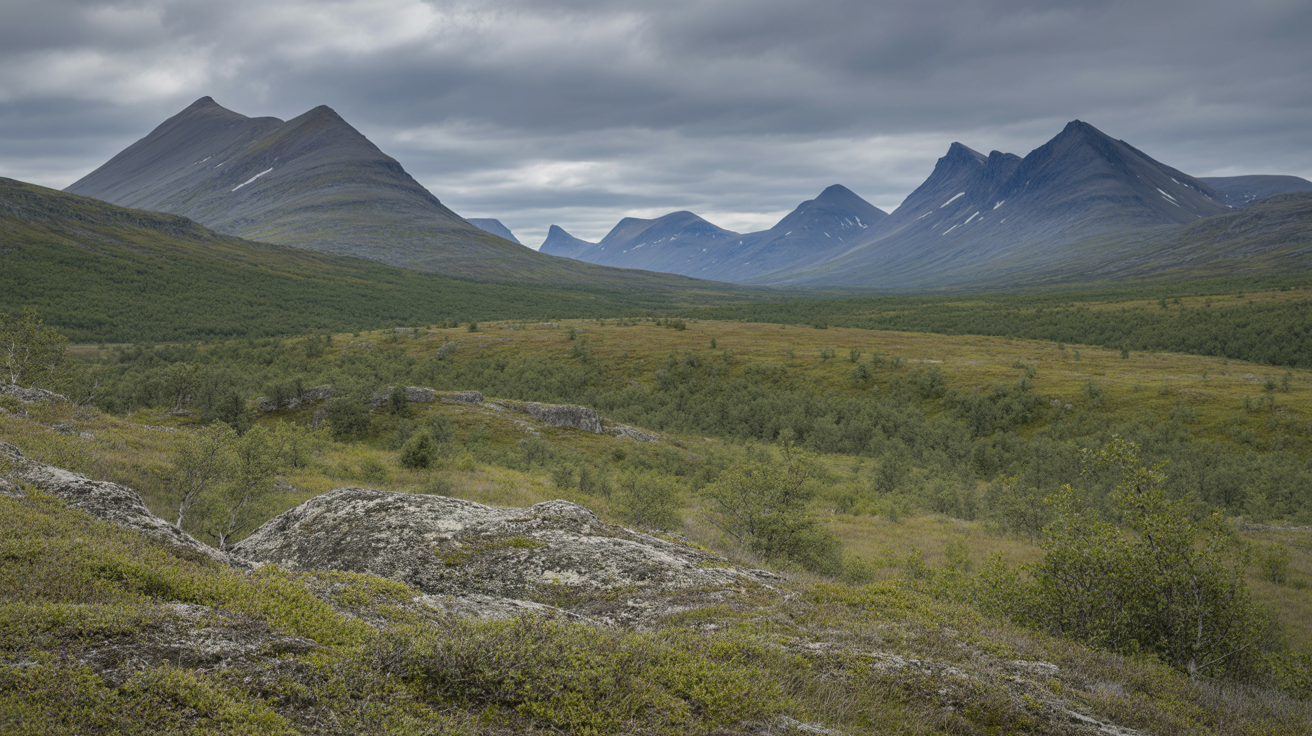 Polar and Subpolar Regions
Tundra
Cold, treeless regions with permafrost supporting specialized cold-adapted wildlife.
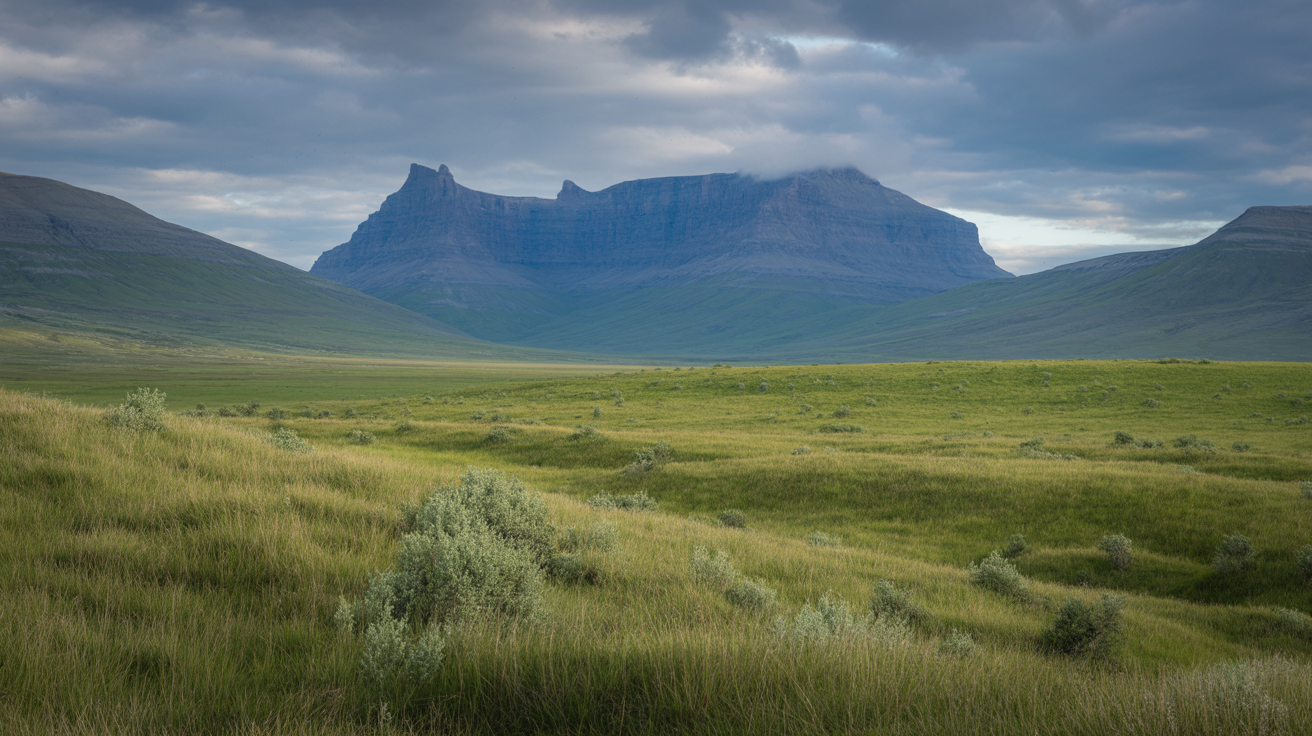 Various Continental Regions
Grassland
Open areas dominated by grasses rather than trees, supporting numerous herbivores and their predators.
 Elevated Terrain
Mountain
High-altitude environments with varying climates and specialized wildlife adapted to rugged terrain and thin air.
 Global
Forest
Wooded areas with significant tree cover and diverse plant and animal communities.
Conservation
The Gray Wolf is currently classified as Least Concern on the IUCN Red List.
Threats & challenges
Major threats to gray wolves include habitat loss and fragmentation, human-wildlife conflict (especially livestock depredation), legal and illegal hunting, and disease (e.g., canine distemper, parvovirus, mange). In some regions, hybridization with domestic dogs poses a genetic threat. Historical persecution led to dramatic range contractions and local extinctions, particularly in Western Europe and the contiguous United States. Recent conservation measures, legal protection, and reintroduction programs have facilitated population recoveries in parts of North America and Europe. However, populations remain vulnerable in areas with weak legal protections or high human density. Climate change may also impact prey availability and habitat suitability.
Taxonomy
Scientific name
Canis lupus
- Kingdom
- Animalia
- Phylum
- Chordata
- Class
- Mammalia
- Order
- Carnivora
- Family
- Canidae
- Genus
- Canis
- Species
- lupus
Where to see a gray wolf
30 zoos and aquariums in 10 countries are recorded as keeping this species.
 Ranua Wildlife Park🇫🇮 Ranua, Finland
 Rosamond Gifford Zoo at Burnet Park🇺🇸 Syracuse, United States
 Tierpark Hellabrunn🇩🇪 München, Germany
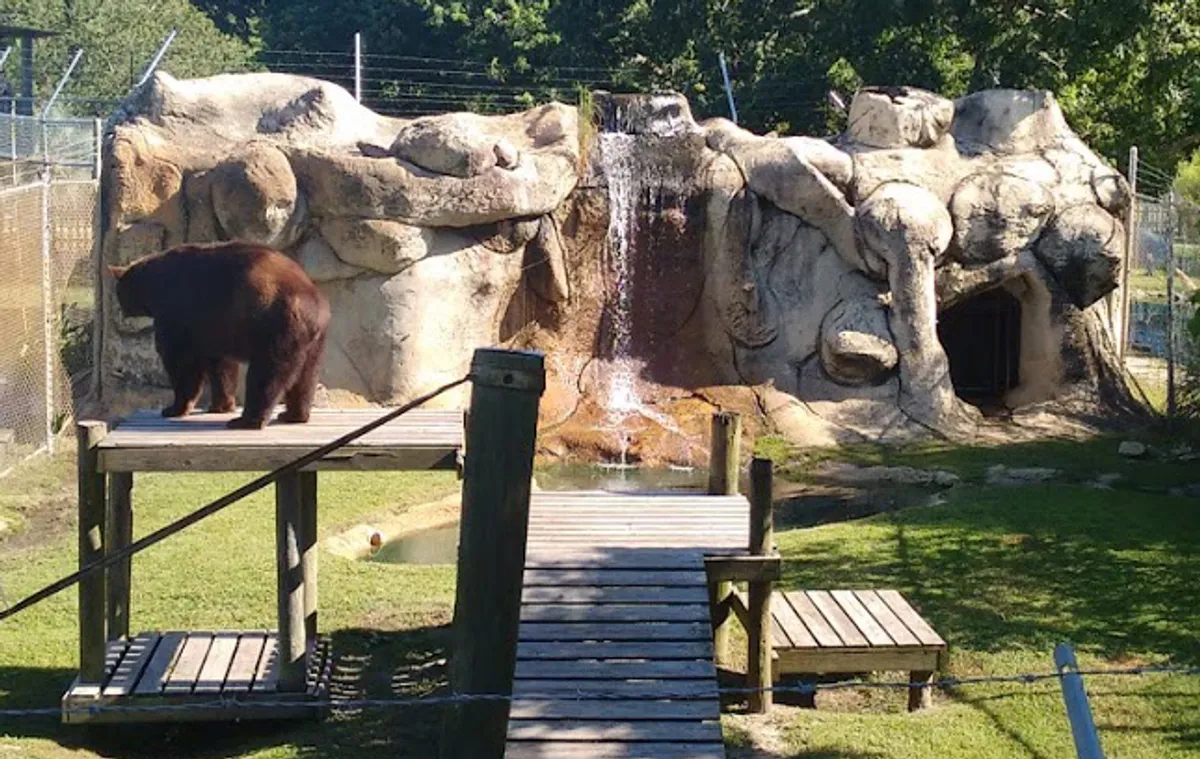 Alabama Gulf Coast Zoo🇺🇸 Gulf Shores, United States
 Alaska Zoo🇺🇸 Anchorage, United States
Community notes
Share your observations about the Gray Wolf.
No community notes yet. Be the first!
Discover more wildlife
More fascinating animals from the encyclopedia.