
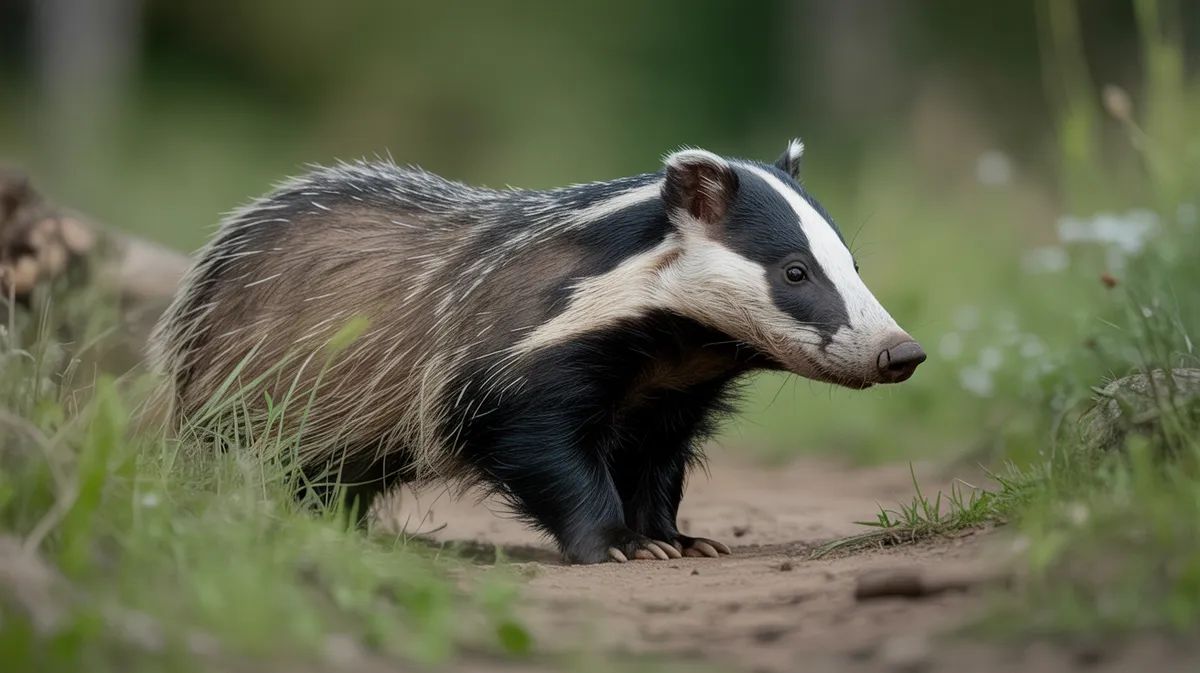
About the Hog Badger
The hog badger is a robust, stocky mammal native to the forests and grasslands of South and Southeast Asia. Notable for its pig-like snout, the hog badger uses its strong sense of smell and powerful claws to dig for roots, tubers, and small animals. Its coarse, bristly fur and distinctive white face markings make it easily recognizable. The species is mostly nocturnal and solitary, spending much of its time foraging on the forest floor. Despite their tough appearance, hog badgers face threats from habitat loss and hunting across their range.
Fascinating facts
Pig-like Nose
The hog badger's long, flexible snout resembles that of a pig, allowing it to root through soil for food.
Forest Dweller
Hog badgers prefer dense forests and grasslands throughout the Himalayan foothills, Southeast Asia, and southern China.
Unique Among Badgers
Unlike their European relatives, hog badgers are often seen during daylight hours and have a less secretive lifestyle.
Detailed description
The hog badger (Arctonyx collaris) is a medium-sized mustelid distinguished by its robust, stocky build and a pig-like, flexible snout adapted for rooting in soil. Adults typically measure 55–70 cm in body length, with a short tail of 12–18 cm, and weigh between 7 and 14 kg, though some individuals may exceed 20 kg. Its coarse, bristly fur is generally grayish-brown, with a paler underside and prominent white facial markings, including a broad white stripe running from the snout to the crown. The limbs are short but extremely powerful, equipped with long, curved claws ideal for digging. Hog badgers possess small eyes and ears, reflecting their reliance on olfaction and tactile senses over vision. They are primarily terrestrial and exhibit a semi-fossorial lifestyle, often excavating burrows or utilizing natural shelters. Though mainly solitary, hog badgers may occasionally be observed in loose family groups, particularly during the breeding season. Their vocalizations include grunts, growls, and hisses, used in communication and threat displays. The species is known for its tenacity and boldness, rarely retreating from potential threats, and is considered one of the more diurnal members of the badger family, with activity peaks at dawn and dusk.
Did you know?
Unlike many badgers, hog badgers are often active during the day (diurnal) as well as at night.
Research & sources
Wikipedia summary
Hog badgers are three species of mustelid in the genus Arctonyx. They represent one of the two genera in the subfamily Melinae, alongside the true badgers.
Behaviour & social structure
Hog badgers are predominantly solitary and territorial, marking their home ranges with scent glands located near the anus. They are opportunistic omnivores, foraging primarily on the ground for a varied diet that includes earthworms, insects, small vertebrates, roots, tubers, fruits, and carrion. Their keen sense of smell and strong forelimbs allow them to locate and excavate underground prey efficiently. Feeding bouts are often accompanied by characteristic rooting behavior, similar to that of wild pigs. While generally crepuscular, they may be active during the day or night depending on local disturbance and food availability. Hog badgers are known for their boldness and have been observed confronting larger predators or humans when threatened. Social interactions are limited outside of the breeding season, though mothers are attentive to their young. They use a combination of vocalizations, scent marking, and body postures for communication.
Reproduction & life cycle
Breeding in hog badgers is seasonal, with mating typically occurring in late winter to early spring (January to March) across much of their range. After a gestation period of approximately 6–7 months, females give birth to litters of 2–4 cubs, usually in well-concealed burrows. The young are born blind and helpless, opening their eyes after about 4–6 weeks. Maternal care is pronounced, with the mother providing food and protection until the cubs are weaned at around 2–3 months of age. Juveniles remain with the mother for several months before dispersing to establish their own territories. Sexual maturity is reached at about 1–2 years of age. There is little evidence of paternal involvement in rearing the young.
Adaptations & survival
Hog badgers exhibit several adaptations for a fossorial and omnivorous lifestyle. Their elongated, muscular snout is highly mobile and sensitive, enabling them to root out subterranean food sources. The forelimbs are robust, with enlarged claws for efficient digging. Their dense, bristly fur provides protection against undergrowth and potential predators. The dental formula is adapted for an omnivorous diet, with strong molars for crushing and incisors for grasping. Behavioral adaptations include a high degree of boldness and aggression when threatened, as well as the use of burrows for shelter and rearing young. Their ability to exploit a wide range of food sources allows them to inhabit diverse environments, from lowland forests to montane grasslands.
Cultural significance
Hog badgers have a limited but notable presence in local folklore and traditional practices within their range. In some Southeast Asian cultures, their meat and body parts are used in traditional medicine, believed to possess healing properties. They are occasionally depicted in regional stories as symbols of tenacity and resilience. However, their reputation as crop raiders or nuisance animals sometimes leads to conflict with farmers. Unlike some other mustelids, hog badgers do not have a significant role in broader mythology or symbolism.
Recent research
Recent taxonomic studies have clarified the genus Arctonyx, splitting it into three distinct species: A. collaris (Greater hog badger), A. albogularis (Northern hog badger), and A. hoevenii (Sumatran hog badger), based on morphological and genetic evidence (Helgen et al., 2008). Ongoing research focuses on their ecology, distribution, and population genetics, with camera trap surveys providing new insights into their habitat use and activity patterns. Studies have also examined their role in soil aeration and seed dispersal, highlighting their ecological importance. However, many aspects of their behavior, reproductive biology, and population dynamics remain poorly understood, underscoring the need for further field research.
Videos
Habitat
Forests and grasslands
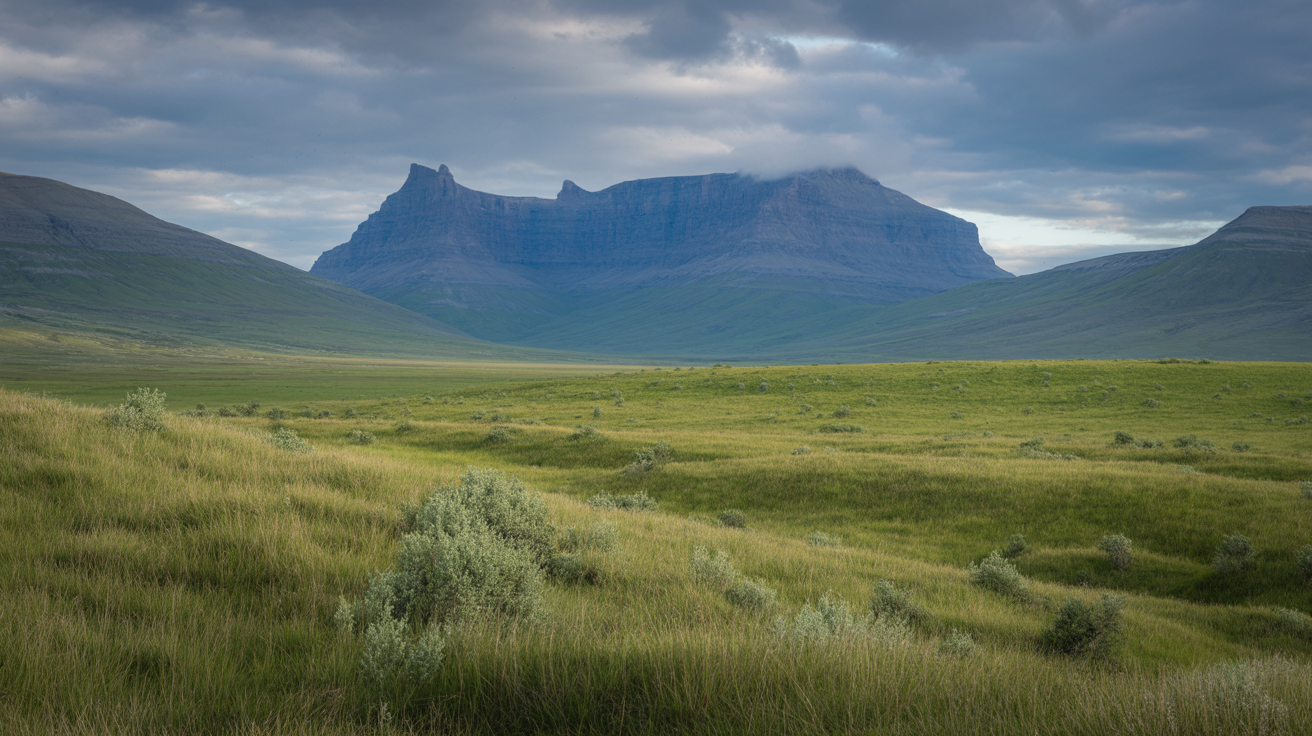 Various Continental Regions
Grassland
Open areas dominated by grasses rather than trees, supporting numerous herbivores and their predators.
 Elevated Terrain
Mountain
High-altitude environments with varying climates and specialized wildlife adapted to rugged terrain and thin air.
 Global
Forest
Wooded areas with significant tree cover and diverse plant and animal communities.
Conservation
The Hog Badger is currently classified as Vulnerable on the IUCN Red List.
Threats & challenges
Hog badgers face a range of threats across their distribution. Habitat loss and fragmentation due to agricultural expansion, logging, and infrastructure development are primary concerns, particularly in Southeast Asia. They are also hunted for meat, traditional medicine, and local trade, with snares and traps posing significant risks. Road mortality is increasingly reported as their habitats intersect with expanding road networks. Although still relatively widespread, population declines have been noted in several regions, leading to their classification as Vulnerable by the IUCN. Conservation challenges include limited ecological data, low reproductive rates, and inadequate legal protection in some range countries. Ongoing habitat degradation and hunting pressure continue to threaten their long-term survival.
Taxonomy
Scientific name
Arctonyx collaris
- Kingdom
- Animalia
- Phylum
- Chordata
- Class
- Mammalia
- Order
- Carnivora
- Family
- Mustelidae
- Genus
- Arctonyx
- Species
- collaris
Community notes
Share your observations about the Hog Badger.
No community notes yet. Be the first!
Discover more wildlife
More fascinating animals from the encyclopedia.