
About the Lion-tailed Macaque
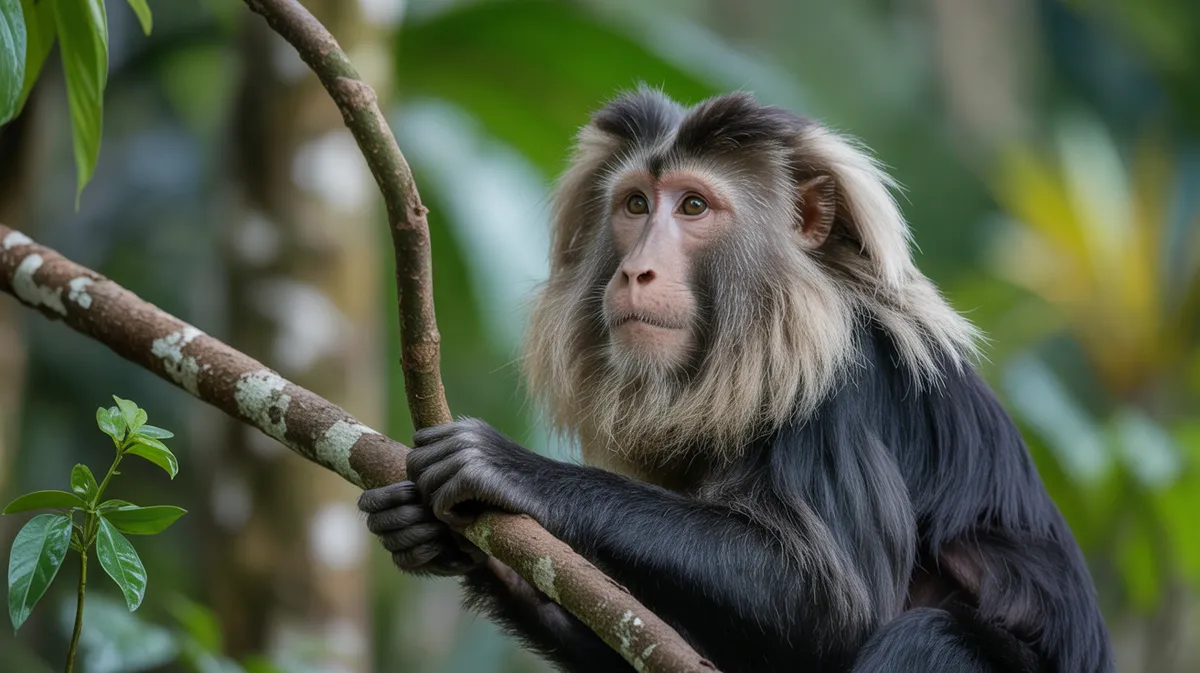
Macaca silenus is confined to the rainforests of the Western Ghats in southern India, where fewer than about 4,000 remain, and it is the most arboreal and the least adaptable of the macaques - which is precisely the problem. Where rhesus and bonnet macaques thrive around temples, farms and cities, the lion-tailed macaque will not use degraded forest or the ground if it can avoid it, and it depends on the fruit of a specific set of tall evergreen trees, especially Cullenia exarillata. It has a jet-black coat, a silver-gray mane framing a black face, and a tufted, lion-like tail tip that gives it its name. Its foraging is unusually skilled: it extracts insects, frogs and lizards from tree hollows, bark crevices and bromeliad-like epiphytes, using its long fingers to probe, and it stuffs food into cheek pouches that can hold nearly as much as the stomach, letting it grab and go. Populations have been shattered into isolated fragments by tea, coffee and cardamom plantations and by roads, and the animals will not cross open gaps, so canopy bridges over highways have become a real conservation tool. It is one of the world's most endangered primates.
Fascinating facts
Arboreal Experts
Lion-tailed Macaques spend over 99% of their time in the trees, rarely descending to the ground even for food or water.
Iconic Mane
Their name comes from the unique silvery mane and lion-like tufted tail, making them instantly recognizable among primates.
Seed Dispersers
They help maintain forest diversity by dispersing seeds through their fruit-based diet, supporting ecosystem health.
Detailed description
The lion-tailed macaque (Macaca silenus) is a medium-sized primate, typically measuring 42–61 cm in body length with a tail of 25–38 cm, and weighing between 2–10 kg, with males generally larger than females. Its most striking feature is the silvery-white mane encircling its face, which contrasts sharply with its otherwise jet-black fur. The tail is slender and ends in a prominent black tuft, reminiscent of a lion’s tail, giving the species its common name. Adapted for an arboreal lifestyle, the lion-tailed macaque has long limbs and dexterous hands with opposable thumbs, facilitating efficient movement through the dense canopy. Its face is bare and dark, with expressive eyes and a pronounced muzzle. The species is highly social, living in cohesive groups typically consisting of 10–20 individuals, usually with a single dominant male, several females, and their offspring. Vocal communication is complex, including a variety of calls for alarm, contact, and social interactions. The lion-tailed macaque is diurnal and spends nearly all of its time in the upper canopy, rarely descending to the ground. Its diet is omnivorous but primarily frugivorous, supplemented by leaves, flowers, seeds, insects, and small vertebrates. The species is long-lived, with individuals in the wild reaching up to 20 years and those in captivity living into their early 30s.
Did you know?
Despite their name and lion-like mane, Lion-tailed Macaques are actually one of the smallest and most arboreal species of macaques.
Research & sources
Wikipedia summary
The lion-tailed macaque, also known as the wanderoo, is an Old World monkey endemic to the Western Ghats of South India.
Behaviour & social structure
Lion-tailed macaques are highly arboreal, rarely venturing to the ground except to cross gaps between trees or during periods of food scarcity. They are active during the day (diurnal), with peak activity in the early morning and late afternoon. Foraging is a group activity, with individuals spreading out to search for fruit, their primary food source, but also consuming young leaves, flowers, seeds, insects, bird eggs, and small vertebrates. They exhibit a wide range of vocalizations, including sharp alarm calls, soft contact calls, and complex social calls used in group cohesion and hierarchy maintenance. Social grooming is a vital behavior, reinforcing bonds and reducing tension within the group. Dominance hierarchies are well established, especially among females, and disputes are settled through displays, vocalizations, and occasional physical aggression. Play is common among juveniles and helps develop social skills. The species is known for its caution and elusiveness, making it difficult to observe in the wild.
Reproduction & life cycle
Lion-tailed macaques have a polygynous mating system, with the dominant male typically having priority access to receptive females. Breeding can occur year-round but peaks during the wet season when food is most abundant. Females exhibit visible sexual swellings when in estrus. After mating, the gestation period lasts approximately 170–186 days (about 5.5–6 months), resulting in the birth of a single infant. Births usually occur at the onset of the monsoon, ensuring ample food for lactating mothers. Infants are born with lighter fur and cling to their mothers for the first few months. Maternal care is intensive, with mothers carrying, grooming, and protecting their young. Alloparental care (care by other group members) is occasionally observed. Weaning occurs at 12–15 months, and sexual maturity is reached at 4–5 years for females and 6–7 years for males.
Adaptations & survival
The lion-tailed macaque exhibits several adaptations for life in the rainforest canopy. Its long, strong limbs and prehensile hands and feet allow for agile movement among branches, while its tail aids in balance. The species has a highly developed sense of vision, including color vision, which is crucial for identifying ripe fruits. Its omnivorous diet and ability to exploit a wide variety of food sources help it survive seasonal fluctuations in fruit availability. Socially, the macaque's complex vocal repertoire and grooming behaviors facilitate group cohesion and conflict resolution. The silvery mane may play a role in visual communication, enhancing facial expressions during social interactions. Its cautious, secretive nature reduces predation risk in the dense forest environment.
Cultural significance
In local folklore and Hindu mythology, the lion-tailed macaque is sometimes associated with forest spirits and is considered a symbol of the undisturbed rainforest. Its elusive nature has contributed to its mystique among indigenous communities. The species has occasionally been hunted for traditional medicine or as a food source, but such practices are now rare. Conservation efforts have increased its visibility as a flagship species for the protection of the Western Ghats biodiversity hotspot.
Recent research
Recent research has focused on the genetic diversity of fragmented populations, revealing concerning levels of inbreeding in some isolated groups. Studies on feeding ecology have highlighted the macaque's role as a seed disperser, contributing to forest regeneration. Behavioral research has documented the impact of habitat fragmentation on group size, ranging patterns, and stress levels, using non-invasive hormonal analysis. Conservation programs are increasingly using camera traps and GPS tracking to monitor populations and movement corridors. Ongoing research aims to assess the effectiveness of habitat corridors and community-based conservation initiatives.
Videos
Habitat
Tropical rainforest
 Elevated Terrain
Mountain
High-altitude environments with varying climates and specialized wildlife adapted to rugged terrain and thin air.
 Tropical Regions
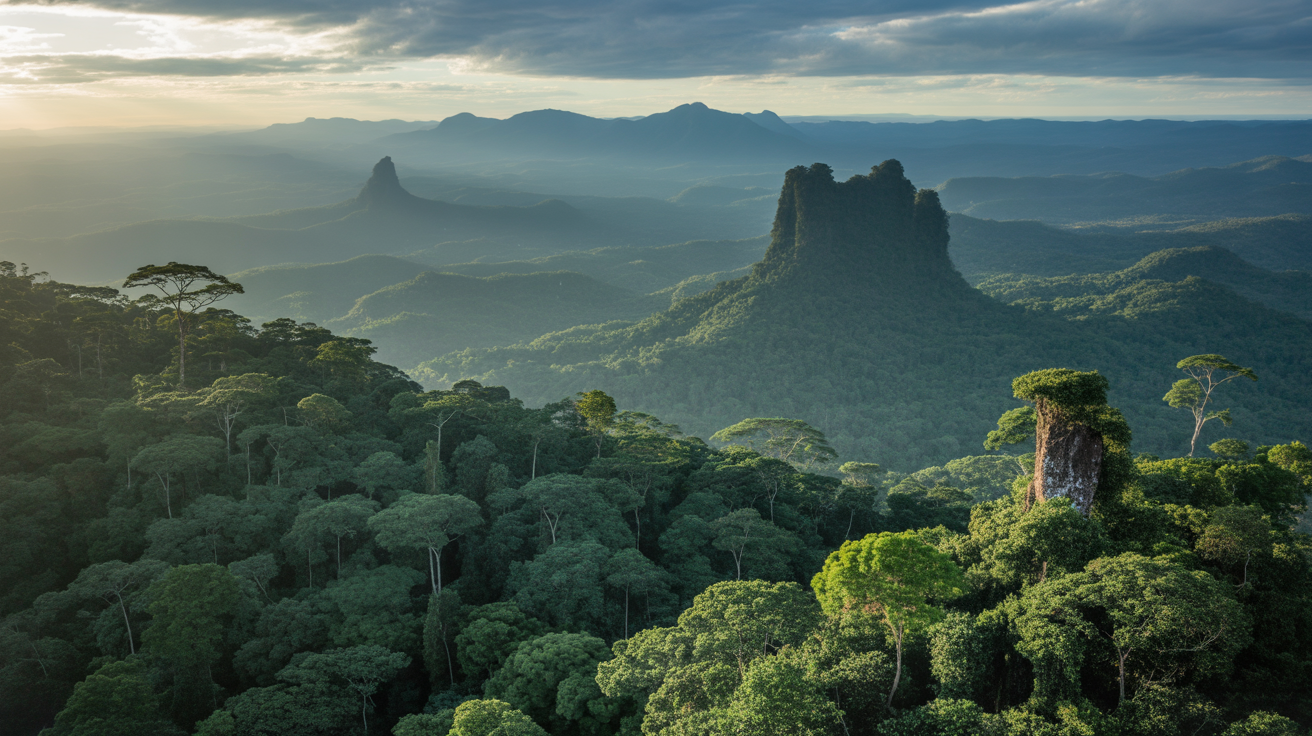
Rainforest
Dense, wet forests with the highest biodiversity on Earth, containing more than half of the world's plant and animal species.
 Global
Forest
Wooded areas with significant tree cover and diverse plant and animal communities.
Conservation
The Lion-tailed Macaque is currently classified as Endangered on the IUCN Red List.
Threats & challenges
The primary threats to the lion-tailed macaque are habitat loss and fragmentation due to deforestation, agricultural expansion (notably tea, coffee, and eucalyptus plantations), and infrastructure development in the Western Ghats. As a strict canopy-dweller, it is particularly vulnerable to the loss of continuous forest cover. Small, isolated populations suffer from reduced genetic diversity and increased risk of local extinction. Human-macaque conflict, such as crop raiding, can lead to persecution. Hunting is rare but has occurred in some areas. The total wild population is estimated at fewer than 4,000 mature individuals, and the species is listed as Endangered by the IUCN and on CITES Appendix I. Conservation challenges include the need for habitat restoration, creation of wildlife corridors, and community engagement to reduce conflict.
Taxonomy
Scientific name
Macaca silenus
- Kingdom
- Animalia
- Phylum
- Chordata
- Class
- Mammalia
- Order
- Primates
- Family
- Cercopithecidae
- Genus
- Macaca
- Species
- silenus
Where to see a lion-tailed macaque
6 zoos and aquariums in 4 countries are recorded as keeping this species.
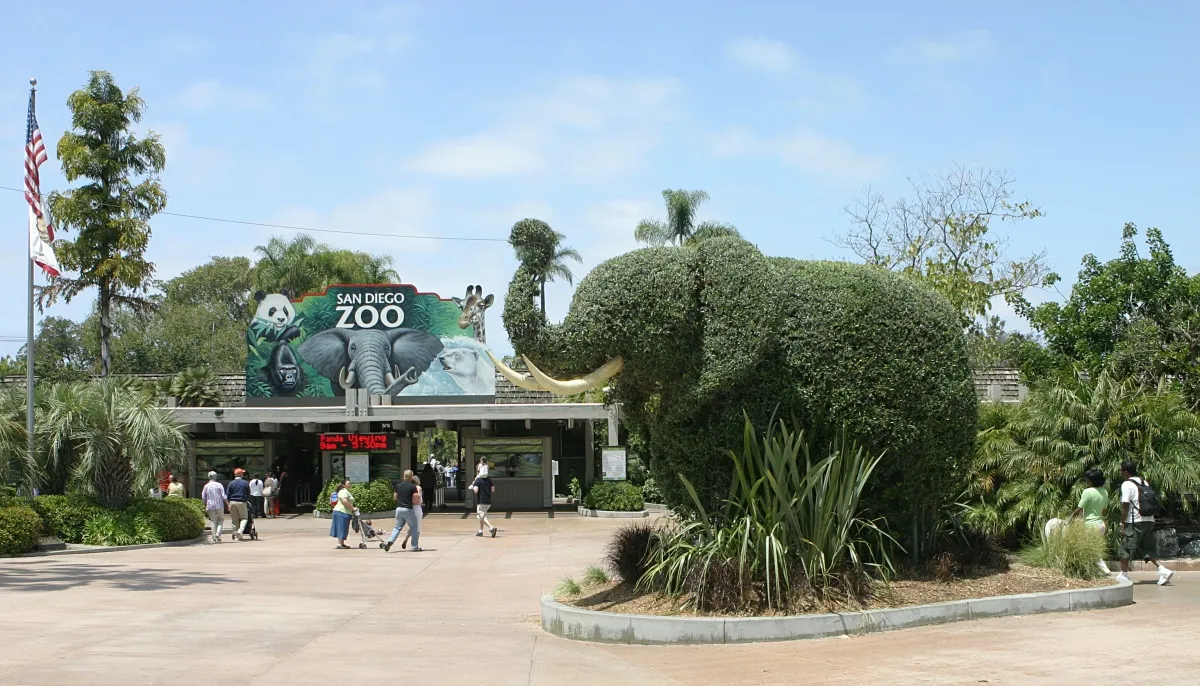 San Diego Zoo🇺🇸 San Diego, United States
 Zoo Dresden🇩🇪 Dresden, Germany
 Zoo Duisburg🇩🇪 Duisburg, Germany
 Detroit Zoo🇺🇸 Royal Oak, United States
 Toronto Zoo🇨🇦 Canada
Community notes
Share your observations about the Lion-tailed Macaque.
No community notes yet. Be the first!
Discover more wildlife
More fascinating animals from the encyclopedia.