
About the Mountain Pygmy Possum
Burramys parvus was described from a fossil in 1896 and assumed extinct for over 60 years, until a live one walked into a ski lodge at Mount Hotham in 1966 — one of the very few mammals known to science as a fossil before it was known alive. It is Australia's only marsupial that truly hibernates and the only one restricted to alpine habitat, surviving above the snowline in boulder fields in a total range of a few square kilometres across Victoria and New South Wales. The animal weighs about 45 grams. Its winter survival depends on gaining fat in autumn and then hibernating for up to seven months under the insulating snowpack, where the temperature under a metre of snow stays close to freezing rather than plunging to alpine air temperatures. Its critical food is the bogong moth, which migrates in millions to aestivate in the same alpine boulder caves; the moths are essentially flying fat, and the possums gorge on them in spring. This makes the species doubly vulnerable: warming winters strip the snow blanket that keeps hibernation viable, and the bogong moth population crashed catastrophically around 2017 to 2019. Fewer than 2,000 adults are thought to remain.
Fascinating facts
Snow Hibernator
Unlike most marsupials, the Mountain Pygmy Possum hibernates for months beneath the snow, lowering its body temperature to near freezing.
Moth Feast
The possum's survival is heavily linked to the Bogong moth migration, which provides a critical food source during spring and summer.
Alpine Specialist
This species is found only in three isolated alpine regions in Australia: Mount Kosciuszko, Mount Bogong, and Mount Buller.
Detailed description
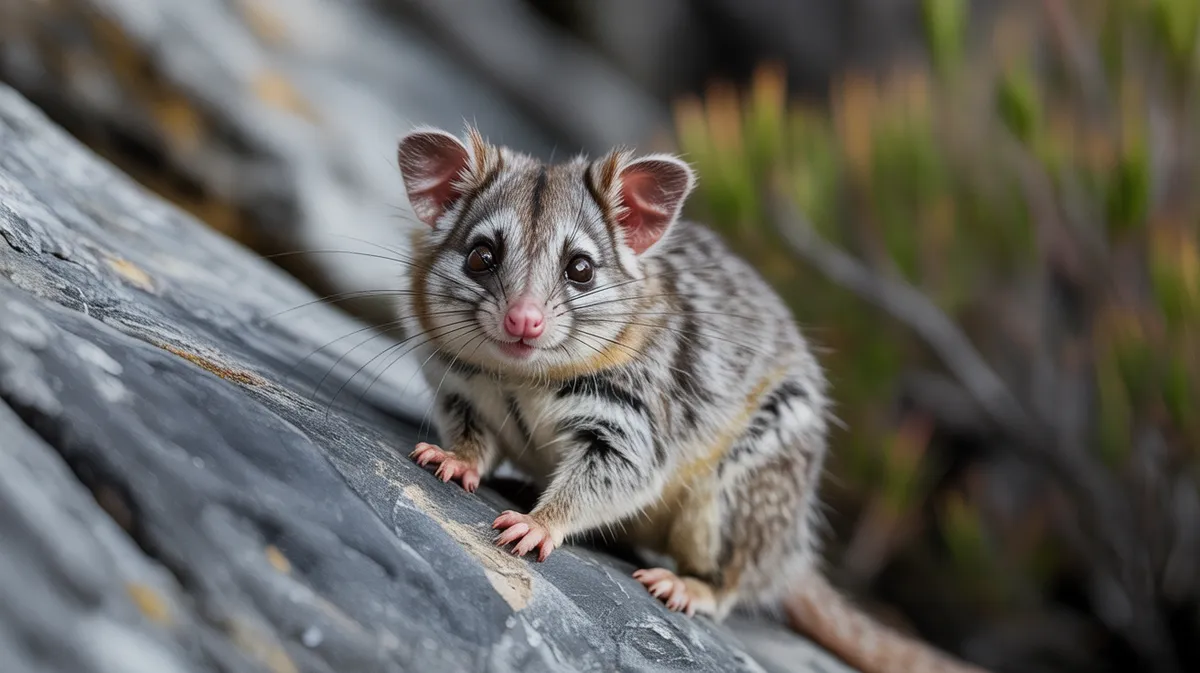
The Mountain Pygmy Possum (Burramys parvus) is a diminutive marsupial, with adults typically weighing between 35 and 80 grams and measuring 10–12 cm in head-body length, with a prehensile tail extending up to 14 cm. Its dense, fine grey-brown fur provides insulation against the harsh alpine climate, while the cream-colored underbelly aids in camouflage among rocks and snow. The species exhibits a robust skull and strong jaws, adaptations for feeding on hard seeds and insects. Nocturnal and highly secretive, the possum is primarily terrestrial but demonstrates excellent climbing skills, using its tail for balance and grasping. Its large, forward-facing eyes and sensitive whiskers enhance night vision and tactile navigation in rocky crevices. Socially, individuals are generally solitary outside of the breeding season, though overlapping home ranges and communal nesting in winter have been observed. Females possess a well-developed pouch with four teats, and both sexes construct elaborate nests from moss, grass, and leaves within rock crevices. The species is unique among Australian marsupials for its extended hibernation period, lasting up to seven months, during which it relies on stored body fat and stable subnivean (beneath the snow) temperatures. The Mountain Pygmy Possum is the only extant member of its genus and is a relict species from the Pleistocene, displaying several primitive anatomical features.
Did you know?
The Mountain Pygmy Possum was believed extinct until its rediscovery in 1966, when a living specimen was found in a ski lodge basement in Victoria, Australia.
Research & sources
Wikipedia summary
The mountain pygmy possum, also simply known as the burramys, is a small, mouse-sized nocturnal marsupial of Australia found in dense alpine rock screes and boulder fields, mainly southern Victoria and around Mount Kosciuszko in Kosciuszko National Park in New South Wales at elevations from 1,300 to 2,230 metres. At almost 14 cm (5.5 in), its prehensile tail is longer than its 11 cm (4.3 in) combined head and body length. Its diet consists of insects, fleshy fruits, nuts, nectar and seeds. Its body is covered in a thick coat of fine grey fur except for its stomach, which is cream coloured; its tail is hairless. On the underside of the female's body is a pouch containing four teats. This possum is the only extant species in the genus Burramys. It is also the only Australian mammal restricted to alpine habitat.
Behaviour & social structure
Mountain Pygmy Possums are crepuscular to nocturnal, emerging at dusk to forage and retreating to shelter before dawn. Their foraging behavior is opportunistic and seasonally variable, with a diet dominated by Bogong moths (Agrotis infusa) during summer migrations, supplemented by seeds, berries (notably from mountain plum pine, Podocarpus lawrencei), and other invertebrates. Possums exhibit food caching behavior, storing seeds and insects in their nests for later consumption. They are agile climbers, often moving through complex boulder fields and low alpine vegetation. Social interactions are limited outside the breeding season, but females may share communal nests in winter, possibly for thermoregulation. Males are more solitary and range widely, especially during the breeding season when they travel long distances to access female-dominated habitats. Territoriality is minimal, though individuals may defend nest sites. Vocalizations are rare, with communication primarily through scent marking and tactile cues.
Reproduction & life cycle
Breeding occurs once annually, typically from late October to December, coinciding with the availability of high-energy food sources. Males migrate from lower elevations to female nesting areas at the onset of the breeding season, a journey that can exceed several kilometers. After a brief courtship, copulation occurs, and the gestation period lasts approximately 14 days. Litters usually consist of 3–4 young, which remain in the pouch for about 3–4 weeks before transitioning to the nest. Weaning occurs at 9–10 weeks, and juveniles become independent shortly thereafter. Females reach sexual maturity at one year, while males mature slightly later. Parental care is provided exclusively by the mother, who maintains and defends the nest. Reproductive success is closely tied to food abundance, particularly the annual Bogong moth influx, and poor moth years can result in reproductive failure.
Adaptations & survival
The Mountain Pygmy Possum exhibits several remarkable adaptations to its alpine environment. Its dense fur and compact body minimize heat loss, while the ability to enter prolonged torpor and true hibernation conserves energy during winter when food is scarce. The species is uniquely adapted to subnivean life, with nests constructed below the snow layer, where temperatures remain stable and above freezing. Its prehensile tail and dexterous limbs facilitate movement through rocky terrain and dense vegetation. The possum's dental morphology, including robust incisors and molars, allows for efficient processing of both hard seeds and soft-bodied insects. Physiologically, it can accumulate significant fat reserves in autumn, which are metabolized during hibernation. Behavioral flexibility, such as food caching and communal nesting, further enhances survival in an unpredictable environment.
Cultural significance
The Mountain Pygmy Possum holds symbolic value as an indicator species for the health of Australia's alpine ecosystems and has become a flagship for alpine conservation efforts. While it does not feature prominently in Aboriginal mythology or traditional use, its rediscovery in 1966 (after being known only from fossils) captured public imagination and spurred significant scientific and conservation interest. The possum is often used in environmental education to highlight the impacts of climate change and habitat loss on endemic fauna. It has also appeared in Australian postage stamps and conservation campaigns, serving as a mascot for alpine biodiversity.
Recent research
Recent research has focused on the impacts of climate change on hibernation ecology, with studies demonstrating that reduced snow cover increases overwinter mortality. Genetic analyses have revealed low genetic diversity within isolated populations, prompting translocation and genetic rescue initiatives. Radio-tracking and microchip studies have provided insights into movement patterns, habitat use, and the importance of habitat connectivity. Conservation breeding programs, including successful captive breeding and reintroduction efforts, are ongoing. Novel research is investigating the nutritional ecology of Bogong moths and alternative food sources to buffer against moth population crashes. There is also active monitoring of disease threats, such as toxoplasmosis and fungal infections, which could further impact vulnerable populations.
Videos
Habitat
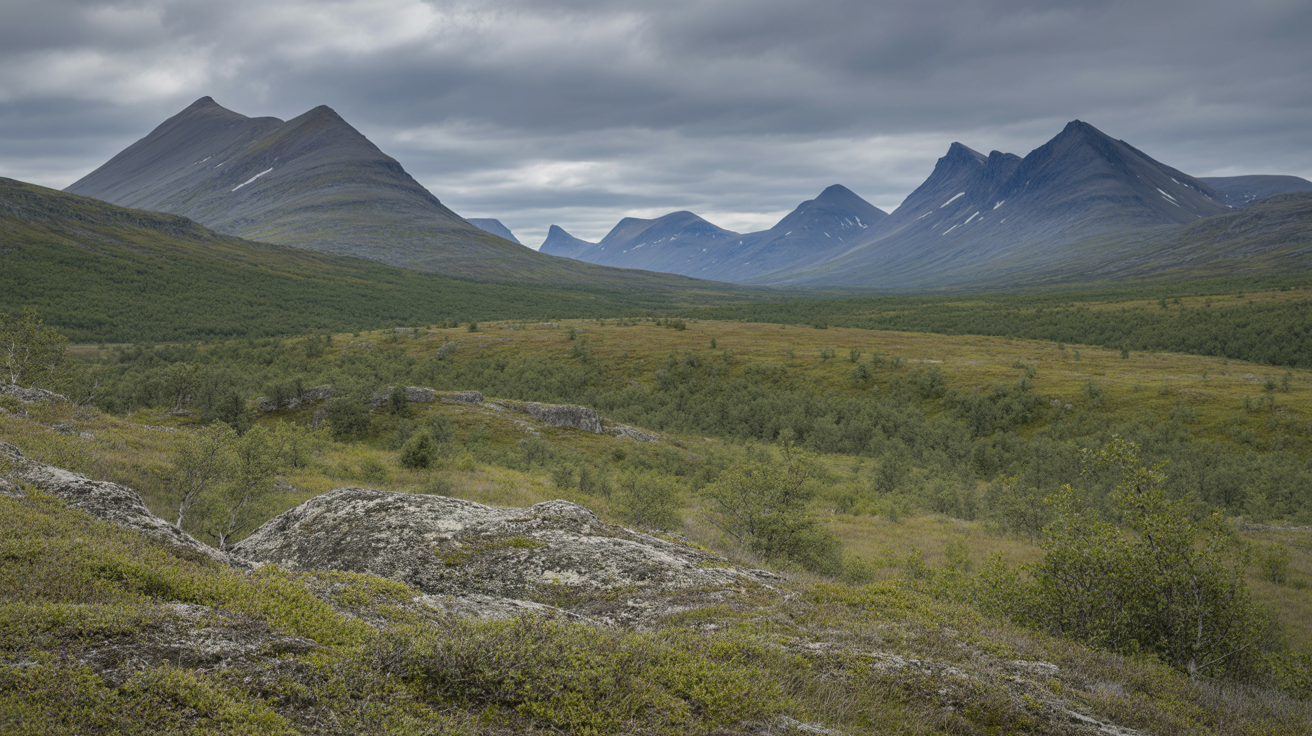
Alpine and subalpine boulder fields
 Polar and Subpolar Regions
Tundra
Cold, treeless regions with permafrost supporting specialized cold-adapted wildlife.
 Elevated Terrain
Mountain
High-altitude environments with varying climates and specialized wildlife adapted to rugged terrain and thin air.
 Global
Forest
Wooded areas with significant tree cover and diverse plant and animal communities.
Conservation
The Mountain Pygmy Possum is currently classified as Critically Endangered on the IUCN Red List.
Threats & challenges
The Mountain Pygmy Possum faces a suite of severe threats, most notably habitat fragmentation due to ski resort development, road construction, and altered fire regimes. Climate change poses a critical risk by reducing snow cover duration and depth, disrupting hibernation and exposing possums to lethal cold or predation. The decline of Bogong moth populations, linked to drought and pesticide use in their breeding grounds, threatens the possum's primary food source. Introduced predators such as feral cats and red foxes, as well as competition from invasive rodents, exacerbate mortality rates. The species' highly restricted and fragmented distribution (three main populations: Mount Kosciuszko, Mount Bogong, and Mount Buller) makes it vulnerable to stochastic events and genetic bottlenecks. Current estimates suggest fewer than 2,000 individuals remain in the wild, with some subpopulations numbering less than 100.
Taxonomy
Scientific name
Burramys parvus
- Kingdom
- Animalia
- Phylum
- Chordata
- Class
- Mammalia
- Order
- Diprotodontia
- Family
- Burramyidae
- Genus
- Burramys
- Species
- parvus
Community notes
Share your observations about the Mountain Pygmy Possum.
No community notes yet. Be the first!
Discover more wildlife
More fascinating animals from the encyclopedia.