
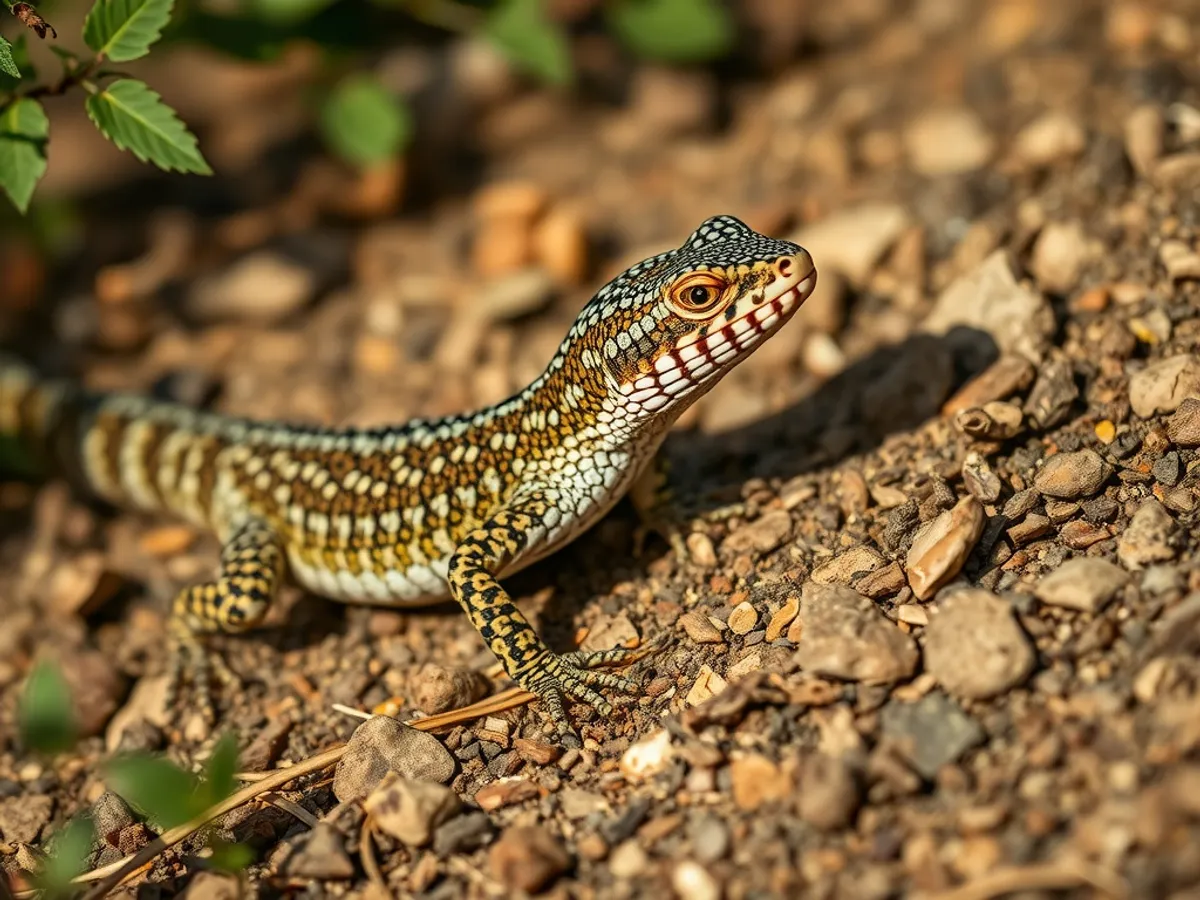
About the Ocellated Lizard
The Ocellated Lizard is one of the largest lizard species native to southwestern Europe, known for its striking green body adorned with blue and black eye-like spots, or 'ocelli,' along its sides. These robust reptiles can reach up to 90 cm (35 inches) in length, including their long, tapering tail. They are highly agile, basking in sunny spots during the day and retreating to burrows or under rocks when threatened. Ocellated Lizards are primarily terrestrial but can climb shrubs and low trees in search of prey. Their vivid coloration and elusive behavior make them a coveted sight for herpetologists and wildlife enthusiasts alike.
Fascinating facts
Impressive Size
The Ocellated Lizard is one of the largest lizards in Europe, with adults reaching up to 90 cm (35 inches) in length.
Diverse Diet
Their diet ranges from insects, spiders, and small vertebrates to fruits and flowers, showing remarkable adaptability.
Eye-catching Spots
The blue spots along their flanks give them their name and serve as a warning to potential predators.
Detailed description
The Ocellated Lizard (Timon lepidus) is the largest member of the Lacertidae family in Europe, with adults commonly reaching 40–60 cm in snout-to-vent length and total lengths up to 90 cm, of which the tail comprises more than half. Its robust body is covered in granular scales, with a vivid green dorsal coloration interspersed with black and yellow spots, and distinctive blue 'ocelli'—eye-like spots—along the flanks, especially prominent in males. The head is broad and triangular, equipped with strong jaws and well-developed teeth adapted for a varied diet. Sexual dimorphism is evident: males are larger, more vividly colored, and possess broader heads than females. The species is diurnal and highly territorial, often seen basking on rocks or open ground during the warmest parts of the day. Ocellated Lizards are primarily terrestrial but are adept climbers, scaling shrubs and low trees in pursuit of prey or to escape predators. Their limbs are powerful, enabling rapid sprints and agile maneuvers. When threatened, they may retreat to self-dug burrows or crevices, and can shed their tails (autotomy) as a defensive mechanism. The species exhibits a complex social structure, with dominant males defending territories that may overlap with several females.
Did you know?
Despite their size and vibrant coloration, Ocellated Lizards are masters of camouflage and can disappear rapidly into thick vegetation or underground burrows when disturbed.
Research & sources
Wikipedia summary
The ocellated lizard or jewelled lizard is a species of lizard in the family Lacertidae. The species is endemic to southwestern Europe.
Behaviour & social structure
Ocellated Lizards are solitary and territorial, with males aggressively defending their home ranges from rivals, especially during the breeding season. They are primarily active from March to October, with peak activity in spring and early summer. Their daily routine involves basking in the morning to raise body temperature, followed by foraging for food, and seeking shelter during the hottest midday hours. Their omnivorous diet includes large insects (beetles, grasshoppers), other arthropods, small vertebrates (such as lizards and nestling birds), fruits, and occasionally eggs. Hunting is typically active: they stalk and ambush prey, relying on keen vision and rapid bursts of speed. Social interactions are most pronounced during the breeding season, with males engaging in ritualized displays and combat. Outside of this period, individuals avoid close contact, communicating through visual signals and chemical cues.
Reproduction & life cycle
Breeding occurs from late April to early June, triggered by rising temperatures and increased daylight. Males engage in combat and display behaviors to attract females, including head-bobbing, body inflation, and vibrant coloration. After mating, females lay a single clutch of 5–22 eggs (average 10–15) in a self-dug nest chamber in sandy or loose soil, typically in sunny, well-drained locations. Incubation lasts 6–10 weeks, depending on temperature and humidity. Hatchlings emerge in mid to late summer, measuring 8–10 cm in length, and are independent from birth. There is no parental care post-oviposition. Sexual maturity is reached at 2–3 years of age, with growth rates influenced by food availability and environmental conditions.
Adaptations & survival
Timon lepidus exhibits several adaptations for Mediterranean environments: its cryptic coloration provides camouflage among vegetation and rocky substrates, while the blue ocelli may function in intraspecific signaling and predator deterrence. The lizard's robust limbs and claws facilitate digging and climbing, and its powerful jaws enable it to exploit a broad range of prey. Tail autotomy allows escape from predators, with the tail regenerating over time, albeit shorter and less patterned. Physiologically, the species is well-adapted to thermal fluctuations, employing behavioral thermoregulation (basking and sheltering) to maintain optimal body temperature. Its omnivorous diet and opportunistic feeding habits confer resilience to seasonal food shortages.
Cultural significance
In traditional Iberian folklore, the Ocellated Lizard is often associated with good fortune and is sometimes featured in local legends as a guardian of treasures or as a symbol of vitality and renewal. Its striking appearance has made it a subject of fascination for naturalists and artists. In some rural areas, it is erroneously believed to be venomous or harmful, leading to persecution. However, it plays an important ecological role as both predator and prey, and is increasingly recognized as a flagship species for Mediterranean habitat conservation.
Recent research
Recent genetic studies have clarified the phylogenetic relationships within the genus Timon, revealing significant genetic structuring among populations and supporting the recognition of several subspecies. Ongoing research focuses on the impacts of habitat fragmentation on gene flow, population viability, and behavioral ecology, including studies on territoriality, mating systems, and thermal biology. Conservation projects in Spain, Portugal, and southern France are monitoring population trends and developing habitat restoration strategies. Notably, the species is used as a model organism for studying the effects of climate change on Mediterranean reptiles.
Videos
Habitat
Mediterranean scrubland and open woodland
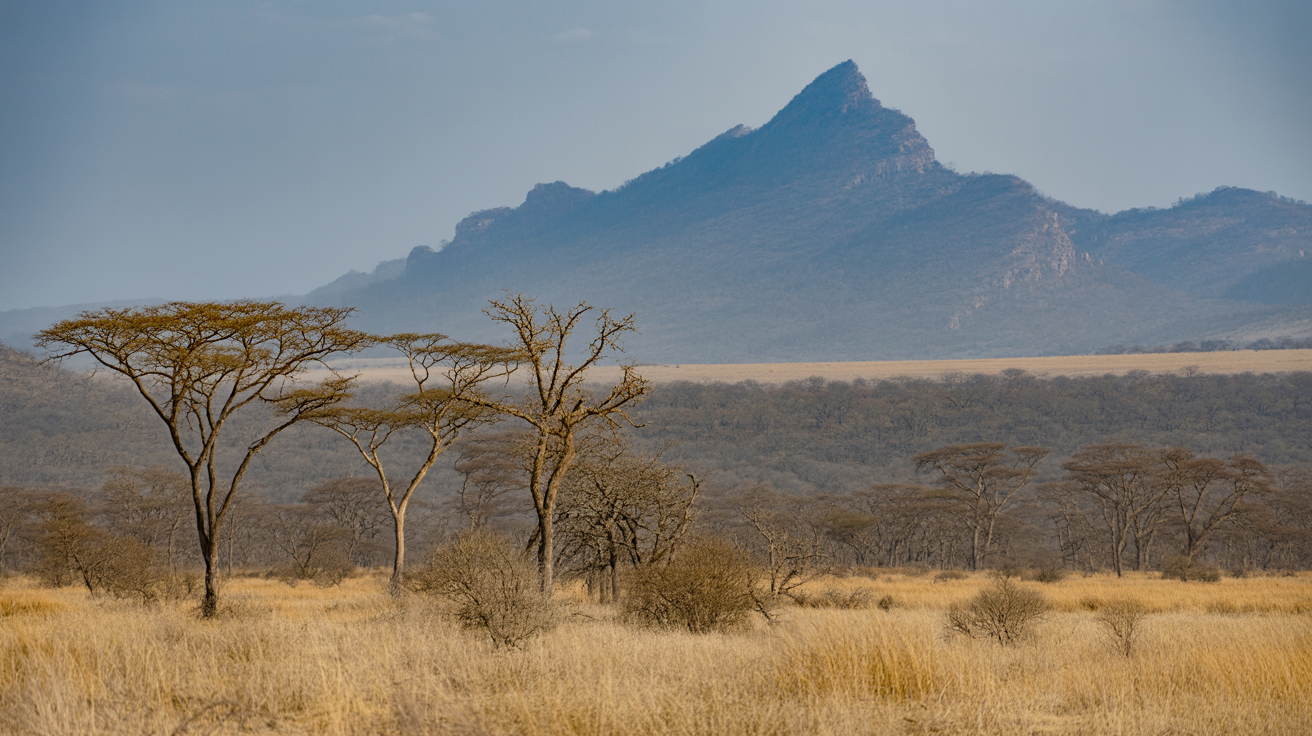 Africa
Savanna
Grasslands with scattered trees, characterized by seasonal rainfall and home to diverse grazing animals and predators.
 Various Continental Regions
Grassland
Open areas dominated by grasses rather than trees, supporting numerous herbivores and their predators.
 Elevated Terrain
Mountain
High-altitude environments with varying climates and specialized wildlife adapted to rugged terrain and thin air.
 Global
Forest
Wooded areas with significant tree cover and diverse plant and animal communities.
Conservation
The Ocellated Lizard is currently classified as Near Threatened on the IUCN Red List.
Threats & challenges
Despite being classified as 'Least Concern' by the IUCN, Ocellated Lizard populations are declining in parts of their range due to habitat loss, fragmentation, and degradation—primarily from agricultural expansion, urbanization, and wildfires. Road mortality, predation by introduced species (such as domestic cats and dogs), and illegal collection for the pet trade also pose significant threats. Climate change, with increased frequency of droughts and heatwaves, may further impact habitat suitability and reproductive success. Local extirpations have been reported, and some subspecies (e.g., T. l. oteroi) have restricted distributions and are more vulnerable.
Taxonomy
Scientific name
Timon lepidus
- Kingdom
- Animalia
- Phylum
- Chordata
- Class
- Reptilia
- Order
- Squamata
- Family
- Lacertidae
- Genus
- Timon
- Species
- lepidus
Community notes
Share your observations about the Ocellated Lizard.
No community notes yet. Be the first!
Discover more wildlife
More fascinating animals from the encyclopedia.