
About the Pallid Bat Flea
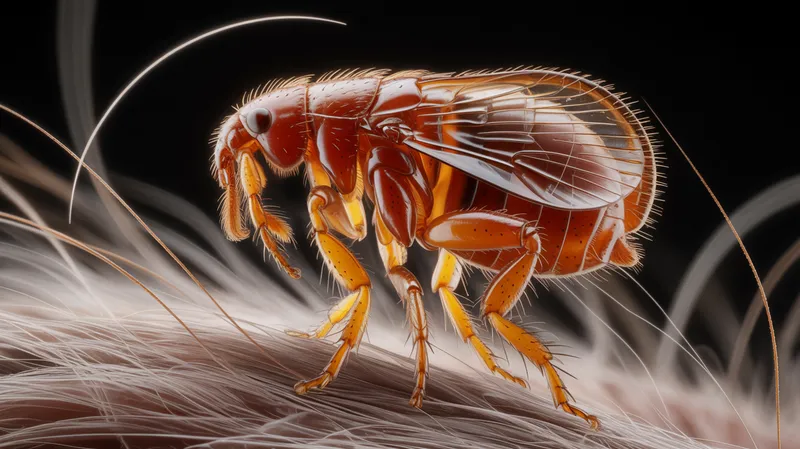
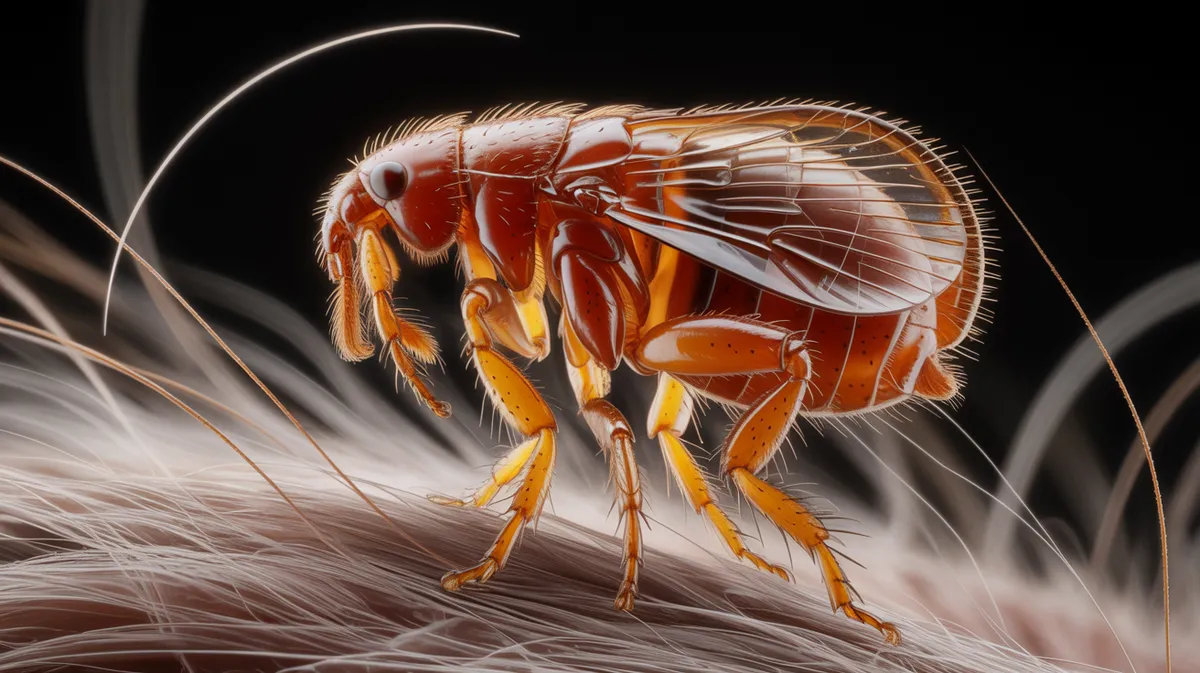
The Pallid Bat Flea is a specialized ectoparasite that primarily infests pallid bats (Antrozous pallidus) in North America. This small, wingless insect features a laterally compressed body and strong legs, enabling it to move efficiently through the fur of its host. Adapted to a parasitic lifestyle, it feeds on the blood of bats and is rarely found on other animals. The species is highly host-specific, playing a role in the unique ecology of bat roosts. Its presence is typically an indicator of healthy bat populations in arid and semi-arid environments.
Fascinating facts
Host Specialist
The Pallid Bat Flea is almost exclusively found on pallid bats, rarely infesting other bat species.
Blood Feeder
This flea survives by feeding on the blood of its bat host, using mouthparts adapted for piercing skin.
Habitat Tied to Roosts
The flea's distribution is closely linked to bat roosts in caves, abandoned mines, and crevices in arid regions.
Detailed description
The Pallid Bat Flea (Myodopsylla pallida) is a small, obligate ectoparasite measuring approximately 2–3 mm in length, with a laterally compressed, reddish-brown body that allows it to navigate efficiently through the dense fur of its host, the pallid bat (Antrozous pallidus). Its exoskeleton is tough and resilient, providing protection from host grooming and environmental pressures within roosts. The flea’s mouthparts are highly specialized for piercing skin and extracting blood, featuring elongated, serrated stylets and robust palps. Its hind legs are powerfully muscled, enabling impressive jumping abilities that facilitate host-to-host transfer within the confines of bat colonies. The antennae are short and recessed, minimizing the risk of damage during movement. Myodopsylla pallida is wingless, a common adaptation among fleas, and possesses backward-facing bristles (ctenidia) that anchor it securely to the host. The species exhibits a lifecycle closely synchronized with the reproductive cycles of its host, with eggs, larvae, and pupae developing in the organic debris of bat roosts. Adult fleas are typically found on bats, while immature stages remain off-host, feeding on organic matter and dried blood. This flea is highly host-specific, rarely infesting other mammals, and its population dynamics are tightly linked to those of the pallid bat. Its presence within bat roosts contributes to the unique micro-ecosystem, influencing both bat health and the broader roost community.
Did you know?
Unlike many flea species, the pallid bat flea is almost exclusively found on a single bat species, making it a highly specialized parasite.
Research & sources
Behaviour & social structure
Myodopsylla pallida demonstrates a largely nocturnal activity pattern, paralleling the behavior of its bat hosts. Adults spend most of their time on the host, feeding intermittently by piercing the bat’s skin and ingesting blood meals, which can last several minutes. Feeding is often triggered by the bat’s periods of rest, as movement can dislodge the flea. Between feedings, the flea may move to less accessible areas of the bat’s body, such as under the wings or around the neck, to avoid grooming. Social interactions among fleas are minimal, as they are solitary feeders, but high host density in communal roosts can lead to increased flea-to-flea encounters and competition for optimal feeding sites. Larval and pupal stages are gregarious, aggregating in the guano and detritus of the roost, where they feed on organic debris. The flea’s daily routine is dictated by the host’s activity, with increased movement and host-switching occurring during bat arousals and roost changes.
Reproduction & life cycle
Reproduction in Myodopsylla pallida is closely tied to the reproductive cycle of the pallid bat. Mating occurs on the host, with males using specialized genitalia to grasp females. After mating, females lay eggs in the bat’s fur or directly into the roost substrate. The eggs hatch within 2–5 days, depending on temperature and humidity. Larvae are free-living and feed on organic matter, including dried blood and skin flakes, for 1–2 weeks before pupating. The pupal stage lasts 1–2 weeks, after which adults emerge and seek hosts. The entire lifecycle can be completed in as little as 3–4 weeks under optimal conditions, but development may be prolonged in cooler or drier environments. There is no parental care; all stages except the adult are independent. Breeding is continuous throughout the bat’s active season, but peaks may occur in spring and early summer, coinciding with the birth of juvenile bats and increased host availability.
Adaptations & survival
Myodopsylla pallida exhibits several adaptations for its parasitic lifestyle. Its laterally compressed body and backward-facing bristles allow it to move easily through fur and resist host grooming. The flea’s strong hind legs enable it to jump distances up to 20 cm, facilitating host-to-host transfer in crowded roosts. Its mouthparts are highly specialized for hematophagy, with serrated stylets for efficient skin penetration and anti-coagulant saliva to prevent blood clotting during feeding. The flea’s lifecycle is synchronized with that of its host, ensuring that larval development coincides with periods of high organic debris in roosts. Its host specificity reduces competition with other flea species and minimizes the risk of host immune rejection. The ability to survive extended periods off-host in the larval and pupal stages is crucial for persistence in fluctuating roost environments.
Cultural significance
The Pallid Bat Flea has little direct cultural significance to humans, given its highly specialized and cryptic lifestyle. It is not known to play a role in mythology, symbolism, or traditional medicine. However, as a component of bat roost ecosystems, it is of scientific interest to parasitologists and ecologists studying host-parasite coevolution and the health of bat populations. Its presence can serve as an indicator of undisturbed, healthy bat colonies, which are valued for their role in insect control and ecosystem balance.
Recent research
Recent research on Myodopsylla pallida has focused on its host specificity, lifecycle synchronization with bat reproductive cycles, and its role in the transmission of bat-associated pathogens. Molecular studies have confirmed its close evolutionary relationship with other bat fleas in the family Ischnopsyllidae. Ongoing research is investigating the potential for flea-borne transmission of bacteria such as Bartonella spp. within bat colonies, though there is currently no evidence of significant zoonotic risk. Studies of roost microclimates have highlighted the flea’s sensitivity to temperature and humidity, with implications for its persistence under changing environmental conditions. The species is also used as a model for understanding host-parasite dynamics in highly specialized systems.
Sources
The Siphonaptera of North America: Classification, Host Relationships, and Geographic Distribution
J. K. Hubbard (1968)
scientificHost specificity and coevolution in bat fleas (Siphonaptera: Ischnopsyllidae) from North America
J. A. Marshall (1981)
scientificIschnopsyllidae (Siphonaptera) of North America: Host relationships and distribution
Lewis, R.E. (1974)
scientificFleas (Siphonaptera) of North America: A Guide to Their Identification and Host Associations
Michael W. Hastriter & Richard D. Price (2003)
scientificVideos
Habitat
Roosts of pallid bats in caves, mines, and rock crevices
 Arid Regions
Desert
Arid lands with minimal rainfall, extreme temperatures, and specialized wildlife adapted to harsh conditions.
 Elevated Terrain
Mountain
High-altitude environments with varying climates and specialized wildlife adapted to rugged terrain and thin air.
 Global
Forest
Wooded areas with significant tree cover and diverse plant and animal communities.
Conservation
The Pallid Bat Flea is currently classified as Least Concern on the IUCN Red List.
Threats & challenges
Currently, Myodopsylla pallida faces few direct threats and is classified as Least Concern. However, its populations are indirectly vulnerable to declines in pallid bat numbers due to habitat loss, roost disturbance (especially in caves and mines), and pesticide use that can impact both bats and flea larvae in roost debris. Climate change may alter the microclimate of roosts, affecting flea development and survival. Human disturbance of bat roosts, such as recreational caving or mine closures, can disrupt the flea’s lifecycle. Despite these challenges, the species remains stable where healthy bat populations persist, and there is no evidence of significant population decline at present.
Taxonomy
Scientific name
Myodopsylla pallida
- Kingdom
- Animalia
- Phylum
- Arthropoda
- Class
- Insecta
- Order
- Siphonaptera
- Family
- Ischnopsyllidae
- Genus
- Myodopsylla
- Species
- pallida
Community notes
Share your observations about the Pallid Bat Flea.
No community notes yet. Be the first!
Discover more wildlife
More fascinating animals from the encyclopedia.