
About the Pink Cockatoo
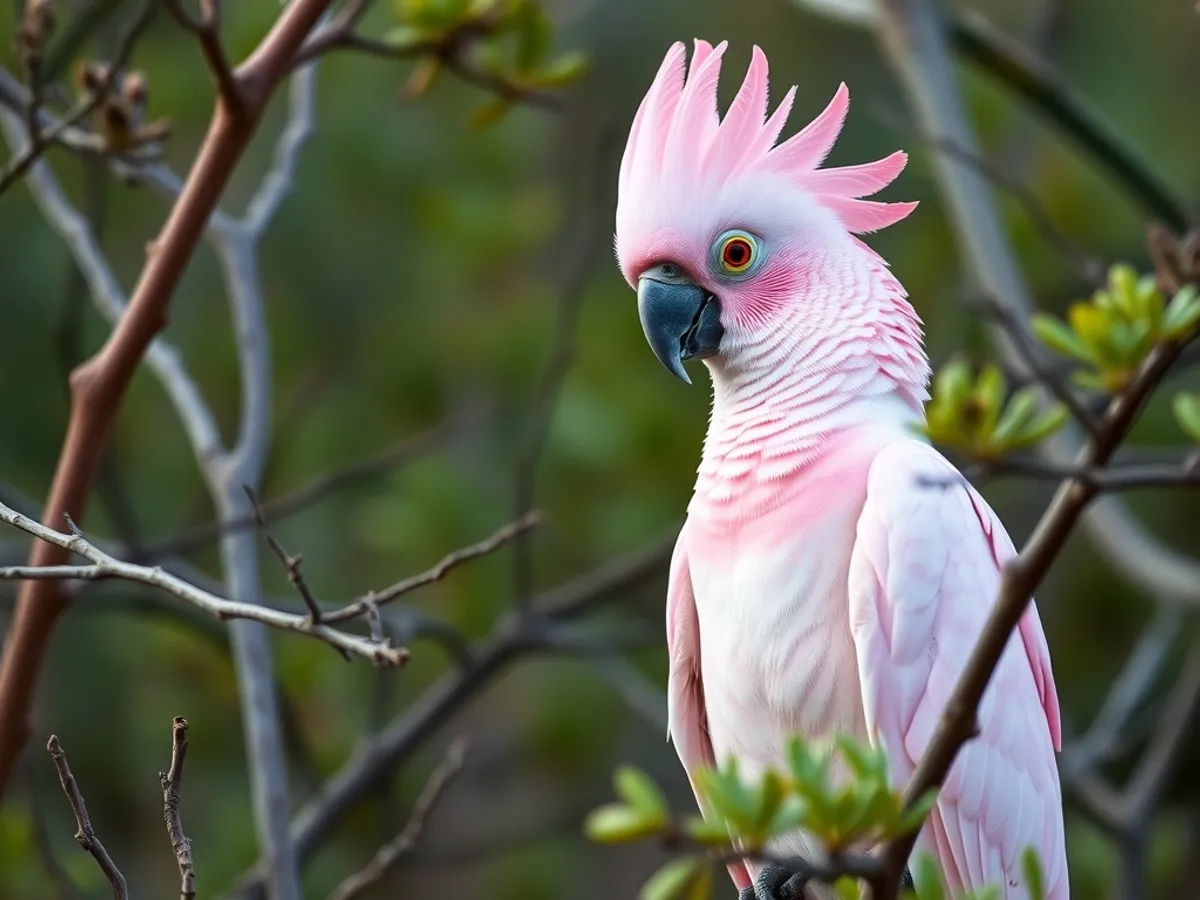
The Pink Cockatoo, also known as Major Mitchell's Cockatoo, is a strikingly beautiful parrot native to arid and semi-arid regions of Australia. Its plumage is predominantly soft white with a delicate salmon-pink chest and face, and it boasts a spectacular crest with bands of bright red and yellow. Pink Cockatoos are known for their strong pair bonds and often seen in pairs or small family groups, communicating through distinct loud calls. They are less gregarious than other cockatoos and are often found in more remote and undisturbed habitats.
Fascinating facts
Crest Display
The Pink Cockatoo’s crest features vivid red and yellow bands and can be raised or lowered to express mood or excitement.
Desert Dwellers
These birds are specially adapted to Australia’s arid interior, relying on native seeds and fruits found in dry woodlands and shrublands.
Nesting Loyalty
Pink Cockatoos are known to use the same nesting hollow for many years, making suitable trees critical for their breeding success.
Detailed description
The Pink Cockatoo (Lophochroa leadbeateri), also known as Major Mitchell's Cockatoo, is a medium-sized parrot measuring 33–40 cm (13–16 in) in length and weighing approximately 300–400 grams. Its plumage is predominantly soft white, with a distinctive salmon-pink wash across the face, underparts, and underwing coverts. The most striking feature is its broad, fan-shaped crest, which is vividly marked with alternating bands of bright red and yellow, edged with white—a unique trait among cockatoos. The bill is short and robust, adapted for cracking seeds, and the eyes are dark brown, surrounded by a pale blue orbital ring. Sexual dimorphism is subtle, with females typically exhibiting a paler eye ring and less intense coloration in the crest. Pink Cockatoos are known for their strong monogamous pair bonds and often engage in mutual preening and synchronized movements. Their flight is slow and undulating, and they are less gregarious than other cockatoos, usually seen in pairs or small family groups. The species is largely sedentary, but may undertake local movements in response to water and food availability. Their vocalizations are loud, clear whistles and screeches, used for communication between mates and to signal alarm. They are long-lived birds, with lifespans in the wild estimated at 40–60 years.
Did you know?
Despite their striking appearance, Pink Cockatoos are rarely seen in large flocks and are considered one of the more elusive Australian parrots.
Research & sources
Wikipedia summary
The pink cockatoo, also known as Major Mitchell's cockatoo or Leadbeater's cockatoo, is a medium-sized cockatoo that inhabits arid and semi-arid inland areas across Australia, with the exception of the north east.
Behaviour & social structure
Pink Cockatoos are diurnal and spend much of their day foraging on the ground or in trees for seeds, nuts, roots, bulbs, and occasionally insects and their larvae. They show a preference for seeds of native grasses and shrubs, such as Acacia and Eucalyptus species. Foraging is often conducted in the early morning and late afternoon to avoid the midday heat. Socially, they are less flock-oriented than other cockatoos, typically forming stable pairs or small family groups, though loose aggregations of up to 20 birds may occur at abundant food or water sources. They communicate with a variety of calls, including contact calls, alarm calls, and courtship vocalizations. Pink Cockatoos are highly territorial during the breeding season, with pairs defending nesting sites vigorously. They engage in elaborate courtship displays, including crest-raising, wing-spreading, and mutual feeding. Bathing and dust-bathing are common behaviors, and they are known to use their strong beaks to excavate nest hollows and manipulate objects.
Reproduction & life cycle
Breeding occurs primarily from August to December, coinciding with periods of increased rainfall and food availability. Pink Cockatoos are monogamous, forming lifelong pair bonds. Courtship involves mutual preening, feeding, and synchronized displays. Nests are typically constructed in deep hollows of mature eucalypt or cypress pine trees, often near water sources. The female lays 2–4 white eggs, which are incubated for approximately 23–25 days, primarily by the female, though males assist with incubation and feeding. Both parents participate in feeding the chicks, which are altricial and remain in the nest for 6–8 weeks before fledging. Parental care continues for several weeks post-fledging, with juveniles remaining dependent on adults for food and protection. Breeding success is highly dependent on the availability of suitable nest hollows, which are often a limiting resource.
Adaptations & survival
The Pink Cockatoo exhibits several adaptations for survival in arid and semi-arid environments. Its pale plumage reflects sunlight, reducing heat absorption, while the pink coloration may provide camouflage among flowering shrubs and red soil. The large, strong bill is specialized for cracking hard seeds and bulbs, allowing exploitation of a wide range of food sources. Their ability to utilize deep tree hollows for nesting provides protection from predators and extreme temperatures. Behavioral adaptations include nomadic movements in response to water and food scarcity, and the ability to fly long distances to reach isolated waterholes. Their social structure—small, stable groups—reduces competition and enhances resource sharing in sparse habitats. Additionally, their vocalizations carry over long distances, facilitating communication in open landscapes.
Cultural significance
The Pink Cockatoo holds a special place in Australian culture and Indigenous mythology. It is often regarded as a symbol of the Australian outback, celebrated for its beauty and rarity. In Aboriginal Dreamtime stories, the bird is associated with rain and renewal, reflecting its presence after seasonal rains. The species was named after Major Sir Thomas Mitchell, an early explorer of inland Australia, and has featured in Australian art, postage stamps, and literature. Its striking appearance and gentle nature have made it a sought-after aviary bird, though this has contributed to illegal trade in the past. The Pink Cockatoo is also an emblem of several regional organizations and conservation campaigns.
Recent research
Recent research has focused on the species' nesting ecology, particularly the critical dependence on large, old-growth trees for successful breeding. Studies using GPS tracking have revealed that Pink Cockatoos may travel over 20 km in a day to access water and food resources, highlighting the importance of landscape connectivity. Genetic studies have clarified its taxonomic placement, supporting the separation of Lophochroa from the genus Cacatua. Ongoing research is examining the impact of climate change on breeding success and population dynamics, as well as the effectiveness of artificial nest boxes in supplementing natural hollows. Conservation genetics projects are assessing population structure and gene flow across fragmented habitats.
Videos
Habitat
Arid and semi-arid woodlands and shrublands
 Arid Regions
Desert
Arid lands with minimal rainfall, extreme temperatures, and specialized wildlife adapted to harsh conditions.
 Africa
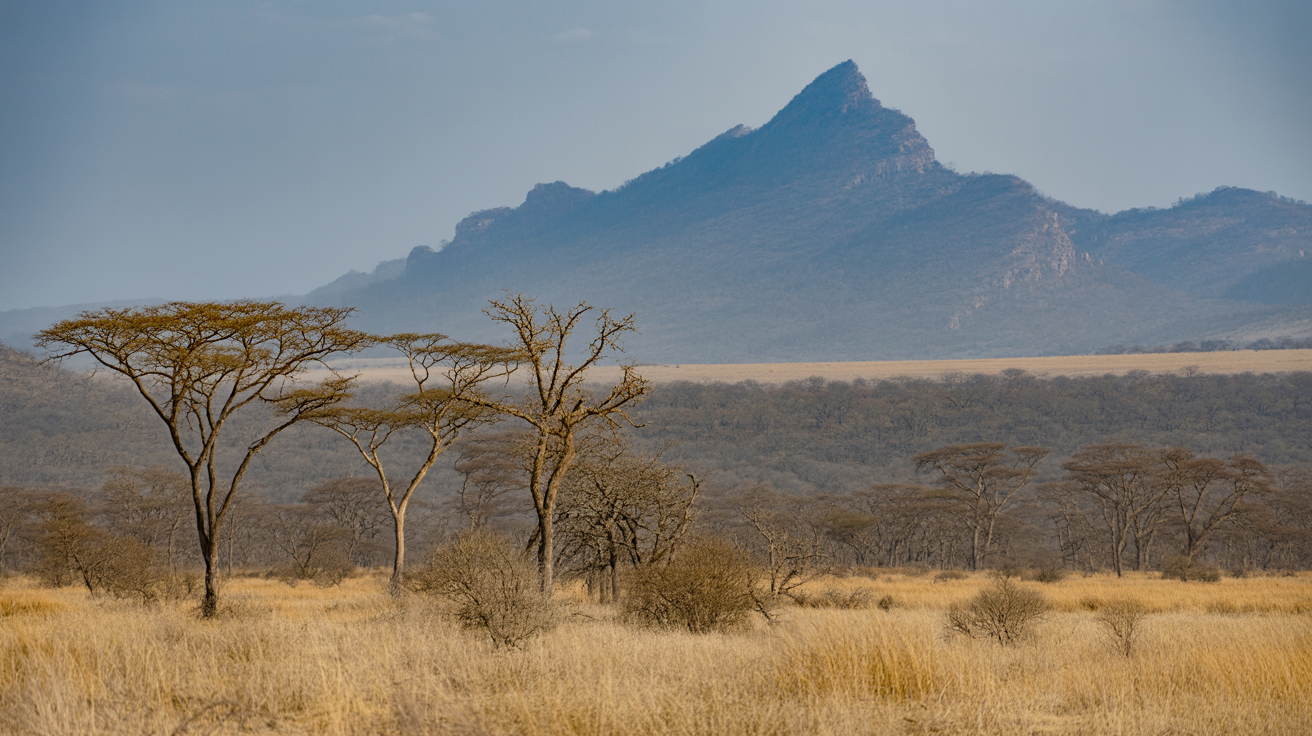
Savanna
Grasslands with scattered trees, characterized by seasonal rainfall and home to diverse grazing animals and predators.
 Various Continental Regions
Grassland
Open areas dominated by grasses rather than trees, supporting numerous herbivores and their predators.
 Global
Forest
Wooded areas with significant tree cover and diverse plant and animal communities.
Conservation
The Pink Cockatoo is currently classified as Least Concern on the IUCN Red List.
Threats & challenges
While the Pink Cockatoo is currently listed as Least Concern by the IUCN, its populations face several localized threats. Habitat loss due to land clearing for agriculture, pastoralism, and urban development reduces the availability of mature trees with suitable nesting hollows. Competition for nest sites with invasive species such as feral bees and other parrots further limits breeding opportunities. Illegal trapping for the pet trade, although less common today, has historically impacted some populations. Climate change poses emerging risks by altering rainfall patterns and increasing the frequency of droughts, which can affect food and water availability. Fragmentation of habitat may lead to isolated populations with reduced genetic diversity. Conservation efforts focus on habitat protection, nest box programs, and public education to mitigate these threats.
Taxonomy
Scientific name
Lophochroa leadbeateri
- Kingdom
- Animalia
- Phylum
- Chordata
- Class
- Aves
- Order
- Psittaciformes
- Family
- Cacatuidae
- Genus
- Lophochroa
- Species
- leadbeateri
Where to see a pink cockatoo
2 zoos and aquariums in 2 countries are recorded as keeping this species.

Community notes
Share your observations about the Pink Cockatoo.
No community notes yet. Be the first!
Discover more wildlife
More fascinating animals from the encyclopedia.