
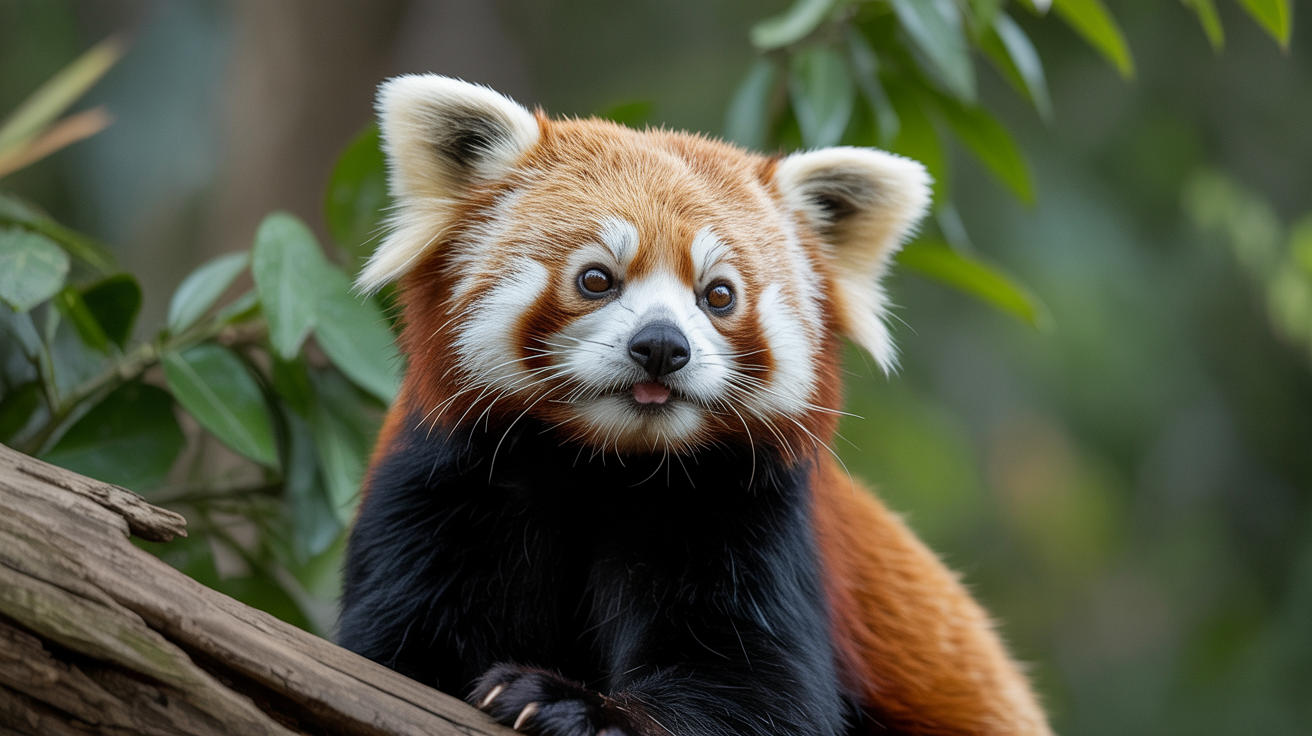
About the Red Panda
The Red Panda (Ailurus fulgens) is a small arboreal mammal found predominantly in the temperate forests of the eastern Himalayas and southwestern China, including regions like Sikkim, Bhutan, and Yunnan. Weighing between 3 to 6 kilograms and measuring about 50 to 65 centimeters in body length, with an additional 30 to 50 centimeters of tail, this species is known for its striking reddish-brown fur and bushy tail. Despite its name, the Red Panda is not closely related to the Giant Panda; instead, it belongs to its own unique family, Ailuridae. Its bamboo-centric diet, which constitutes about 95% of its intake, is supplemented by fruits, acorns, and occasionally small mammals. The Red Panda's semi-retractable claws and flexible ankles are key adaptations that aid in climbing and foraging in the dense forest canopy. These adaptations are crucial for both feeding and avoiding predators in their mountainous habitat.
Fascinating facts
Expert Climbers
Red pandas spend most of their time in trees, using their sharp claws and flexible ankles to navigate branches with agility.
Bamboo Diet
Although classified as carnivores, red pandas primarily eat bamboo, occasionally supplementing their diet with fruits, acorns, and insects.
False Thumb
Red pandas possess a unique 'false thumb'—an extended wrist bone—that helps them grasp and manipulate food, similar to the giant panda.
Detailed description
The red panda (Ailurus fulgens) is a small, arboreal mammal measuring 50–64 cm (20–25 in) in body length, with a tail of 28–59 cm (11–23 in), and weighing between 3.7–6.2 kg (8.2–13.7 lbs). Its dense, woolly fur is reddish-brown on the upper parts and blackish on the lower parts, providing excellent camouflage among moss- and lichen-covered tree branches. The face features distinctive white markings and tear tracks, thought to reduce glare and aid in visual communication. Red pandas possess a false thumb—an extended wrist bone—adapted for grasping bamboo, their primary food. They are crepuscular and nocturnal, spending most of the day resting in tree branches and becoming active at dawn and dusk. Solitary by nature, red pandas maintain overlapping home ranges but interact infrequently outside the breeding season. Their vocalizations include squeals, twitters, and huff-quacks, used for communication during encounters. Red pandas are highly territorial, marking their range with scent glands located at the base of the tail and on the soles of their feet. Their reproductive cycle is seasonal, with females giving birth to one to four cubs in tree hollows or rock crevices. The species is highly specialized for an arboreal lifestyle, with flexible ankles and sharp, semi-retractable claws aiding in climbing and descending trees headfirst.
Did you know?
Despite their name, red pandas are not closely related to the giant panda and are the only living members of their family, Ailuridae.
Research & sources
Wikipedia summary
A red panda is a small mammal native to the eastern Himalayas and southwestern China.
Behaviour & social structure
Red pandas are primarily solitary, except during the breeding season or when females are raising young. They are most active during twilight (crepuscular) and nighttime (nocturnal) hours, spending up to 13 hours a day foraging and feeding. Their diet is dominated by bamboo leaves and shoots, but they also consume fruits, acorns, roots, eggs, and occasionally insects or small vertebrates. Red pandas use their agile limbs and bushy tails for balance while navigating the forest canopy, often sleeping curled up with their tails wrapped around their bodies for warmth. They mark territory with urine, feces, and secretions from anal and pedal glands. Social interactions are rare and can be aggressive, especially between males. Communication is primarily olfactory, but vocalizations are used in close encounters, particularly during mating or between mothers and cubs.
Reproduction & life cycle
Red pandas exhibit a seasonal breeding pattern, with mating typically occurring between January and March. Females experience delayed implantation, resulting in a gestation period of 112–158 days. Births usually take place from June to July, with litters ranging from one to four cubs (most commonly two). Cubs are born blind and helpless, weighing 90–110 grams (3.2–3.9 oz), and remain in the nest for about 90 days. Mothers provide extensive care, grooming and feeding the cubs, and frequently moving them to new nests for safety. Weaning occurs at around five to six months, but juveniles may remain with the mother until the next breeding season. Males do not participate in parental care.
Adaptations & survival
Red pandas are highly adapted to cold, montane forests. Their thick fur insulates against low temperatures, and the dense underfur covers even the soles of their feet, providing warmth and traction on slippery branches. The false thumb, an enlarged radial sesamoid bone, enables precise grasping of bamboo stems. Their flexible ankles allow them to descend trees headfirst, a rare trait among mammals. Red pandas have a slow metabolic rate, an adaptation to their low-nutrient, high-fiber bamboo diet, and their digestive tract is relatively simple, relying on rapid passage and high intake rather than efficient digestion. Their cryptic coloration and arboreal habits provide camouflage from predators such as snow leopards and martens.
Cultural significance
Red pandas hold cultural significance in the Himalayan and Chinese regions, where they are sometimes featured in local folklore and considered symbols of gentleness and good luck. In Nepal, they are known as 'Habre' and are regarded as a flagship species for conservation. The red panda is the state animal of Sikkim, India, and appears in regional emblems and conservation campaigns. Internationally, red pandas have gained popularity as charismatic ambassadors for wildlife conservation, often featured in zoos and media. There is no significant evidence of traditional medicinal use, but their pelts have historically been used in local ceremonies and hats.
Recent research
Recent genetic studies have revealed two distinct subspecies or even potential species: the Himalayan red panda (Ailurus fulgens fulgens) and the Chinese red panda (Ailurus fulgens styani), with implications for targeted conservation. Ongoing research focuses on habitat connectivity, dietary ecology, and the impact of climate change on bamboo phenology. Advances in non-invasive monitoring, such as camera trapping and genetic sampling from feces, have improved population estimates and understanding of movement patterns. Studies on gut microbiota are shedding light on how red pandas process their fibrous diet. Conservation genetics is increasingly important for managing fragmented populations and maintaining genetic diversity.
Videos
Habitat
Temperate forest


Conservation
The Red Panda is currently classified as Endangered on the IUCN Red List.
Threats & challenges
The red panda faces numerous threats, including habitat loss and fragmentation due to deforestation, agricultural expansion, and infrastructure development. Poaching for the illegal pet trade and traditional pelts, as well as accidental trapping, further reduce populations. Climate change is altering bamboo availability and habitat suitability, compounding existing pressures. Disease transmission from domestic animals and genetic isolation due to fragmented populations are emerging concerns. The global population is estimated at fewer than 10,000 mature individuals and is declining, leading to its classification as Endangered by the IUCN. Conservation challenges include enforcing anti-poaching laws, restoring habitat corridors, and mitigating human-wildlife conflict.
Taxonomy
Scientific name
Ailurus fulgens
- Kingdom
- Animalia
- Phylum
- Chordata
- Class
- Mammalia
- Order
- Carnivora
- Family
- Ailuridae
- Genus
- Ailurus
- Species
- fulgens
Where to see a red panda
48 zoos and aquariums in 8 countries are recorded as keeping this species.
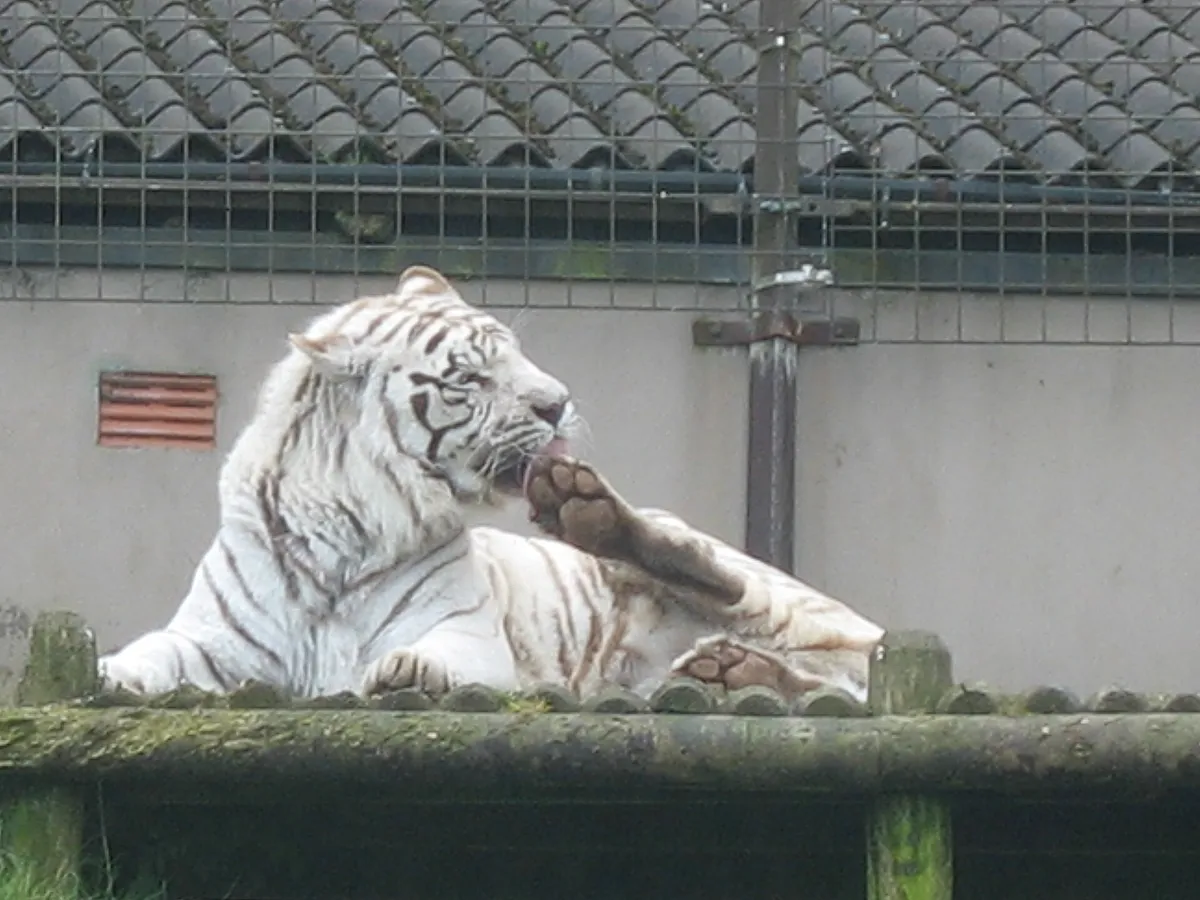 Belfast Zoo🇬🇧 Belfast, United Kingdom
 Bronx Zoo🇺🇸 Bronx, United States
 Newquay Zoo🇬🇧 Newquay, United Kingdom
 Rosamond Gifford Zoo at Burnet Park🇺🇸 Syracuse, United States
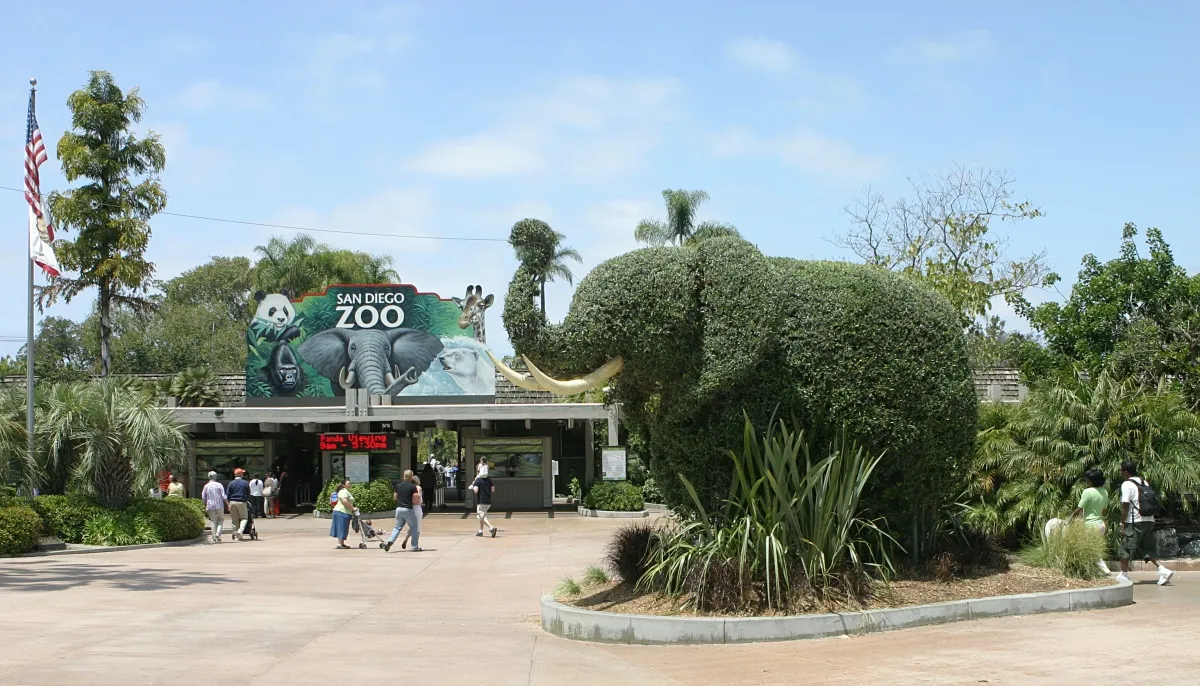 San Diego Zoo🇺🇸 San Diego, United States
Community notes
Share your observations about the Red Panda.
No community notes yet. Be the first!
Discover more wildlife
More fascinating animals from the encyclopedia.