
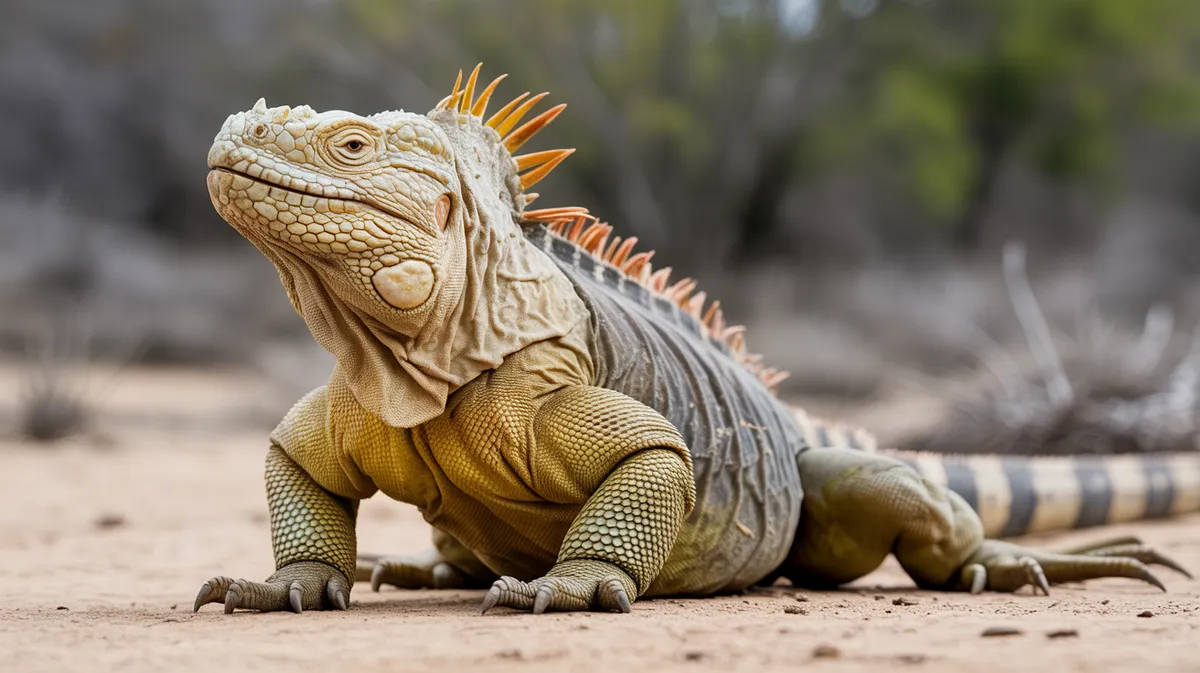
About the Rhinoceros Iguana
Cyclura cornuta is one of the rock iguanas of the West Indies, restricted to Hispaniola — Haiti and the Dominican Republic — and a few offshore islands, and it is far heavier and more terrestrial than the green iguana most people picture. Adults reach 60 to 136 cm and up to 10 kg, with a thick body, a heavy jowled head, and the bony horn-like tubercles on the snout that give the species its name and are much larger in males. It is largely herbivorous, taking leaves, flowers, fruit and cactus, and it is an important seed disperser for dry forest plants — seeds that pass through an iguana germinate faster than those that fall to the ground. It digs deep burrows in limestone soil and basks at the entrance, and it will retreat into rock crevices rather than up a tree. Males are territorial, head-bobbing and doing push-ups in display, and a large male will bite hard. The West Indian rock iguanas as a group are the most endangered lizards on Earth: they evolved on islands with no mammalian predators, and free-roaming dogs, cats, pigs and mongooses eat the eggs and young, while charcoal production strips their dry forest. The rhinoceros iguana is Vulnerable and declining, and its Haitian populations are in serious trouble.
Fascinating facts
Horned Snout
The 'horns' on a rhinoceros iguana's snout are actually outgrowths of bone covered by scales and are used in displays and combat between males.
Plant-Based Diet
Although they may occasionally eat insects or carrion, rhinoceros iguanas primarily feed on leaves, fruits, and flowers.
Sun Seekers
Rhinoceros iguanas are ectothermic and depend on basking in the sun to warm up and become active each day.
Detailed description
The rhinoceros iguana (Cyclura cornuta) is a robust, terrestrial lizard distinguished by the trio of horn-like bony outgrowths on its snout, a feature unique among iguanids and the source of its common name. Adults typically range from 60 to 136 cm in total length and can weigh between 4.5 and 9 kg, with males generally larger and more heavily built than females. Their coloration varies from steely gray to olive-green or brown, often with subtle banding or mottling, and their skin is thick, covered in small granular scales interspersed with larger, keeled tubercles. The head is broad, with pronounced jowls and a dewlap, and the tail is muscular and laterally compressed, aiding in balance and defense. Rhinoceros iguanas are primarily diurnal and spend much of their time basking on rocks to regulate body temperature. They possess strong limbs and claws for digging burrows, which serve as refuges from predators and extreme heat. Unlike many other iguanas, they are highly terrestrial, rarely climbing trees except when young. Their digestive tract is adapted for a high-fiber, herbivorous diet, with a large hindgut for fermenting tough plant material. Lifespans in the wild are estimated at 15–20 years, though individuals in captivity have been known to exceed 30 years.
Did you know?
Unlike many lizards, rhinoceros iguanas can live harmoniously in small groups, especially when raised together from a young age.
Research & sources
Wikipedia summary
The rhinoceros iguana is an endangered species of iguana that is endemic to the Caribbean island of Hispaniola and its surrounding islands. A large lizard, they vary in length from 60 to 136 centimetres, and skin colours range from a steely grey to a dark green and even brown. Their name derives from the bony-plated pseudo-horn or outgrowth which resembles the horn of a rhinoceros on the iguana's snout. It is known to coexist with the Ricord's iguana ; the two species are the only taxa of rock iguana to do so.
Behaviour & social structure
Rhinoceros iguanas are largely solitary, with adults maintaining overlapping but loosely defined territories. Males are territorial during the breeding season, engaging in ritualized head-bobbing, push-ups, and tail-whipping displays to deter rivals. Outside of the breeding period, direct aggression is rare. These iguanas are crepuscular to diurnal, emerging in the morning to bask and forage during the cooler hours, retreating to burrows or shaded crevices during midday heat. Their diet consists mainly of leaves, flowers, fruits, and occasionally fungi, but they may opportunistically consume invertebrates, small vertebrates, or carrion. Feeding is methodical, with individuals using their strong jaws to crop tough vegetation. They play a significant ecological role as seed dispersers, passing viable seeds through their digestive tract. Juveniles are more arboreal and secretive, likely as an adaptation to avoid predation.
Reproduction & life cycle
Breeding occurs during the early rainy season, typically from May to June. Males court females with head-bobbing and physical nudges, and copulation is often preceded by brief chases. Females lay a single clutch of 5–20 leathery eggs in deep, self-dug burrows, which are carefully covered and guarded for a short period. Incubation lasts approximately 85–100 days, depending on environmental conditions, with hatchlings emerging in late summer to early autumn. There is no parental care post-hatching; juveniles are independent from birth. Sexual maturity is reached at 4–6 years of age. Reproductive success is closely tied to rainfall and food availability, with drought years often resulting in reduced clutch sizes or skipped breeding.
Adaptations & survival
Rhinoceros iguanas exhibit several adaptations for survival in xeric, rocky environments. Their cryptic coloration provides camouflage among rocks and scrub. The bony 'horns' may serve as a visual signal in social interactions or as a deterrent to predators. Their powerful limbs and claws are specialized for digging extensive burrows, which offer protection from predators and temperature extremes. A large, fermentative hindgut allows efficient extraction of nutrients from fibrous plant matter. Behavioral thermoregulation—basking and seeking shade—enables them to maintain optimal body temperature. Juveniles' arboreal tendencies reduce predation risk, while adults' robust build and tail-whipping serve as effective defenses.
Cultural significance
While not as prominent in Caribbean folklore as some other reptiles, rhinoceros iguanas are occasionally featured in local myths and are sometimes regarded as symbols of resilience and longevity. In some rural communities, they have been hunted for food, though this practice has declined due to legal protections and conservation outreach. Ecotourism centered around iguana viewing is emerging as a source of income and conservation awareness in parts of Hispaniola.
Recent research
Recent genetic studies have clarified the evolutionary relationships within the Cyclura genus, highlighting the distinctiveness of C. cornuta and the now-extinct Navassa Island subspecies (C. c. onchiopsis). Ongoing research focuses on population genetics, hybridization dynamics with Ricord's iguana, and the effectiveness of head-starting (captive rearing and release) programs. Studies on seed dispersal by rhinoceros iguanas underscore their ecological importance in maintaining plant diversity in dry forests. Satellite telemetry is being used to better understand their spatial ecology and habitat requirements, informing conservation planning.
Sources
CITES Appendices
Convention on International Trade in Endangered Species of Wild Fauna and Flora (CITES)
conservationGenetic diversity and population structure in the endangered rhinoceros iguana (Cyclura cornuta)
Malone, C.L. et al. (2017)
scientificVideos
Habitat
Dry forest and scrubland
 Various Continental Regions
Grassland
Open areas dominated by grasses rather than trees, supporting numerous herbivores and their predators.
 Elevated Terrain
Mountain
High-altitude environments with varying climates and specialized wildlife adapted to rugged terrain and thin air.
 Global
Forest
Wooded areas with significant tree cover and diverse plant and animal communities.
Conservation
The Rhinoceros Iguana is currently classified as Vulnerable on the IUCN Red List.
Threats & challenges
The primary threats to rhinoceros iguanas are habitat loss due to agriculture, charcoal production, and urban development, as well as predation by introduced species such as dogs, cats, and mongooses. Illegal hunting for food and the pet trade further exacerbate population declines. Hybridization with the closely related Ricord's iguana (Cyclura ricordii) in areas of sympatry poses a genetic threat. Climate change and increasing frequency of droughts may also impact reproductive success and food availability. The species is listed as Endangered on the IUCN Red List, with an estimated wild population of fewer than 5,000 mature individuals and a continuing downward trend. Conservation efforts focus on habitat protection, head-starting programs, and community education.
Taxonomy
Scientific name
Cyclura cornuta
- Kingdom
- Animalia
- Phylum
- Chordata
- Class
- Reptilia
- Order
- Squamata
- Family
- Iguanidae
- Genus
- Cyclura
- Species
- cornuta
Where to see a rhinoceros iguana
5 zoos and aquariums in 3 countries are recorded as keeping this species.
 Dudley Zoo & Castle🇬🇧 Dudley, United Kingdom
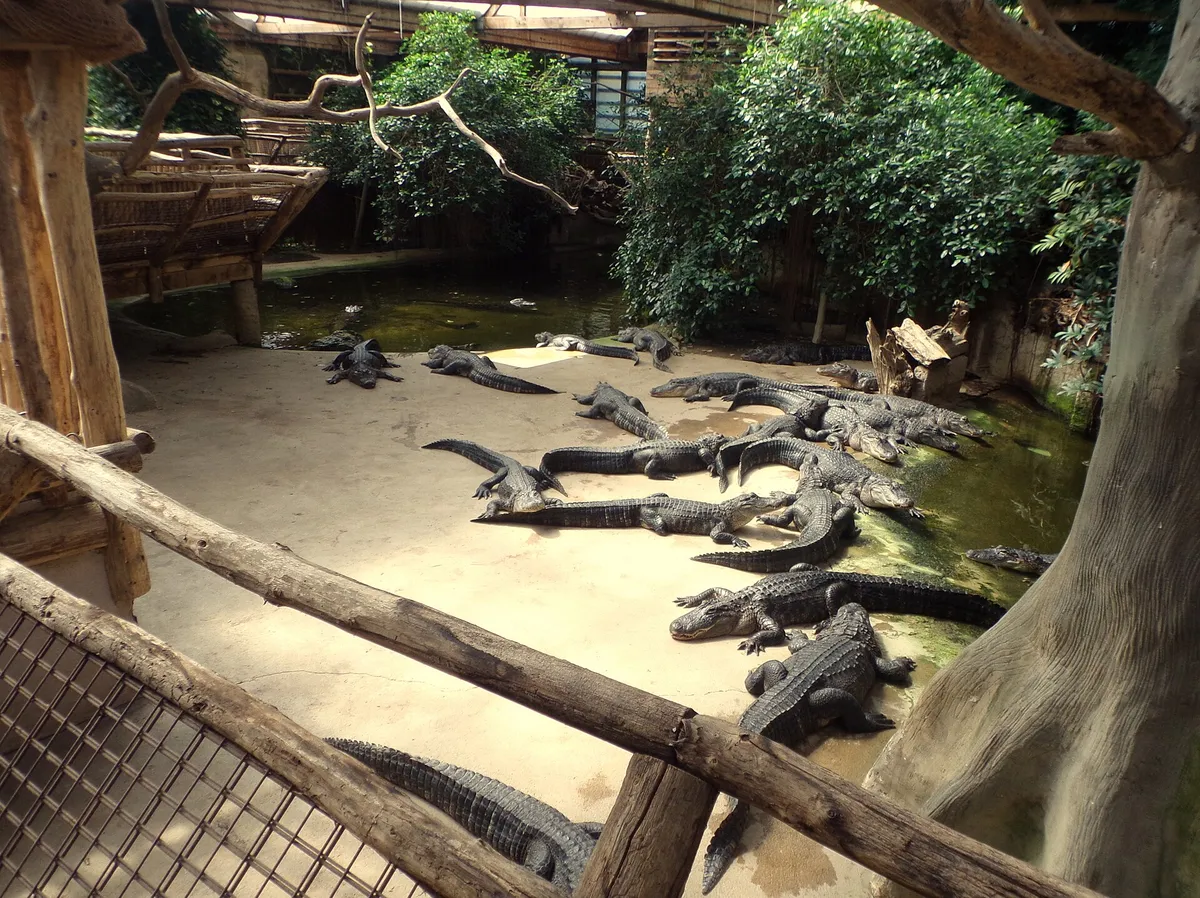 Alligator Bay🇫🇷 Beauvoir, France
 Sacramento Zoo🇺🇸 Sacramento, United States
- 🦁Colchester Zoo🇬🇧 United Kingdom
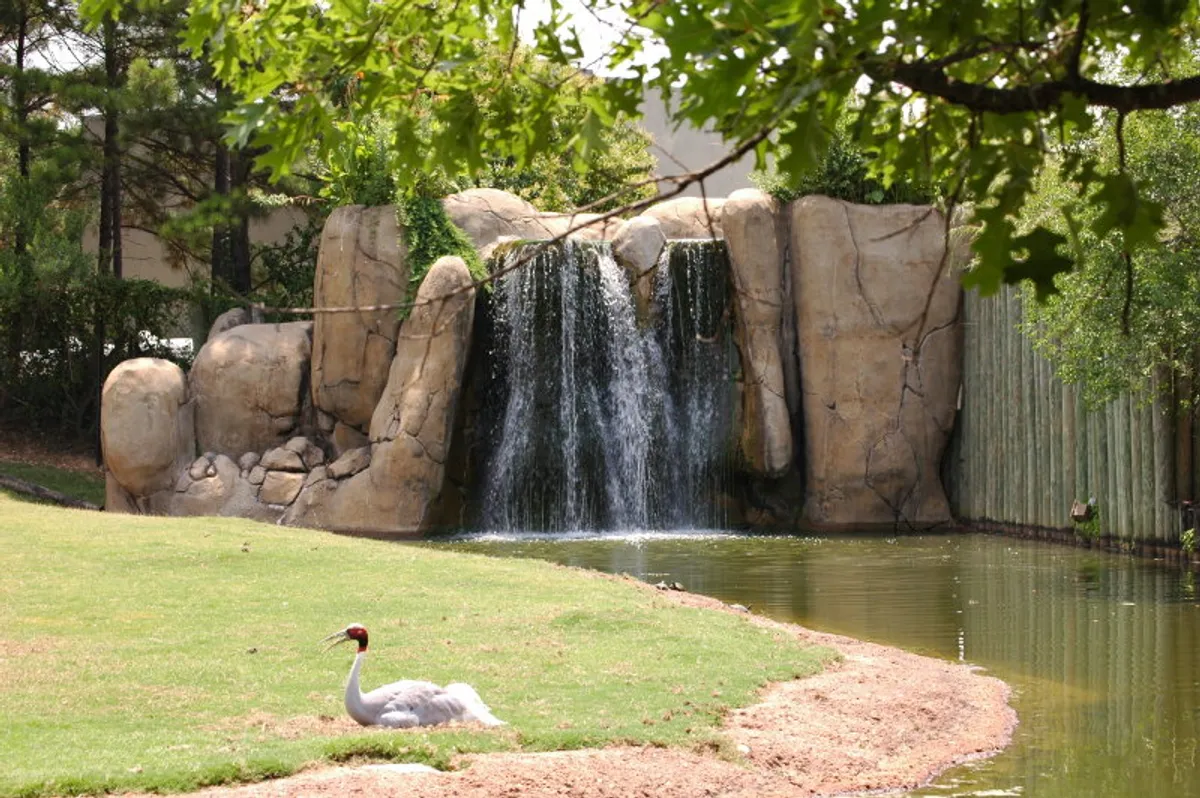 Montgomery Zoo🇺🇸 United States
Community notes
Share your observations about the Rhinoceros Iguana.
No community notes yet. Be the first!
Discover more wildlife
More fascinating animals from the encyclopedia.