
About the Rock Ptarmigan
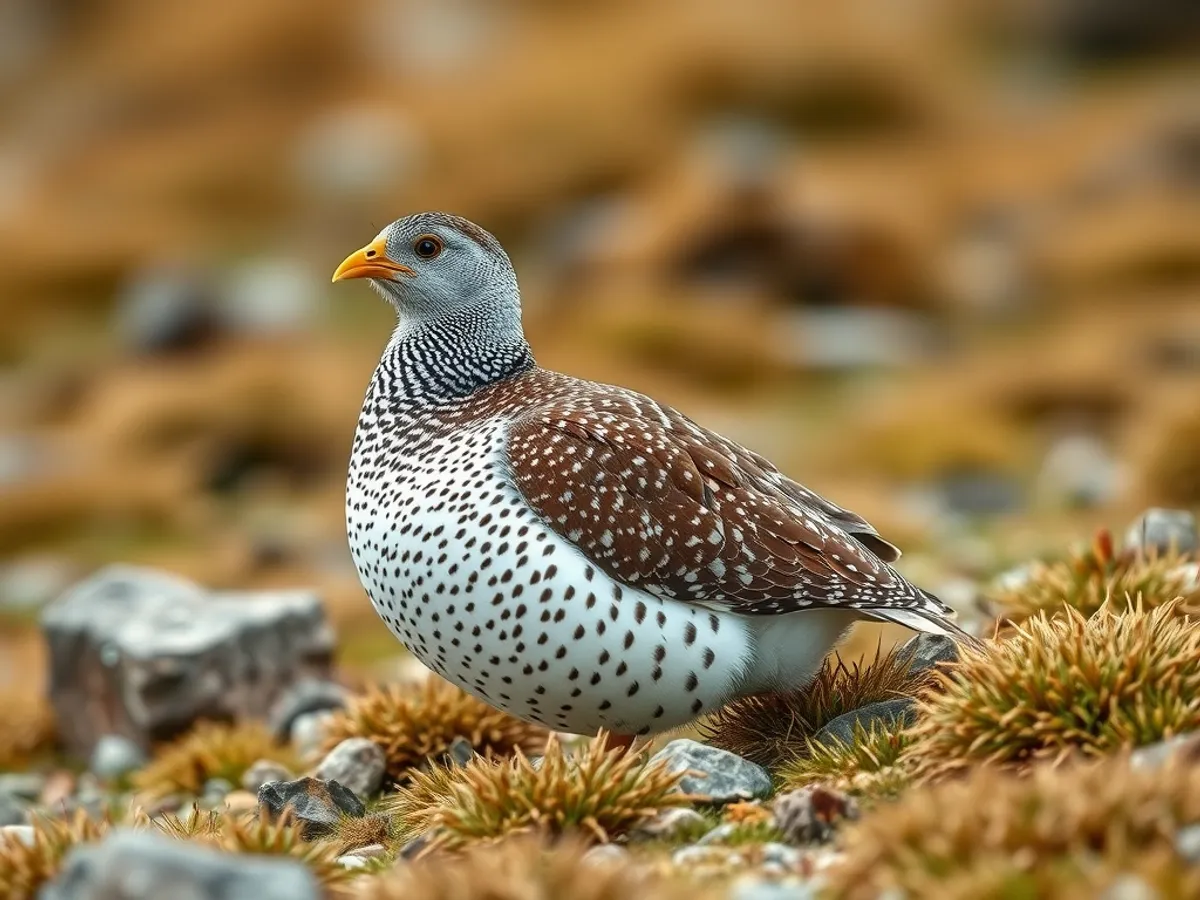
Lagopus muta changes plumage three times a year, not twice — a white winter coat, a mottled grey-brown spring plumage, and a browner summer one — so that a bird sitting still is almost always the exact colour of the ground beneath it as the snowline retreats up the mountain. The white feathers are hollow and full of air, so the winter coat is also better insulation than the summer one, and the bird roosts by burrowing into powder snow, where the temperature is far above the ambient air. Its feet are feathered right down over the toes — the genus name Lagopus means hare-foot — which serves as a snowshoe, roughly doubling the effective surface area and letting it walk on crust that would swallow a similar-sized bird. It lives on Arctic tundra and on high mountains further south as a glacial relict, marooned above the treeline in Scotland, the Alps, the Pyrenees and Japan, where the isolated populations are now among the species most exposed to a warming climate. Males keep a red comb above the eye, engorged and vivid in display and otherwise hidden. In winter the ptarmigan survives on buds and twigs of willow and birch, food so poor that it must eat enormous quantities and relies on a large caecum to ferment it.
Fascinating facts
Seasonal Camouflage
Rock Ptarmigans molt their feathers twice a year, turning white in winter and mottled brown and grey in summer to blend with their surroundings.
Unique Diet
Their diet mainly consists of buds, leaves, berries, and flowers, but in winter, they survive on twigs and willow catkins.
Feathered Feet
The Rock Ptarmigan's feet are densely feathered, acting as natural snowshoes to help them walk on snow without sinking.
Detailed description
The Rock Ptarmigan (Lagopus muta) is a medium-sized grouse, measuring 34–36 cm in length with a wingspan of 54–60 cm and weighing between 400–700 grams, with males generally larger than females. Its most distinctive feature is its seasonal plumage: in winter, both sexes are almost entirely white except for a black tail and, in males, a black eye-stripe; in summer, the plumage becomes mottled brown, grey, and black, providing camouflage among rocks and tundra vegetation. The bird has a compact, rounded body, short tail, and strong legs and feet that are densely feathered, acting as insulation and aiding movement on snow. The bill is short and robust, adapted for foraging on tough arctic vegetation. Rock Ptarmigans are primarily ground-dwellers, relying on cryptic coloration and stillness to avoid predators. Outside the breeding season, they form loose flocks, but during breeding, pairs become territorial. Their vocalizations are low, guttural croaks and clucks, used for communication and display. The species is highly adapted for cold climates, with a basal metabolic rate that can be seasonally adjusted and a digestive system capable of extracting nutrients from fibrous, low-quality winter forage. Their lifespan in the wild is typically 2–5 years, though predation and harsh weather can limit survival.
Did you know?
The Rock Ptarmigan is the official bird of Nunavut, Canada, and was featured on the Icelandic one-króna coin.
Research & sources
Wikipedia summary
The rock ptarmigan is a medium-sized game bird in the grouse family. It is known simply as the ptarmigan in Europe. It is the official bird for the Canadian territory of Nunavut, where it is known as the aqiggiq (ᐊᕿᒡᒋᖅ), and the official game bird for the province of Newfoundland and Labrador. In Japan, it is known as the raichō (雷鳥), which means "thunder bird". It is the official bird of Gifu, Nagano, and Toyama Prefectures and is a protected species nationwide. Unlike many arctic bird species, ptarmigan do not gain substantial mass to hibernate over winter.
Behaviour & social structure
Rock Ptarmigans are diurnal and spend most of their time foraging on the ground, feeding on buds, leaves, twigs, seeds, and flowers of arctic and alpine plants. In winter, they rely heavily on willow and birch buds, while in summer their diet becomes more varied, including berries and insects. They use their feathered feet to scratch through snow to access food. Socially, they are gregarious in winter, forming flocks of up to several dozen individuals, which helps reduce predation risk. During the breeding season, males become highly territorial, performing conspicuous displays that include vocalizations, wing-flicking, and short flights to deter rivals and attract females. Daily routines involve periods of intensive feeding interspersed with rest and preening, often in sheltered depressions to conserve heat. When threatened, they rely on camouflage and sudden, explosive flight to escape predators such as foxes, raptors, and mustelids.
Reproduction & life cycle
Rock Ptarmigans are monogamous during the breeding season, which typically begins in late May or early June, depending on latitude and snowmelt. Males establish and defend territories through vocal and visual displays. After pairing, the female selects a nest site, usually a shallow scrape on the ground concealed by vegetation or rocks. She lays 6–10 eggs, which are incubated solely by the female for 21–24 days. Chicks are precocial, leaving the nest within hours of hatching and feeding themselves, though the female provides brooding and protection. The male may remain nearby to guard the territory but does not participate in incubation or direct chick care. Fledging occurs at 10–12 days, but young remain with the female for several weeks. Breeding success is highly variable and influenced by weather, predation, and food availability.
Adaptations & survival
Rock Ptarmigans exhibit a suite of adaptations for survival in extreme environments. Their seasonal plumage provides effective camouflage against both snow and rocky tundra, reducing predation risk. Dense feathering on the legs and feet insulates against cold and increases surface area, functioning like snowshoes. They have a counter-current heat exchange system in their legs to minimize heat loss. Their digestive tract is enlarged and highly efficient at extracting nutrients from fibrous winter browse, aided by a well-developed cecum hosting symbiotic bacteria. Behaviorally, they use snow burrows for roosting, which provides insulation from wind and cold. Their metabolic rate can be seasonally adjusted, lowering energy requirements during the harshest months. These adaptations allow them to remain active throughout winter, unlike many arctic birds that migrate or hibernate.
Cultural significance
The Rock Ptarmigan holds significant cultural value in many regions. It is the official bird of Nunavut (Canada), where it is known as aqiggiq in Inuktitut, and the official game bird of Newfoundland and Labrador. In Japan, the ptarmigan (raichō, or 'thunder bird') is revered in folklore and is the official bird of several prefectures, symbolizing purity and endurance. In the Scottish Highlands, it is a traditional game species and features in local folklore. Indigenous peoples of the Arctic have historically hunted ptarmigan for food and used their feathers for insulation. The bird's seasonal transformations have inspired stories and symbolism related to adaptation and survival.
Recent research
Recent research has focused on the effects of climate change on Rock Ptarmigan distribution and phenology, with studies documenting earlier snowmelt leading to mismatches between plumage color and background, increasing predation risk. Genetic studies have revealed significant subspecies diversity, reflecting historical isolation in glacial refugia. Ongoing research in Japan and the Alps monitors population trends and habitat use, informing conservation strategies. Studies on their gut microbiome have provided insights into adaptations for digesting fibrous arctic plants. There is also interest in their role as indicator species for ecosystem health in tundra and alpine environments.
Sources
Handbook of the Birds of the World, Vol. 2: New World Vultures to Guineafowl
del Hoyo, J., Elliott, A., & Sargatal, J. (Eds.) (1994)
scientificClimate change and the mismatch between camouflage and background color in arctic birds
Mills, L.S., Zimova, M., Oyler, J., et al. (2013)
scientificVideos
Habitat
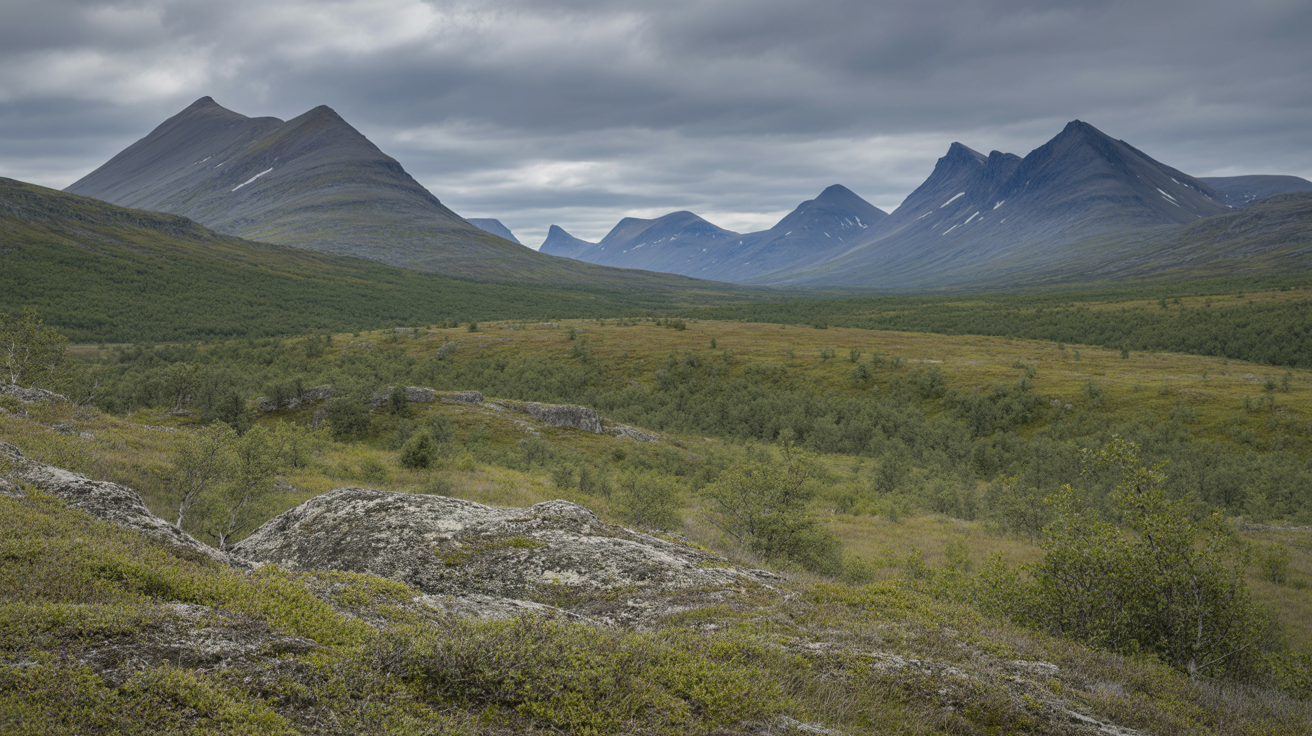
Arctic tundra and alpine regions
 Polar Regions
Arctic
Cold, frozen landscapes around the North Pole with specialized wildlife adapted to extreme cold.
 Polar and Subpolar Regions
Tundra
Cold, treeless regions with permafrost supporting specialized cold-adapted wildlife.
 Elevated Terrain
Mountain
High-altitude environments with varying climates and specialized wildlife adapted to rugged terrain and thin air.
Conservation
The Rock Ptarmigan is currently classified as Least Concern on the IUCN Red List.
Threats & challenges
While currently classified as Least Concern by the IUCN, Rock Ptarmigans face several threats. Climate change poses the most significant long-term risk, as warming temperatures reduce suitable tundra and alpine habitats, leading to range contraction and potential hybridization with related species. Increased frequency of freeze-thaw cycles can encase food plants in ice, reducing winter food availability. Predation by introduced mammals (e.g., red foxes in some arctic islands) and increased human disturbance from tourism and development also pose localized threats. In some regions, overhunting can impact populations, though regulated hunting is sustainable in many areas. Population trends are generally stable, but declines have been noted in parts of their southern range, particularly in the European Alps and Japan.
Taxonomy
Scientific name
Lagopus muta
- Kingdom
- Animalia
- Phylum
- Chordata
- Class
- Aves
- Order
- Galliformes
- Family
- Phasianidae
- Genus
- Lagopus
- Species
- muta
Community notes
Share your observations about the Rock Ptarmigan.
No community notes yet. Be the first!
Discover more wildlife
More fascinating animals from the encyclopedia.