

Search the encyclopedia
27 animals
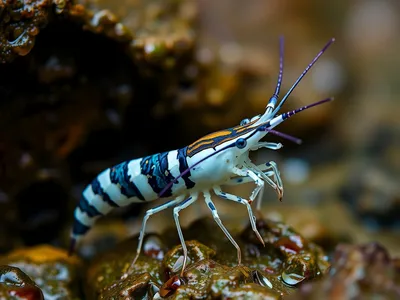
Blue Tiger Shrimp
Caridina cantonensis var. 'Blue Tiger'
The Blue Tiger Shrimp is a striking freshwater invertebrate known for its vivid blue coloration and distinctive black tiger-like stripes. Native to streams and rivers in Southeast Asia, these shrimp are highly sought after in the aquarium hobby for their unique appearance and active behavior. They are relatively small and thrive in clean, well-oxygenated water with stable parameters. Blue Tiger Shrimp are peaceful and social, often seen grazing on biofilm and algae, and can coexist well with other non-aggressive tank mates. Due to their specific care requirements and rarity, they are best suited for experienced aquarists.

Boerboel
Canis lupus familiaris
The Boerboel is a large, powerful dog breed originally developed in South Africa as a farm and estate guardian. Renowned for its protective instincts, intelligence, and strong bonds with family, the Boerboel is both a loyal companion and an effective working dog. This breed is muscular and athletic, with a confident demeanor and a calm, steady nature when properly socialized. While devoted and affectionate with their household, Boerboels require consistent training and early socialization to thrive as family pets.

Broholmer
Canis lupus familiaris
The Broholmer is a large, powerful Danish mastiff-type dog breed originally used for guarding estates and hunting large game such as deer. Distinguished by its robust build, broad head, and calm yet watchful demeanor, the Broholmer is known for its gentle loyalty to its family. This breed nearly went extinct in the mid-20th century but was revived by dedicated enthusiasts. Today, Broholmers are valued as devoted family companions and reliable watchdogs, with an even temperament and strong protective instincts.

Dogo Argentino
Canis lupus familiaris
The Dogo Argentino is a large, muscular dog breed developed in Argentina primarily for big-game hunting, such as wild boar and puma. Renowned for its striking white coat, powerful build, and athleticism, the breed is also known for its courage, intelligence, and loyalty. Dogo Argentinos are highly trainable and protective, making them excellent working dogs and devoted family companions when properly socialized. Because of their strength and prey drive, they require experienced handling and early socialization.
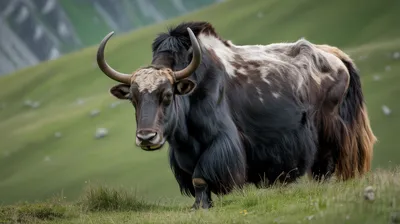
Domestic Yak
Bos grunniens
The domestic yak is a large, long-haired bovine native to the high-altitude regions of the Himalayas and Central Asia. Adapted to cold mountainous environments, yaks possess a thick woolly coat and large lungs that help them thrive at elevations above 3,000 meters. They are integral to the livelihoods of people living in Tibet, Nepal, Mongolia, and surrounding areas, providing milk, meat, wool, and serving as pack animals. Yaks are known for their gentle temperament and impressive stamina, allowing them to navigate rugged terrain with ease.
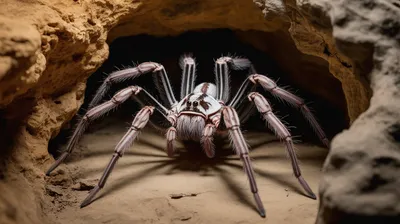
Giant huntsman spider
Heteropoda maxima
The giant huntsman spider is renowned for being the world's largest spider by leg span, which can reach up to 30 centimeters (12 inches). Discovered in Laos in 2001, this arachnid possesses long, crab-like legs and a pale, yellowish-brown body covered in dark spots. Adapted to cave habitats, the giant huntsman is agile and swift, using its speed to ambush prey rather than spinning webs. Its secretive nature and remote habitat make sightings extremely rare, contributing to the spider's mysterious reputation.
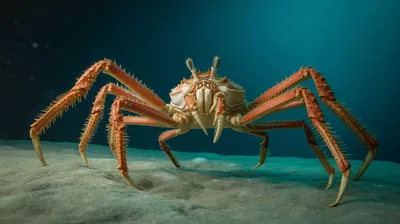
Giant Spider Crab
Macrocheira kaempferi
Macrocheira kaempferi has the greatest leg span of any arthropod that has ever lived, reaching close to 3.7 m from claw tip to claw tip, but the animal itself is far smaller than that number suggests: the carapace is only about 40 cm across, and almost the entire span is spindly leg. It lives on the sea floor off the Pacific coast of Japan, typically between 150 and 300 m, and it is not a predator so much as a slow, patient scavenger and forager, picking through the sediment for dead fish, molluscs and algae. Its legs are so long and thin relative to the body that it walks in a slow, delicate, stilted gait rather than scuttling, and a lost leg is regrown over successive moults. It decorates its shell, planting sponges, kelp and anemones on the carapace so that a resting crab looks like a piece of rock, a habit shared with many smaller spider crabs. In spring it moves into shallower water to breed, which is when the Suruga Bay fishery takes them, and it is a delicacy in the region. Individuals are believed to be long-lived, with estimates running towards a century, though this is genuinely uncertain because the crab stops moulting once mature and there is no reliable way to age it.
Guinea Pig
Cavia porcellus
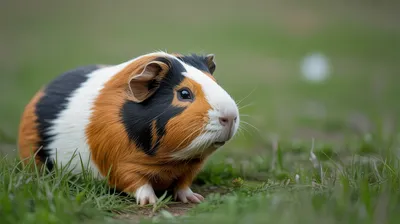
Cavia porcellus is a fully domesticated animal with no wild population anywhere - it was bred from wild cavies in the Andes at least 3,000 years ago, primarily as food, and cuy remains an everyday meat in Peru, Ecuador and Bolivia, where an estimated tens of millions are eaten each year and where a colonial-era painting of the Last Supper in Cusco Cathedral shows a roasted guinea pig on the table. It is neither a pig nor from Guinea; the name is likely a corruption of Guiana or a reference to the ships that carried them, and "pig" to the squealing and the shape. Guinea pigs share a rare handicap with humans, other primates and a few bats: a broken GULO gene, meaning they cannot synthesise vitamin C and must get it from their diet or develop scurvy - which is precisely why they became a laboratory staple, and why the phrase "guinea pig" entered English at all. They are highly social, hyper-vocal - the wheek, the purr, the tooth-chatter each carry distinct meaning - and precocial to a striking degree: newborns arrive furred, eyes open, teeth in, and are running and nibbling solids within hours. Their teeth grow continuously and must be worn down on fibrous hay.
Immortal Jellyfish
Turritopsis dohrnii
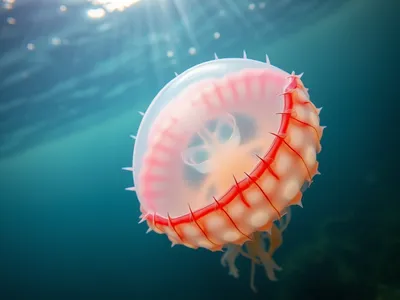
The immortal jellyfish has found a way out of dying of old age. When it is starved, injured or otherwise stressed, the adult medusa does not simply perish: it settles onto a surface, and its cells transdifferentiate — converting directly from one mature cell type into another, which almost nothing else in the animal kingdom can do — and the animal reverts wholesale to the polyp stage it long ago outgrew. From that polyp it buds new medusae, genetically identical to itself. In effect it rewinds to youth, and it can in principle repeat the trick indefinitely. It is not invincible: it can still be eaten, or killed by disease, and in the wild the overwhelming majority die like anything else — the immortality is an escape from ageing, not from predators. It is only a few millimetres across, and has spread across the world's oceans in the ballast water of ships. It is now studied intently for what it might reveal about ageing and cellular reprogramming.
Jungle Curl
Felis catus
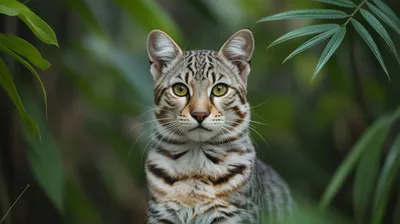
The Jungle Curl is a rare and exotic domestic cat breed known for its distinctive curled-back ears and wild, leopard-like spotted coat. Developed by crossing domestic cats with wildcat hybrids, it retains a playful yet intelligent temperament and adapts well to home environments. The breed is admired for its athletic build, expressive eyes, and unique ear shape, setting it apart from other domestic cats. Jungle Curls are sociable, highly interactive, and form strong bonds with their owners, making them a sought-after breed among enthusiasts.
Kinkalow Cat
Felis catus
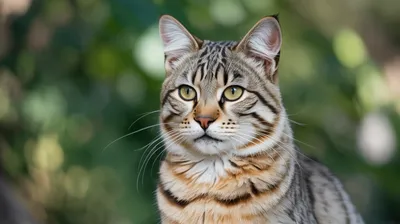
The Kinkalow is a rare, designer breed of domestic cat developed by crossing the Munchkin and the American Curl. This small, playful feline is distinguished by its very short legs and distinctive curled-back ears, giving it a unique and endearing appearance. Kinkalows are known for their friendly, affectionate personalities and high energy, often displaying a kitten-like demeanor well into adulthood. Due to their rarity and hybrid status, Kinkalows are primarily found as companion animals in select homes and catteries.
Liger
Panthera leo × Panthera tigris
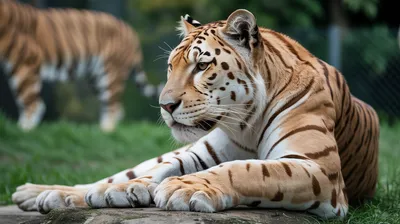
A liger is the offspring of a male lion and a female tiger, and its most striking feature - enormous size, frequently over 3 m and 300 kg, larger than either parent - is not hybrid vigour but a genetic malfunction. In lions, where a female mates with several males, fathers are selected to push offspring growth aggressively at the mother's expense, and mothers are selected to rein it in; the tug-of-war is fought through genomic imprinting, in which certain growth genes are switched on or off depending on which parent they came from. Tigers, being largely solitary and less promiscuous, have a weaker version of this arms race. Cross a lion father with a tiger mother and the lion's growth-promoting imprinted genes meet no matching brake from the tiger side, so growth is never properly switched off. The result is an animal that keeps growing throughout life and frequently suffers for it, with skeletal, cardiac and neurological problems. The reciprocal cross - a tiger father and a lion mother - produces a tigon, which is typically smaller than either parent, exactly as the theory predicts. Male ligers are sterile; females are occasionally fertile. Ligers occur only in captivity, since the parent species barely overlap in the wild and behave completely differently.
Mandalay Cat
Felis catus
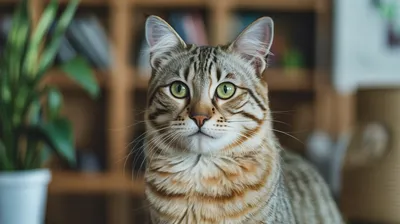
The Mandalay is a rare and elegant domestic cat breed originating from New Zealand, recognized for its striking golden-brown coat and expressive yellow eyes. Developed in the late 20th century by selectively breeding Burmese cats with sable coats, the Mandalay has a short, fine, and glossy fur that shimmers in the light. They are medium-sized, muscular, and known for their affectionate, playful, and highly social temperament. Mandalay cats are intelligent and active, often seeking out human companionship and interactive play. Their unique coloration and outgoing personality make them a favorite among enthusiasts, though they remain quite rare globally.
Marbled Crayfish
Procambarus virginalis
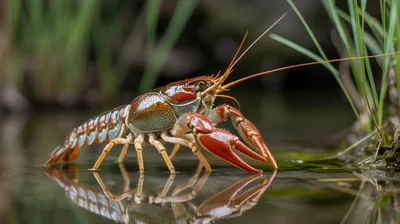
Procambarus virginalis is, as far as anyone can tell, an animal that did not exist before about 1995. It appeared in the German aquarium trade, where hobbyists noticed a crayfish that was reproducing without any males present, and genetic work later showed why: it is triploid, carrying three sets of chromosomes, and it arose from a mating between two slough crayfish, Procambarus fallax, in which one parent contributed an unreduced gamete. The result is an all-female animal that reproduces exclusively by parthenogenesis - every marbled crayfish alive is a clone, and genome sequencing of animals from Germany, Madagascar and the pet trade found them to be effectively genetically identical. It is one of the very few documented cases of a new asexual animal species arising within living memory, and biologists have used it as a natural experiment in how a clonal lineage behaves. It behaves invasively. Released into the wild, a single individual can found a population, and marbled crayfish have exploded across Madagascar - going from a handful of sites to over 100,000 square kilometres in about a decade - threatening endemic crayfish and rice paddies, and they are established in Germany, Slovakia, Ukraine, Japan and elsewhere. The EU has banned them.

Papillon Dog
Canis lupus familiaris
The Papillon is a small, elegant toy dog breed known for its distinctive butterfly-like ears, from which its French name 'Papillon' (meaning 'butterfly') is derived. Highly intelligent and energetic, Papillons are renowned for their agility, quick learning, and sociable nature. Their fine, flowing coat is typically white with patches of color, and they are often seen excelling in dog sports and obedience competitions. Despite their delicate appearance, Papillons are robust and adaptable, making them excellent companions for a variety of households.

Ping-pong tree sponge
Chondrocladia lampadiglobus
The ping-pong tree sponge is a deep-sea sponge known for its unique appearance, resembling a tiny tree adorned with ping-pong ball-like spheres. These white, globular structures are actually specialized appendages used for capturing prey, making this sponge a rare example of a carnivorous sponge. Found at depths exceeding 2,000 meters, it thrives in cold, dark ocean environments where it anchors itself to the seafloor. Its unusual feeding method and alien-like form have fascinated marine biologists since its discovery.

Pointer (English Pointer)
Canis lupus familiaris
The Pointer, often called the English Pointer, is a medium-to-large breed of dog renowned for its athletic build, keen sense of smell, and strong hunting instincts. Developed in England for locating game birds, Pointers are easily recognized by their graceful stance and the characteristic pose of standing still with their nose pointing towards game. They are highly energetic, intelligent, and require ample exercise, making them excellent companions for active families and hunters alike. Their affectionate and even temperament also make them good family pets when given enough mental and physical stimulation.

Pointer (English)
Canis lupus familiaris
The Pointer (English), commonly referred to simply as the Pointer, is a medium-to-large breed of dog originally developed in England for hunting and pointing game birds. Renowned for its athleticism and graceful stance, the breed is characterized by a lean, muscular body, a long neck, and a distinctly straight tail that is held level to the back when 'pointing.' Pointers are highly energetic, intelligent, and affectionate companions, excelling in both fieldwork and as family pets. Their short, smooth coat comes in a variety of colors, most commonly white with liver, lemon, black, or orange markings.
Pumi
Canis lupus familiaris
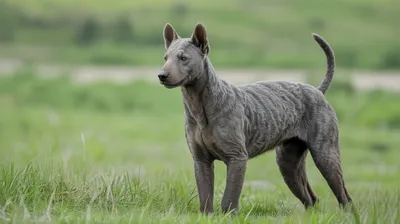
The Pumi is a lively and intelligent herding dog breed originating from Hungary. Distinguished by its curly, dense coat and expressive, upright ears, the Pumi is agile, energetic, and highly alert, making it an excellent working dog and companion. Traditionally used for herding sheep and cattle, the Pumi is known for its quick movements and keen sense of hearing. Its playful yet focused nature makes it well-suited to active families and various canine sports. With proper training and socialization, the Pumi thrives as both a working dog and a devoted family member.
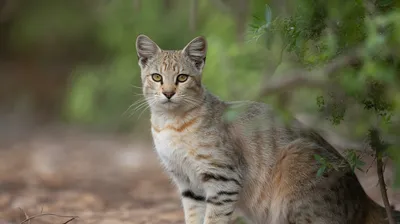
Raas Cat
Felis catus
The Raas cat is a rare and unique domestic cat breed originating from Raas Island, off the coast of East Java, Indonesia. It is known for its striking appearance, often featuring a solid blue-gray or black coat, and its robust, muscular build. The Raas cat is prized locally for its intelligence, agility, and loyal temperament, making it both a skilled hunter and a valued companion. This breed is deeply woven into Indonesian folklore and is considered a symbol of good fortune by the islanders. Due to its isolated island origin, the Raas cat has remained genetically distinct from many other domestic breeds.

Somali Cat
Felis catus
The Somali cat is a long-haired breed of domestic cat, often described as the long-haired variety of the Abyssinian. It is known for its fox-like appearance, with a bushy tail, large ears, almond-shaped eyes, and a soft, ticked coat that comes in various colors. Somali cats are highly energetic, playful, and intelligent, often enjoying interactive games and companionship. Their affectionate and curious nature makes them popular pets for families and individuals alike. Despite their luxurious coats, they are relatively easy to groom compared to other long-haired breeds.
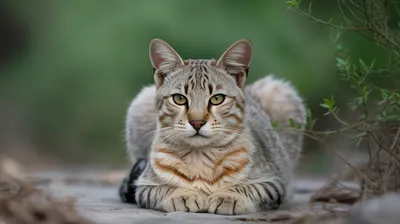
Suphalak Cat
Felis catus
The Suphalak is a rare and ancient domestic cat breed native to Thailand, known for its striking solid copper or reddish-brown coat. This breed is renowned for its muscular build, golden or yellow eyes, and smooth, close-lying fur. Historically, the Suphalak was considered a symbol of wealth and good fortune in Thai culture and is mentioned in the centuries-old Tamra Maew or 'Cat Book Poems.' Due to its rarity, the Suphalak is seldom seen outside Thailand and is closely related to other native Thai breeds such as the Burmese and the Korat.
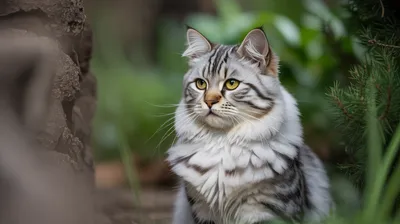
Tiffany (Chantilly) Cat
Felis catus
The Tiffany, also known as the Chantilly or Chantilly-Tiffany, is a rare domestic cat breed known for its luxurious semi-longhaired coat and striking golden eyes. Originally developed in North America in the late 1960s, this breed features a soft, silky coat that is most often found in rich chocolate brown, but can also appear in other solid colors. Chantilly cats are recognized for their gentle, affectionate temperament and their tendency to bond closely with their human families. While once nearly extinct, small dedicated breeding programs have kept the breed alive, though it remains very rare today.

Tosa Inu
Canis lupus familiaris
The Tosa Inu, also known simply as the Tosa, is a large and powerful dog breed originating from Japan. Originally bred as a fighting dog, the Tosa combines the size and strength of Western breeds with the agility and spirit of Japanese dogs. This breed is known for its calm, patient demeanor and loyalty toward its family, but can be reserved or protective around strangers. The Tosa is muscular, with a short, dense coat usually in shades of red, fawn, or brindle. Because of its history and strength, it requires experienced ownership and early, consistent training.