
About the Takin
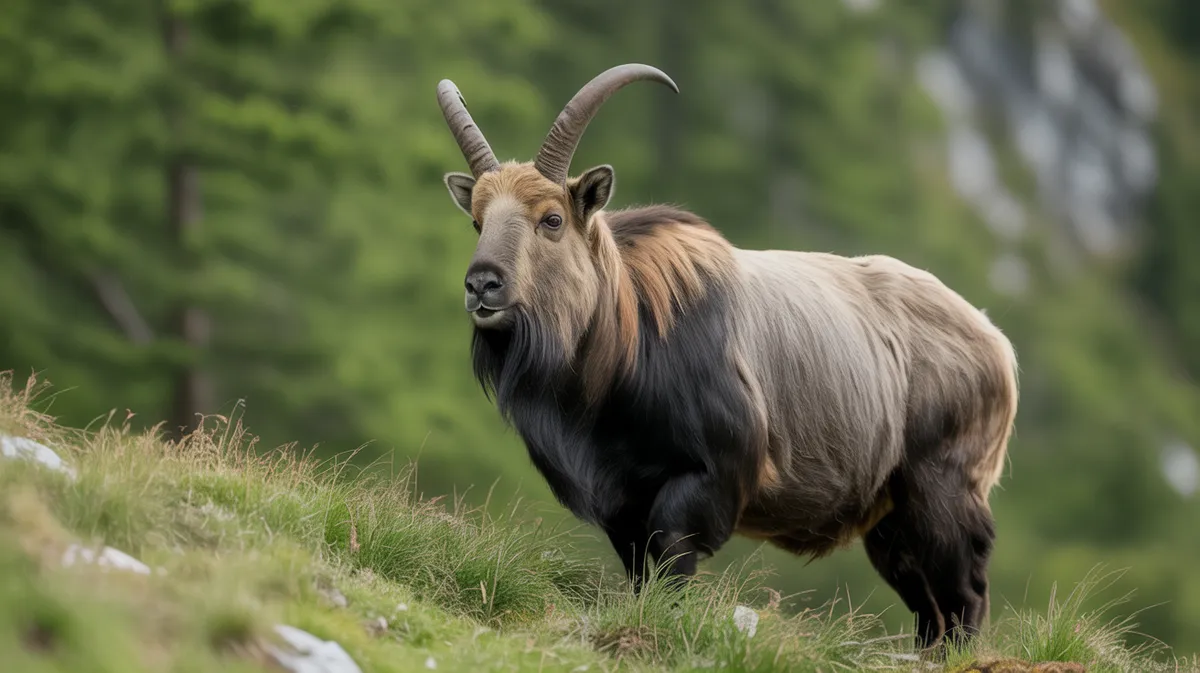
The takin (Budorcas taxicolor) is a heavy, ox-nosed goat-antelope of the eastern Himalayas and the mountains of western China, the national animal of Bhutan, and it looks like a committee assembled it from a musk ox, a wildebeest and a bison. It is in fact a caprine, in the same subfamily as sheep and goats, and its bulk, up to 350 kilograms, makes it one of the largest members of that group. Two features stand out. The nose is unusually large and bulbous, with a big sinus cavity, which is thought to warm and humidify the frigid air of the 3,000- to 4,000-metre bamboo and rhododendron thickets it lives in. And unlike most bovids, which have discrete scent glands on the face or feet, the takin secretes an oily, strong-smelling substance across the entire surface of its skin, which coats and waterproofs the coarse coat in wet mountain forest; the smell has been compared to burnt oil. Takin migrate seasonally up and down the mountainside, gathering in herds of dozens on high summer pastures and dispersing into forest in winter, and they cut and maintain well-worn trails through dense bamboo. The golden takin of the Qinling Mountains, with its pale, gleaming coat, has been suggested, romantically and unprovably, as an origin for the legend of the Golden Fleece.
Fascinating facts
Unusual Appearance
Takins look like a blend of goat, antelope, and muskox, with a large, blunt nose and arching horns on both males and females.
Weatherproof Coat
Their oily, thick coat protects them from the damp and cold of their high-altitude habitats, acting as a natural raincoat.
Mountain Dwellers
Takins are accomplished climbers, navigating steep forests and alpine meadows at elevations up to 4,500 meters (14,700 feet).
Detailed description
The takin (Budorcas taxicolor) is a robust, heavily built ungulate characterized by a deep-chested body, short but powerful limbs, and a distinctive, large arched nose. Adults typically measure 170–220 cm in body length, stand 100–140 cm at the shoulder, and weigh between 250–400 kg, with males generally larger than females. Their dense, oily coat, ranging from golden-yellow to dark brown depending on the subspecies, provides insulation against the cold, damp climates of their high-altitude habitats. Both sexes possess stout, upward- and backward-curving horns that can reach up to 64 cm in length. The takin's broad, flexible muzzle is adapted for browsing a wide variety of vegetation, including leaves, grasses, bamboo shoots, and woody plants. Socially, takins are gregarious, forming herds of up to 300 individuals during the summer when food is abundant, though smaller groups or solitary animals are more common in winter. They are crepuscular, being most active during early morning and late afternoon, and display seasonal altitudinal migrations, descending to lower elevations in winter. Their vocalizations include coughs, whistles, and snorts, used for communication within the herd. The species is well adapted to steep, rugged terrain, using their strong legs and specialized hooves to traverse rocky slopes and dense undergrowth.
Did you know?
The takin's appearance is so unusual that it is thought to have inspired the legend of the 'golden fleece' in Greek mythology.
Research & sources
Wikipedia summary
The takin, also called cattle chamois or gnu goat, is a large species of ungulate of the subfamily Caprinae found in the eastern Himalayas. It includes four subspecies: the Mishmi takin, the golden takin, the Tibetan takin, and the Bhutan takin.
Behaviour & social structure
Takins are primarily browsers, feeding on a diverse array of plant materials such as leaves, twigs, grasses, herbs, and bamboo shoots. They often stand on their hind legs to reach higher foliage, a behavior reminiscent of goats. Herds are matriarchal, led by an older female, with adult males joining only during the breeding season. Outside the rut, mature males are more solitary or form small bachelor groups. Takins use scent-marking from specialized glands near their eyes and on their hooves to communicate territory and reproductive status. They are known for their agility on steep, rocky slopes and can move quickly through dense forest. Daily routines involve foraging during cooler periods and resting in shaded or sheltered areas during midday. When threatened, takins may emit loud cough-like alarm calls and retreat to thick vegetation or rocky outcrops for protection.
Reproduction & life cycle
The breeding season, or rut, occurs from July to August. During this time, males compete for access to females, engaging in displays and occasional head-butting contests. After successful mating, females undergo a gestation period of approximately 7–8 months (about 210–220 days). Calving typically occurs in late winter or early spring (February–April), with females giving birth to a single calf, though twins are rare. Newborns are precocial, able to stand and move within hours of birth. Mothers are highly protective, hiding their calves in dense vegetation for the first few weeks. Calves are weaned at around 6 months but may remain with the mother for up to a year. Sexual maturity is reached at 2.5–4 years of age.
Adaptations & survival
Takins exhibit several unique adaptations for survival in high-altitude, cold environments. Their thick, oily coat repels rain and insulates against low temperatures and humidity. The large, moose-like nose contains complex nasal sinuses that warm and humidify cold air before it reaches the lungs, reducing heat loss and preventing dehydration. Their robust build and strong limb musculature enable them to navigate steep, rocky terrain with ease. The broad, splayed hooves provide stability on uneven surfaces. Social behaviors such as herding offer protection from predators and facilitate cooperative foraging. Seasonal migrations allow takins to exploit different altitudinal zones for optimal food availability and shelter.
Cultural significance
The takin holds deep cultural significance in Bhutan, where it is the national animal and features prominently in folklore and religious symbolism. According to legend, the takin was created by the 15th-century Buddhist saint Drukpa Kunley, who combined the head of a goat with the body of a cow, explaining the animal's unusual appearance. Takins are also depicted in traditional art and are sometimes associated with strength and resilience. In China, the golden takin is a protected species and a symbol of regional biodiversity. While not widely used in traditional medicine today, some historical records indicate that takin parts were once valued for their supposed medicinal properties.
Recent research
Recent research has focused on takin population genetics, revealing significant genetic differentiation among the four recognized subspecies: Mishmi (B. t. taxicolor), Golden (B. t. bedfordi), Tibetan (B. t. tibetana), and Bhutan (B. t. whitei) takins. Ongoing studies use GPS telemetry to track seasonal movements and habitat use, informing conservation planning. Ecological research has highlighted the takin's role as a keystone browser, influencing forest structure and plant community dynamics. Conservation genetics studies are underway to assess the impact of habitat fragmentation and guide reintroduction efforts. There is growing interest in the effects of climate change on takin distribution and the potential for assisted migration or habitat corridors.
Sources
Budorcas taxicolor: Taxonomy, Ecology, and Conservation
Song, Y.-L., Smith, A.T., MacKinnon, J. (2008)
scientificIUCN Red List of Threatened Species: Budorcas taxicolor
IUCN SSC Caprinae Specialist Group
conservationPhylogeography and genetic diversity of the takin (Budorcas taxicolor)
Li, M., et al. (2010)
scientificVideos
Habitat
Mountain forests and alpine meadows
 Various Continental Regions
Grassland
Open areas dominated by grasses rather than trees, supporting numerous herbivores and their predators.
 Elevated Terrain
Mountain
High-altitude environments with varying climates and specialized wildlife adapted to rugged terrain and thin air.
 Global
Forest
Wooded areas with significant tree cover and diverse plant and animal communities.
Conservation
The Takin is currently classified as Vulnerable on the IUCN Red List.
Threats & challenges
Major threats to takin populations include habitat loss and fragmentation due to logging, agricultural expansion, and infrastructure development. Poaching for meat, horns, and traditional medicine also poses significant risks, especially in areas with limited enforcement. Human disturbance, such as livestock grazing and tourism, can disrupt migration routes and breeding grounds. Climate change may further impact their alpine habitats, altering vegetation patterns and increasing competition with domestic livestock. Population trends are generally declining, with local extinctions reported in some regions. Conservation challenges include the need for transboundary habitat protection, anti-poaching measures, and community engagement.
Taxonomy
Scientific name
Budorcas taxicolor
- Kingdom
- Animalia
- Phylum
- Chordata
- Class
- Mammalia
- Order
- Artiodactyla
- Family
- Bovidae
- Genus
- Budorcas
- Species
- taxicolor
Where to see a takin
5 zoos and aquariums in 2 countries are recorded as keeping this species.
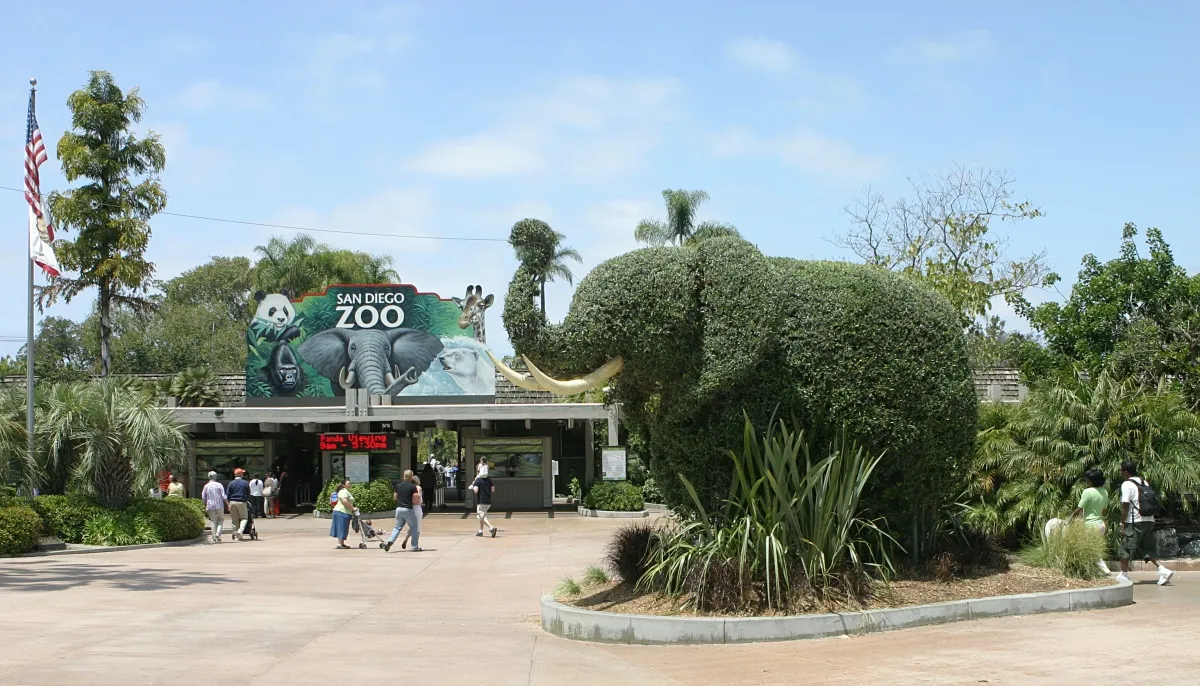 San Diego Zoo🇺🇸 San Diego, United States
 Tierpark Hellabrunn🇩🇪 München, Germany
 Metro Richmond Zoo🇺🇸 Moseley, United States
 Cincinnati Zoo and Botanical Garden🇺🇸 United States
- 🦁Peoria Zoo🇺🇸 United States
Community notes
Share your observations about the Takin.
No community notes yet. Be the first!
Discover more wildlife
More fascinating animals from the encyclopedia.