
About the Yellow-eyed Penguin
The yellow-eyed penguin, or hoiho (Megadyptes antipodes), of southern New Zealand and its subantarctic islands is one of the rarest penguins in the world, and its mainland population has fallen to somewhere around a hundred breeding pairs. It breaks the penguin rule of colonial nesting. Pairs will not nest within sight of another pair, and they require visual barriers, dense coastal forest, flax and scrub, in which each nest is screened; where the vegetation has been cleared for pasture and the birds are forced into the open, breeding success collapses, which is why habitat restoration for this species is essentially a matter of replanting shrubs. Its foraging is also unusual. Most penguins hunt in the water column; the hoiho is a benthic forager, diving 40 to 120 metres straight to the seafloor and working along the bottom for opalfish, blue cod and squid, spending most of each dive on the substrate. This ties it to a particular kind of seabed and makes it vulnerable to trawling and to warming water. Chicks are killed by introduced stoats, ferrets and cats, and by avian diphtheria; adults drown in set nets. The Maori name hoiho, meaning noise shouter, refers to its shrill call. It is not closely related to the crested penguins and is the sole member of its genus.
Fascinating facts
Distinctive Eyes
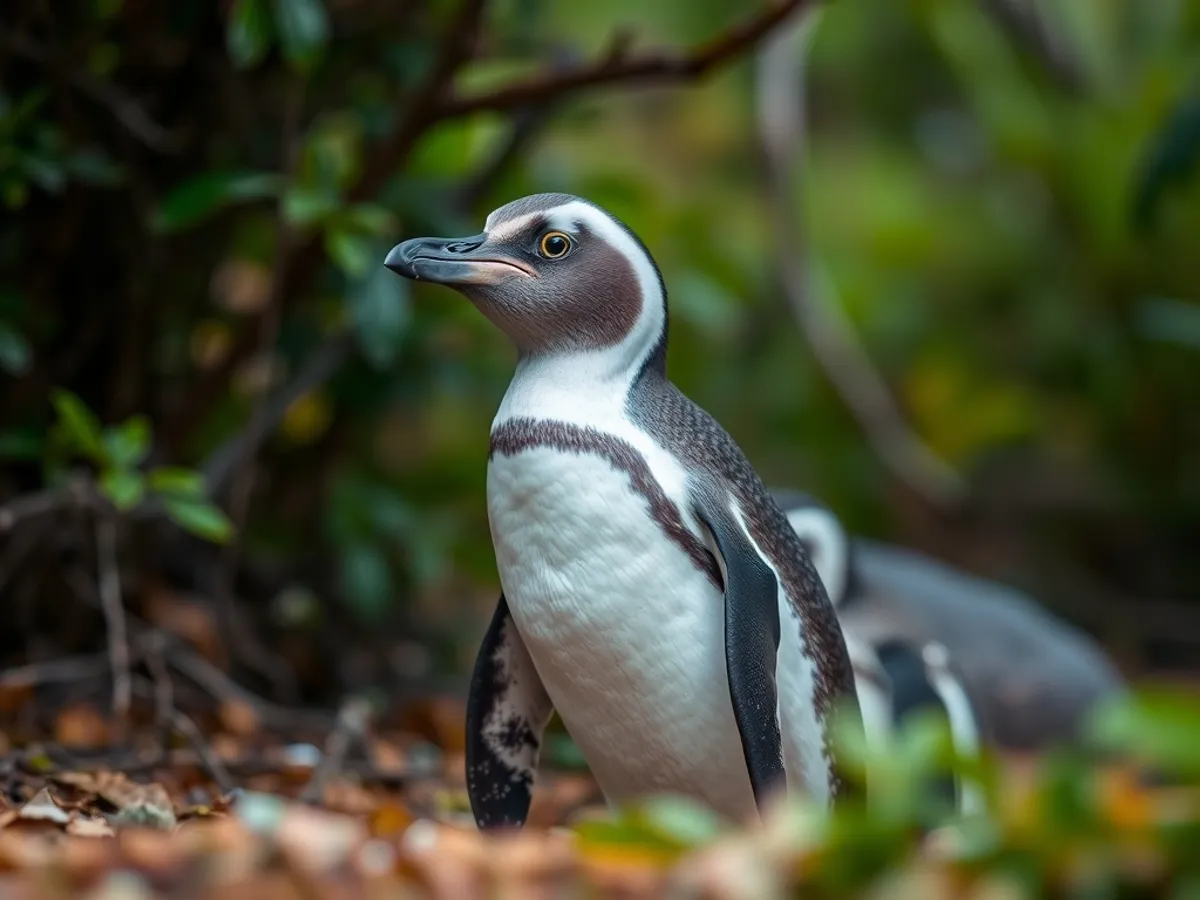
The species gets its name from its unique pale yellow eyes, which are rare among penguins and are a key identification feature.
Secretive Nesters
Yellow-eyed Penguins prefer to nest in dense coastal vegetation, often out of sight of other penguins to minimize social interactions.
Diving Hunters
Their diet consists mainly of fish and squid, which they hunt by making long, deep dives offshore, sometimes reaching depths of over 100 meters.
Detailed description
The Yellow-eyed Penguin (Megadyptes antipodes), or hoiho, is a medium-sized penguin, standing 62–79 cm tall and weighing between 3–8.5 kg, with males typically larger than females. It is instantly recognizable by its pale yellow eyes and a vivid yellow band of feathers that extends from each eye around the occiput, contrasting with its slate-grey head and back. The underparts are white, and the flippers are pinkish with black margins. This species is largely solitary outside of the breeding season, unlike many other penguins that nest in colonies. Yellow-eyed Penguins are highly territorial, maintaining significant distances—sometimes over 50 meters—between nests. They are strong swimmers, capable of foraging up to 20 km offshore and diving to depths of 40–120 meters, with recorded dives as deep as 160 meters. Their vocalizations are relatively quiet compared to other penguins, possibly an adaptation to their forested nesting habitats. The species is long-lived for a penguin, with individuals reaching 20 years in the wild. Their plumage is dense and waterproof, providing insulation in cold waters. Juveniles lack the yellow eye band, which develops gradually as they mature.
Did you know?
Yellow-eyed Penguins are so rare that fewer than 2,000 breeding pairs remain in the wild, making them one of the rarest penguin species globally.
Research & sources
Wikipedia summary
The yellow-eyed penguin, known also as hoiho, is a species of penguin endemic to New Zealand. It is the sole extant species in the genus Megadyptes.
Behaviour & social structure
Yellow-eyed Penguins are diurnal, spending daylight hours foraging at sea and returning to land in the late afternoon or evening. They are solitary hunters, feeding primarily on demersal fish such as red cod, opal fish, and silversides, as well as squid and crustaceans. Foraging trips can last from several hours to multiple days during chick-rearing periods. On land, they are secretive and avoid open spaces, preferring to move through dense vegetation to reach their nests. Social interactions are limited outside of the breeding season, with adults showing strong territorial aggression during nesting. They communicate through a range of low-frequency brays and hisses, mainly during courtship or territorial disputes. Preening is a common daily activity, essential for maintaining feather condition and waterproofing.
Reproduction & life cycle
Yellow-eyed Penguins are monogamous, often forming long-term pair bonds that may last for many years. The breeding season begins in August–September, with nest building in secluded forest or scrubland sites, often under dense vegetation or fallen logs. Both sexes participate in nest construction, using twigs, grass, and leaves. Females typically lay two eggs in September–October, with both parents sharing incubation duties over a 39–51 day period. After hatching, chicks are brooded and guarded for the first 3–6 weeks, then left alone while both parents forage. Chicks fledge at around 100–120 days, usually in February–March. Breeding success is highly variable and sensitive to food availability, predation, and disease.
Adaptations & survival
Yellow-eyed Penguins have evolved several unique adaptations for survival. Their cryptic plumage and preference for nesting in dense vegetation reduce predation risk. Their strong, streamlined bodies and powerful flippers enable deep, sustained dives in pursuit of benthic prey. The yellow eye band may play a role in species recognition or mate selection. Their solitary nesting behavior minimizes competition and disease transmission. Physiologically, they possess a counter-current heat exchange system in their flippers and legs to conserve body heat in cold waters. Their vocalizations are adapted for short-range communication in dense forest environments.
Cultural significance
The Yellow-eyed Penguin, or hoiho, holds significant cultural value for Māori, who regard it as a taonga (treasure) species. Its distinctive appearance and rarity have made it an iconic symbol of New Zealand’s unique biodiversity. The hoiho features in local folklore and is a flagship species for conservation efforts, drawing ecotourism interest and supporting community-based conservation initiatives. It does not have a history of traditional use as food or material, but its protection is enshrined in New Zealand law and conservation policy.
Recent research
Recent research has focused on the genetic diversity of the species, revealing low variability and highlighting the risk of inbreeding depression. Studies using satellite telemetry and time-depth recorders have provided detailed insights into foraging ranges and habitat use, informing marine protection strategies. Ongoing research is investigating the impacts of disease outbreaks and the effectiveness of predator control programs. The discovery of two extinct subspecies, M. a. waitaha and M. a. richdalei, through ancient DNA analysis, has shed light on the species’ evolutionary history and the effects of human colonization on New Zealand’s avifauna.
Videos
Habitat
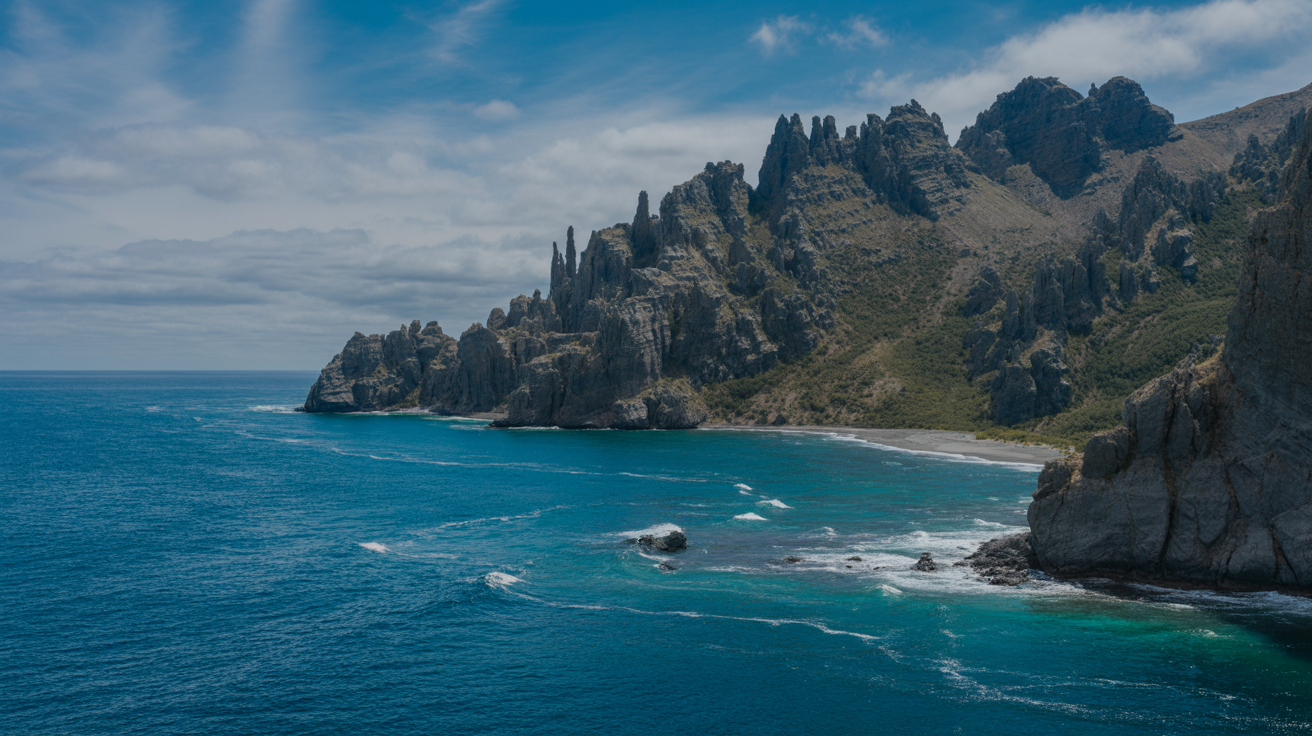
Coastal forest and scrubland

Conservation
The Yellow-eyed Penguin is currently classified as Endangered on the IUCN Red List.
Threats & challenges
The species faces multiple threats, including habitat loss due to deforestation and coastal development, predation by introduced mammals (stoats, ferrets, dogs, cats), and disease outbreaks such as diphtheritic stomatitis and avian malaria. Fisheries bycatch and competition for food with commercial fisheries also pose significant risks. Climate change impacts, including ocean warming and changes in prey distribution, are increasingly affecting foraging success and chick survival. Human disturbance, particularly during the breeding season, can lead to nest abandonment. The population is estimated at fewer than 2,000 mature individuals and is declining, with some local populations facing imminent extinction without intervention.
Taxonomy
Scientific name
Megadyptes antipodes
- Kingdom
- Animalia
- Phylum
- Chordata
- Class
- Aves
- Order
- Sphenisciformes
- Family
- Spheniscidae
- Genus
- Megadyptes
- Species
- antipodes
Community notes
Share your observations about the Yellow-eyed Penguin.
No community notes yet. Be the first!
Discover more wildlife
More fascinating animals from the encyclopedia.