
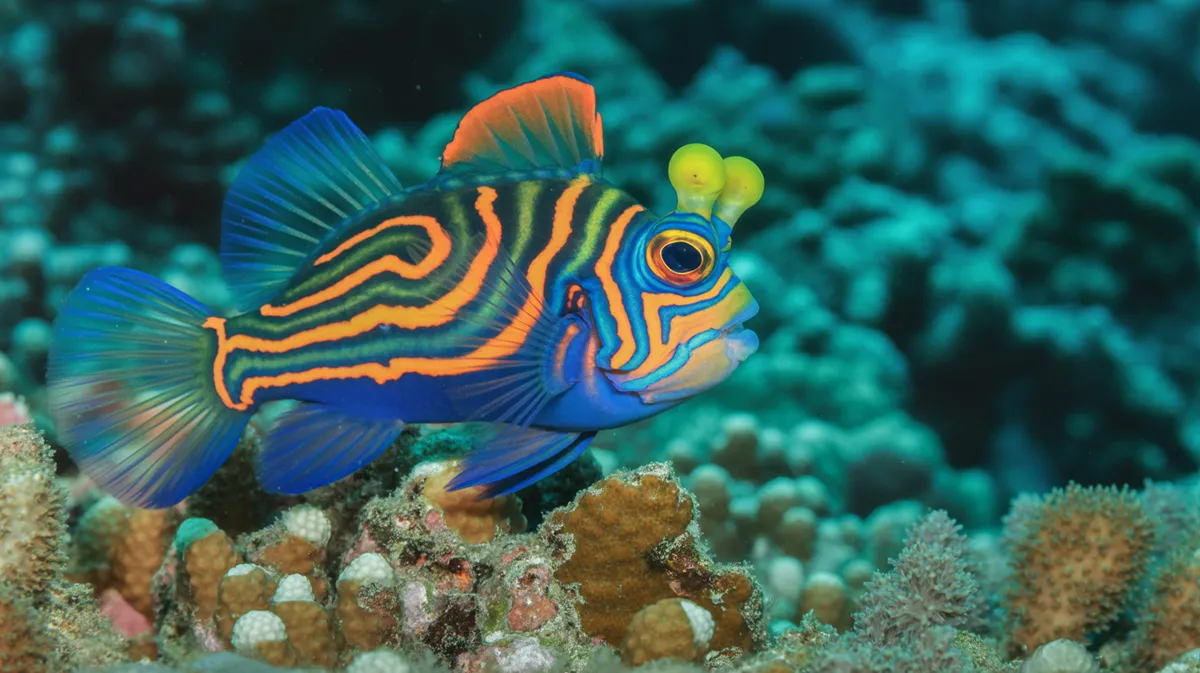
Nature is the greatest artist of all, and a handful of animals wear its boldest work. From fish that glow like neon signs to butterflies that shimmer in colours no pigment can make, the most colorful animals on Earth use their palettes to attract mates, warn enemies, and dazzle rivals. This entry in our Nature's Record-Breakers series celebrates the planet's most vivid creatures — and the surprising science of how they get their colour.
It rounds out the series alongside the weirdest animals and the loudest. A key idea runs through the list: much of the most intense colour in nature isn't pigment at all, but structure — microscopic architecture that bends light.
1. Mandarinfish
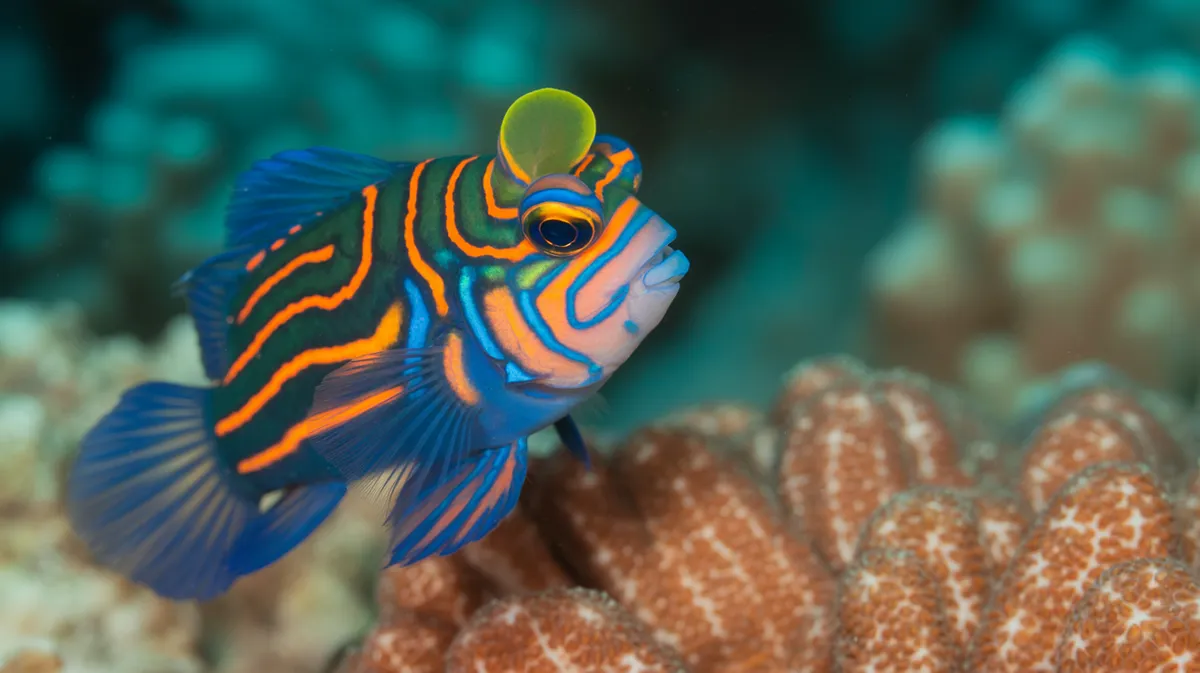
This tiny reef fish from the Pacific is one of the only animals on Earth with true blue pigment in its skin — almost every other "blue" animal fakes it with light tricks. Swirled in electric orange, blue, and green, the mandarinfish looks hand-painted.
Its blue isn't reflected light but genuine cellular pigment, a rarity that makes the mandarinfish one of the only truly blue animals on Earth. The colours double as a warning, advertising a foul-tasting, toxic mucus that coats its scaleless skin.
2. Peacock
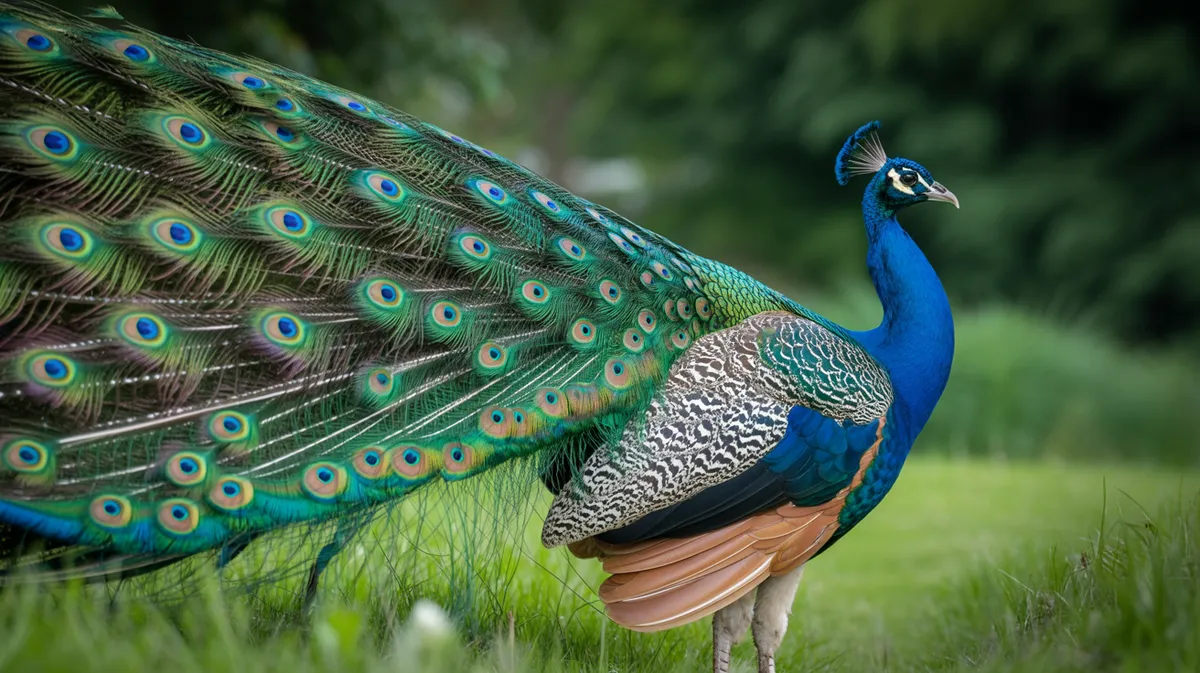
The peacock's train isn't actually green and gold by pigment — it's microscopic crystal-like structures that scatter light into shimmering iridescence. As the bird moves, the colours shift, a living display engineered entirely from nanostructure and sunlight.
When a peacock fans and shivers its train, it creates a shimmering, ever-shifting display that peahens judge closely when choosing a mate. The vibration even generates a low-frequency sound, below human hearing, that may be part of the courtship signal.
3. Blue Morpho Butterfly
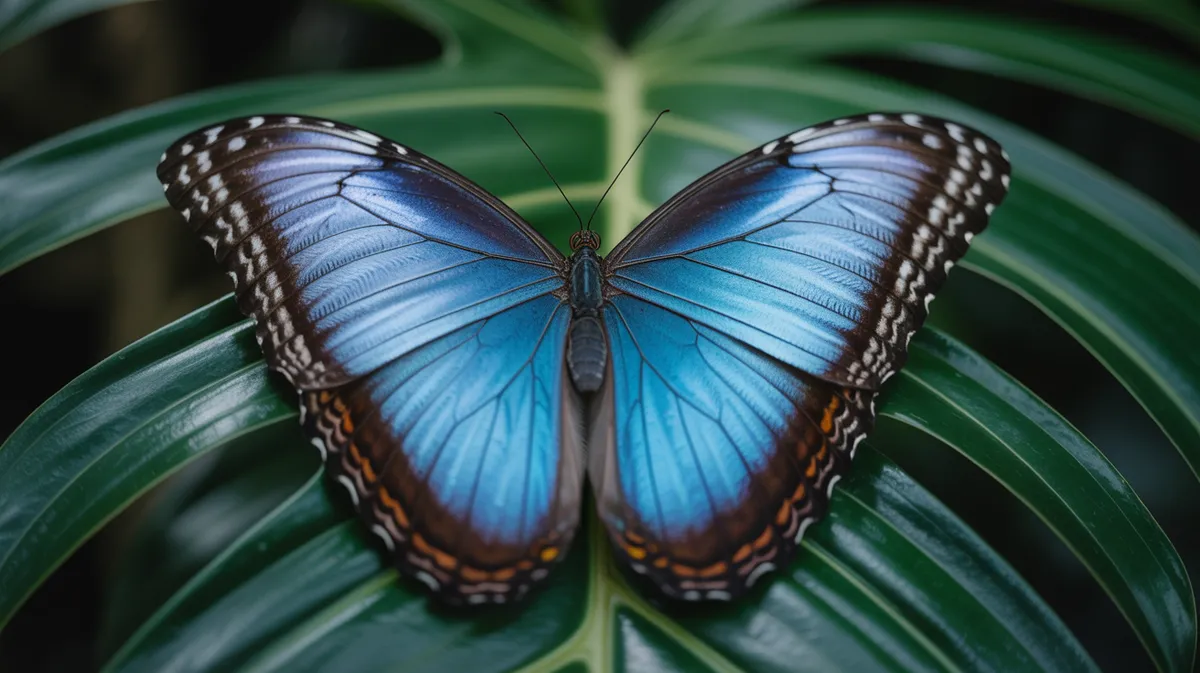
The blue morpho's wings have no blue pigment whatsoever. Their brilliant, metallic blue comes purely from layered scales that reflect blue wavelengths — "structural colour" so intense the butterfly can be spotted flashing through the rainforest from far away.
Because the colour is structure rather than pigment, it flashes brilliantly as the wings beat and all but vanishes when they close to show drab brown undersides — a built-in disappearing act. The effect is so striking that engineers study morpho wings to design fade-proof paints and displays.
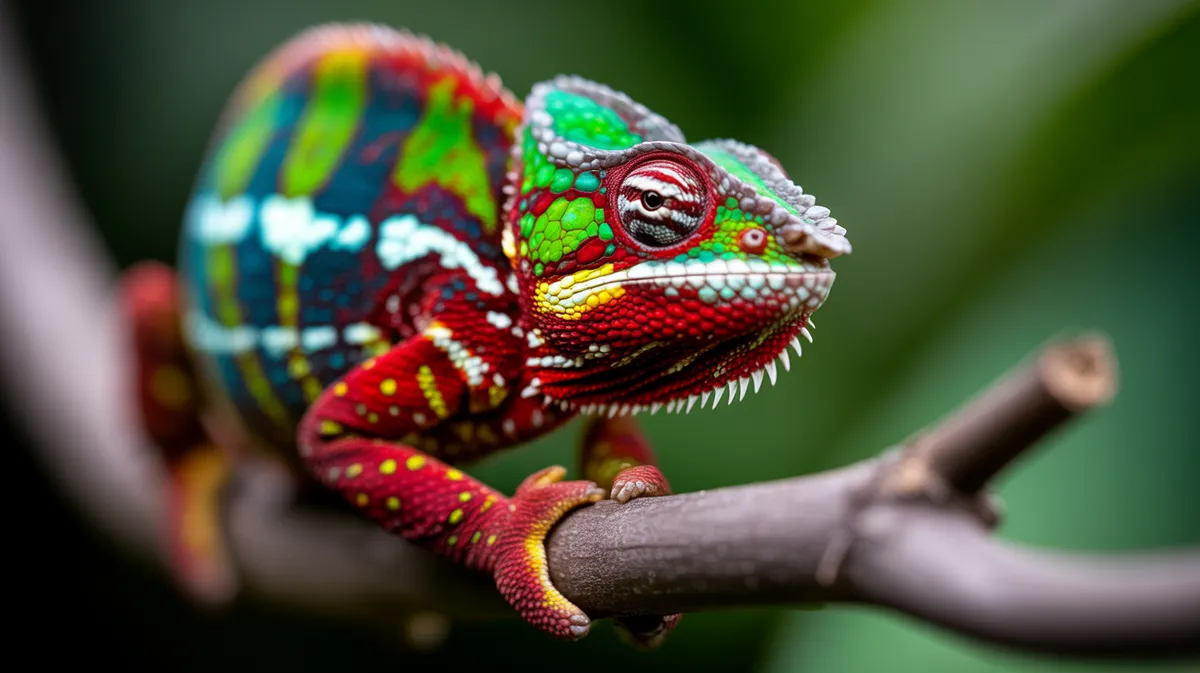
4. Panther Chameleon
Madagascar's panther chameleon doesn't just blend in — it puts on a show, shifting through reds, blues, greens, and yellows. It does so by actively rearranging tiny crystals in its skin cells, tuning which wavelengths bounce back to signal mood, territory, and readiness to mate.
Different regions of Madagascar produce wildly different colour forms, from fiery red to electric blue, almost like living local flags. By tuning the spacing of crystals in special skin cells, the chameleon can shift its appearance within seconds to signal aggression, fear, or readiness to mate.
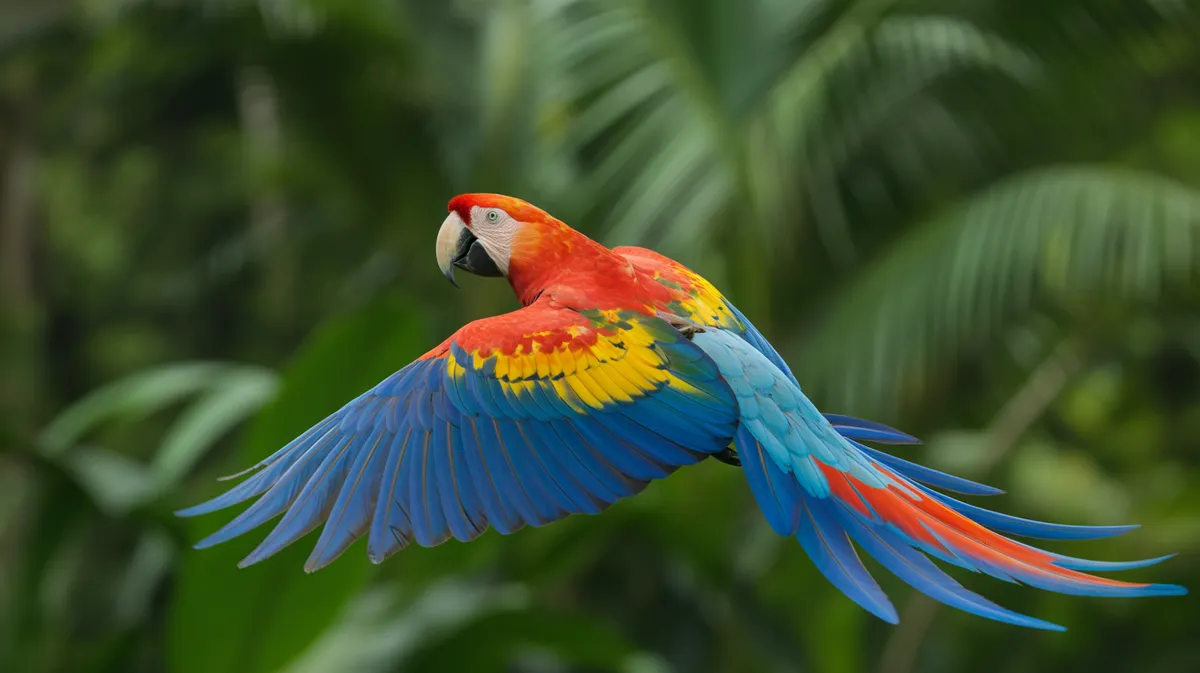
5. Scarlet Macaw
A riot of red, yellow, and blue, the scarlet macaw is among the most flamboyant birds in the Americas. Its bold plumage helps pairs and flocks recognise one another across the dense canopy — and has made it, sadly, a prize for the pet trade.
Their bold colours come from special pigments called psittacofulvins that parrots uniquely manufacture in their own feathers. Highly intelligent and long-lived, scarlet macaws mate for life and fill the rainforest with calls as raucous as their plumage is bright.
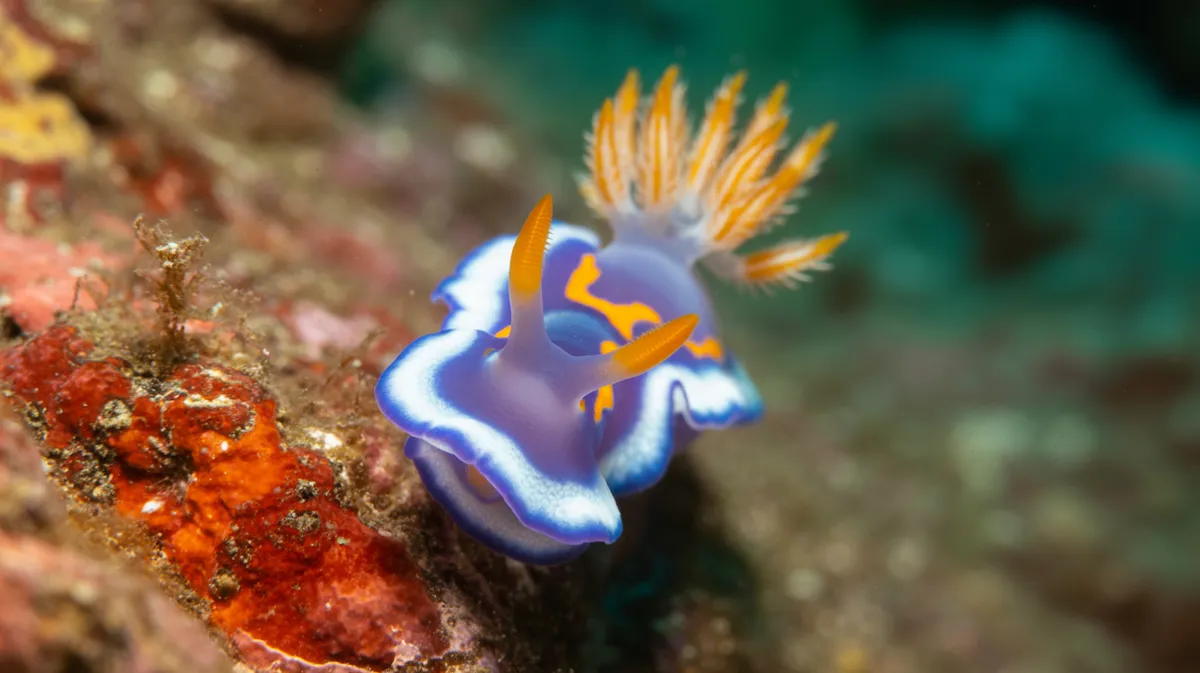
6. Nudibranch
These shell-less sea slugs come in psychedelic combinations of colour that seem almost unreal. The brilliance is usually a warning: many nudibranchs are toxic or sting, and their loud colours tell predators not to bother.
Many nudibranchs get their colours and even their weapons from their food, recycling the stinging cells of jellyfish or the toxins of sponges into their own bodies. With over 3,000 known species in nearly every colour imaginable, they are among the most flamboyant animals in the sea.
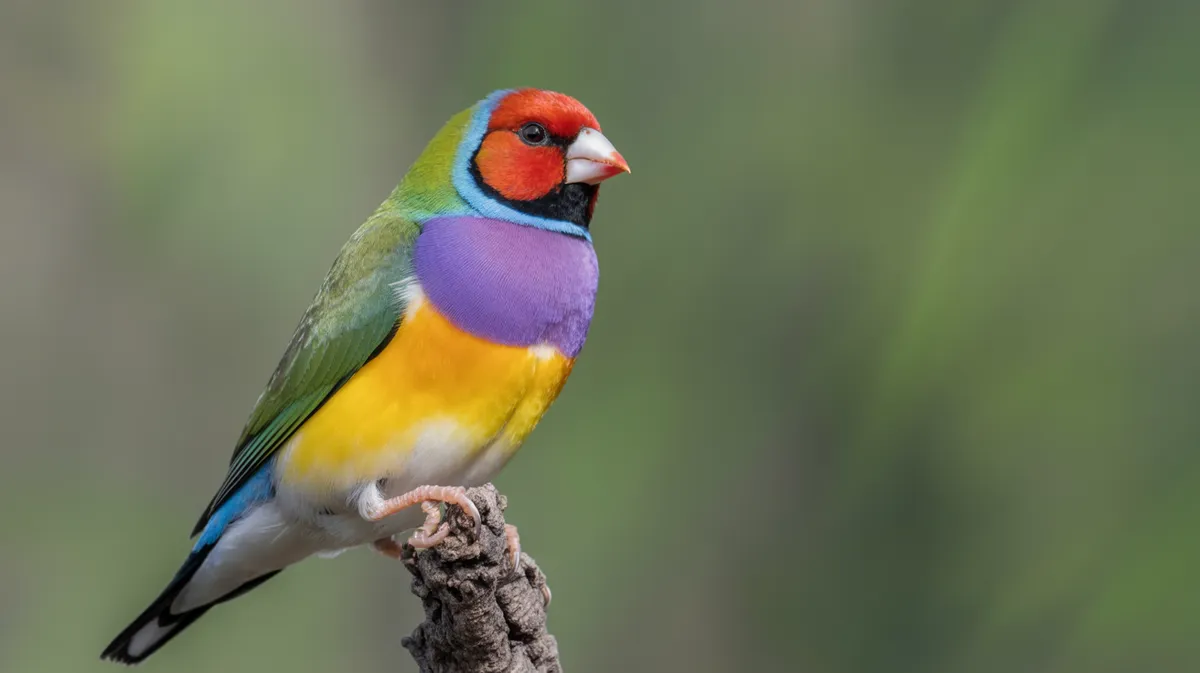
7. Gouldian Finch
Often called the "rainbow finch," this small Australian bird looks airbrushed in purple, yellow, green, and red, with a head that can be black, red, or gold. Few birds pack so many bold colours onto so small a frame.
Remarkably, the same species comes with different head colours — black, red, or yellow — and the birds can tell these morphs apart when choosing mates. Once abundant across northern Australia, the rainbow finch has declined sharply, making its riot of colour increasingly rare in the wild.
8. Mandarin Duck
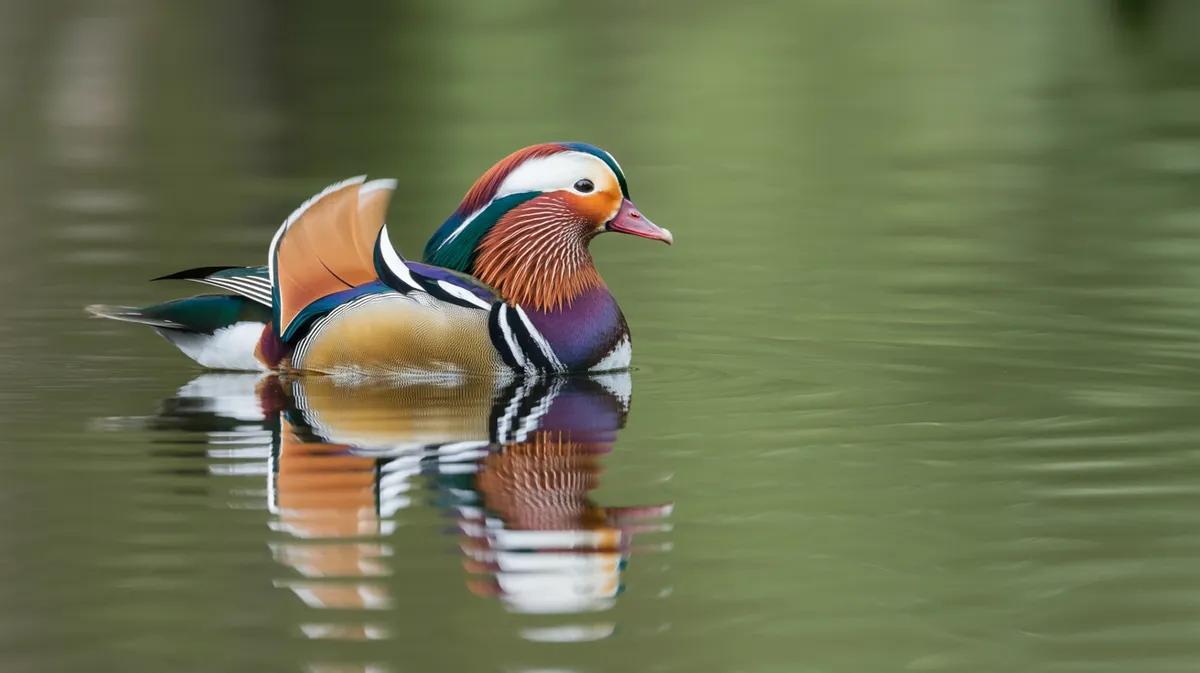
The male mandarin duck is so ornately patterned — coppery whiskers, purple breast, orange "sail" feathers — that it looks like a carved ornament. The finery is all about courtship; the drab brown females do the choosing.
Revered in East Asia as a symbol of love and fidelity, pairs are often given as wedding gifts. Outside the breeding season the male moults into drab 'eclipse' plumage almost identical to the female's, only to repaint himself in full splendour when courtship returns.
9. Poison Dart Frog
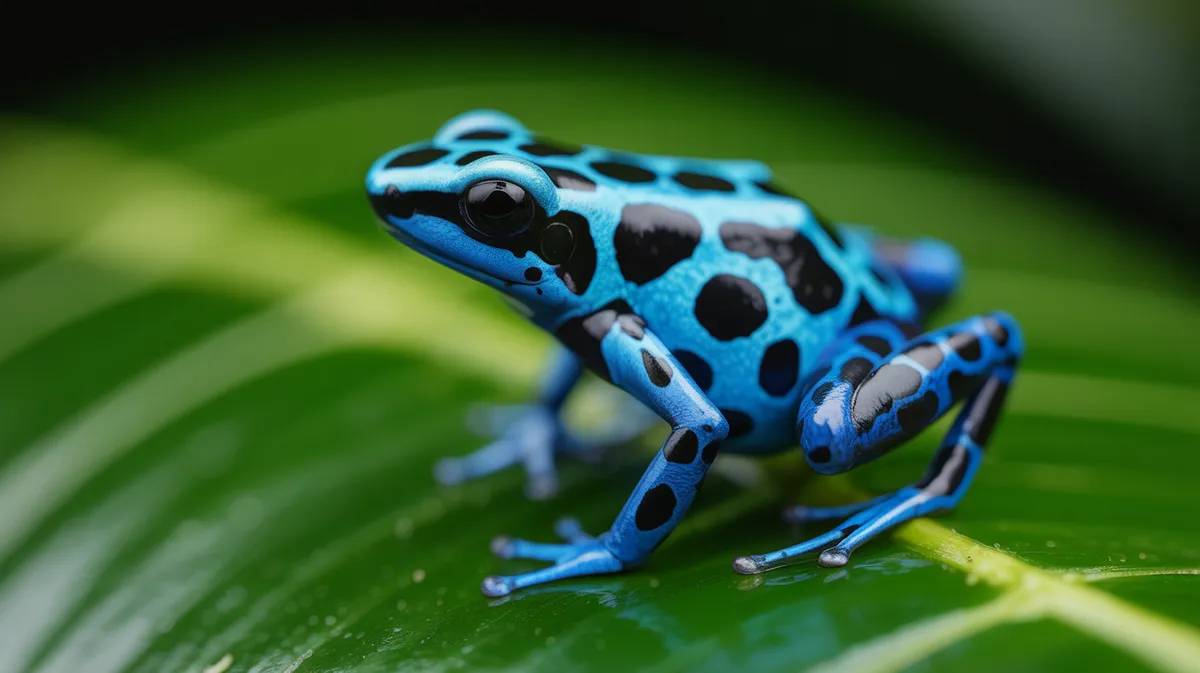
The dazzling colours of poison dart frogs (also on our most venomous list) are a billboard: don't eat me. Called aposematism, this honest advertising pairs brilliant blues, reds, and yellows with genuinely dangerous toxins.
This is honest advertising taken to an extreme: generally the brighter and bolder the frog, the more toxic it is, and predators quickly learn to leave it alone. Some species gain their poison from their diet, so frogs raised in captivity lose both the toxin and the deadly reputation that protects them.
10. Resplendent Quetzal
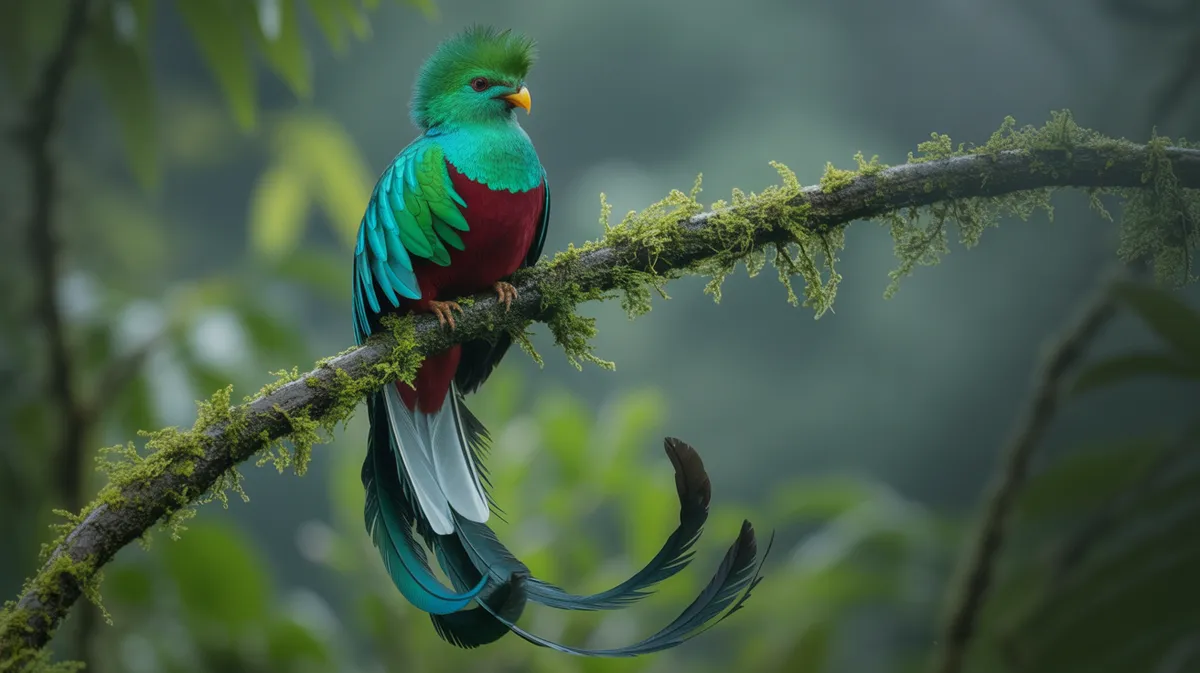
Revered by the ancient Maya and Aztecs, the resplendent quetzal trails iridescent emerald tail feathers up to a metre long, set against a crimson breast. Its shimmering green is, once again, structural colour — light engineered into living jewellery.
The male's iridescent tail streamers can be longer than its entire body, trailing behind it in shimmering ripples as it flies. So sacred was the quetzal to ancient Mesoamerican cultures that killing one was a crime, and its feathers were prized above gold.
Pigment versus structure
The big secret of animal colour is that the most spectacular shades — metallic blues, shifting iridescence — usually aren't pigments at all, but nanostructures that manipulate light. Pigment makes a parrot red; physics makes a morpho blue. Nature uses both to paint its masterpieces.
Frequently asked questions
What is the most colorful animal in the world? Strong contenders include the mandarinfish, the peacock, and the panther chameleon.
Why are some animals so brightly coloured? Mainly to attract mates, to warn predators that they're toxic (aposematism), or to recognise their own kind.
Is animal colour always from pigment? No — many of the most vivid colours, like the blue morpho's wings, come from light-bending structures, not pigment.
That brings our Nature's Record-Breakers series to twelve. Revisit the fastest, the rarest, or the greatest living fossils on Earth.