
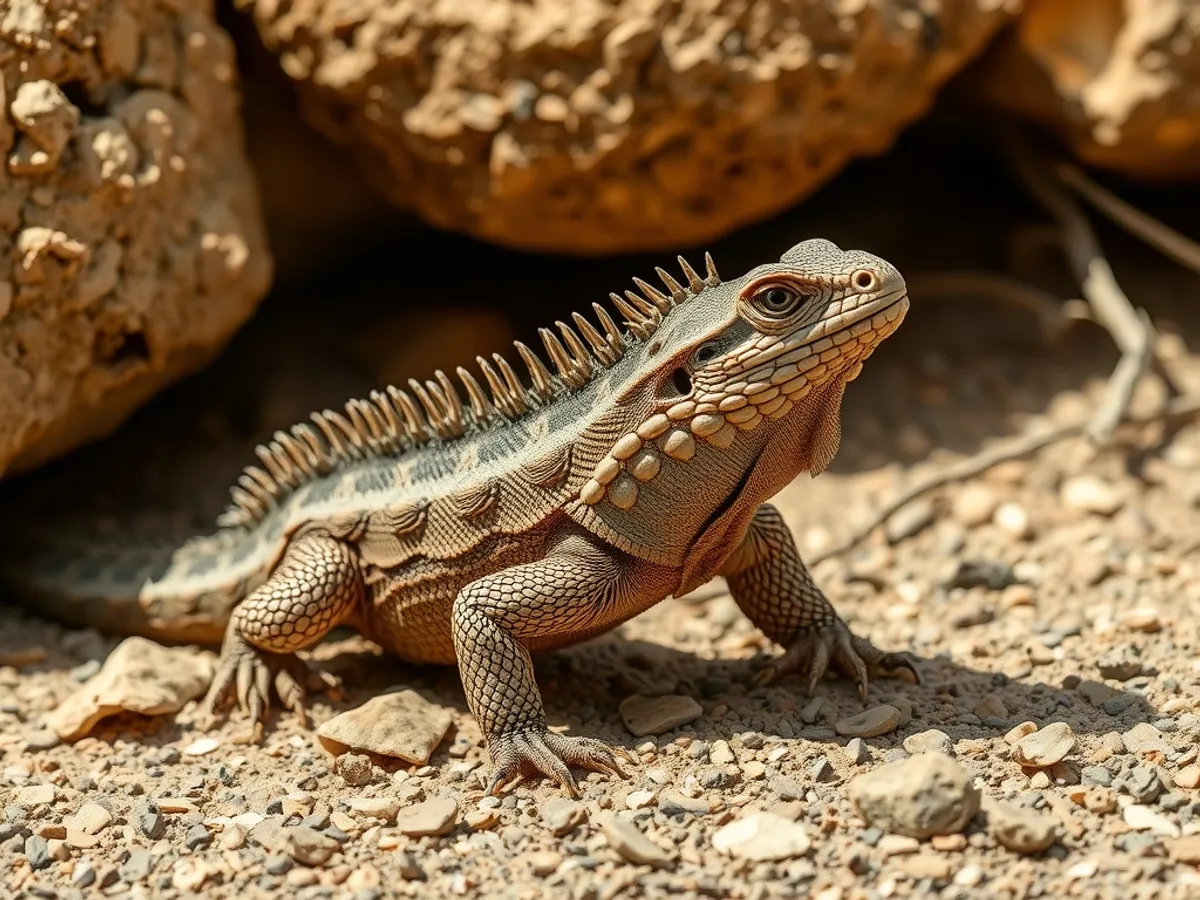
About the Armadillo girdled lizard
The armadillo girdled lizard defends itself exactly the way its namesake does. Threatened, it takes its own tail in its mouth and curls into a tight ring, turning the soft belly inward and presenting nothing but a wall of heavy, spined scales — an armoured doughnut that a predator can get no purchase on and cannot easily swallow. It lives in the rocky, arid scrub of western South Africa, sheltering in cracks in sandstone outcrops, and unusually for a lizard it is social: groups of up to several dozen share the same crevices. That sociality is precisely why it has become such a target for the illegal pet trade, since an entire colony can be taken at once by cracking open a single rock. It is unusual in another way too — it gives birth to live young, one or two at a time, rather than laying eggs, and females have been recorded feeding their offspring, which is close to unheard of among lizards. It reproduces very slowly and is now protected.
Fascinating facts
Defensive Curl
When threatened, this lizard curls into a ball and grips its tail in its mouth, protecting its vulnerable underbelly with tough, spiny scales.
Social Reptile
Unlike most lizards, Armadillo girdled lizards are social and live in groups, sometimes sharing crevices with up to 60 individuals.
Insect Specialist
Its primary diet consists of termites and small insects, which it hunts among the rocks and scrub of its arid habitat.
Detailed description
The Armadillo girdled lizard (Ouroborus cataphractus) is a medium-sized, heavily armored lizard, typically reaching 7–10 cm in snout-to-vent length, with a total length (including tail) of up to 20 cm. Its body is dorsoventrally flattened, an adaptation for squeezing into narrow rock crevices, and is covered with robust, osteoderm-reinforced scales arranged in transverse bands. The tail is short, thick, and encircled by prominent, sharp spines, which serve as both a defensive weapon and a tool for anchoring the animal in its rocky habitat. The coloration ranges from golden-brown to dark brown, often matching the arid, rocky environment for camouflage. This lizard is renowned for its unique defensive behavior: when threatened, it curls into a tight ball, gripping its tail in its jaws and presenting a ring of spines to deter predators, a behavior reminiscent of the mythical ouroboros and the mammalian armadillo. Unlike most lizards, O. cataphractus is highly social, forming stable colonies of up to 60 individuals that share complex networks of rock crevices. These groups exhibit cooperative behaviors such as communal basking and shared vigilance. The species is diurnal, basking in the morning sun to regulate its body temperature before foraging. Its diet consists primarily of termites and other small arthropods, but it may also consume plant material opportunistically. Reproduction is viviparous, with females giving birth to one or two live young per year after a long gestation period. The species is slow-growing and long-lived, with individuals known to survive over a decade in the wild.
Did you know?
The Armadillo girdled lizard can go several months without drinking water, deriving most of its moisture from its insect diet and the dew that forms on rocks.
Research & sources
Wikipedia summary
The armadillo girdled lizard, also commonly known as the armadillo lizard, the armadillo spiny-tailed lizard, and the golden-armadillo lizard, is a species of lizard in the family Cordylidae. The species is endemic to desert areas along the western coast of South Africa. In 2011, it was moved to its own genus based on molecular phylogeny, but formerly it was included in the genus Cordylus. It has the largest known genome of all squamates.
Behaviour & social structure
Armadillo girdled lizards are primarily diurnal, emerging from their communal shelters in the early morning to bask and raise their body temperature. Foraging typically occurs near their home crevices, with individuals preying mainly on termites (notably Hodotermes mossambicus) and occasionally other insects or spiders. They use a sit-and-wait strategy, often ambushing prey that passes near their basking sites. Social interactions are complex: groups are composed of related individuals, and there is evidence of kin-based sociality, with juveniles remaining in their natal group for several years. Aggression is rare within groups but may occur between neighboring colonies, particularly during the breeding season. Vocalizations are absent, but tail displays and body postures are used in intraspecific communication. At night and during extreme heat, the lizards retreat deep into rock crevices for protection.
Reproduction & life cycle
Ouroborus cataphractus is viviparous, a rare trait among lizards, giving birth to live young rather than laying eggs. Mating occurs in the austral spring (September–November), with courtship involving gentle biting and nudging by the male. Females undergo a gestation period of approximately 6–8 months, one of the longest among lizards of similar size. Typically, only one or two offspring are produced per year, reflecting a K-selected reproductive strategy. Neonates are born fully developed and armored, measuring about 5–7 cm in length. Parental care is limited, but juveniles remain with the natal group, benefiting from communal protection and thermoregulation. Sexual maturity is reached at 3–4 years of age.
Adaptations & survival
The most striking adaptation is the ability to curl into a defensive ball, exposing only the spiny, armored exterior to predators—a behavior unique among lizards and highly effective against avian and mammalian predators. The robust osteoderms and spiny tail provide further protection. The flattened body and flexible joints allow the lizard to squeeze into narrow rock fissures, evading larger predators and extreme temperatures. Sociality is another key adaptation, offering benefits such as increased vigilance, predator deterrence, and improved thermoregulation through communal basking. The species’ slow metabolism and low reproductive rate are suited to the resource-scarce, unpredictable environment of the South African semi-desert. Additionally, O. cataphractus possesses the largest known genome among squamates (over 5.2 Gb), though the adaptive significance of this remains under study.
Cultural significance
While not a major figure in indigenous folklore, the Armadillo girdled lizard has gained symbolic significance in modern culture due to its unique appearance and defensive behavior, often likened to the mythical ouroboros symbolizing eternity and self-renewal. Its popularity in the exotic pet trade has brought it international attention, though this has had negative consequences for wild populations. In South Africa, it is sometimes featured in ecotourism and conservation education as a flagship species for the arid western regions.
Recent research
Recent molecular phylogenetic studies (Stanley et al., 2011) led to the reclassification of the species into its own genus, Ouroborus, highlighting its deep evolutionary divergence from other cordylids. Genomic research has revealed that O. cataphractus possesses the largest genome among squamates, raising questions about genome evolution and adaptation in reptiles. Behavioral ecology studies have documented the species’ complex social structure, rare among lizards, and its implications for survival and reproduction. Ongoing research is examining the impact of climate change on microhabitat selection and thermoregulation, as well as the genetic consequences of population fragmentation.
Sources
Phylogenetic relationships of the African lizard family Cordylidae (Squamata: Cordyloidea)
Stanley, E.L., Bauer, A.M., Jackman, T.R., Branch, W.R., & Mouton, P.L.F.N. (2011)
scientificVideos
Habitat
Rocky deserts and semi-arid scrublands
 Arid Regions
Desert
Arid lands with minimal rainfall, extreme temperatures, and specialized wildlife adapted to harsh conditions.
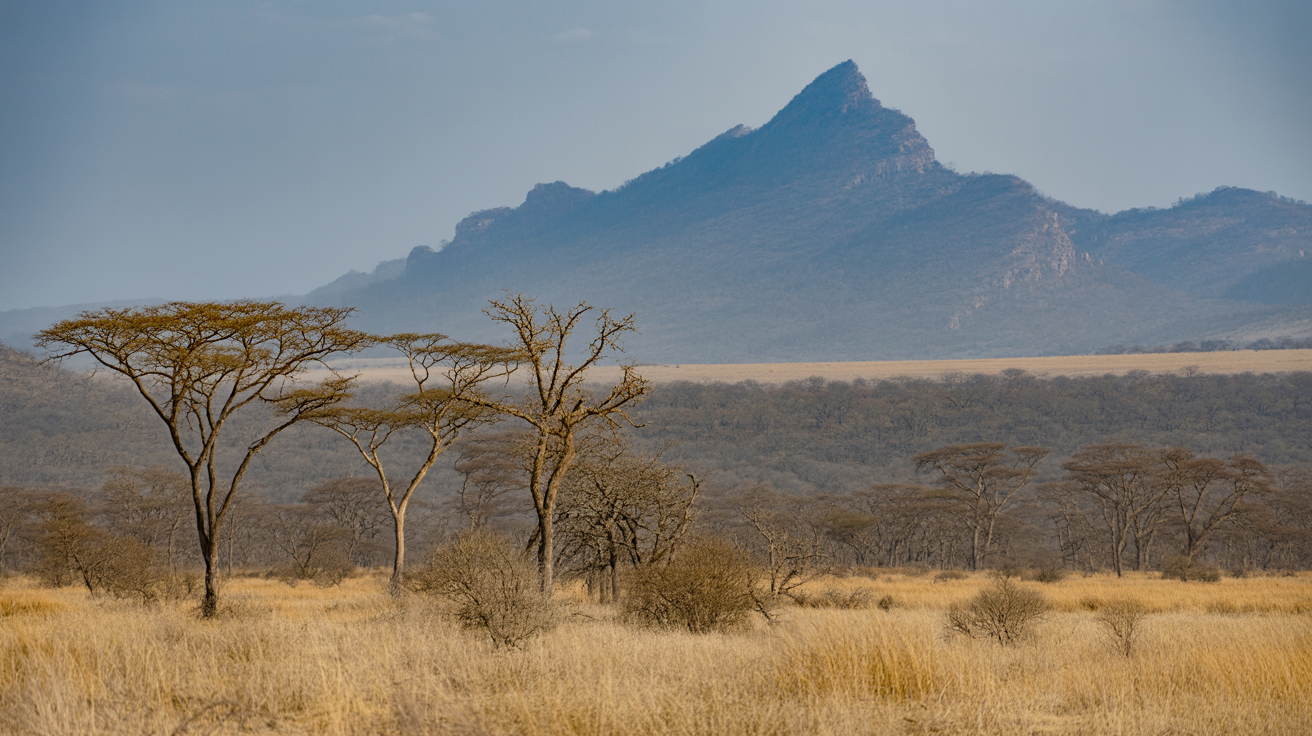 Africa
Savanna
Grasslands with scattered trees, characterized by seasonal rainfall and home to diverse grazing animals and predators.
 Elevated Terrain
Mountain
High-altitude environments with varying climates and specialized wildlife adapted to rugged terrain and thin air.
Conservation
The Armadillo girdled lizard is currently classified as Vulnerable on the IUCN Red List.
Threats & challenges
The primary threats to the Armadillo girdled lizard are habitat degradation due to overgrazing, mining, and agricultural expansion in the Succulent Karoo biome. Illegal collection for the international pet trade has historically caused significant population declines, as the species’ social structure and low reproductive rate make recovery slow. Climate change poses additional risks by altering the delicate balance of temperature and moisture in their habitat. Predation by native birds and mammals is natural but exacerbated by habitat fragmentation. The IUCN currently lists the species as Near Threatened, with populations decreasing in many areas. Conservation efforts focus on habitat protection, regulation of trade, and public education.
Taxonomy
Scientific name
Ouroborus cataphractus
- Kingdom
- Animalia
- Phylum
- Chordata
- Class
- Reptilia
- Order
- Squamata
- Family
- Cordylidae
- Genus
- Ouroborus
- Species
- cataphractus
Community notes
Share your observations about the Armadillo girdled lizard.
No community notes yet. Be the first!
Discover more wildlife
More fascinating animals from the encyclopedia.