
About the Caracal
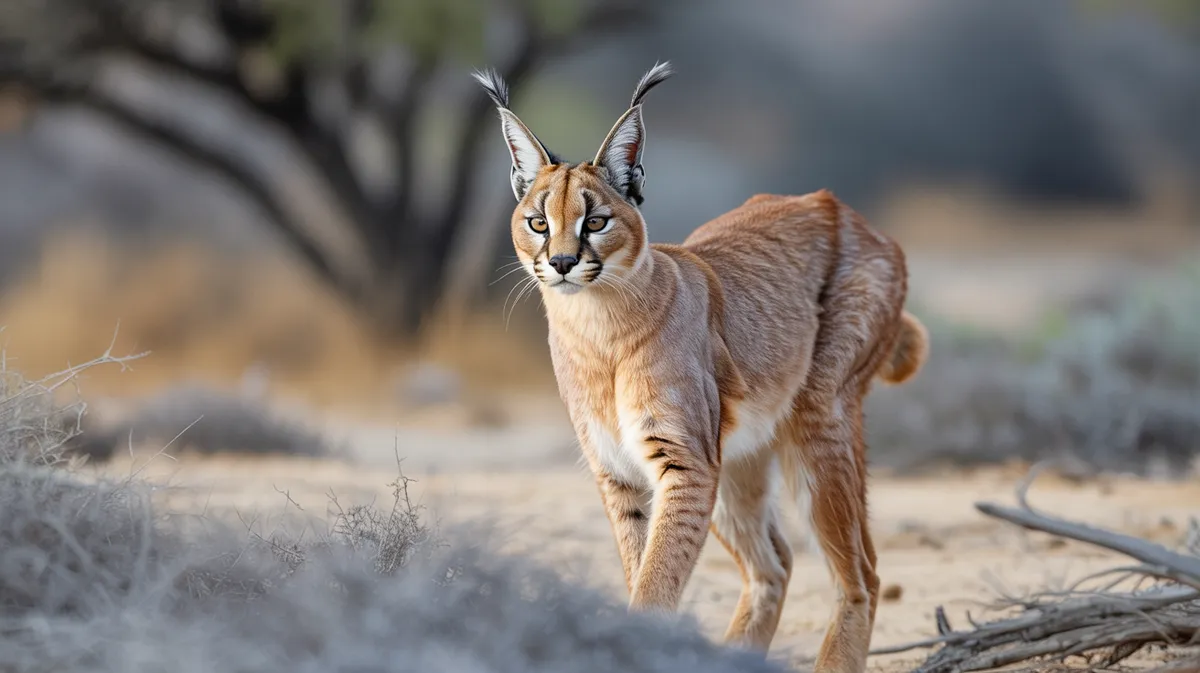
The caracal is a mid-sized cat with a genuinely spectacular specialism: it can leap several metres straight up from a standstill and swat a bird out of the air, occasionally taking more than one on a single jump. That vertical explosiveness comes from unusually powerful hind limbs, and it converts flying prey — normally beyond a cat's reach — into a dependable food source. Its most conspicuous feature is a pair of long black ear tufts, and each ear is steered by around twenty muscles; the tufts are commonly assumed to sharpen hearing, though their function is genuinely debated and they may serve just as much as signals to other caracals. Despite the old name "desert lynx" it is not a lynx at all — its closest relatives are the serval and the African golden cat. It is formidable for its size, killing prey substantially larger than itself, and it caches leftovers, sometimes hauling a carcass into a tree the way a leopard does. Secretive, largely nocturnal and remarkably adaptable, it persists across Africa and into the Middle East and India, often living close to human settlements without ever being seen.
Fascinating facts
Exceptional Hearing
Caracals have over 20 muscles in each ear, allowing them to pinpoint prey with remarkable accuracy even when hidden.
Incredible Leaper
This cat can jump up to 3 meters vertically, enabling it to catch multiple birds in a single leap.
Royal Companions
Caracals were depicted in ancient Egyptian art and kept by royalty for their grace and hunting prowess.
Detailed description
The caracal (Caracal caracal) is a robust, medium-sized felid distinguished by its elongated, muscular limbs and a streamlined body, typically measuring 40–50 cm at the shoulder and weighing between 8–19 kg, with males generally larger than females. Its most striking feature is the long, black-tufted ears, which are highly mobile and serve as both camouflage and a sophisticated auditory tool. The coat is short, dense, and uniformly reddish-tan or sandy, with lighter underparts and subtle reddish markings on the ventral side. The face is short and broad, with prominent facial markings and long, white vibrissae. The caracal's tail is relatively short, about a third of its body length, aiding in balance during rapid pursuits and agile leaps. Its long, sharp canine teeth and powerful jaws are adapted for subduing a wide range of prey. The caracal is highly agile, capable of leaping up to 3 meters vertically to snatch birds in mid-air, a feat facilitated by strong hindlimb musculature. Solitary and territorial, caracals are primarily nocturnal but may be active during the day in undisturbed regions. They are highly adaptable, occupying habitats from dry savannas and semi-deserts to woodlands and scrublands, and are known for their elusive, secretive nature.
Did you know?
Caracals were once trained by ancient Egyptians and Indians for bird hunting due to their remarkable agility.
Research & sources
Wikipedia summary
The caracal is a medium-sized wild cat native to Africa, the Middle East, Central Asia, and arid areas of Pakistan and northwestern India. It is characterised by a robust build, long legs, a short face, long tufted ears, relatively short tail, and long canine teeth. Its coat is uniformly reddish tan or sandy, while the ventral parts are lighter with small reddish markings. It reaches 40–50 cm (16–20 in) at the shoulder and weighs 8–19 kg (18–42 lb). It was first scientifically described by German naturalist Johann Christian Daniel von Schreber in 1776. Three subspecies are recognised.
Behaviour & social structure
Caracals are solitary and territorial, with individuals maintaining home ranges that can vary from 5 to over 220 square kilometers depending on habitat quality and prey availability. They are crepuscular to nocturnal hunters, with peak activity at dawn and dusk, although diurnal activity is observed in areas with minimal human disturbance. Caracals use stealth and cover to stalk prey, followed by a sudden, explosive chase or leap. Their diet is highly opportunistic, including birds, rodents, hares, hyraxes, small antelopes, and occasionally reptiles and insects. They are renowned for their ability to catch multiple birds in a single leap, using their powerful hind legs and acute hearing to detect and ambush prey. Caracals communicate through scent marking, vocalizations (growls, hisses, meows), and visual signals, particularly ear movements. Social interactions are limited to mating pairs and mothers with dependent young; otherwise, adults avoid each other, using urine and feces to delineate territory boundaries.
Reproduction & life cycle
Caracals are polygynous, with males overlapping the territories of several females. Breeding can occur year-round, but in some regions, peaks are observed in the dry season. Estrus lasts 3–6 days, during which females vocalize and scent-mark to attract males. After a gestation period of 68–81 days, females give birth to litters of 1–6 kittens (typically 2–3) in secluded dens, such as rock crevices, abandoned burrows, or dense vegetation. Kittens are born blind and helpless, opening their eyes after 6–10 days. Weaning occurs at 10–15 weeks, but young may remain with the mother for up to a year, learning hunting skills through play and observation. Sexual maturity is reached at 12–16 months for females and 15–21 months for males. Parental care is provided exclusively by the female, who relocates the den frequently to avoid predation.
Adaptations & survival
The caracal exhibits several adaptations for survival in arid and semi-arid environments. Its short, dense fur minimizes water loss and provides camouflage in sandy or grassy habitats. The long, tufted ears, containing over 20 muscles each, enhance directional hearing, allowing the caracal to detect prey and communicate with conspecifics through subtle ear movements. The powerful hind limbs enable extraordinary vertical leaps, a specialization for catching birds in flight. Caracals can survive with minimal water intake, obtaining most of their hydration from prey. Their retractable claws and padded feet facilitate silent stalking, while acute vision and olfaction aid in nocturnal hunting. Behavioral flexibility, including dietary opportunism and variable activity patterns, allows caracals to thrive in diverse and changing environments.
Cultural significance
Caracals have held symbolic and practical significance in various cultures. In ancient Egypt, they were depicted in art and sculpture, sometimes associated with royalty and the divine. Their ear tufts were believed to have magical properties, and caracals were occasionally kept as exotic pets or used for hunting birds. In parts of India and Persia, trained caracals participated in courtly falconry, valued for their agility and hunting prowess. Folklore across Africa and the Middle East often features the caracal as a cunning and elusive animal, sometimes revered and sometimes feared. Today, the caracal continues to appear in local myths, proverbs, and as a symbol of wilderness.
Recent research
Recent studies have focused on caracal genetics, revealing low genetic differentiation across much of its range but highlighting distinct populations in North Africa and Asia. Research into their spatial ecology using GPS collars has provided insights into home range size, habitat selection, and movement patterns, informing conservation management. Dietary studies using scat analysis have documented the caracal's adaptability and role as a mesopredator, sometimes influencing prey and competitor populations. Ongoing research is investigating the impact of human encroachment, livestock depredation, and the effectiveness of non-lethal conflict mitigation strategies. There is also interest in the caracal's remarkable jumping mechanics and sensory adaptations, with potential applications in biomimetics and animal behavior science.
Videos
Habitat
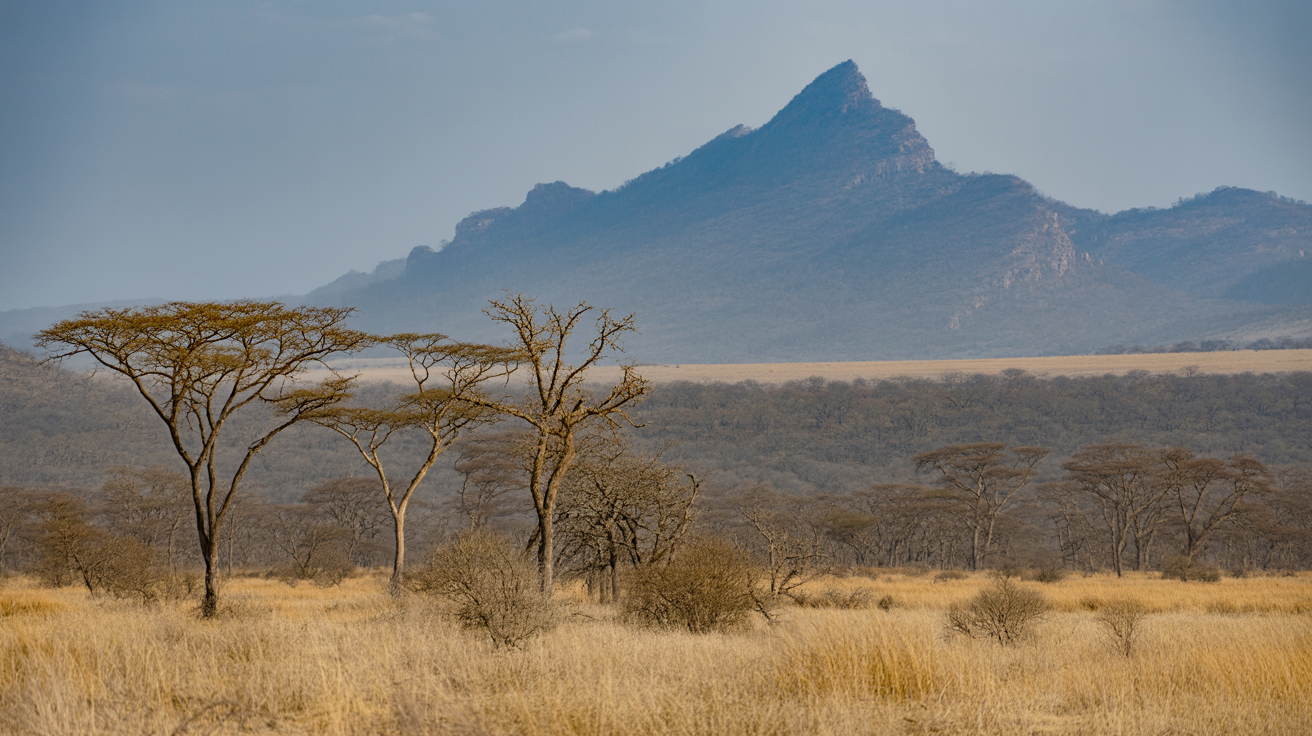
Savanna, semi-desert, scrubland, and woodland
 Arid Regions
Desert
Arid lands with minimal rainfall, extreme temperatures, and specialized wildlife adapted to harsh conditions.
 Africa
Savanna
Grasslands with scattered trees, characterized by seasonal rainfall and home to diverse grazing animals and predators.
 Various Continental Regions
Grassland
Open areas dominated by grasses rather than trees, supporting numerous herbivores and their predators.
 Elevated Terrain
Mountain
High-altitude environments with varying climates and specialized wildlife adapted to rugged terrain and thin air.
 Global
Forest
Wooded areas with significant tree cover and diverse plant and animal communities.
Conservation
The Caracal is currently classified as Least Concern on the IUCN Red List.
Threats & challenges
While the caracal is classified as Least Concern by the IUCN, it faces localized threats from habitat loss, fragmentation, and human-wildlife conflict, particularly in agricultural regions where it may prey on livestock. Retaliatory killing, persecution, and accidental trapping are significant mortality factors. In some areas, road mortality and illegal pet trade also pose risks. Habitat degradation due to overgrazing and land conversion reduces prey availability. Despite these pressures, the caracal remains widespread and adaptable, with stable populations in many protected areas. However, certain subspecies or isolated populations, especially in Asia and North Africa, are more vulnerable and may require targeted conservation measures.
Taxonomy
Scientific name
Caracal caracal
- Kingdom
- Animalia
- Phylum
- Chordata
- Class
- Mammalia
- Order
- Carnivora
- Family
- Felidae
- Genus
- Caracal
- Species
- caracal
Where to see a caracal
7 zoos and aquariums in 4 countries are recorded as keeping this species.
 San Diego Zoo🇺🇸 San Diego, United States
 Zoo Dresden🇩🇪 Dresden, Germany
 National Zoological Park🇺🇸 Washington, United States
 Śląski Ogród Zoologiczny🇵🇱 Chorzów, Poland
- 🦁Little Rock Zoo🇺🇸 Little Rock, United States
Community notes
Share your observations about the Caracal.
No community notes yet. Be the first!
Discover more wildlife
More fascinating animals from the encyclopedia.