
About the Malagasy Rainbow Frog
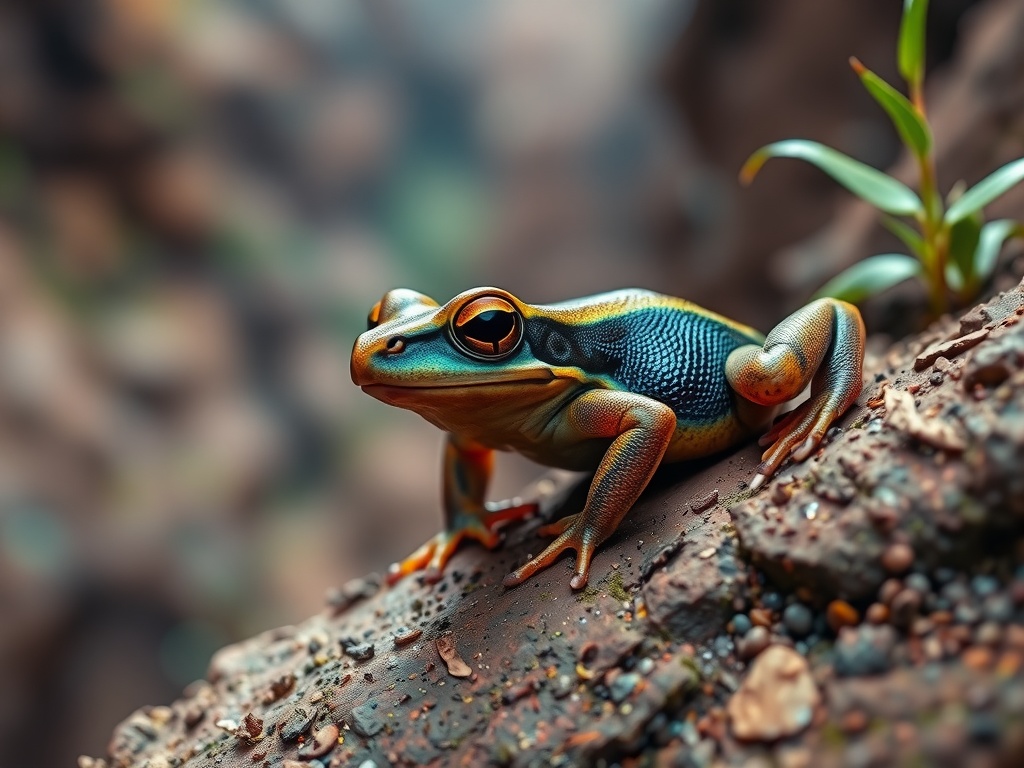
The Malagasy Rainbow Frog is a strikingly colorful amphibian endemic to the Isalo Massif region of southwestern Madagascar. Renowned for its vivid red, green, orange, and white markings, this small frog is adapted for both burrowing and climbing in rocky canyons and sandstone outcrops. It is primarily active during the rainy season when it emerges to breed in temporary pools. The species is highly specialized and sensitive to habitat disturbance, making it vulnerable to environmental changes and collection for the pet trade. Conservation efforts are crucial due to its limited distribution and declining habitat.
Fascinating facts
Brilliant Colors
The Malagasy Rainbow Frog displays a stunning array of red, green, orange, and white colors, making it one of the most visually striking frogs in the world.
Burrower and Climber
It has strong, spade-like hind limbs for digging and adhesive pads on its toes for climbing, allowing it to navigate both underground and vertical surfaces.
Micro-Endemic
This species is found only in a small area of the Isalo Massif in Madagascar, making its survival highly dependent on the conservation of this unique habitat.
Detailed description
The Malagasy Rainbow Frog (Scaphiophryne gottlebei) is a small, robust amphibian, typically reaching 2.5–3.5 cm in snout-vent length. Its body is compact and slightly flattened, with muscular limbs adapted for both burrowing and climbing. The skin is smooth and vividly patterned, displaying a mosaic of red, green, orange, and white, which provides disruptive camouflage among the lichen- and moss-covered rocks of its habitat. The head is broad with a short, rounded snout, and the eyes are large and laterally positioned, offering a wide field of vision. Digging is facilitated by keratinized tubercles on the hind feet, while adhesive toe pads enable climbing on vertical surfaces. The species is primarily fossorial outside the breeding season, spending much of the year underground or concealed in rock crevices to avoid desiccation. During the rainy season, it becomes more surface-active, congregating in temporary pools to breed. The Malagasy Rainbow Frog is generally solitary except during breeding aggregations, and it exhibits a cryptic lifestyle to evade predators. Its specialized morphology and behavior reflect a high degree of adaptation to the unique microhabitats of the Isalo Massif.
Did you know?
Despite its popularity in the exotic pet trade, the Malagasy Rainbow Frog is strictly protected and collecting it from the wild is illegal.
Research & sources
Behaviour & social structure
Scaphiophryne gottlebei is primarily nocturnal, emerging at dusk to forage and breed. Its diet consists mainly of small invertebrates, such as ants, termites, beetles, and other arthropods, which it captures using a rapid tongue projection. The frog employs a sit-and-wait hunting strategy, remaining motionless until prey approaches. Outside the breeding season, individuals are highly secretive, spending daylight hours hidden beneath rocks or within burrows to minimize water loss. Social interactions are limited, with individuals maintaining solitary territories except during the brief breeding period. When threatened, the frog may inflate its body and display its bright ventral coloration as a warning to potential predators. Vocalizations are infrequent and primarily associated with male advertisement calls during mating.
Reproduction & life cycle
Breeding is closely tied to the onset of the rainy season (typically November to February), when ephemeral pools form in the canyons. Males congregate at these sites and produce a series of short, pulsed advertisement calls to attract females. Amplexus is axillary, and females lay clutches of 50–300 eggs, which are deposited in shallow water attached to submerged vegetation or substrate. Embryonic development is rapid, with eggs hatching within 2–4 days depending on temperature. The tadpoles are benthic and develop quickly, completing metamorphosis in as little as 4–6 weeks to take advantage of the temporary nature of their aquatic environment. There is no parental care after oviposition; both adults and juveniles disperse soon after metamorphosis.
Adaptations & survival
The Malagasy Rainbow Frog exhibits several remarkable adaptations for survival in its arid, rocky environment. Its bright coloration provides both camouflage and aposematic signaling, deterring predators by suggesting toxicity, although no potent toxins have been identified. The frog's burrowing ability, facilitated by spade-like tubercles on the hind feet, allows it to escape desiccation during dry periods. Adhesive toe pads enable climbing on steep rock faces, expanding its foraging and breeding niches. Rapid reproductive cycles and accelerated larval development are crucial for exploiting short-lived rain pools. Physiologically, the species is capable of tolerating significant dehydration, and it can enter a state of torpor during prolonged dry spells.
Cultural significance
The Malagasy Rainbow Frog is not known to have significant traditional uses or roles in Malagasy folklore, likely due to its secretive nature and limited distribution. However, its striking appearance has made it a symbol of Madagascar’s unique biodiversity and a flagship species for conservation efforts in the region. It is frequently featured in educational materials and ecotourism promotions, highlighting the importance of preserving Madagascar’s endemic fauna.
Recent research
Recent research has focused on the population genetics and phylogeography of Scaphiophryne gottlebei, revealing low genetic diversity likely due to its small, isolated populations. Studies on its reproductive ecology have provided insights into the species’ rapid larval development and adaptation to ephemeral aquatic habitats. Ongoing conservation research is assessing the effectiveness of protected areas and the impact of the pet trade, with some success in captive breeding programs reported. There is also interest in the frog’s skin microbiome and potential resistance to chytridiomycosis, a fungal disease devastating amphibian populations worldwide.
Sources
Scaphiophryne gottlebei (Malagasy Rainbow Frog): Natural History, Distribution, and Conservation
Vences, M. & Glaw, F. (2006)
scientificScaphiophryne gottlebei: The IUCN Red List of Threatened Species 2021
IUCN SSC Amphibian Specialist Group
conservationVideos
Habitat
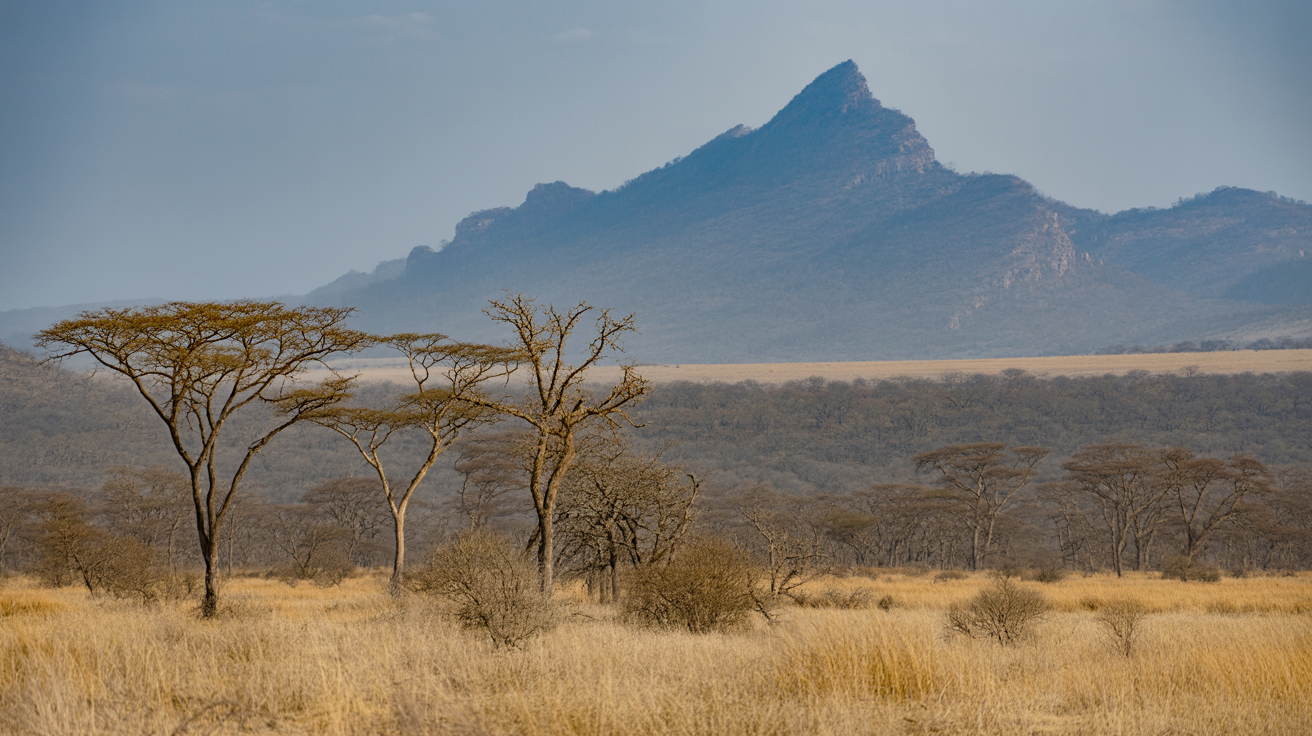
Rocky canyons and sandstone outcrops in dry forest and savanna regions
 Africa
Savanna
Grasslands with scattered trees, characterized by seasonal rainfall and home to diverse grazing animals and predators.
 Elevated Terrain
Mountain
High-altitude environments with varying climates and specialized wildlife adapted to rugged terrain and thin air.
 Global
Forest
Wooded areas with significant tree cover and diverse plant and animal communities.
Conservation
The Malagasy Rainbow Frog is currently classified as Endangered on the IUCN Red List.
Threats & challenges
The primary threats to Scaphiophryne gottlebei include habitat loss due to deforestation, mining, and agricultural expansion in the Isalo region. The species is also heavily impacted by illegal collection for the international pet trade, which has led to significant population declines. Its highly restricted range and specialized habitat requirements make it particularly vulnerable to environmental changes, including altered rainfall patterns due to climate change. Population trends are declining, and the species is listed as Endangered by the IUCN. Conservation challenges include enforcing habitat protection, regulating trade, and mitigating the effects of habitat fragmentation.
Taxonomy
Scientific name
Scaphiophryne gottlebei
- Kingdom
- Animalia
- Phylum
- Chordata
- Class
- Amphibia
- Order
- Anura
- Family
- Microhylidae
- Genus
- Scaphiophryne
- Species
- gottlebei
Community notes
Share your observations about the Malagasy Rainbow Frog.
No community notes yet. Be the first!
Discover more wildlife
More fascinating animals from the encyclopedia.