
Search the encyclopedia
13 animals
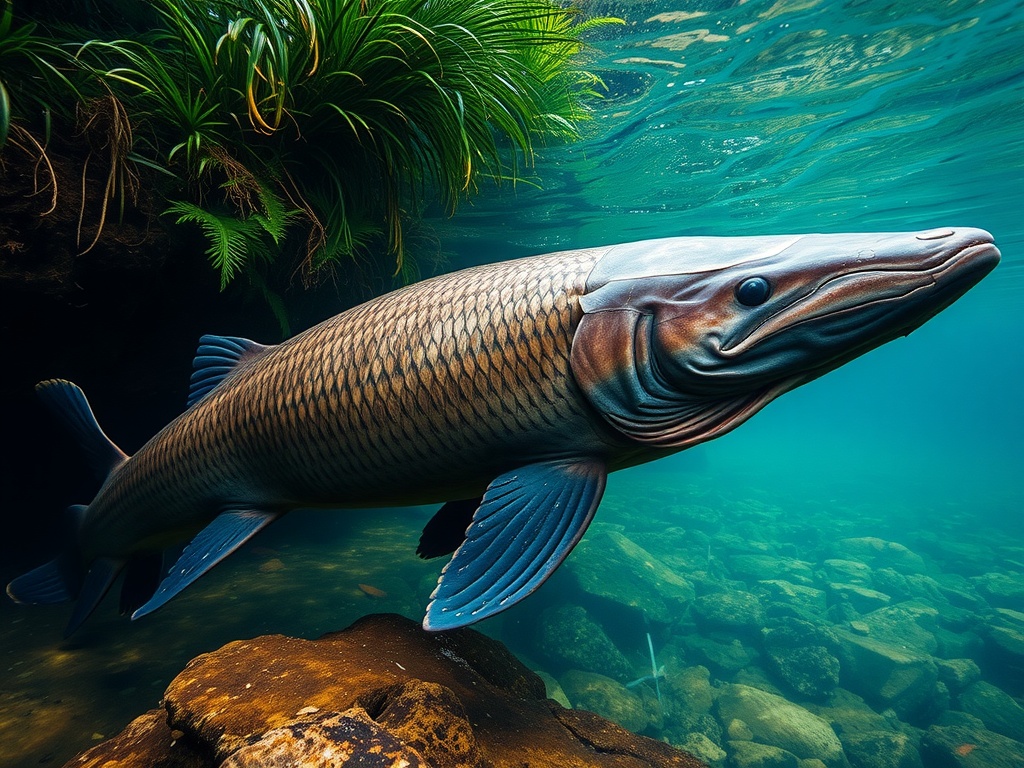
Arapaima
Arapaima gigas
The arapaima is an air-breather that will drown if it cannot reach the surface: its swim bladder is lined with lung-like tissue and it must gulp air roughly every five to twenty minutes, an adaptation to the oxygen-starved, seasonally stagnant floodwaters of the Amazon. That single fact reshaped both its ecology and its fate — because it must surface, fishermen can count it, and because it must surface, it can be harpooned. Its scales are a materials-science celebrity: a hard, mineralised outer layer sits over a tough, corrugated inner layer of collagen fibres arranged in a twisting Bouligand structure, so a crack that starts in the brittle shell is deflected and dissipated rather than propagating. Piranha teeth cannot get through them, and engineers have copied the design for flexible body armour. Adults reach 3 m and 200 kg. Males guard the young in a shoal beneath them, and a gland on the head releases a pheromone-rich secretion that the fry actively feed on and follow.
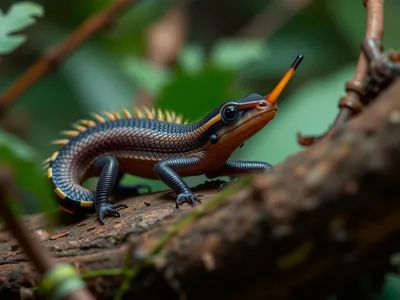
Aye-aye Leech
Chtonobdella ayeaye
The Aye-aye leech (Chtonobdella ayeaye) is a rare terrestrial blood-feeding leech discovered in the rainforests of Madagascar. This unique invertebrate is notable for its association with the aye-aye lemur, from which it is believed to commonly feed. Unlike many aquatic leeches, the Aye-aye leech has adapted to a primarily arboreal and terrestrial lifestyle, using its muscular body to move through leaf litter and up trees. Its presence is considered an indicator of healthy, undisturbed rainforest ecosystems.
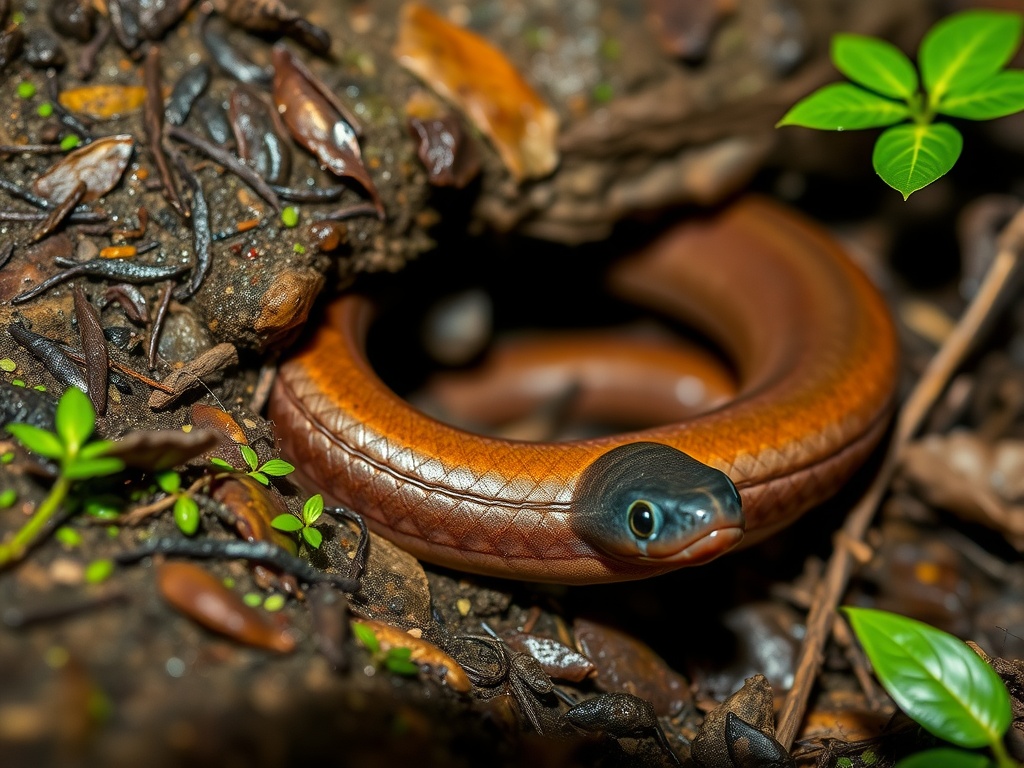
Beddome’s Caecilian
Ichthyophis beddomei
Beddome’s Caecilian is a limbless, burrowing amphibian native to the Western Ghats of southern India. Its elongated, worm-like body is adapted for a subterranean lifestyle, with smooth, segmented skin that is typically dark brown to bluish-black in color. This secretive animal spends most of its life hidden in moist soil, leaf litter, or under rotting logs, emerging mainly during the monsoon season. Beddome’s Caecilian is rarely seen due to its underground habits, and much of its biology remains poorly understood.
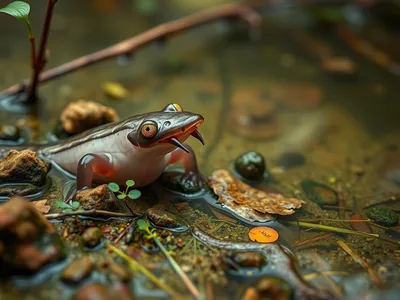
Giant Leech
Haementeria ghilianii
The giant leech is one of the world's largest leech species, native to South America. It can grow up to 45 centimeters (18 inches) in length, making it a strikingly large invertebrate. This freshwater parasite uses a long proboscis to feed on the blood of aquatic animals, such as fish and amphibians. Despite their size and appearance, giant leeches are generally not dangerous to humans and play a role in their ecosystem by regulating host populations.
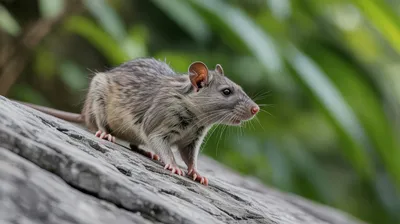
Laotian Rock Rat
Laonastes aenigmamus
Laonastes aenigmamus was found in 1996 in a meat market in Khammouane Province, Laos, laid out for sale among the bushmeat, and formally described in 2005 as a new species in a new family. Then it got stranger. In 2006 palaeontologists Mary Dawson and colleagues recognised it as a member of Diatomyidae - a rodent family known only from fossils, and believed to have gone extinct around 11 million years ago. The rock rat is therefore a Lazarus taxon of extraordinary depth, an animal that vanished from the fossil record in the Miocene and turned up on a butcher's block. Its closest living relatives are gundis of North Africa, not the rats it superficially resembles. The animal is squirrel-like, dark gray, with a long furry tail, splayed feet for scrambling over karst, and a waddling gait; it lives in limestone outcrops in central Laos, eats leaves, seeds and insects, and appears to be nocturnal and slow-moving. Local Lao people, who call it kha-nyou, had of course always known it and hunted it, and it was scientists who were 11 million years late. Its known range is small and it depends entirely on the region's karst limestone, which is being quarried for cement.
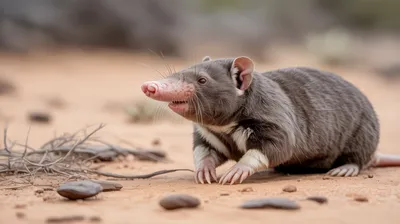
Marsupial Mole
Notoryctes typhlops
Notoryctes typhlops of Australia's central deserts is one of the most extreme examples of convergent evolution among mammals. It is a marsupial, with no close relationship to true moles or to golden moles, and yet it has independently arrived at almost exactly the same body: no external eyes at all - the eyes are vestigial lenses under the skin - no external ears, a horny shield on the nose, and forelimbs bearing two huge flattened spade-like claws. It does not dig burrows. It "swims" through loose sand, the tunnel collapsing behind it, so a marsupial mole leaves no permanent structure and there is no burrow to find, which is a large part of why the animal is so poorly known that no reliable population estimate exists. Its pouch, like a bilby's, opens backwards so it does not fill with sand. It has an extraordinarily low and variable metabolic rate and body temperature, which is what allows it to live in a food-scarce environment where it must move a great deal of sand for very little reward, eating insect larvae and small reptiles it happens to encounter underground. Aboriginal peoples of the Western Desert have long known it as itjaritjari and can find it by tracking its brief surface trails after rain.
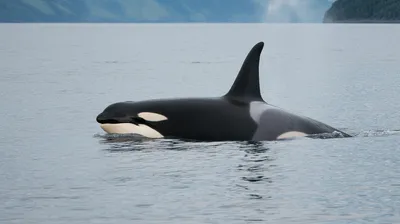
Orca (Killer Whale)
Orcinus orca
Orcas, or killer whales (Orcinus orca), are the largest members of the dolphin family, Delphinidae, with adult males reaching lengths of up to 9 meters and weighing over 5,400 kilograms. These apex predators are distributed across all of the world's oceans, from the frigid Arctic and Antarctic regions to tropical seas. Orcas exhibit remarkable adaptability, with distinct populations, known as ecotypes, that have evolved unique hunting strategies and prey preferences. For instance, the North Pacific's 'transient' orcas primarily hunt marine mammals, while 'resident' groups focus on fish, particularly salmon. Their striking black and white coloration serves as a form of disruptive camouflage, breaking up their outline in the water and aiding in stealth during hunting. Socially, orcas live in matrilineal pods, where offspring remain with their mothers for life, enhancing cooperative hunting and caregiving. Their complex vocalizations, which vary significantly between pods, suggest a sophisticated level of communication and cultural transmission.
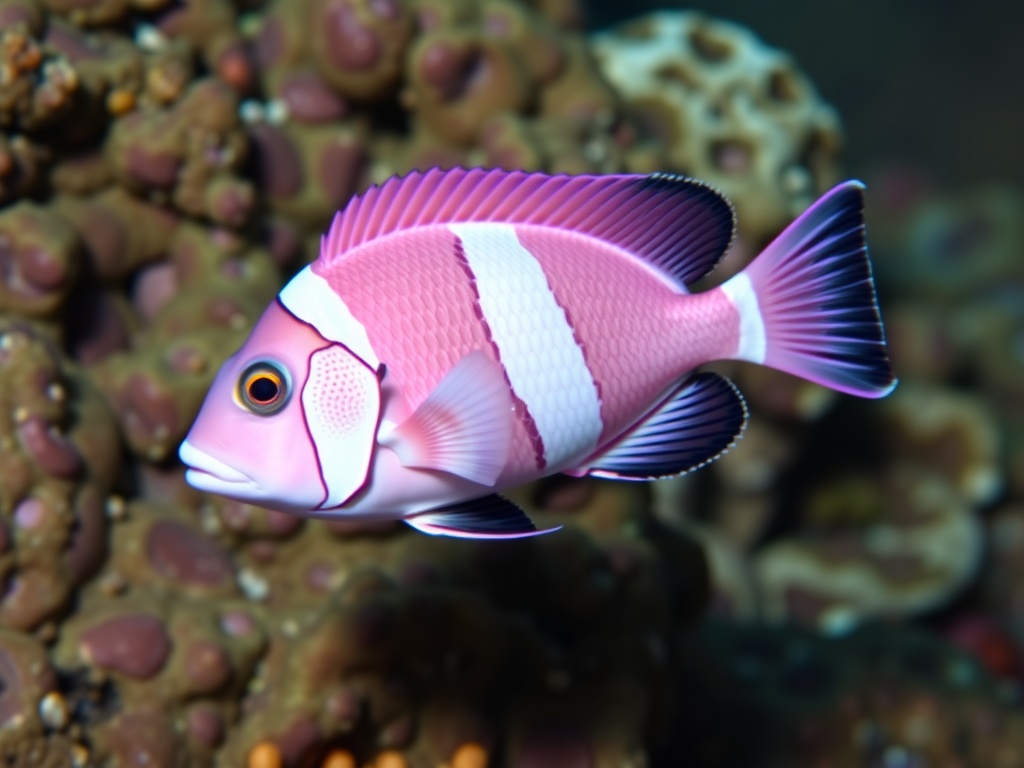
Peppermint Angelfish
Centropyge boylei
The Peppermint Angelfish is a small, vividly colored marine fish, famed for its striking red and white vertical stripes that resemble peppermint candy. Native to the deep reef slopes of the central South Pacific, this elusive angelfish inhabits depths between 55 and 120 meters, making it difficult to observe or collect. Its diminutive size, brilliant coloration, and extreme rarity have made it highly sought after in the aquarium trade, often fetching enormous prices. Peppermint Angelfish are known for their shy and secretive nature, typically hiding among coral rubble and steep reef drop-offs.
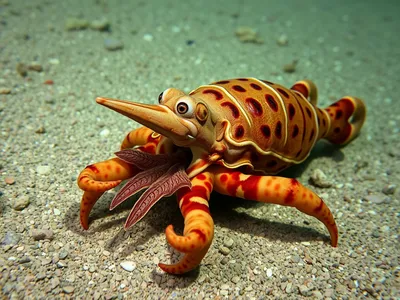
Pfeffer's flamboyant cuttlefish
Metasepia pfefferi
Pfeffer's flamboyant cuttlefish is the only cuttlefish known to be toxic, and it advertises the fact loudly. It is small, and rather than swimming it usually walks along the seabed on two flattened arms and two fleshy lobes of the mantle — an odd gait for a cephalopod, and one that leaves it slow and thoroughly exposed. The compensation is the display: waves of vivid purple, yellow and red pulse across the skin in a rolling, hypnotic pattern, which is almost certainly aposematic, a warning that this is an animal not worth eating. Its muscle tissue carries a toxin comparable in potency to that of a blue-ringed octopus, which is unique among cuttlefish. It hunts by stalking slowly and then firing out two long feeding tentacles faster than the prey can respond. Like other cuttlefish it drives the display through chromatophores under direct nervous control, so the colour is not a slow blush but something closer to a screen, capable of changing in a fraction of a second.
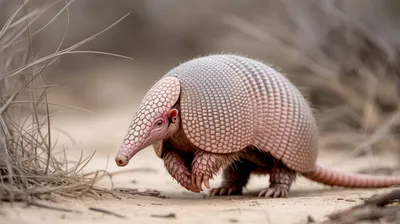
Pink Fairy Armadillo
Chlamyphorus truncatus
The pink fairy armadillo is the smallest armadillo — roughly the length of a human hand — and it spends almost its entire life underground in the sandy plains of central Argentina. Its shell is unlike any other armadillo's: thin, flexible, and attached to the body only along a narrow membrane down the spine. It is pink because it is thin enough to be translucent, and what shows through is the blood beneath. That is not decoration: the animal appears to regulate its temperature by pumping blood into or out of the shell, dumping or conserving heat as needed. It is a sand-swimmer, hauling itself through loose sand with enormous front claws so quickly it seems to swim, and it uses a flattened, plate-like rear to plug the tunnel behind it and block pursuit. Nearly blind, it navigates by touch and smell. It is so narrowly specialised for its burrow that captured animals almost always die quickly, which is a large part of why so little is known about it — including whether it is threatened.
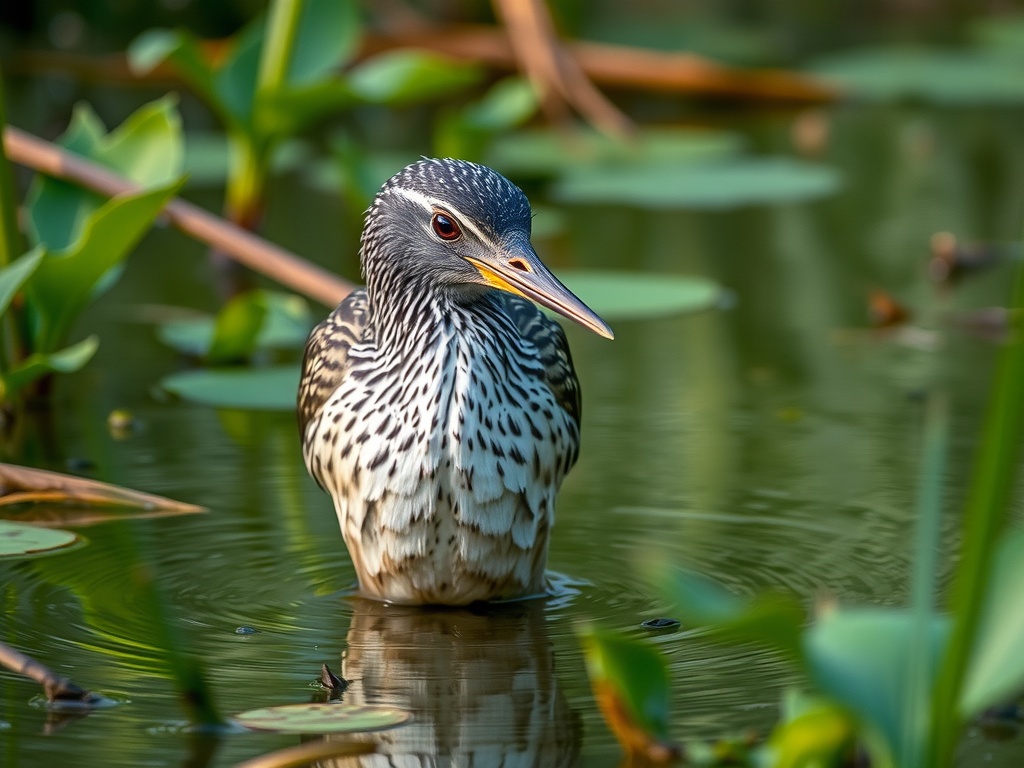
Reticulated Siren
Siren reticulata
The Reticulated Siren is a large, eel-like aquatic salamander discovered in the southeastern United States. Distinguished by its intricate, net-like reticulated skin pattern, this amphibian lacks hind limbs and has only small, feathery external gills and forelimbs. It can grow up to 60 centimeters in length, making it one of the largest salamanders in North America. The Reticulated Siren is fully aquatic, spending its entire life in slow-moving freshwater habitats such as marshes, swamps, and wetland ponds.
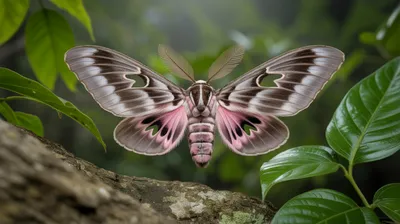
Venezuelan poodle moth
Artace sp.
The Venezuelan poodle moth is a mysterious and visually striking moth species first discovered in Venezuela in 2009. Characterized by its fluffy, poodle-like appearance, it has dense white or grayish scales covering its body and wings, giving it a soft, fuzzy look. Its large, feathery antennae and stout body make it distinct among moths, leading to significant interest and speculation among entomologists. Due to its recent discovery and limited observations, much about its behavior, ecology, and even precise classification remains unknown.
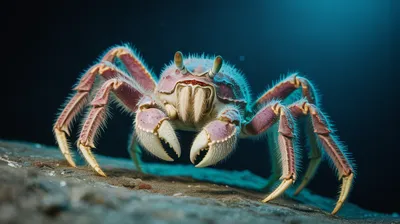
Yeti Crab
Kiwa hirsuta
Yeti crabs (genus Kiwa) are blind, pale squat lobsters of hydrothermal vents and cold seeps, first described in 2005, and the hair that gives them their name is a farm. Their claws and undersides are covered in dense setae colonised by chemosynthetic bacteria, which oxidise sulfides and methane from the vent fluid and grow into a thick mat; the crab periodically combs its own hair with specialised comb-like mouthparts and eats the crop. It is one of the clearest cases of an animal cultivating its own food on its body. Two species illustrate the extremes. Kiwa puravida, at Costa Rican methane seeps, waves its claws rhythmically in the flow, a motion that looks like dancing and appears to stir the water so that fresh sulfide and oxygen keep reaching the bacteria, essentially aerating the crop. Kiwa tyleri, the "Hoff crab" of the East Scotia Ridge in the Antarctic, faces a harsher bargain: it can only farm bacteria within centimetres of scalding vent fluid, but the surrounding Southern Ocean water is lethally cold, so the crabs pile onto the chimneys at densities exceeding 700 individuals per square metre, stacked on top of one another. Brooding females must leave that warm zone to develop their eggs, and they are frequently found in poor condition at the cold margins.