
Extinct Animals
6 species in the encyclopedia
Species with no known living individuals remaining anywhere on Earth.
Klinodon
Klinodon
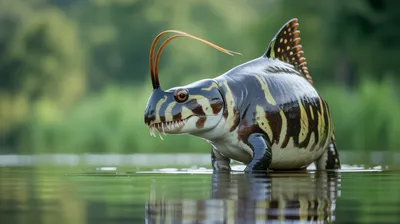
Klinodon is a genus of extinct jawless fish that lived during the Devonian period. Known primarily from fossilized remains, Klinodon possessed a distinctive bony armor and lacked jaws, features typical of early vertebrates known as ostracoderms. These ancient fish played an important role in the evolutionary history of vertebrates by showcasing the transition from armored, jawless forms to more advanced jawed fishes. Fossils of Klinodon have been found in what is now Russia, and they provide valuable insight into the diversity of early Devonian aquatic ecosystems.
Quagga
Equus quagga quagga
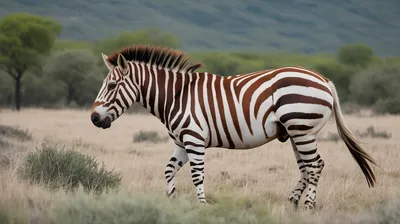
The quagga was a unique subspecies of the plains zebra that inhabited South Africa's grasslands. Notable for its distinct coat, the quagga's front half had bold zebra stripes while its hindquarters were mostly brown and unstriped, giving it a striking two-toned appearance. Quaggas lived in herds and grazed on grasses, playing a vital role in their ecosystem. Sadly, the quagga was hunted to extinction in the late 19th century, with the last known individual dying in 1883. Today, efforts are underway to revive some of its traits through selective breeding programs.
Quetzalcoatlus
Quetzalcoatlus northropi
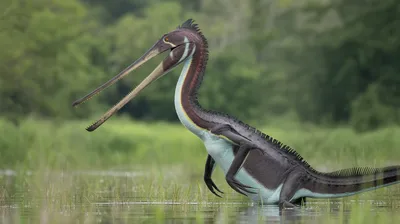
Quetzalcoatlus northropi was an azhdarchid pterosaur from the Late Cretaceous of Texas with a wingspan estimated around 10 to 11 metres — the size of a small aeroplane — and yet it probably weighed only 200 to 250 kg, because its skeleton was a lattice of hollow, air-filled bones with walls sometimes only a millimetre or two thick. The popular image of it soaring over an ocean scooping fish like a giant pelican is almost certainly wrong. Detailed work by Witton and Naish argues that azhdarchids were terrestrial stalkers: their necks were long and stiff, poorly suited to the sideways sweeping a skimmer needs, their feet were small and blunt rather than webbed, and their limb proportions made them competent walkers. The picture now is of a stork-like or ground-hornbill-like predator striding across Cretaceous floodplains picking up baby dinosaurs, lizards and other small animals. Standing, it would have been about the height of a giraffe. It almost certainly did not launch like a bird: the quadrupedal launch model has it vaulting off all four limbs, using the huge forelimb musculature that also powered flight, to clear the ground in a fraction of a second. A smaller species, Q. lawsoni, was formally described in 2021 and is known from far better material.
Steller's Sea Cow
Hydrodamalis gigas
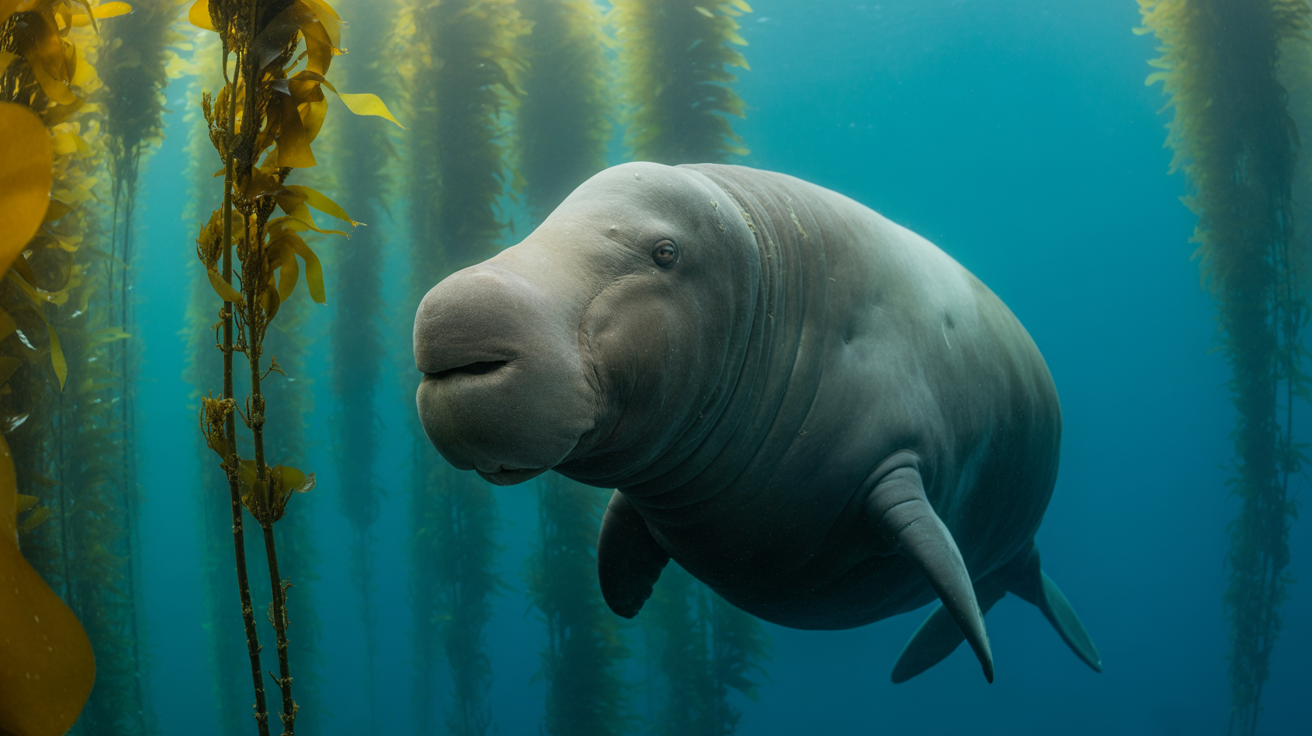
Steller's sea cow (Hydrodamalis gigas) was the largest sirenian ever known, reaching 8 to 9 metres and several tonnes, and it was extinguished within 27 years of being described. The naturalist Georg Steller met it in 1741 when the Bering expedition was wrecked on Bering Island in the Commander group, and his account is the only one written by anyone who saw the animal alive. It had no teeth at all, grinding kelp between two horny plates in the mouth, and it could not submerge: it was so buoyant that it floated with its back permanently exposed, grazing the kelp canopy with its head under water, which made it trivially easy to harpoon from a small boat. Its skin was thick, dark, corrugated and bark-like, apparently as protection against ice and rock. Crucially, the animals Steller saw were already a relict. Fossils show Hydrodamalis once ranged around the North Pacific rim from Japan to Baja California, and it had been reduced by prehistoric hunting and by the loss of kelp forests to the last stronghold where sea otters, and therefore kelp, still persisted. Fur traders and sealers stopping at the Commander Islands took them for meat, and the last was killed around 1768.
Thylacine
Thylacinus cynocephalus
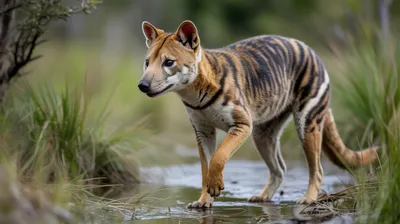
The thylacine (Thylacinus cynocephalus) was a carnivorous marsupial of Tasmania, the last survivor of a family that once spread across Australia and New Guinea, and its resemblance to a dog is one of the textbook cases of convergent evolution: it evolved a dog-like skull and body from a marsupial ancestor with no canid input whatsoever. Both sexes had a pouch; the male's was a backward-opening flap of skin into which he could withdraw the scrotum. It could open its jaws to a startling gape of around 80 degrees, but biomechanical analysis of the skull shows the jaw was surprisingly weak for its size and poorly braced against the twisting forces of a struggling large animal, implying it took small to medium prey such as wallabies and possums rather than the sheep it was blamed for. That is the tragedy: a Tasmanian government bounty paid on 2,184 animals between 1888 and 1909, on the strength of a reputation for sheep-killing that the animal's own anatomy suggests was largely undeserved, and disease and habitat loss finished the job. The last known individual, an animal that later reporting nicknamed Benjamin, died at Hobart's Beaumaris Zoo on 7 September 1936, a date now marked as Australia's National Threatened Species Day. The genome was sequenced in 2018 and is now the basis of well-funded and heavily disputed de-extinction attempts.
Woolly Mammoth
Mammuthus primigenius
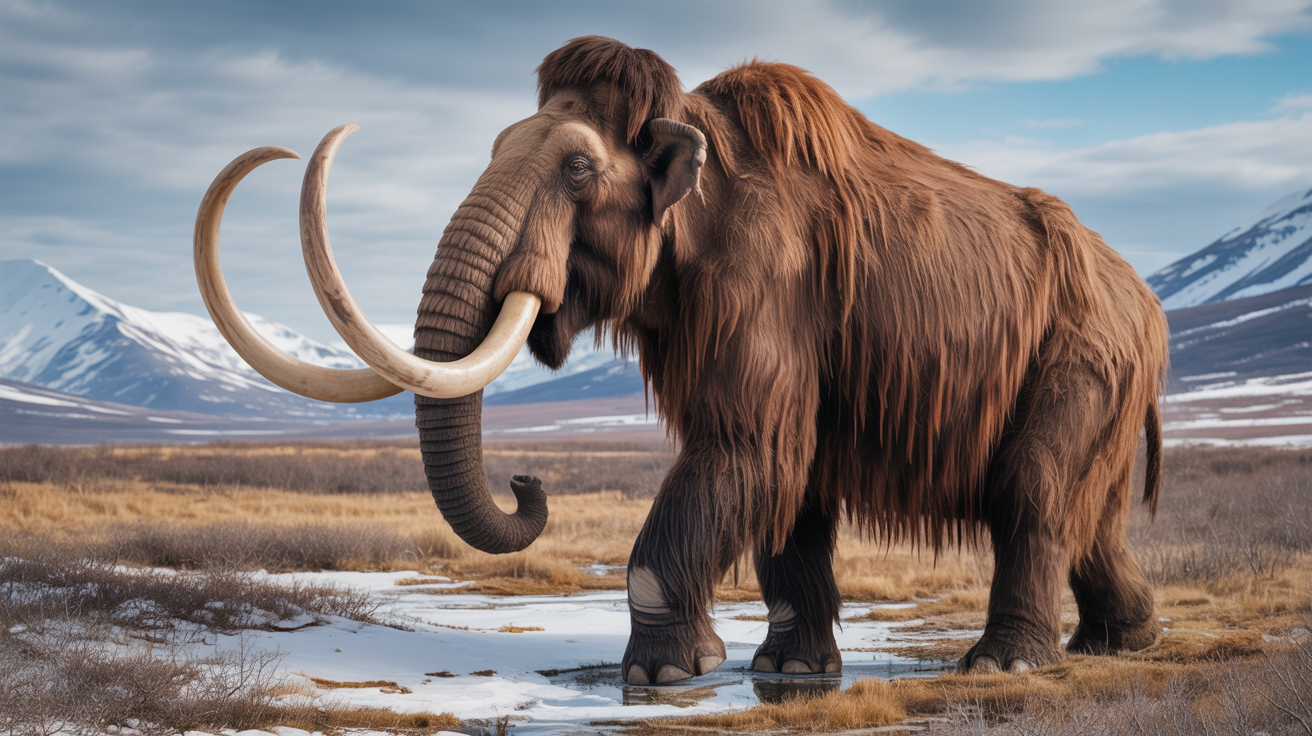
The woolly mammoth (Mammuthus primigenius) was not the largest mammoth. It stood around 3 metres at the shoulder, roughly the size of a modern African elephant, and both the Columbian mammoth and the earlier steppe mammoth were considerably bigger; the woolly form was the cold-adapted specialist, not the giant. Everything about it reduced heat loss: small ears and a short tail, a fat layer up to 10 centimetres thick, a two-layered coat with coarse guard hairs over dense underwool, and a modified trunk tip. Ancient DNA has even shown a variant of haemoglobin that releases oxygen efficiently at low tissue temperatures, letting the animal cool its extremities without losing oxygen delivery, a molecular cold adaptation reconstructed and tested in the laboratory in 2010. Its enormous curved tusks, up to 4.2 metres, carry wear facets on their undersides consistent with being swept sideways to clear snow from vegetation. Analysis of gut contents and dung shows it ate mainly grasses and herbaceous plants, not moss, and it lived in a productive habitat now gone, the mammoth steppe. The last woolly mammoths did not die at the end of the Ice Age. A relict population survived on Wrangel Island in the Arctic Ocean until roughly 4,000 years ago, well after the Egyptian pyramids were built.