
Vulnerable Animals
144 species in the encyclopedia
Species facing a high risk of extinction in the wild if circumstances do not improve.
African Golden Cat
Caracal aurata
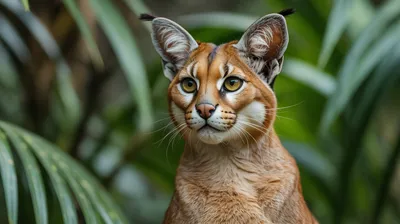
The African Golden Cat is a medium-sized, elusive wild cat native to the rainforests of Central and West Africa. It has a robust build, with a short tail and rounded ears, and its fur color ranges from golden or reddish-brown to silvery-grey, often marked with faint spots or stripes. This solitary and primarily nocturnal feline is seldom seen in the wild due to its secretive nature and dense forest habitat. African Golden Cats are skilled hunters, preying on a variety of small to medium-sized mammals, birds, and reptiles.
African Lion
Panthera leo
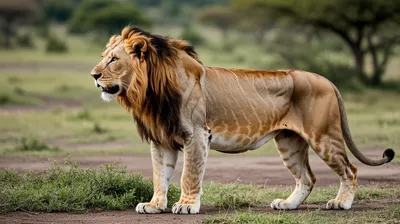
The lion is the only truly social cat, and its social life explains most of what it is. A male's mane is an honest advertisement: darker manes correlate with higher testosterone and better nutrition, and in Serengeti experiments using life-sized dummy lions, females approached dark-maned models while rival males avoided them. Manes are costly — dark manes trap heat, which is why males in hot, arid places such as Tsavo are often nearly maneless, and why mane colour lightens in cooler seasons. The roar carries up to about 8 km, produced by unusually square, fat-padded vocal folds that let the lion push huge volume without straining the larynx. Prides are matrilineal, and the females stay for life while coalitions of males hold tenure for only a couple of years before being ousted; incoming males kill the cubs, which brings the females back into oestrus. Lionesses do most of the hunting, but males are decisive on large, dangerous prey such as buffalo. Fewer than about 25,000 remain in the wild, in a fraction of a range that once stretched from Greece to India.
African Pancake Tortoise
Malacochersus tornieri
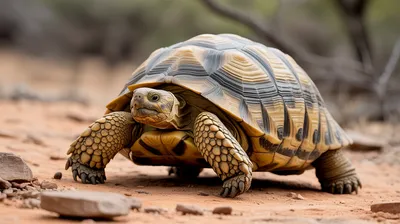
The pancake tortoise abandoned the one thing tortoises are famous for: armour. Its shell is flat, thin and riddled with large fenestrations — genuine holes in the underlying bone — so the whole carapace flexes like a stiff leather pad. Squeezed into a crack in a granite kopje, the tortoise inflates its lungs and braces outward with its legs, wedging itself so firmly that a predator cannot extract it; the flexible shell lets it exploit crevices far too narrow for a domed tortoise. It does not withdraw and sit tight, because it cannot — instead it is the fastest tortoise known, and will simply run for the nearest rock and disappear. The low mass that comes with a hollow shell also means that, unlike a heavy domed species, a flipped pancake tortoise can right itself with a flick of the neck and leg. It lives on rocky outcrops in Kenya and Tanzania, lays a single egg at a time several times a year, and was moved to CITES Appendix I in 2019 after collectors stripped whole kopjes for the pet trade.
African Spurred Tortoise
Centrochelys sulcata
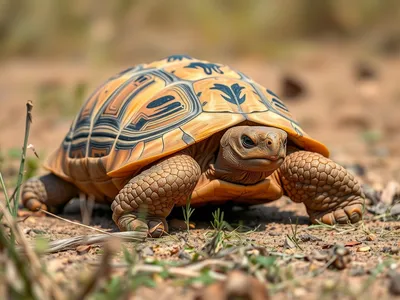
The sulcata is the largest mainland tortoise on Earth — outweighed only by the island giants of Aldabra and Galapagos — and it can pass 100 kg. It survives the Sahel by engineering its own climate: it excavates burrows that can run 3 m deep and over 10 m long, where humidity stays high and temperature stable, and it aestivates through the worst of the dry season inside. Those burrows are a keystone resource, sheltering rodents, snakes, lizards and invertebrates that would otherwise cook. The tortoise stores water in an enlarged bladder and reabsorbs it as needed, which is why it can go months without drinking, feeding on dry grasses that most herbivores cannot digest. The "spurs" of its name are the conical, horny scales on the back of each thigh. Its size is also its tragedy in captivity: sold as a hatchling the size of a golf ball, it grows into a burrowing, fence-flattening animal that outlives its owner, and reptile rescues across the United States are permanently overwhelmed with abandoned adults.
Aldabra Giant Tortoise
Aldabrachelys gigantea
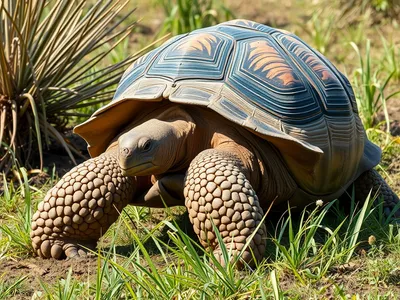
Aldabra Atoll in the Seychelles carries roughly 100,000 giant tortoises — many times the number in all of Galapagos, making it by far the largest population of giant tortoises on Earth, and one of the last places where a reptile is the dominant grazing herbivore. Their grazing has produced "tortoise turf": a dwarfed, low-growing sward of grasses and herbs that flower at ground level, plants that evolved under constant cropping in the same way that grasses coevolved with mammalian grazers elsewhere. The main killer on Aldabra is not predation but heat. A tortoise has no way to shed heat quickly, and on an atoll with little shade, animals caught out in the open at midday can die of hyperthermia; competition for shade is real and lethal. They will stand on their hind legs to reach higher browse, and populations differ in neck length accordingly. They are also opportunistic and unsentimental feeders, gnawing bones and eating carrion for calcium and protein.
Alligator Snapping Turtle
Macrochelys temminckii
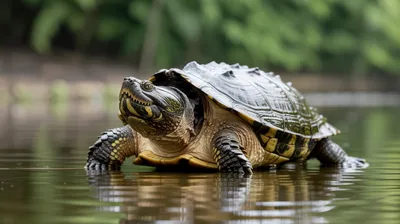
The alligator snapping turtle is one of very few vertebrates that fishes with a lure. It lies on the river bottom with its jaws open and wiggles a pink, worm-shaped appendage on the floor of its tongue; a fish that comes to inspect the "worm" is taken by a strike that closes the jaws in a fraction of a second. It is a genuine ambush specialist that may sit motionless for so long that algae grow on its shell, and its three high ridges of keels, hidden eyes set at the sides of the head, and hooked beak separate it clearly from the far more aggressive common snapper. The popular claim that it can bite through a broomstick is not true: measured bite forces are around 150 pounds of force, respectable but comparable to a large dog and well below the crushing power of many turtles that eat shellfish. Males can exceed 100 kg. Populations across the Mississippi basin were gutted in the twentieth century by commercial harvest for turtle soup, and the species is slow-maturing enough that recovery takes decades.
Amazonian Manatee
Trichechus inunguis
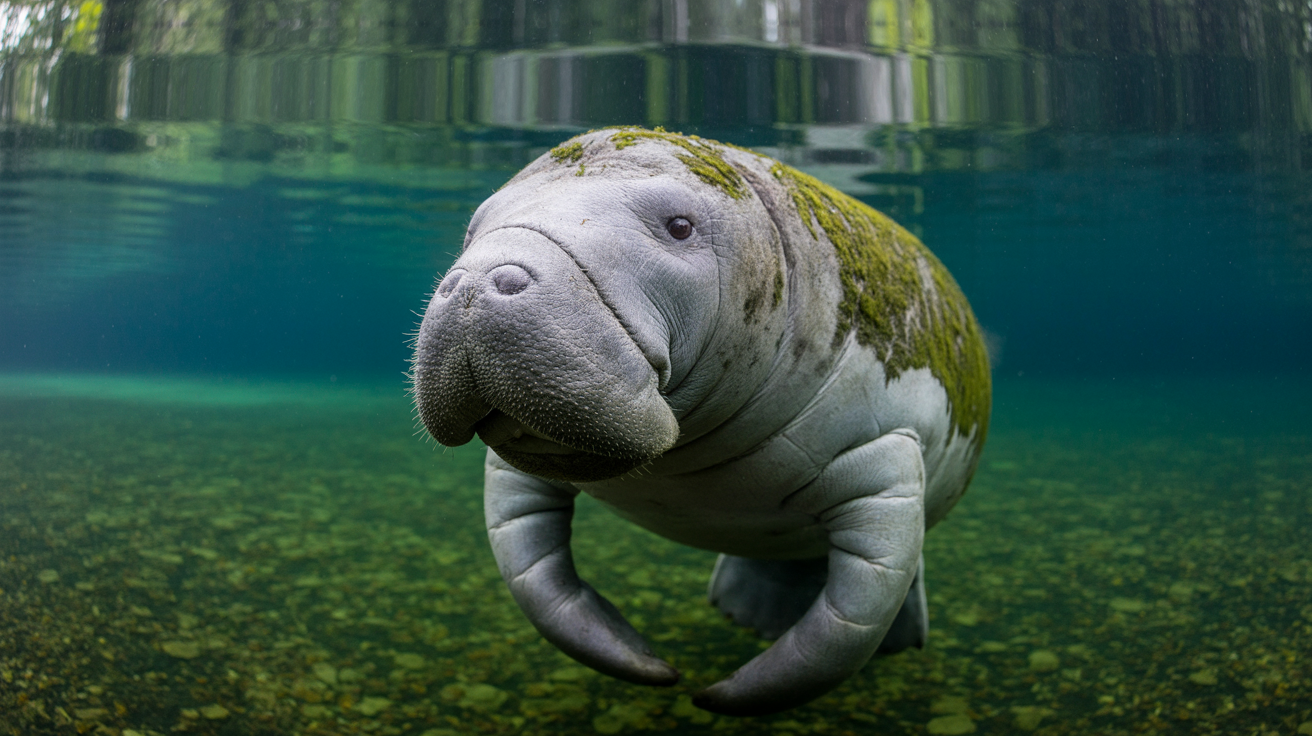
The Amazonian manatee is the only sirenian that lives exclusively in fresh water, never entering the sea, and it is the smallest and slimmest of the manatees. Its scientific name, Trichechus inunguis, means "without nails" — unlike its Caribbean cousin it has no nails on its flippers. Its survival strategy is extreme patience: when the Amazon's floodwaters retreat, animals are stranded in shrinking lakes with almost nothing left to eat, and a manatee may simply fast for months, living off fat laid down in the flood season and letting its metabolic rate fall. Individuals have been documented going without significant food through most of the dry season. The teeth solve the other problem: aquatic plants are loaded with abrasive silica, so manatee molars march forward along the jaw throughout life, worn ones dropping out at the front and new ones erupting at the back, a conveyor belt shared with elephants, their closest living relatives. Between the 1930s and 1950s hundreds of thousands were killed for their tough hide, which was made into machine belts and hoses.
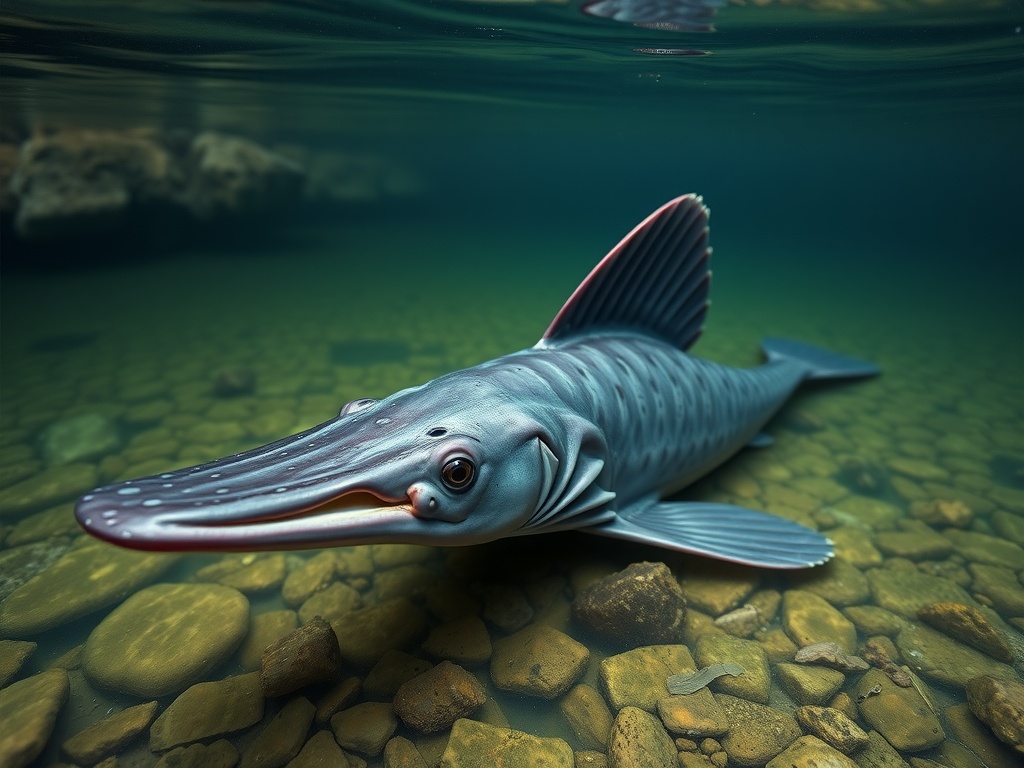
American Paddlefish
Polyodon spathula
The American Paddlefish is a large, ancient freshwater fish known for its long, paddle-shaped snout, called a rostrum, which can be up to one-third of its body length. It inhabits slow-moving waters of large rivers and reservoirs in the Mississippi River basin of North America. Paddlefish are filter feeders, primarily consuming zooplankton by swimming with their mouths open. This species is highly adapted to sensing electrical fields in the water with electroreceptors on its rostrum. Due to habitat fragmentation, overfishing, and pollution, American Paddlefish populations have declined in recent decades.
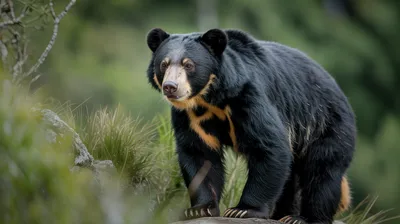
Andean Bear
Tremarctos ornatus
The Andean bear is South America's only bear, and it is the last survivor of the short-faced bears — the subfamily Tremarctinae, which also produced the enormous extinct Arctotherium and Arctodus. That ancestry shows in its face: a short, deep muzzle with powerful jaw muscles, but here it is used for crushing plant matter rather than bone. It is overwhelmingly a herbivore, working through bromeliads, palm hearts, orchid bulbs and unripe fruit — tough, fibrous material that requires exactly that bite. It is a superb climber and will build a platform of broken branches in a tree, part feeding stage, part daybed, and these platforms are often the easiest sign that a bear is present in cloud forest. Living in a climate with no hard winter, it does not hibernate, and females can give birth at almost any time of year. The pale markings around the eyes and muzzle are unique to each individual, which is what lets camera-trap researchers count them.
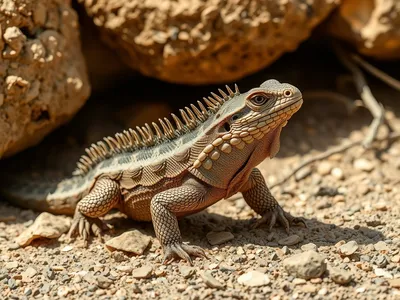
Armadillo girdled lizard
Ouroborus cataphractus
The armadillo girdled lizard defends itself exactly the way its namesake does. Threatened, it takes its own tail in its mouth and curls into a tight ring, turning the soft belly inward and presenting nothing but a wall of heavy, spined scales — an armoured doughnut that a predator can get no purchase on and cannot easily swallow. It lives in the rocky, arid scrub of western South Africa, sheltering in cracks in sandstone outcrops, and unusually for a lizard it is social: groups of up to several dozen share the same crevices. That sociality is precisely why it has become such a target for the illegal pet trade, since an entire colony can be taken at once by cracking open a single rock. It is unusual in another way too — it gives birth to live young, one or two at a time, rather than laying eggs, and females have been recorded feeding their offspring, which is close to unheard of among lizards. It reproduces very slowly and is now protected.
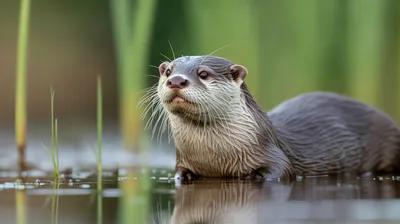
Asian Small-clawed Otter
Aonyx cinereus
The smallest otter in the world, at roughly 3 to 5 kg, has given up on the standard otter toolkit. Its claws are blunt and barely project past the toe pads, and its webbing is reduced, and both are trade-offs for something else: exceptionally sensitive, dexterous forepaws. It hunts largely by touch, sweeping its hands through mud and under rocks for crabs, snails and mussels the way a raccoon does, rather than chasing fish. Its molars are broad and rounded — crushing teeth, not slicing ones — and it will carry a hard-shelled prey item ashore and let the sun open it rather than force it. It is intensely social, living in extended family groups of a dozen or more, with a vocal repertoire of at least a dozen distinct calls and a shared latrine site. Its popularity as an "otter cafe" and social media pet drove a surge in illegal capture from Southeast Asia, and it was moved to CITES Appendix I in 2019.
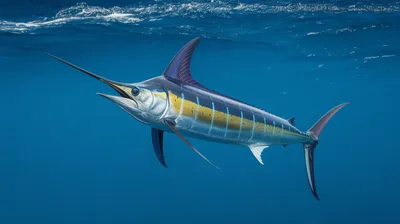
Atlantic Blue Marlin
Makaira nigricans
The Atlantic Blue Marlin is one of the largest and most powerful fish in the ocean, renowned for its elongated bill and vibrant cobalt-blue coloration. Found throughout the tropical and subtropical waters of the Atlantic Ocean, this majestic predator is a prized catch among sport fishers due to its incredible speed and acrobatic leaps. Blue marlins are solitary hunters, using their sharp bills to slash through schools of fish with precision. Females are notably larger than males, and the species plays a vital role in maintaining the balance of open-ocean ecosystems.
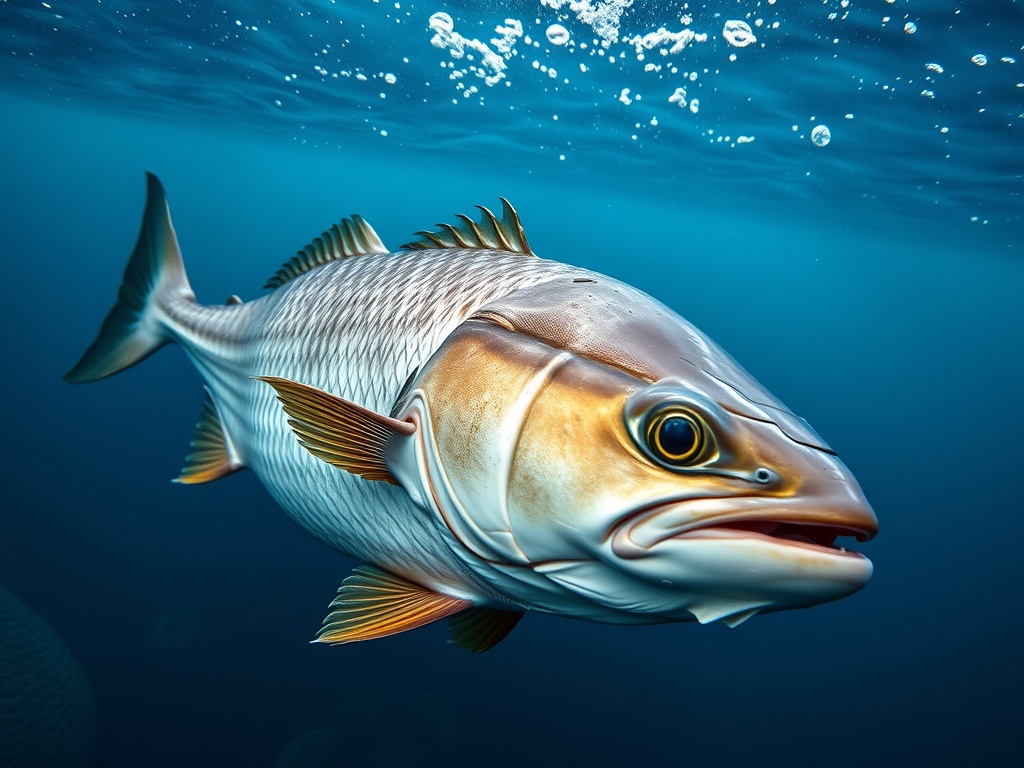
Atlantic cod
Gadus morhua
Atlantic cod is the fish that built empires and then supplied the twentieth century's most notorious fisheries collapse. Basque and Portuguese boats were working the Newfoundland banks before Cabot formally "discovered" them, and salt cod fed European navies, plantations and armies for four centuries. Then, in July 1992, Canada closed the northern cod fishery outright, throwing roughly 30,000 people out of work in a single announcement; the stock, which had already fallen by more than 95 percent, has still not properly recovered more than three decades later. Cod are astonishingly fecund — a large female can release several million eggs in a season — which is exactly why nobody believed they could be fished out. Fishing also changed the fish itself: by removing the biggest, oldest, latest-maturing individuals for decades, it selected for cod that mature younger and smaller, an evolutionary shift that makes recovery harder. Northern cod carry antifreeze glycoproteins in the blood, letting them work water below the normal freezing point of their body fluids.
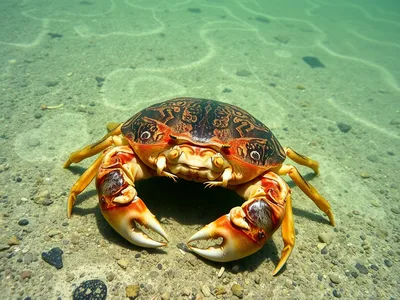
Atlantic Horseshoe Crab
Limulus polyphemus
The horseshoe crab is not a crab. It is closer to spiders and scorpions than to anything crustacean, and its body plan has run essentially unchanged for something like four hundred and fifty million years — it was old before the dinosaurs. Its blood is blue, because it carries oxygen with copper rather than iron, and it contains cells of extraordinary usefulness: they clot violently in the presence of bacterial endotoxin, in quantities almost too small to measure. That reaction was turned into a test, and it is now the global standard for checking that vaccines, injectable drugs and implanted devices are free of contamination — which means that essentially every injection given to a human being has been screened using the blood of this animal. Hundreds of thousands are caught each year, bled, and returned to the sea, a practice that is now under pressure as synthetic alternatives are developed. It has ten eyes, and every spring it comes ashore in huge numbers to spawn, feeding the shorebirds that time their migration to arrive exactly then.
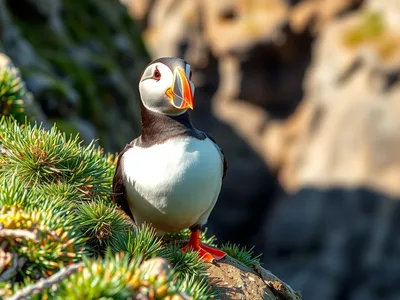
Atlantic Puffin
Fratercula arctica
The Atlantic puffin's parrot-bright bill is a seasonal ornament: the orange, blue and yellow plates are grown for the breeding season and shed afterwards, leaving a smaller, duller bill for the winter at sea. That bill performs a trick few birds manage — a puffin can carry a dozen or more small fish crosswise at once, pinning the catch against backward-pointing spines on its tongue and palate while still opening its beak for the next one. In the air it is frankly inelegant, beating stubby wings around four hundred times a minute just to stay up; underwater those same wings become superb, and the bird effectively flies beneath the surface in pursuit of sandeels and herring. Puffins spend most of the year far out on the open ocean, touching land only to breed, when they nest in burrows dug into clifftop turf or take over abandoned rabbit holes. They are long-lived and faithful to both mate and burrow, returning to the same patch of cliff year after year. Their decline is mostly a food-web problem: warming seas have pushed the small fish they depend on beyond reach of the colonies.
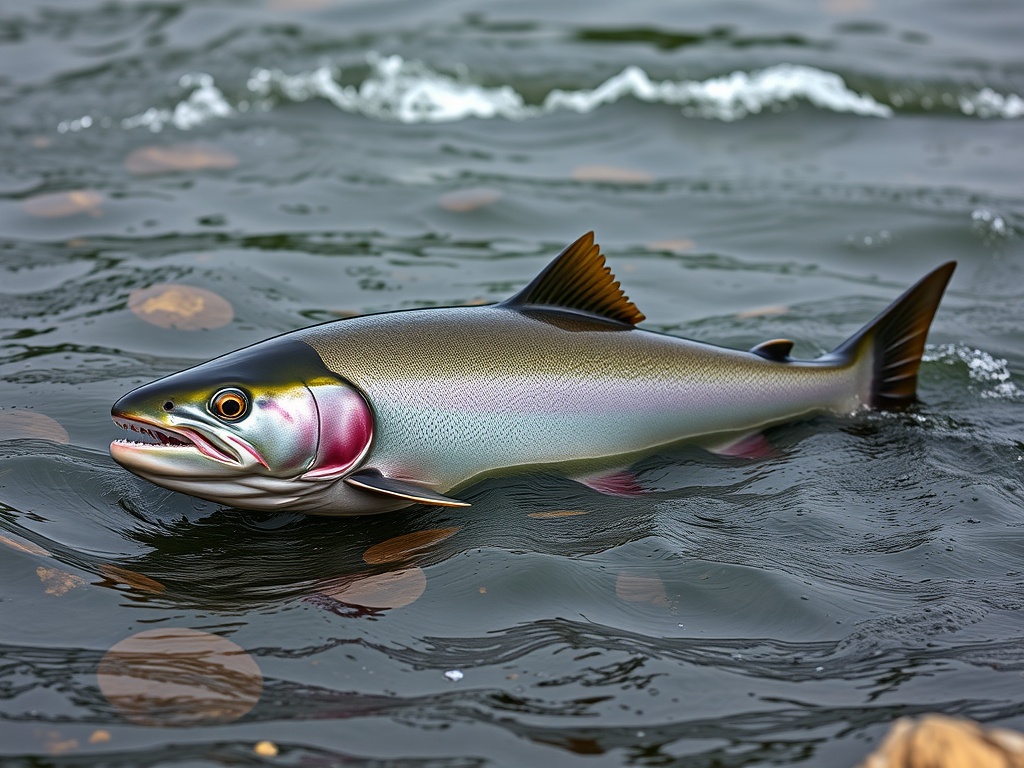
Atlantic salmon
Salmo salar
Atlantic salmon breaks the rule everyone learns from Pacific salmon: it does not have to die after spawning. A spent fish, called a kelt, can drop back to sea, feed, recondition and return to spawn again, and repeat spawners — usually large females — are disproportionately valuable to a population. The migration involves a full physiological rebuild. A parr living in fresh water turns into a smolt: it silvers, its gill cells switch from retaining salt to excreting it, its kidneys change function, and its behaviour flips from territorial to schooling, all within weeks. It finds its way home with what appears to be a magnetic map for the ocean crossing, then switches to olfaction, homing on the specific chemical signature of the stream it was imprinted on as a juvenile. Small male parr that never went to sea at all can sneak into a redd and fertilise eggs while a large sea-run male is fighting off rivals — and in some rivers those tiny males fertilise a serious share of the eggs.
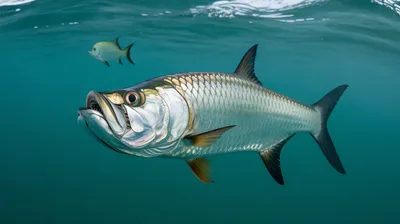
Atlantic Tarpon
Megalops atlanticus
The tarpon is a large silver fish that breathes air. Its swim bladder connects to the oesophagus and is lined with spongy, alveolar-like tissue, so the fish gulps at the surface — anglers call it "rolling" — and can extract oxygen directly. This is not a curiosity: it is what lets juvenile tarpon survive in stagnant, near-anoxic mangrove pools and ditches where no predator can follow them, and those foul backwaters are the species' nursery. It is an ancient fish in a very literal sense: the larva is a leptocephalus, a transparent, ribbon-like, leaf-shaped creature almost identical to an eel's, marking tarpon as members of the Elopomorpha, a lineage that split off near the base of the modern bony fish. Adults exceed 2 m and 100 kg, live 50 to 80 years, and spawn offshore around new and full moons, with the ribbon larvae drifting back into the estuaries. Its mouth is a bony, unyielding bucket, which is why anglers lose most of the fish they hook.
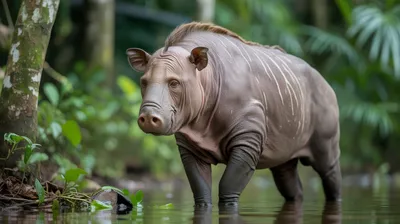
Babirusa
Babyrousa celebensis
The babirusa is a Sulawesi pig with tusks that grow the wrong way. In males, the upper canines rotate in their sockets and grow upward, penetrating straight through the skin of the snout, then curve backward toward the forehead. They are not used against rivals in any obvious way — they may serve as a shield against the lower tusks of an opponent, or simply as a display — and because they never stop growing, an old male whose tusks are not worn or broken can, in rare recorded cases, have one curve back and penetrate his own skull. The name means "pig-deer" in Malay, from those antler-like tusks. Its guts are also unusual: the stomach is complex and sacculated, closer to a ruminant's than to a normal pig's, and it appears to ferment plant material more thoroughly than other suids. It roots comparatively little, because it lacks the reinforcing rostral bone in the snout that lets other pigs plough soil, and it feeds heavily on fallen fruit and leaves.
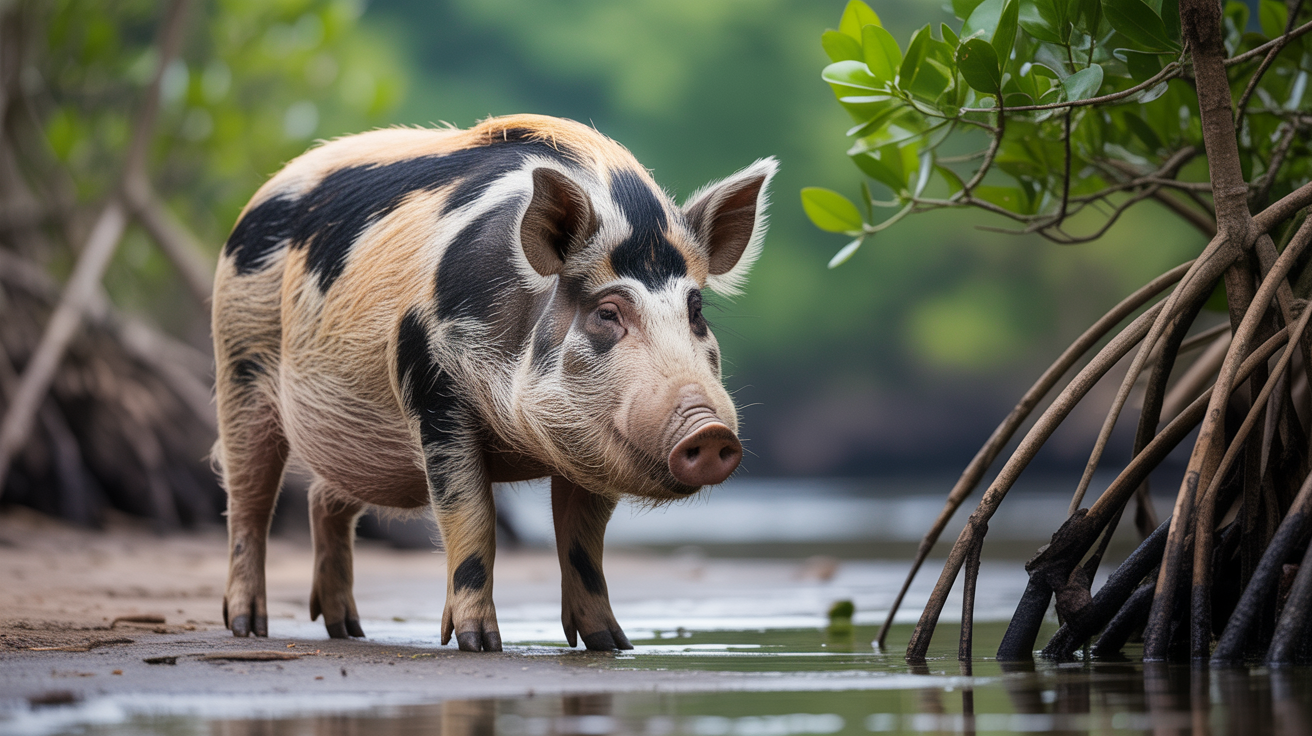
Bearded Pig
Sus barbatus
The bearded pig is a wild pig species native to Southeast Asia, easily recognizable by the distinctive beard-like whiskers that grow along its snout and cheeks. It has a relatively slender body, long legs, and a shaggy coat that ranges from gray to brown, providing effective camouflage in its forested habitat. Bearded pigs are highly adaptable foragers, often traveling long distances in search of food, and are known for their migratory behavior in response to fruiting events. They play a vital ecological role in seed dispersal and forest regeneration. Social and intelligent, bearded pigs often form small groups called sounders, especially when food is abundant.
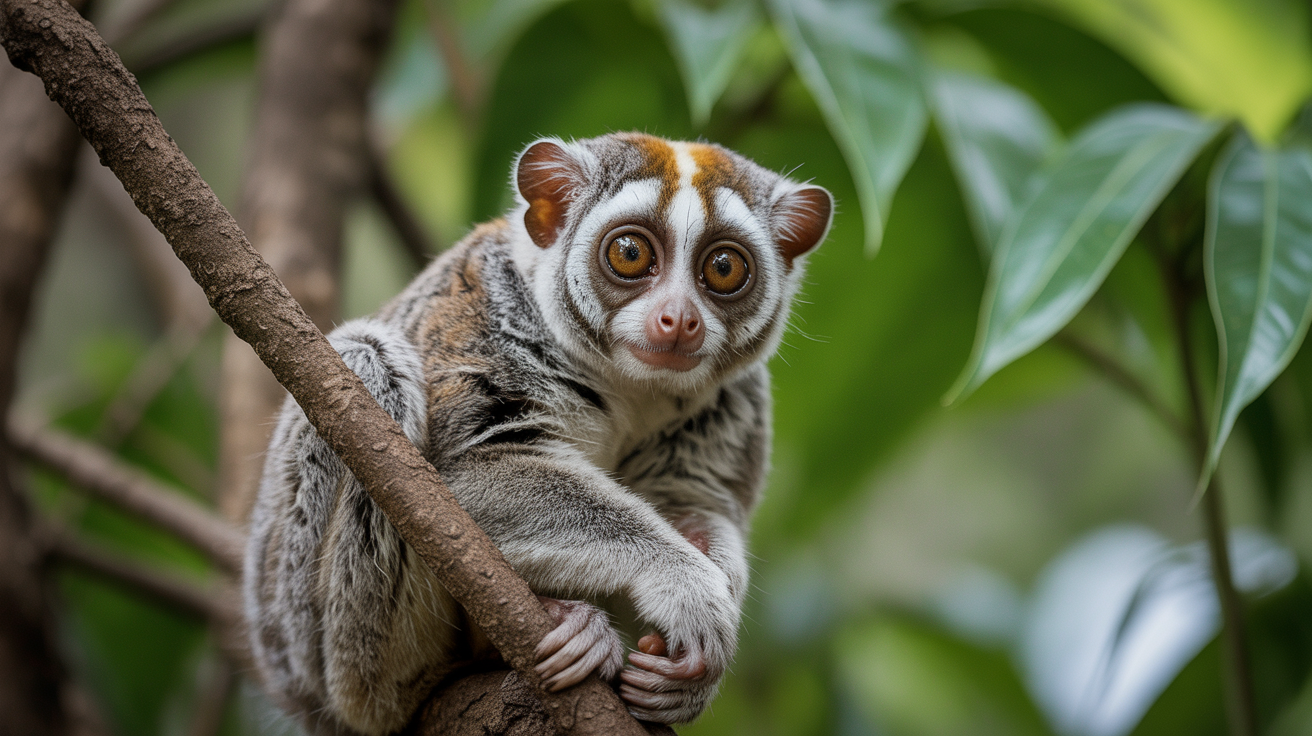
Bengal Slow Loris
Nycticebus bengalensis
The slow loris is the only venomous primate in the world, and the mechanism is peculiar enough that it took a long time to be believed. It has a gland on the inside of the upper arm that secretes an oily toxin, and it raises its arms above its head and licks that gland, mixing the secretion with its saliva — only then is the bite venomous. The combined toxin can cause severe, slow-healing wounds and, in humans, anaphylactic shock. A mother will also groom the toxin into her infant's fur before leaving it parked on a branch while she forages, which appears to deter predators from the unguarded baby. Its slowness is not laziness but strategy: it moves with a deliberate, fluid, almost mechanical crawl that generates none of the sudden motion a predator's eye is tuned to detect, and it can hold a branch with a grip that does not tire, thanks to a network of blood vessels in its limbs. The pet trade routinely pulls its teeth out with pliers.
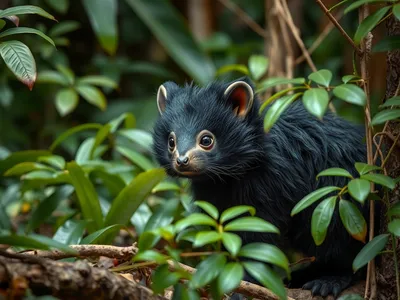
Binturong
Arctictis binturong
The binturong smells of buttered popcorn, and this is not a figure of speech. Its urine contains 2-acetyl-1-pyrroline, the very same compound produced when popcorn is heated and the molecule that gives basmati rice its aroma, and the animal produces it without any cooking at all — the compound appears to form as the urine passes through its fur, and it uses it to mark territory as it moves through the canopy, dragging its tail and leaving the scent behind. It is a viverrid, related to civets, and it is one of only two carnivorans in the world with a genuinely prehensile tail — it can hang by it, using it as a fifth limb in the trees. It is a slow, heavy, arboreal animal that eats mostly fruit, especially figs, and it is one of the few animals whose gut can soften the tough seed coat of the strangler fig, which makes it an important disperser. Females can delay implantation, timing birth to the season rather than to mating.
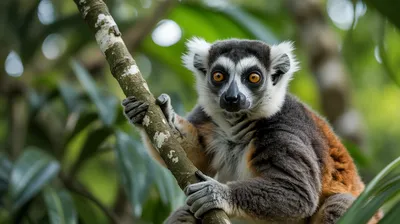
Black Lemur
Eulemur macaco
The Black Lemur is a striking primate endemic to the northwestern tip of Madagascar and neighboring islands. Males are entirely black, while females are brown with white ear tufts, making them easily distinguishable by sex. These medium-sized lemurs are highly social and live in groups, primarily inhabiting tropical forests. Black Lemurs are arboreal, spending most of their lives in the tree canopy, and are known for their playful and curious nature. Their populations are threatened by habitat loss and hunting, rendering them vulnerable in the wild.
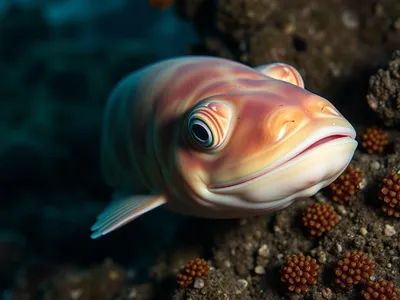
Blobfish
Psychrolutes marcidus
The blobfish is famous for a photograph that badly misrepresents it. In its natural habitat, 600 to 1,200 m down off Australia and New Zealand, it looks like an unremarkable, chunky, big-headed fish; the sagging, melted face the internet knows is what happens when a body adapted to roughly a hundred atmospheres is hauled to the surface and decompresses. The real adaptation is subtler and more interesting. It has almost no swim bladder, because a gas-filled organ is useless and dangerous at that depth, and instead its flesh is a gelatinous tissue of very low density — marginally less dense than seawater — so the fish simply hovers just above the seafloor at zero energetic cost. It has minimal muscle and a reduced skeleton, because it does not chase anything: it waits, mouth open, and takes whatever crustaceans and invertebrates drift or crawl within reach. It is a fish designed to spend almost no energy at all.
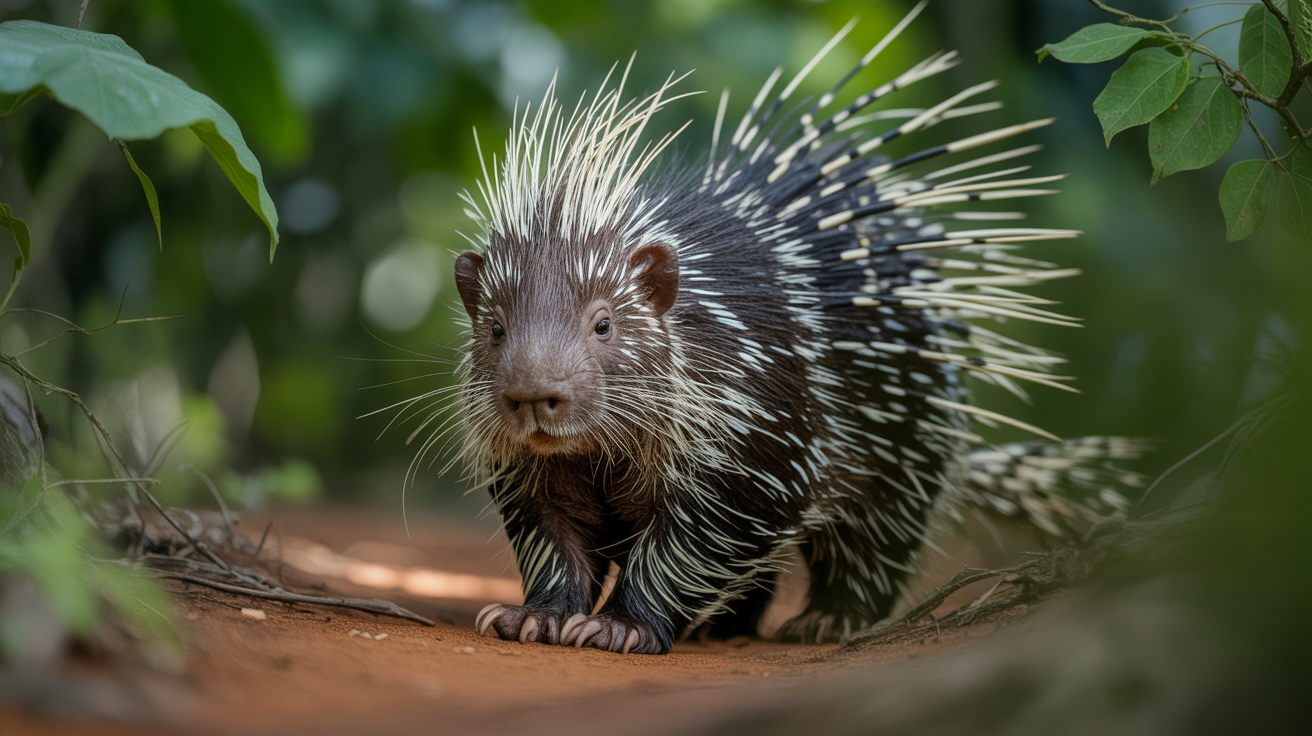
Bristle-spined Porcupine
Chaetomys subspinosus
The Bristle-spined Porcupine is a unique rodent native to the Atlantic Forest of eastern Brazil. Unlike other porcupines, it has long, bristle-like spines mixed with fur rather than rigid, sharp quills. This nocturnal and arboreal animal is secretive and difficult to spot in the wild. Adapted for a life in the trees, it uses its strong limbs and prehensile tail to navigate through dense forest canopies. The species is threatened mainly by habitat loss, making it an increasingly rare sight.