
Critically Endangered Animals
76 species in the encyclopedia
Species facing an extremely high risk of extinction in the wild — the last step before Extinct in the Wild.
Addax
Addax nasomaculatus
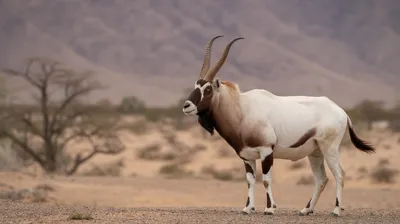
The addax is a desert antelope so committed to aridity that a wild individual may never drink standing water in its life, extracting all it needs from desert grasses, acacia and the dew that condenses on plants before dawn. Its kidneys concentrate urine to a syrup and it feeds mainly at night, when the sparse Sahelian vegetation has reabsorbed the most moisture. The coat performs a seasonal trick: greyish-brown for winter warmth, then bleaching to near-white in summer to reflect the sun. Broad, splayed hooves with flattened soles spread its weight across soft dunes where a hard-hoofed antelope would sink. That same dune-adapted build makes the addax a poor sprinter over firm ground, and this is precisely what destroyed it — once hunters had four-wheel-drive vehicles, an animal that could outlast a lion could not outrun a truck. Both sexes carry spiralling horns of two to three twists, up to about 80 cm long. Today it is one of the most endangered large mammals on Earth, with a wild population in the Termit and Tin Toumma region of Niger that has at times been counted in the dozens.
African cichlid
Various (notably Pseudotropheus zebra, Haplochromis burtoni, and others)
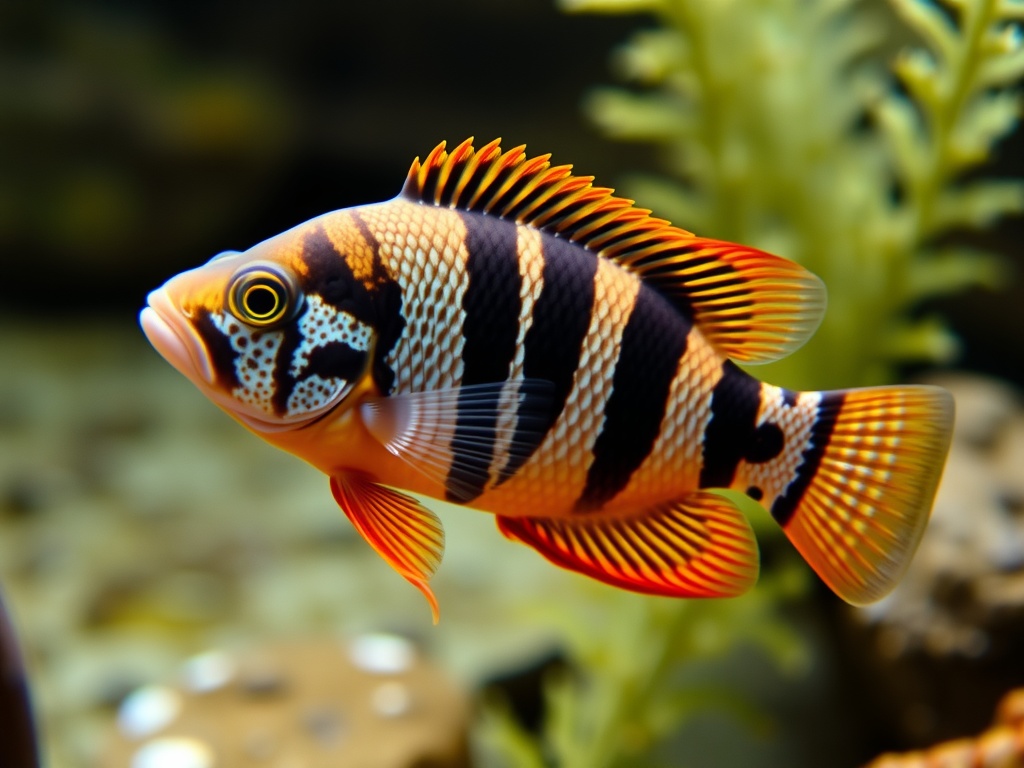
African cichlids are a diverse group of freshwater fish native primarily to the Great Rift Valley lakes of East Africa, especially Lakes Malawi, Tanganyika, and Victoria. They are renowned for their vivid coloration, complex social behaviors, and remarkable adaptability, with hundreds of species exhibiting a wide range of shapes and sizes. African cichlids are popular in the aquarium trade due to their striking appearance and active personalities, but they require specialized care. Their rapid speciation and ecological diversity make them a key subject in evolutionary biology studies. These fish play important roles in their native ecosystems, contributing to the unique biodiversity of African freshwater habitats.
Anderson's Salamander
Ambystoma andersoni
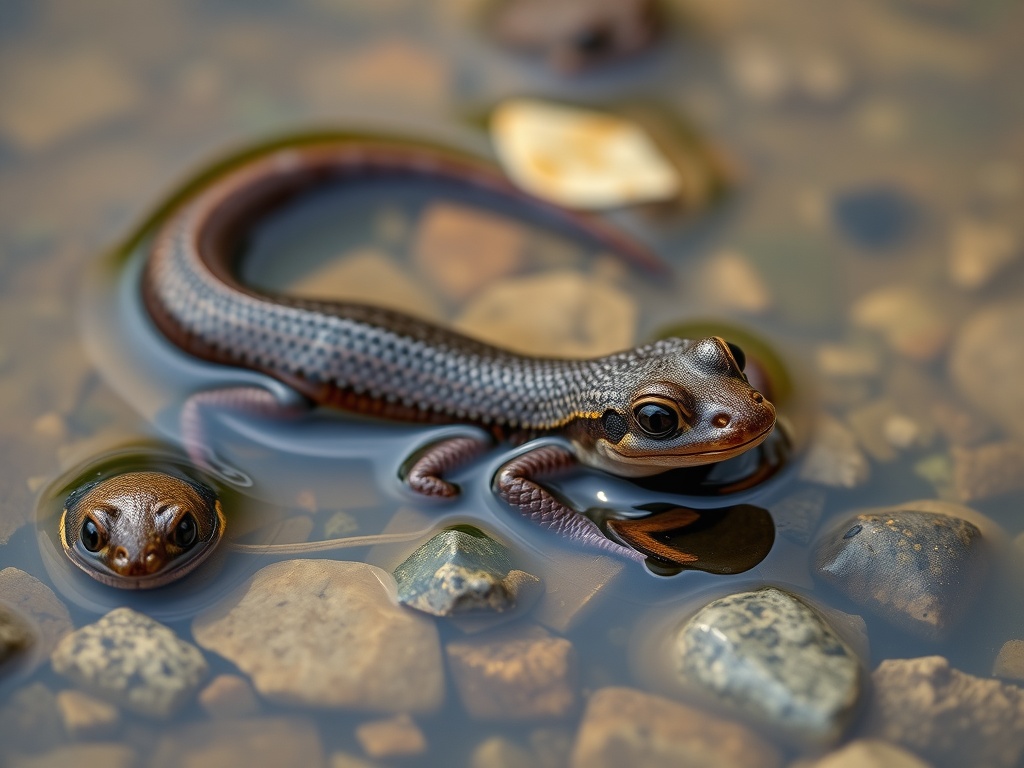
Anderson's Salamander is a critically endangered amphibian native to a single high-altitude lake, Lake Zacapu, in Michoacán, Mexico. It is a large, fully aquatic salamander characterized by its external feathery gills and robust, dark-colored body. Unlike many amphibians, Anderson's Salamander exhibits neoteny, meaning it retains larval features such as gills throughout its life and does not metamorphose into a terrestrial form. The species is adapted to cold, clear freshwater environments and is highly sensitive to habitat degradation. Due to its restricted range and specialized habitat requirements, Anderson's Salamander is extremely vulnerable to environmental changes.
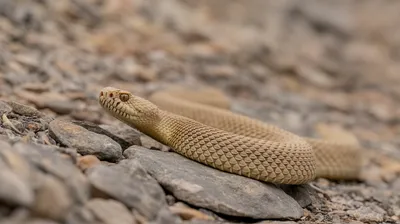
Aruba Island Rattlesnake
Crotalus unicolor
The Aruba Island Rattlesnake is a highly endangered pit viper species endemic to the island of Aruba in the southern Caribbean. It has a light brown or grayish coloration with faint, diamond-shaped patterns that help it blend into the arid, rocky hillsides where it lives. Adapted to a desert-like environment, this snake is primarily nocturnal, emerging at dusk to hunt small mammals, birds, and lizards. With a calm disposition compared to other rattlesnakes, it is rarely encountered by humans and plays a vital role in its ecosystem as both predator and prey.
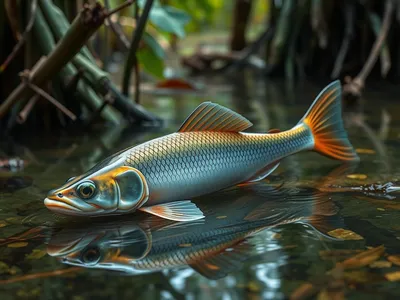
Asian arowana
Scleropages formosus
The Asian arowana is the most expensive aquarium fish in the world, and the reason is entirely cultural rather than biological: its large metallic scales, barbels and sinuous swimming resemble a Chinese dragon, and it is prized in Chinese communities as a bringer of wealth and a deflector of bad luck. Red-toned specimens have changed hands for tens of thousands of dollars. Listed on CITES Appendix I since 1975, it can legally cross borders only from registered captive-breeding farms, and individual fish are microchipped and issued certificates — a paperwork regime that looks more like the diamond trade than the pet trade. Biologically it is a surface predator with an upturned, drawbridge mouth, and it can launch itself well clear of the water to snatch insects and even small birds from overhanging branches, which is why it is called the water monkey. The male is a mouthbrooder, carrying eggs and then free-swimming fry inside his mouth for weeks and releasing them to feed.
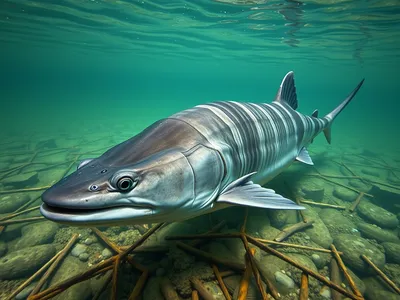
Atlantic sturgeon
Acipenser oxyrinchus
The Atlantic sturgeon is armoured with bony scutes rather than scales, has a skeleton that is largely cartilage, and finds its food without ever seeing it. Four barbels drag along the bottom, and the underside of the long snout is studded with ampullae — electroreceptors that detect the faint electrical fields of buried worms and crustaceans — after which the toothless mouth extends downward as a tube and vacuums them up. Anadromous like salmon, it runs up rivers to spawn, but it plays a much slower game: females may not mature until somewhere between seven and thirty years old depending on latitude, and then spawn only once every two to five years. That reproductive schedule is what makes them so easy to destroy. In the 1880s a caviar rush on the Delaware River made the Atlantic sturgeon a "black gold" fishery, and the population was gutted within a generation. Fish reach 4 m and can live sixty years, and they leap clear of the water for reasons still argued over — group cohesion is the leading hypothesis.
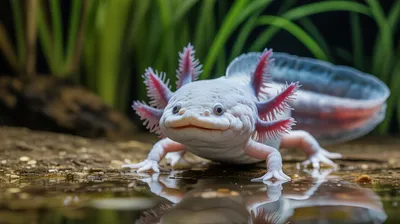
Axolotl
Ambystoma mexicanum
The axolotl (Ambystoma mexicanum) is a unique amphibian native to the ancient lake systems of Xochimilco and Chalco in Mexico City. Unlike most salamanders, axolotls exhibit neoteny, meaning they retain juvenile traits throughout their life, such as their feathery external gills and aquatic lifestyle. These amphibians typically grow to about 15 to 45 cm in length, with a notable regenerative ability that allows them to regrow entire limbs, spinal cords, and even parts of their brain. Axolotls are often mistaken for the larval stage of other neotenic salamanders, such as the tiger salamander (Ambystoma tigrinum), but they can be distinguished by their fully aquatic nature and distinct coloration, ranging from wild-type brown to leucistic pink. The retention of larval features in axolotls is an adaptive trait that allows them to exploit aquatic resources without the competition from terrestrial adults. In the wild, their populations are critically endangered due to habitat loss and pollution, making them a subject of significant conservation efforts.
Bactrian Camel
Camelus bactrianus
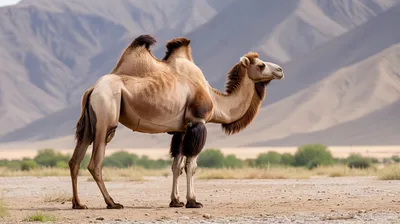
The two humps of a Bactrian camel are fat, not water — a strategic decision to store the body's insulation in two lumps on the back rather than spread beneath the skin, so that the rest of the body can radiate heat freely. A well-fed camel's humps stand firm; a starved one's flop over. The camel's water tricks are elsewhere. It can lose up to about 30 percent of its body water, a level that would kill most mammals through blood thickening, because its red blood cells are oval rather than round and unusually elastic — they resist rupturing when the animal rehydrates and can swell enormously. That is what lets a camel drink over 100 litres in a few minutes without its cells bursting. Nostrils close against blowing sand, double rows of eyelashes screen the eyes, and the woolly winter coat sheds in great hanging sheets in spring. The domestic Bactrian is common, but the wild Bactrian camel is now recognised as a separate species with only around a thousand individuals left in the Gobi.
Barbados Threadsnake
Tetracheilostoma carlae
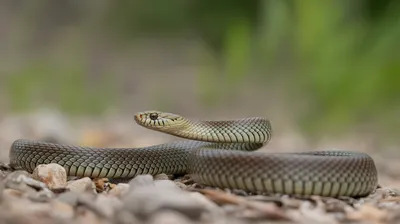
The Barbados threadsnake is the smallest snake in the world: an adult is about 10 cm long and roughly as thick as a strand of spaghetti, and one can coil comfortably on a US quarter. It was described only in 2008, by Blair Hedges, from specimens including one that had been sitting misidentified in a museum for decades. Its size is close to an actual physical floor for snakes, and the reason is reproductive: it lays a single egg, and the hatchling emerges about half the length of its mother. That ratio is extreme, and it reflects a hard constraint — a snake much smaller than this could not produce an offspring large enough to survive and still fit inside itself. Big snakes lay many small eggs; the smallest species are forced into one relatively enormous one. It is a blind, burrowing snake, effectively eyeless, that eats termite and ant larvae underground. It is known only from a few fragments of forest on Barbados, an island whose native forest has been almost entirely cleared for sugar cane.
Black Rhinoceros
Diceros bicornis
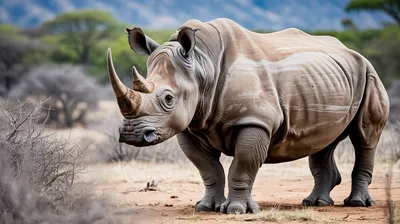
The Black Rhinoceros (Diceros bicornis) is a distinctive member of the rhinoceros family, characterized by its prehensile upper lip which is adapted for grasping twigs and leaves from shrubs and trees. This feature distinguishes it from its relative, the white rhinoceros, which has a wide, flat mouth suited for grazing. Native to a range of habitats across East and Southern Africa, including savannas, grasslands, and deserts, the black rhino's coloration can vary significantly, often appearing in shades of brown or grey rather than true black. Adult black rhinos typically weigh between 800 to 1,400 kilograms (1,760 to 3,090 pounds) and stand at a height of 1.4 to 1.8 meters (4.6 to 5.9 feet) at the shoulder. Despite their massive size, they are surprisingly agile and can run at speeds of up to 55 km/h (34 mph). The species is currently classified as critically endangered, with populations severely impacted by poaching and habitat loss, although conservation efforts have shown some success in recent years.
Black-and-white Ruffed Lemur
Varecia variegata
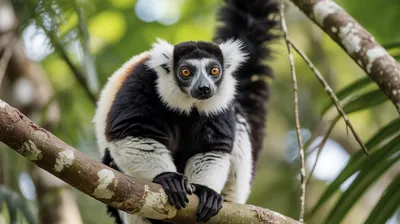
This lemur has a claim that no other primate does: it is probably the world's largest pollinator. The traveller's palm of Madagascar has flowers sealed inside tough bracts that most animals cannot open, and the black-and-white ruffed lemur pulls them apart with its hands, buries its long muzzle inside to drink the nectar, and comes away dusted with pollen that it carries to the next tree. The plant appears to depend on it. Its parenting is equally un-primate-like. Instead of a single infant clinging to its mother, a female bears litters of two or three, and up to six, and does not carry them at all: she builds a nest in the canopy, parks the infants there, and leaves them while she forages, carrying them one at a time in her mouth when she needs to move them. Gestation is only about 102 days and the infants develop fast. It is critically endangered, and it is one of the first species to vanish when rainforest is selectively logged.
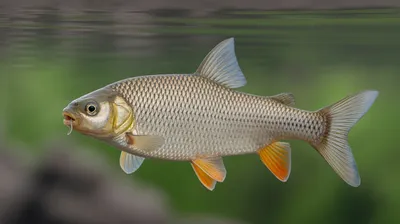
Bonytail Chub
Gila elegans
The Bonytail Chub is a rare freshwater fish endemic to the Colorado River Basin in the southwestern United States. It is easily recognized by its slender body, long bony tail base, and small head, adaptations suited for swift river currents. This species is highly specialized, historically thriving in large, turbulent river systems, but its populations have dramatically declined due to habitat modification and competition from invasive species. Today, the Bonytail Chub is considered one of the most endangered fish in North America and is the focus of extensive conservation and recovery efforts.
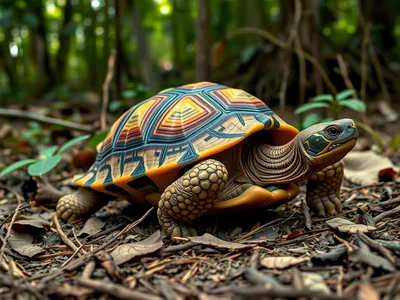
Burmese Star Tortoise
Geochelone platynota
The Burmese Star Tortoise is a medium-sized, critically endangered tortoise native to the dry, deciduous forests of central Myanmar. It is renowned for its beautiful, radiating star-like patterns on its domed shell, which provide effective camouflage among the leaf litter. This herbivorous reptile is primarily terrestrial, spending its days foraging for grasses and other vegetation. Due to habitat loss and poaching for the illegal pet trade, its wild population has been reduced to dangerously low numbers.
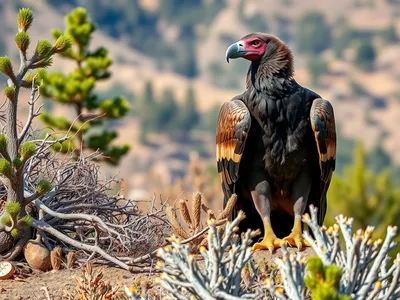
California Condor
Gymnogyps californianus
In 1987 the entire world population of California condors was twenty-two birds, and every one of them was taken into captivity — a decision furiously contested at the time, and the reason the species still exists. Captive breeding, with chicks reared using hand puppets shaped like adult condors so they would not imprint on humans, rebuilt the population into the hundreds, and condors again fly over California, Arizona and Baja. The thing still killing them is lead. Condors are scavengers, and when they feed on carcasses and gut piles left behind by hunters they swallow fragments of lead ammunition, which poisons them — so the recovery is sustained only by routinely trapping wild birds to test and treat their blood. Its bald head is not an aesthetic accident: a feathered head would foul immediately when pushed deep inside a carcass, while bare skin is easy to keep clean, and it also flushes with blood for display and heat regulation. Like other New World vultures it cools itself by defecating down its own legs and letting evaporation carry the heat away. It is the largest land bird in North America, and it can soar for hours on thermals with barely a wingbeat.
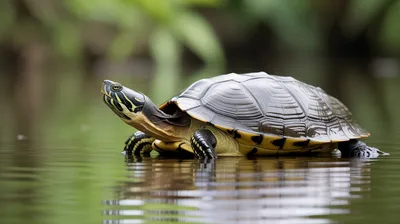
Central American River Turtle
Dermatemys mawii
The Central American River Turtle, also known as 'hickatee,' is an aquatic turtle native to the freshwater rivers and lagoons of Central America. This species has a large, smooth, olive to brown carapace and a distinctive, streamlined head adapted for its aquatic lifestyle. Mainly nocturnal, it spends most of its time submerged, surfacing only to breathe or bask occasionally. As a critically endangered species, it faces serious threats from overhunting and habitat loss, making it one of the world's rarest turtles.
Chinese Giant Salamander
Andrias davidianus
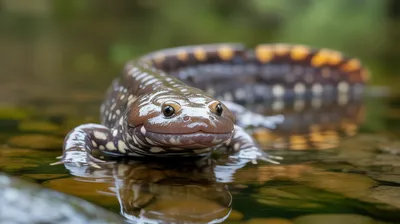
The Chinese giant salamander is the largest amphibian on Earth, reaching 1.8 m, and it breathes almost entirely through its skin — which is why the loose folds and wrinkles along its flanks matter: they are surface area, and they require cold, fast, highly oxygenated mountain streams to work. Remove the oxygen and the animal suffocates in water. Its conservation story is one of the strangest in the world. It was farmed by the million as a luxury food, and farmed animals were released into the wild as a supposed conservation measure — but genetic work has since shown that what was called one species is really a complex of at least five distinct lineages, and the releases dumped the wrong lineage into the wrong rivers, homogenising and swamping the last wild genetic diversity. A field survey covering 97 sites across its range found essentially no verifiably wild animals at all. Its lineage split from other amphibians around 170 million years ago, and it is barely changed from Jurassic fossils.
Coelacanth
Latimeria chalumnae
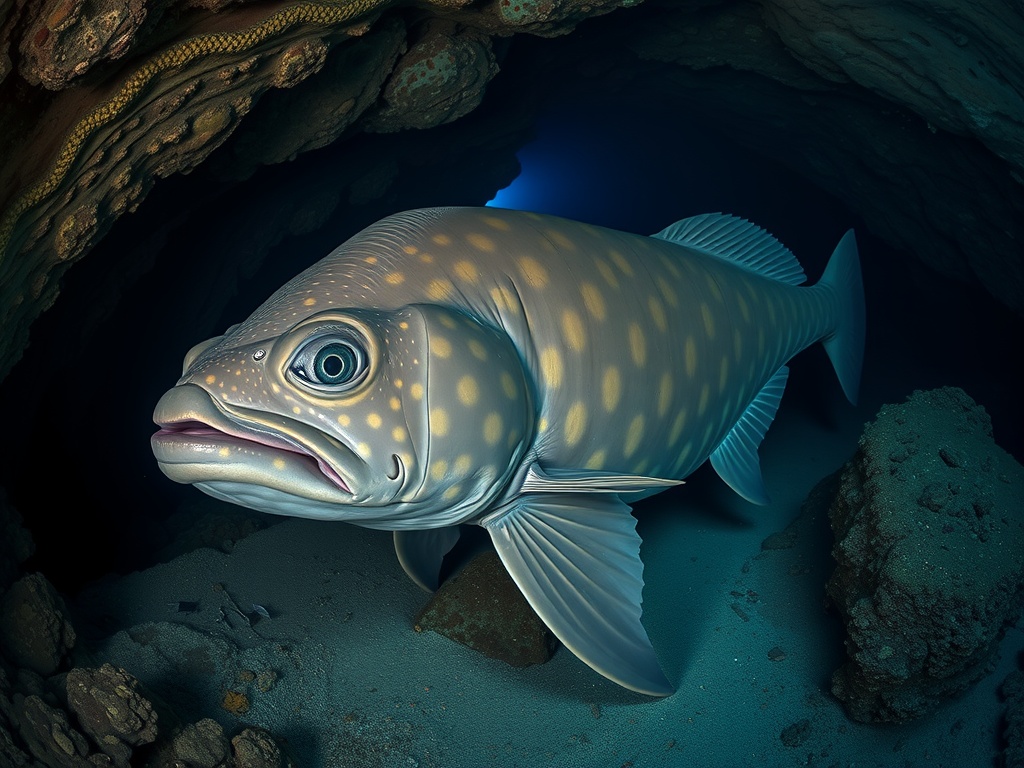
The coelacanth was known only from fossils and assumed to have died out with the dinosaurs, roughly sixty-six million years ago — until 1938, when one turned up in a South African trawler's catch and a museum curator recognised what she was looking at. It is more closely related to us than it is to a tuna. Its lobed, limb-like fins move in the alternating pattern of a walking tetrapod, a ghost of the anatomy that eventually carried vertebrates onto land. It has an intracranial joint, a hinge running across the skull that no other living vertebrate possesses, allowing it to swing the front of its head upward and widen its gape. It has no true backbone — a fluid-filled notochord runs the length of the body — and a rostral organ in the snout that detects the weak electric fields of prey. It drifts in deep volcanic caves by day, hunts slowly at night, gives birth to live young after a gestation that may exceed three years, and is now critically endangered.
Corroboree Frog
Pseudophryne corroboree
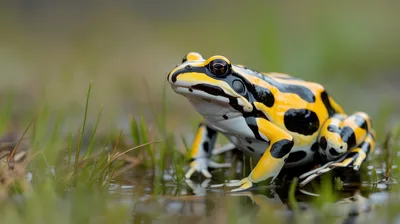
The Corroboree Frog is a small, vividly colored amphibian native to the alpine and subalpine regions of southeastern Australia. Known for its striking yellow and black striped pattern, this frog is highly recognizable and unique among Australian fauna. Corroboree Frogs spend most of their lives on land, only returning to pools and bogs to breed during the summer months. Their populations have dramatically declined due to habitat loss, disease, and climate change, making them one of Australia's most endangered amphibians.
Cuban crocodile
Crocodylus rhombifer
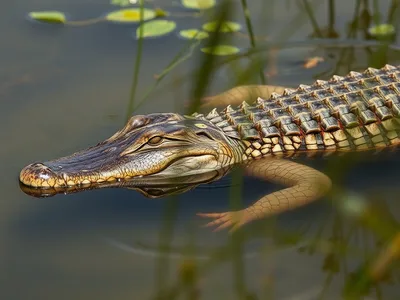
The Cuban crocodile is a medium-sized, highly intelligent crocodilian native to Cuba. Distinguished by its rough, pebbled scales and striking yellow and black coloration, this species is well adapted for terrestrial locomotion and is known for its leaping ability. Cuban crocodiles primarily inhabit freshwater swamps and marshes, where they prey on fish, small mammals, and occasionally turtles. Sadly, this rare crocodile is now restricted to just a few locations due to habitat loss and hunting, placing it among the most endangered crocodilians in the world.
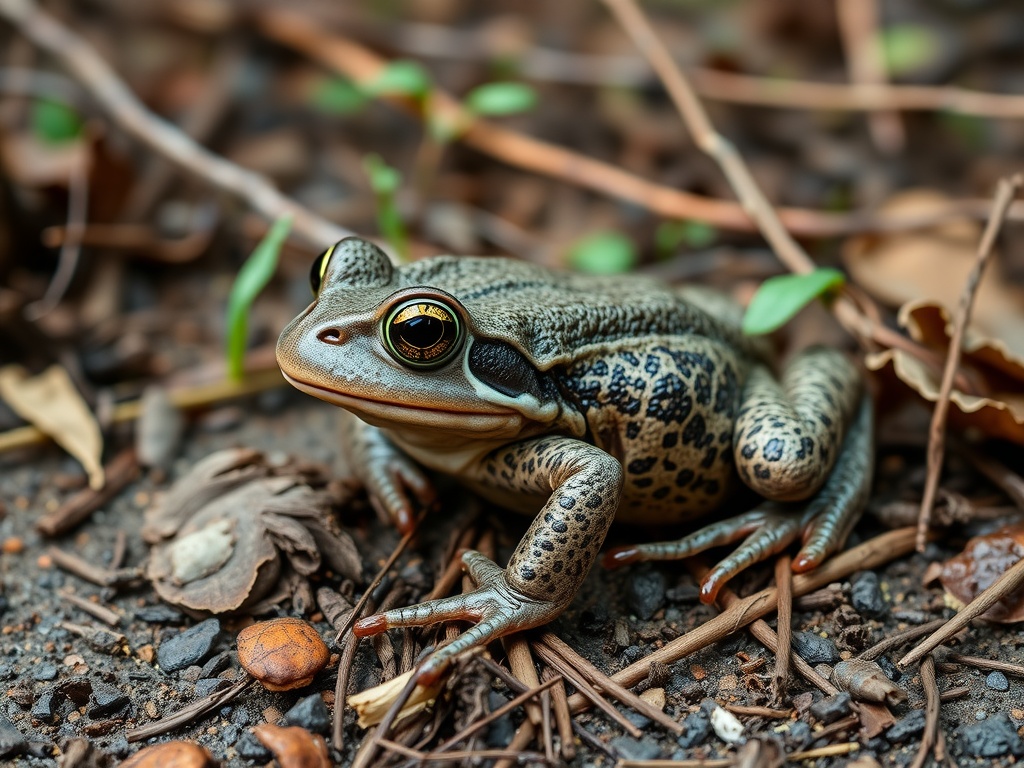
Dusky Gopher Frog
Lithobates sevosus
The Dusky Gopher Frog is a rare and critically endangered amphibian native to the southern United States, primarily Mississippi. It is a stout, medium-sized frog with a warty, dark-colored skin that often features irregular spots and ridges. This secretive species spends most of its life in underground burrows, emerging mainly at night or during heavy rains to breed in temporary, fishless ponds. The Dusky Gopher Frog is notable for its loud, distinctive call that resembles a snore, and its survival is closely tied to the longleaf pine ecosystem.
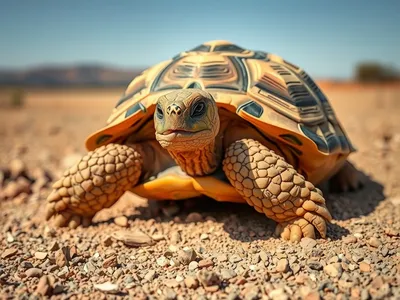
Egyptian tortoise
Testudo kleinmanni
The Egyptian tortoise is one of the smallest tortoise species in the world, known for its delicate yellowish or pale carapace that camouflages well with desert sands. Native to arid regions of Egypt, Libya, and historically Israel, it inhabits sandy and stony deserts, often seeking shelter under sparse vegetation. This critically endangered reptile is adapted to extreme heat and aridity, showing remarkable water conservation abilities. Due to habitat loss and illegal pet trade, its wild populations have drastically declined, making it one of the rarest tortoises globally.
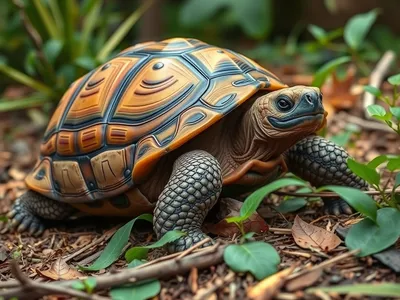
Elongated tortoise
Indotestudo elongata
The elongated tortoise is a medium-sized land tortoise known for its distinctly long, narrow, and slightly flattened golden-brown carapace. Native to Southeast Asia, it inhabits deciduous forests and forest edges, where it spends much of its time foraging among leaf litter. This species is mostly terrestrial, but can tolerate moist and humid environments, and is often found in areas with abundant ground cover. Unfortunately, the elongated tortoise faces heavy pressure from habitat loss and illegal collection for the pet trade and consumption.
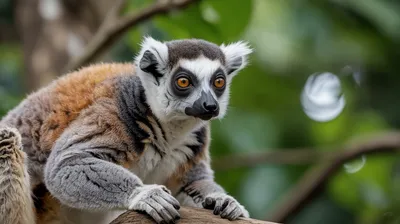
Frilled-necked Lemur
Eulemur macaco flavifrons
The Frilled-necked Lemur, also known as the Blue-eyed Black Lemur, is a medium-sized primate native to northwestern Madagascar. Distinguished by its striking blue eyes and the frilled fur around its neck, this lemur exhibits sexual dimorphism, with males having black fur and females sporting a reddish-brown coat. It inhabits humid forests, where it is mostly arboreal and agile, moving adeptly through the canopy. This species is social, living in small groups and communicating with a variety of vocalizations and facial expressions. Unfortunately, the Frilled-necked Lemur is critically endangered due to habitat destruction and hunting.
Gharial
Gavialis gangeticus
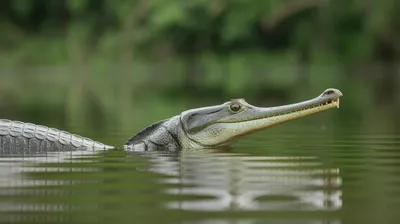
Gavialis gangeticus is the crocodilian that gave up on eating anything but fish. Its snout has become an absurdly long, narrow tube — proportionally the slimmest of any crocodilian — armed with over a hundred interlocking, needle-sharp teeth. A wide jaw would meet enormous drag underwater; a thin one can be swept sideways through the water almost instantly, and the gharial catches fish with exactly that flick, then juggles the fish round and swallows it head first. The trade-off is that it cannot handle large prey at all, and it is essentially harmless to people. Mature males grow a bulbous cartilaginous knob on the tip of the snout called the ghara, after the Indian earthenware pot it resembles, and it acts as a resonator, turning the male's hiss into a buzzing, far-carrying call, as well as being used to blow bubbles in courtship — one of the very few visible external sex differences in any crocodilian. Its legs cannot support its body on land, so unlike other crocodilians it cannot high-walk and simply slides on its belly, which ties it tightly to riverbanks. It is critically endangered, with likely under a thousand breeding adults left, most of them in the Chambal River. Females nest colonially on sandbanks and males help guard the creche of hatchlings.