

Endangered Animals
189 species in the encyclopedia
Species facing a very high risk of extinction in the wild, threatened by habitat loss, poaching, and climate change.
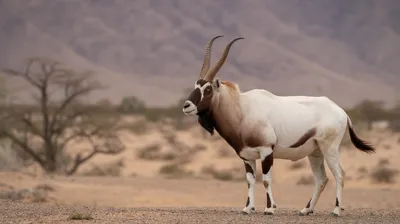
Addax
Addax nasomaculatus
The addax is a desert antelope so committed to aridity that a wild individual may never drink standing water in its life, extracting all it needs from desert grasses, acacia and the dew that condenses on plants before dawn. Its kidneys concentrate urine to a syrup and it feeds mainly at night, when the sparse Sahelian vegetation has reabsorbed the most moisture. The coat performs a seasonal trick: greyish-brown for winter warmth, then bleaching to near-white in summer to reflect the sun. Broad, splayed hooves with flattened soles spread its weight across soft dunes where a hard-hoofed antelope would sink. That same dune-adapted build makes the addax a poor sprinter over firm ground, and this is precisely what destroyed it — once hunters had four-wheel-drive vehicles, an animal that could outlast a lion could not outrun a truck. Both sexes carry spiralling horns of two to three twists, up to about 80 cm long. Today it is one of the most endangered large mammals on Earth, with a wild population in the Termit and Tin Toumma region of Niger that has at times been counted in the dozens.
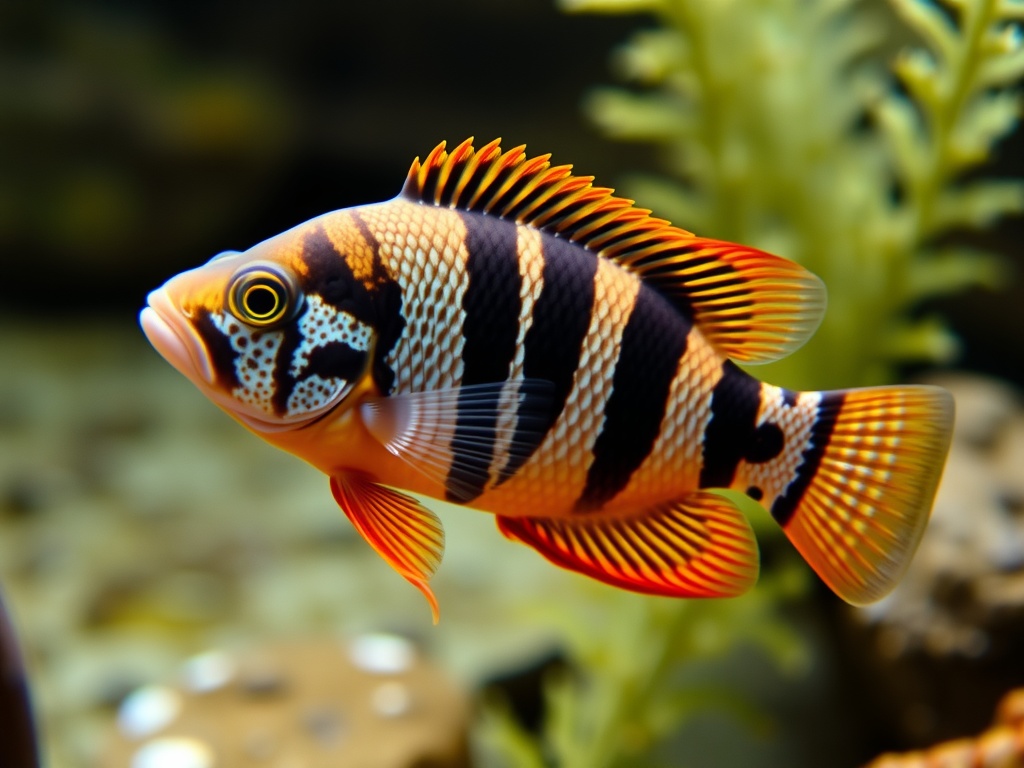
African cichlid
Various (notably Pseudotropheus zebra, Haplochromis burtoni, and others)
African cichlids are a diverse group of freshwater fish native primarily to the Great Rift Valley lakes of East Africa, especially Lakes Malawi, Tanganyika, and Victoria. They are renowned for their vivid coloration, complex social behaviors, and remarkable adaptability, with hundreds of species exhibiting a wide range of shapes and sizes. African cichlids are popular in the aquarium trade due to their striking appearance and active personalities, but they require specialized care. Their rapid speciation and ecological diversity make them a key subject in evolutionary biology studies. These fish play important roles in their native ecosystems, contributing to the unique biodiversity of African freshwater habitats.
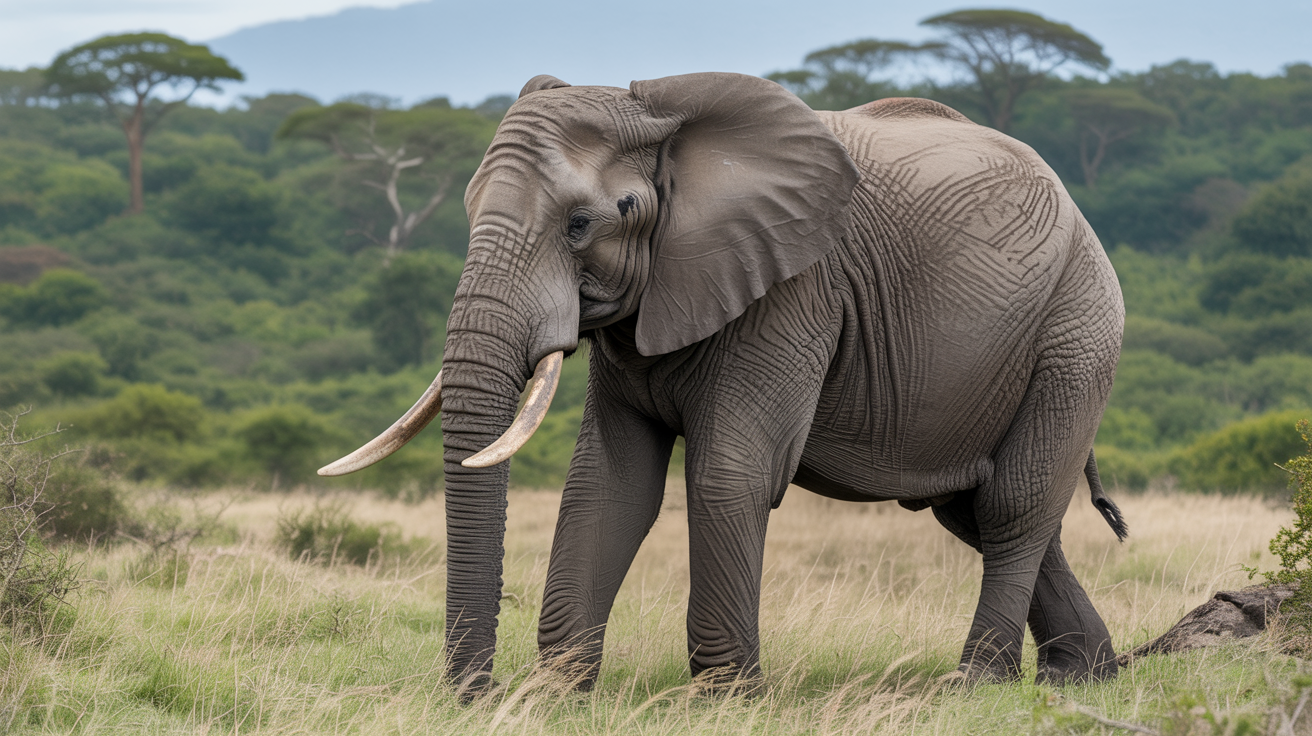
African Elephant
Loxodonta africana
The African elephant, scientifically known as Loxodonta africana, is the largest land mammal on Earth, with bulls reaching up to 4 meters at the shoulder and weighing as much as 6,000 kilograms. These majestic creatures are divided into two species: the African bush elephant and the African forest elephant. The bush elephant, found in a variety of habitats from savannas to deserts, is distinguished by its larger size, broader ears, and curved tusks, which are adaptive traits for dissipating heat and foraging. In contrast, the forest elephant, which inhabits the dense rainforests of Central and West Africa, has straighter tusks and more rounded ears, adaptations that facilitate maneuvering through thick underbrush. Both species exhibit complex social structures, typically led by a matriarch, where females and their calves form tight-knit family groups. Their grey skin is not just a protective layer but also serves as a cooling mechanism, with mud baths providing sunscreen and pest protection.
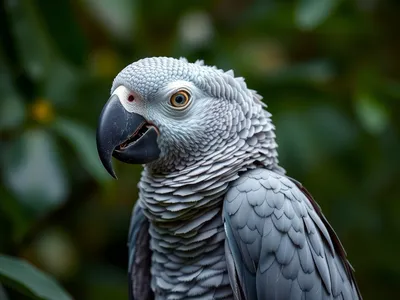
African Grey Parrot
Psittacus erithacus
The African grey is the parrot that changed what science was prepared to say about animal minds. Over three decades, Irene Pepperberg's grey, Alex, learned to label around a hundred objects, colours, shapes and materials, and — crucially — to combine those categories: shown a tray, he could answer which object was both green and three-cornered, which requires holding two attributes in mind at once. He grasped same and different as abstract concepts, and he understood none, a functional zero, which he produced spontaneously when asked which colour differed among a set of identical objects. He is also the only non-human animal on record to have asked an existential question, when he saw himself in a mirror and asked what colour he was. Greys are long-lived, often past fifty, and intensely social, which is exactly why they suffer so badly alone: a bored grey plucks out its own feathers. The demand created by that intelligence has been ruinous, and trapping for the pet trade, combined with habitat loss, has pushed the species onto the endangered list.
African Penguin
Spheniscus demersus
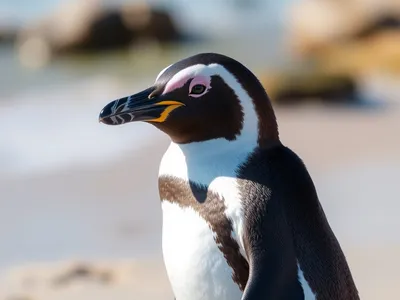
The African penguin is the only penguin that breeds on the African mainland and its islands, and it brays like a donkey — hence its older name, jackass penguin. The bare pink patch above each eye is a radiator: in heat, blood is shunted into the supraorbital gland region and the skin flushes a deeper pink as it dumps heat to the air, which is how a bird built for cold survives Namibian and South African summers. Its collapse is a case study in how an unrelated industry can destroy a species. For centuries penguins nested in burrows dug into metres-deep guano; when guano was scraped off the islands as fertiliser in the nineteenth century, the penguins were left nesting on bare rock, exposed to gulls and to lethal heat. Then commercial purse-seining stripped the sardine and anchovy stocks, and the fish that remained shifted east, away from the breeding colonies. From roughly a million pairs around 1900, fewer than 10,000 breeding pairs remain, and the species is now Critically Endangered.
African Wild Dog
Lycaon pictus
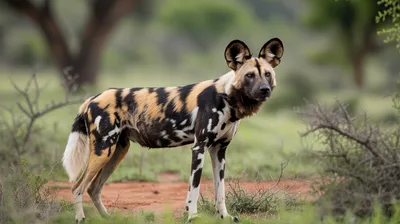
The African wild dog is not a dog, a wolf or a jackal. It is the only living member of its genus, cannot interbreed with any of them, and carries four toes on its front feet rather than five — the mark of a lineage that split off millions of years ago. It is arguably the most effective large predator in Africa, succeeding on a far higher share of its hunts than a lion or leopard, and it does so not by ambush but by endurance, running prey to exhaustion in a coordinated relay. The pack is intensely cooperative: hunters regurgitate meat for pups, for the sick and for injured adults, and dogs too old or hurt to hunt are fed rather than abandoned. Decisions are made collectively — before setting off, a pack effectively votes by sneezing, and the more sneezes recorded, the more likely the hunt is to go ahead, with a lower threshold when a dominant animal initiates. Every individual's blotched coat is unique, which is why the species' scientific name means "painted wolf". Its undoing is space: it needs enormous ranges, which puts it in permanent conflict with farmland and makes it one of Africa's most endangered carnivores.
Amazon River Dolphin
Inia geoffrensis
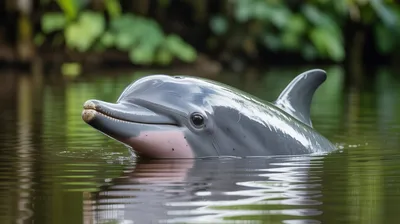
The boto is the largest river dolphin, up to 2.5 m and 185 kg, and it is built for a forest rather than for open water. Its neck vertebrae are unfused, so it can turn its head roughly 90 degrees — useless in the sea, essential for threading between drowned trunks in the varzea flooded forest, where it hunts through the canopy of a submerged rainforest for months each year. Its flippers are broad and paddle-like for tight manoeuvring rather than speed, and its rear teeth are blunt and molar-like, letting it crush armoured catfish and even river turtles that a marine dolphin's uniform cones could not handle. The pink colouring is not pigment so much as scarring and blood vessels close to the skin: males are far pinker than females because they fight, and an old male can be almost flamingo-coloured. Male botos have been recorded carrying objects — sticks, lumps of hard clay, turtles — and thrashing them at the surface in front of females, one of the very few reported cases of object-carrying sexual display in a non-human animal.
Anderson's Crocodile Newt
Echinotriton andersoni
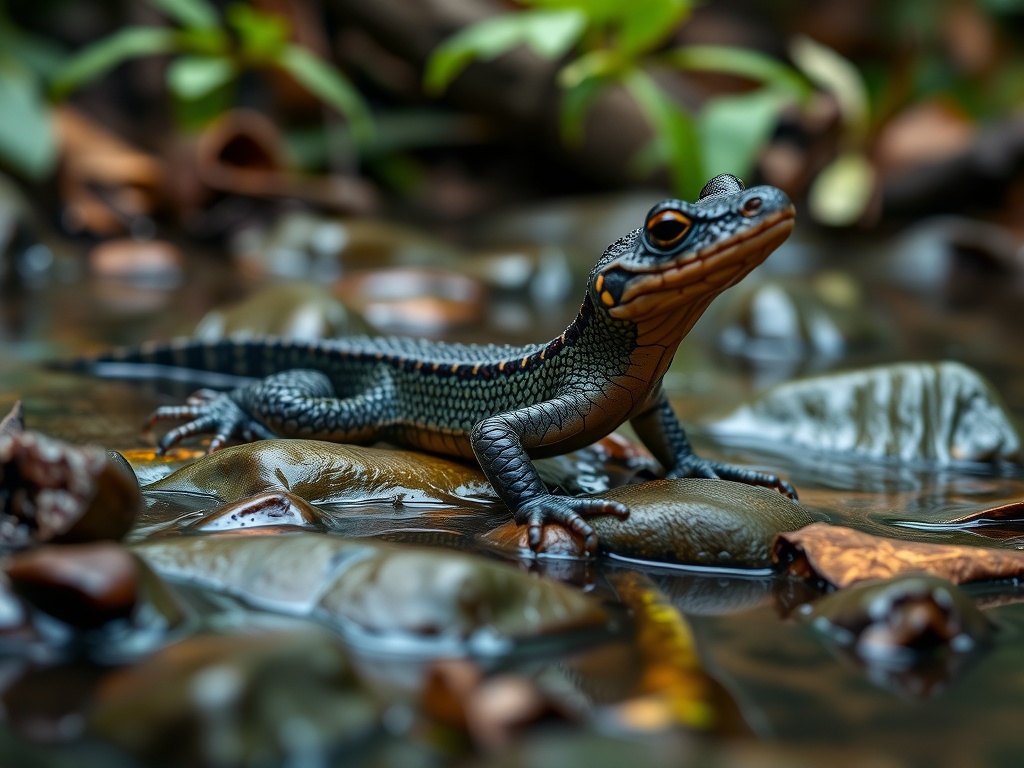
Anderson's Crocodile Newt is a distinctive amphibian known for its rough, crocodile-like skin and prominent orange markings along its sides and tail. Native to the Ryukyu Islands of Japan and parts of Taiwan, this newt inhabits moist forests and mountain streams. It is a secretive, primarily nocturnal creature that spends much of its life hidden under leaf litter or stones. Due to habitat loss and collection for the pet trade, its populations have been declining, making it a conservation concern.
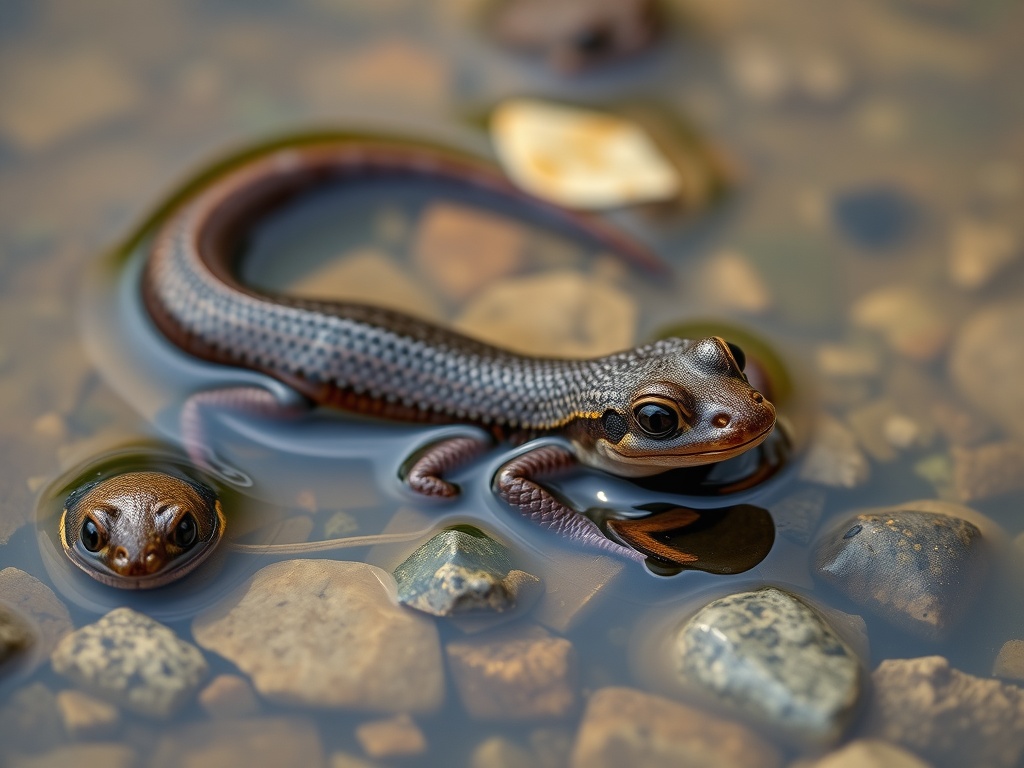
Anderson's Salamander
Ambystoma andersoni
Anderson's Salamander is a critically endangered amphibian native to a single high-altitude lake, Lake Zacapu, in Michoacán, Mexico. It is a large, fully aquatic salamander characterized by its external feathery gills and robust, dark-colored body. Unlike many amphibians, Anderson's Salamander exhibits neoteny, meaning it retains larval features such as gills throughout its life and does not metamorphose into a terrestrial form. The species is adapted to cold, clear freshwater environments and is highly sensitive to habitat degradation. Due to its restricted range and specialized habitat requirements, Anderson's Salamander is extremely vulnerable to environmental changes.
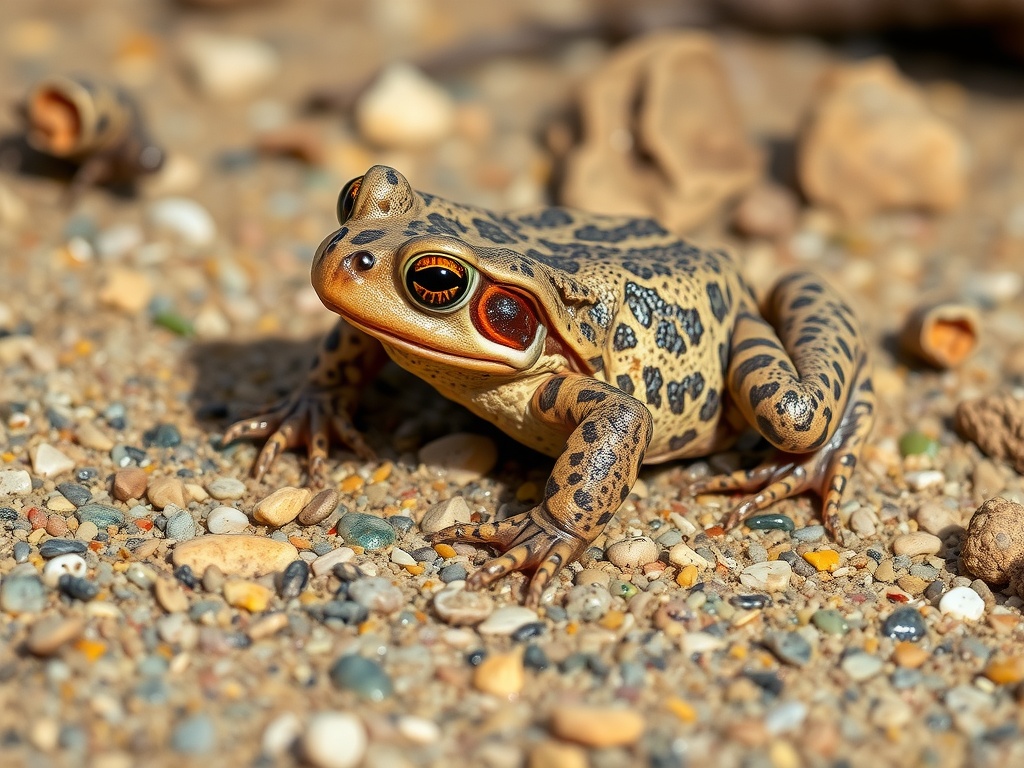
Arroyo Toad
Anaxyrus californicus
The Arroyo Toad is a small, stocky amphibian native to southwestern California and Baja California, Mexico. Characterized by its olive-gray warty skin and pale stripe across its head and back, this toad is specialized for life in sandy streamside habitats. Arroyo Toads are nocturnal and spend much of their life buried underground, emerging mainly during the breeding season after spring rains. Their populations are vulnerable due to habitat destruction, altered water flow, and invasive species.
Aruba Island Rattlesnake
Crotalus unicolor
The Aruba Island Rattlesnake is a highly endangered pit viper species endemic to the island of Aruba in the southern Caribbean. It has a light brown or grayish coloration with faint, diamond-shaped patterns that help it blend into the arid, rocky hillsides where it lives. Adapted to a desert-like environment, this snake is primarily nocturnal, emerging at dusk to hunt small mammals, birds, and lizards. With a calm disposition compared to other rattlesnakes, it is rarely encountered by humans and plays a vital role in its ecosystem as both predator and prey.
Asian arowana
Scleropages formosus
The Asian arowana is the most expensive aquarium fish in the world, and the reason is entirely cultural rather than biological: its large metallic scales, barbels and sinuous swimming resemble a Chinese dragon, and it is prized in Chinese communities as a bringer of wealth and a deflector of bad luck. Red-toned specimens have changed hands for tens of thousands of dollars. Listed on CITES Appendix I since 1975, it can legally cross borders only from registered captive-breeding farms, and individual fish are microchipped and issued certificates — a paperwork regime that looks more like the diamond trade than the pet trade. Biologically it is a surface predator with an upturned, drawbridge mouth, and it can launch itself well clear of the water to snatch insects and even small birds from overhanging branches, which is why it is called the water monkey. The male is a mouthbrooder, carrying eggs and then free-swimming fry inside his mouth for weeks and releasing them to feed.
Asian Elephant
Elephas maximus
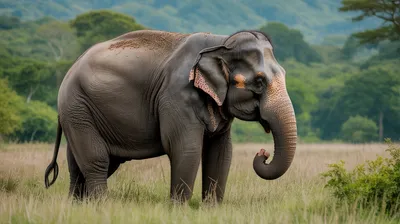
The Asian elephant differs from the African in more than ear size. Its trunk ends in a single finger-like process rather than two, so it grips by curling the tip around an object and pinning it, where an African elephant pinches with two lips. It has a twin-domed forehead, a more arched back, and — crucially — tusks that many individuals simply do not have. Females essentially never carry proper tusks, only small tushes, and a large proportion of males are tuskless too; in Sri Lanka the figure is around 90 percent, a legacy of centuries of selective removal of the tusked animals. The trunk itself contains on the order of 40,000 muscle fascicles and no bone, and it is simultaneously a nose, a hand, a hose, a snorkel and a loudspeaker. Elephants communicate with infrasonic rumbles below the range of human hearing, which travel for kilometres through air and ground, and they detect them partly through their feet. Adult males enter musth, a periodic state with testosterone levels up to sixty times baseline, marked by temporal gland secretion and dangerous aggression.
Atlantic salmon
Salmo salar
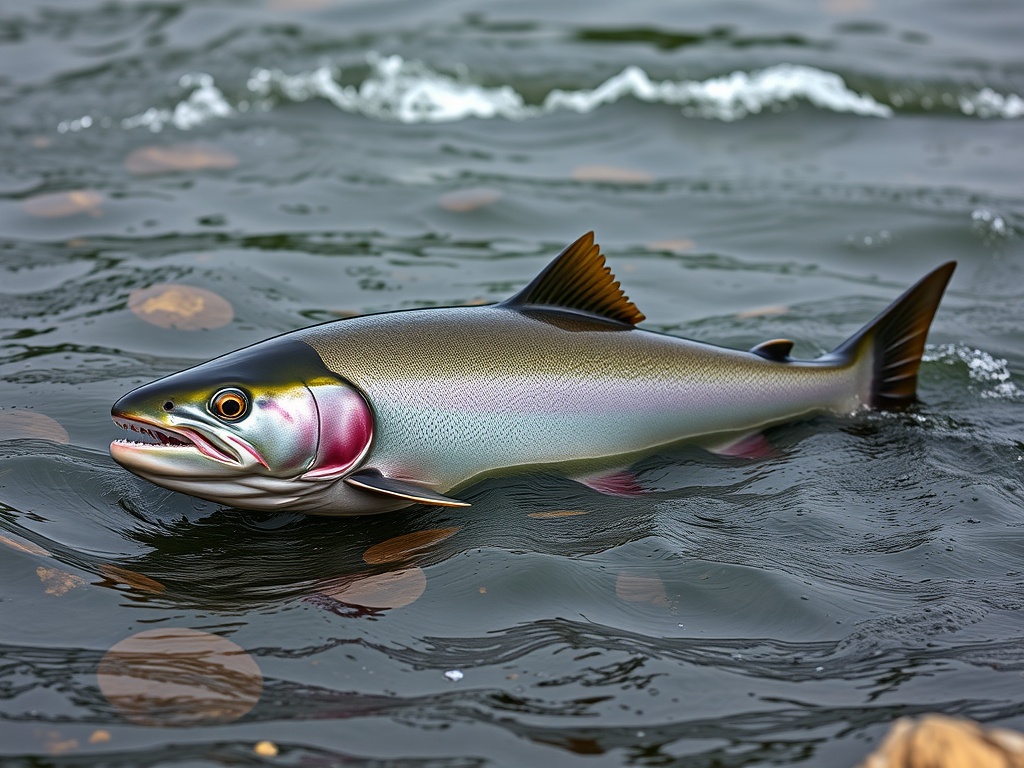
Atlantic salmon breaks the rule everyone learns from Pacific salmon: it does not have to die after spawning. A spent fish, called a kelt, can drop back to sea, feed, recondition and return to spawn again, and repeat spawners — usually large females — are disproportionately valuable to a population. The migration involves a full physiological rebuild. A parr living in fresh water turns into a smolt: it silvers, its gill cells switch from retaining salt to excreting it, its kidneys change function, and its behaviour flips from territorial to schooling, all within weeks. It finds its way home with what appears to be a magnetic map for the ocean crossing, then switches to olfaction, homing on the specific chemical signature of the stream it was imprinted on as a juvenile. Small male parr that never went to sea at all can sneak into a redd and fertilise eggs while a large sea-run male is fighting off rivals — and in some rivers those tiny males fertilise a serious share of the eggs.
Atlantic sturgeon
Acipenser oxyrinchus
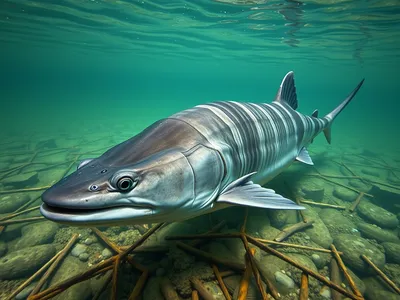
The Atlantic sturgeon is armoured with bony scutes rather than scales, has a skeleton that is largely cartilage, and finds its food without ever seeing it. Four barbels drag along the bottom, and the underside of the long snout is studded with ampullae — electroreceptors that detect the faint electrical fields of buried worms and crustaceans — after which the toothless mouth extends downward as a tube and vacuums them up. Anadromous like salmon, it runs up rivers to spawn, but it plays a much slower game: females may not mature until somewhere between seven and thirty years old depending on latitude, and then spawn only once every two to five years. That reproductive schedule is what makes them so easy to destroy. In the 1880s a caviar rush on the Delaware River made the Atlantic sturgeon a "black gold" fishery, and the population was gutted within a generation. Fish reach 4 m and can live sixty years, and they leap clear of the water for reasons still argued over — group cohesion is the leading hypothesis.
Australian Lungfish
Neoceratodus forsteri
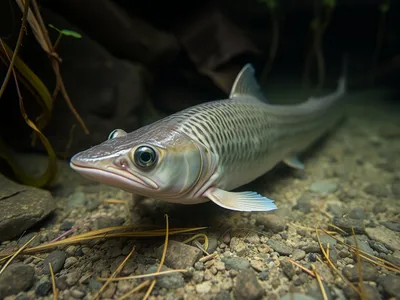
The Australian lungfish is the most conservative of the six surviving lungfish species and the least like the popular image of one. It has a single lung, not the paired lungs of the African and South American species, and it does not aestivate: it cannot survive being dried out, and it uses its gills as a matter of course, rising to gulp air only when the water goes stagnant or when it is exerting itself. Its fins are the point. They are thick, fleshy, flipper-like lobes on bony supports, and the fish walks on them along the river bottom in a slow diagonal gait — a living demonstration of the kind of limb from which tetrapod legs were built. It is native only to a handful of Queensland rivers, chiefly the Burnett and Mary, and fossils essentially indistinguishable from it are around 100 million years old. When its genome was sequenced in 2021 it was the largest animal genome assembled to that date, and it confirmed decisively that lungfish, not coelacanths, are the closest living fish relatives of all land vertebrates.
Australian Sea Lion
Neophoca cinerea
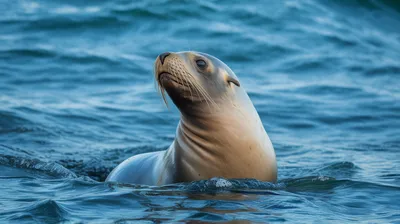
The Australian Sea Lion is a rare and charismatic marine mammal native to the southern and western coasts of Australia. It has a robust body, short fur, and is easily identified by its creamy to yellowish coloring on the face and underparts, contrasted with a dark brown back. Known for their playful behavior, Australian Sea Lions are also strong swimmers, often seen surfing waves close to shore. Their breeding colonies are found on isolated sandy beaches and rocky coasts, and they have a very unusual 17-18 month breeding cycle, one of the longest among pinnipeds.
Axolotl
Ambystoma mexicanum
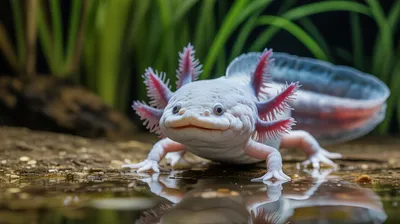
The axolotl (Ambystoma mexicanum) is a unique amphibian native to the ancient lake systems of Xochimilco and Chalco in Mexico City. Unlike most salamanders, axolotls exhibit neoteny, meaning they retain juvenile traits throughout their life, such as their feathery external gills and aquatic lifestyle. These amphibians typically grow to about 15 to 45 cm in length, with a notable regenerative ability that allows them to regrow entire limbs, spinal cords, and even parts of their brain. Axolotls are often mistaken for the larval stage of other neotenic salamanders, such as the tiger salamander (Ambystoma tigrinum), but they can be distinguished by their fully aquatic nature and distinct coloration, ranging from wild-type brown to leucistic pink. The retention of larval features in axolotls is an adaptive trait that allows them to exploit aquatic resources without the competition from terrestrial adults. In the wild, their populations are critically endangered due to habitat loss and pollution, making them a subject of significant conservation efforts.
Aye-aye
Daubentonia madagascariensis
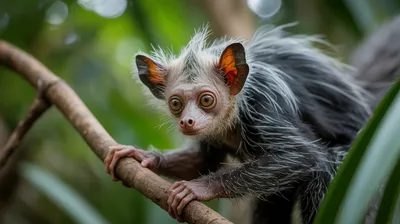
The aye-aye is a lemur that hunts like a woodpecker, and it has assembled a toolkit no other primate has. It taps rapidly along a branch with a specialised, skeletal middle finger, listens to the returning echo with enormous mobile ears, and identifies the hollow chamber where a grub is tunnelling — percussive foraging, a form of echolocation by knocking, unknown in any other primate. Then it gnaws through the wood with incisors that never stop growing, like a rodent's, which is why it was originally classified as one. Finally it inserts that same middle finger, which is not only elongated and impossibly thin but mounted on a ball-and-socket joint, letting it hook and rotate inside the tunnel to spear the grub and draw it out. It fills the ecological role that woodpeckers occupy elsewhere, and Madagascar has no woodpeckers. It is also killed on sight in parts of its range, where local superstition holds that the pointing of that finger is an omen of death.
Bactrian Camel
Camelus bactrianus
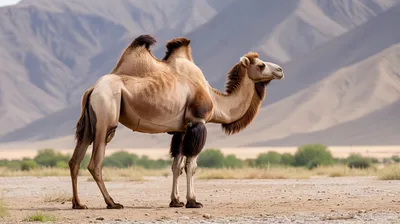
The two humps of a Bactrian camel are fat, not water — a strategic decision to store the body's insulation in two lumps on the back rather than spread beneath the skin, so that the rest of the body can radiate heat freely. A well-fed camel's humps stand firm; a starved one's flop over. The camel's water tricks are elsewhere. It can lose up to about 30 percent of its body water, a level that would kill most mammals through blood thickening, because its red blood cells are oval rather than round and unusually elastic — they resist rupturing when the animal rehydrates and can swell enormously. That is what lets a camel drink over 100 litres in a few minutes without its cells bursting. Nostrils close against blowing sand, double rows of eyelashes screen the eyes, and the woolly winter coat sheds in great hanging sheets in spring. The domestic Bactrian is common, but the wild Bactrian camel is now recognised as a separate species with only around a thousand individuals left in the Gobi.
Baird's Tapir
Tapirus bairdii
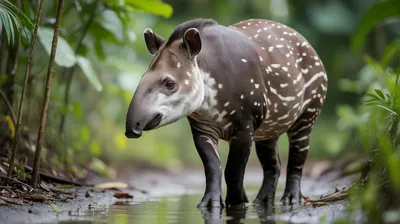
Baird's tapir is the largest native land mammal in Central America and one of the least often seen. It is shy, largely nocturnal, and keeps to dense forest and water, and its growing scarcity is a problem that extends far beyond the animal itself: like all tapirs it swallows large fruits whole and disperses the seeds intact over long distances, and there is nothing else in its range that can do the job at that size. Where the tapir vanishes, the composition of the forest changes with it. It is related to horses and rhinos rather than to pigs, and it carries the same short prehensile proboscis, used to grip and strip vegetation and as a snorkel while swimming — it takes to rivers readily and can walk submerged along the bottom. Calves are born with a striped and spotted coat that fades within a few months. It breeds very slowly, usually a single calf after a gestation of roughly thirteen months, which leaves it almost no capacity to absorb hunting or habitat loss, and it is endangered across its range.
Bala shark
Balantiocheilos melanopterus
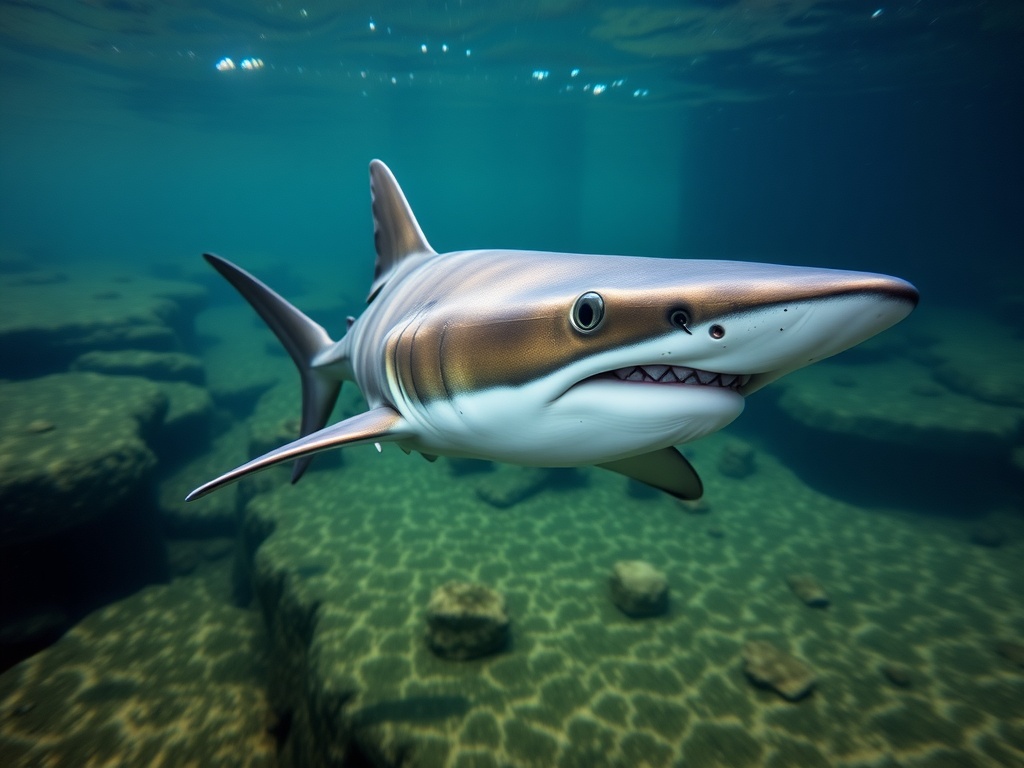
The Bala shark, also known as the tricolor shark or silver shark, is a striking freshwater fish native to Southeast Asia. With its torpedo-shaped body, large eyes, and distinctive black-edged fins, it is often mistaken for a true shark, though it belongs to the minnow family. Bala sharks are active, social swimmers that can grow quite large, making them a popular but challenging choice for home aquariums. In the wild, they inhabit fast-flowing rivers and lakes, but their populations have declined due to overfishing and habitat loss.
Banggai cardinalfish
Pterapogon kauderni
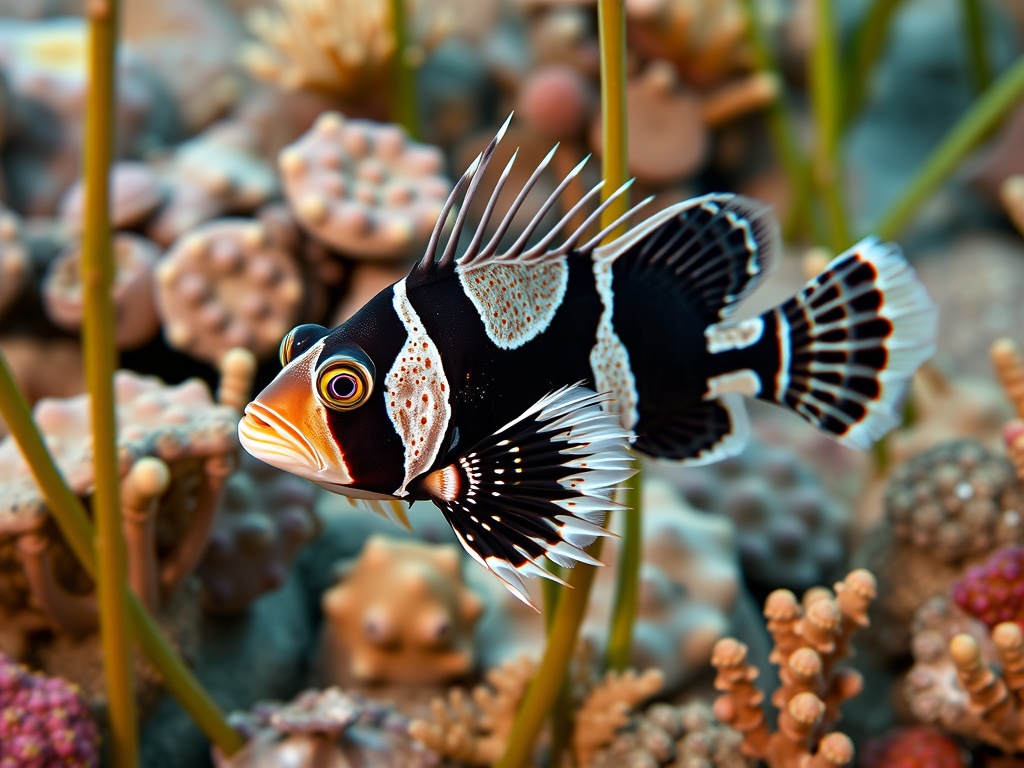
The Banggai cardinalfish is a small, striking marine fish known for its bold black vertical stripes, silver body, and elongated fins. Endemic to the Banggai Archipelago in Indonesia, this species inhabits shallow coastal waters, often among seagrass beds and coral reefs. It is popular in the aquarium trade due to its attractive appearance and peaceful nature. The Banggai cardinalfish forms small social groups and displays unique parental care, with males mouthbrooding the eggs until they hatch. Due to overcollection and habitat loss, the species is considered endangered in the wild.
Barbados Threadsnake
Tetracheilostoma carlae
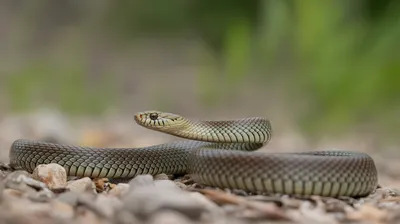
The Barbados threadsnake is the smallest snake in the world: an adult is about 10 cm long and roughly as thick as a strand of spaghetti, and one can coil comfortably on a US quarter. It was described only in 2008, by Blair Hedges, from specimens including one that had been sitting misidentified in a museum for decades. Its size is close to an actual physical floor for snakes, and the reason is reproductive: it lays a single egg, and the hatchling emerges about half the length of its mother. That ratio is extreme, and it reflects a hard constraint — a snake much smaller than this could not produce an offspring large enough to survive and still fit inside itself. Big snakes lay many small eggs; the smallest species are forced into one relatively enormous one. It is a blind, burrowing snake, effectively eyeless, that eats termite and ant larvae underground. It is known only from a few fragments of forest on Barbados, an island whose native forest has been almost entirely cleared for sugar cane.